Perforated Aluminum Panel Specs That Prevent Costly Façade Rework
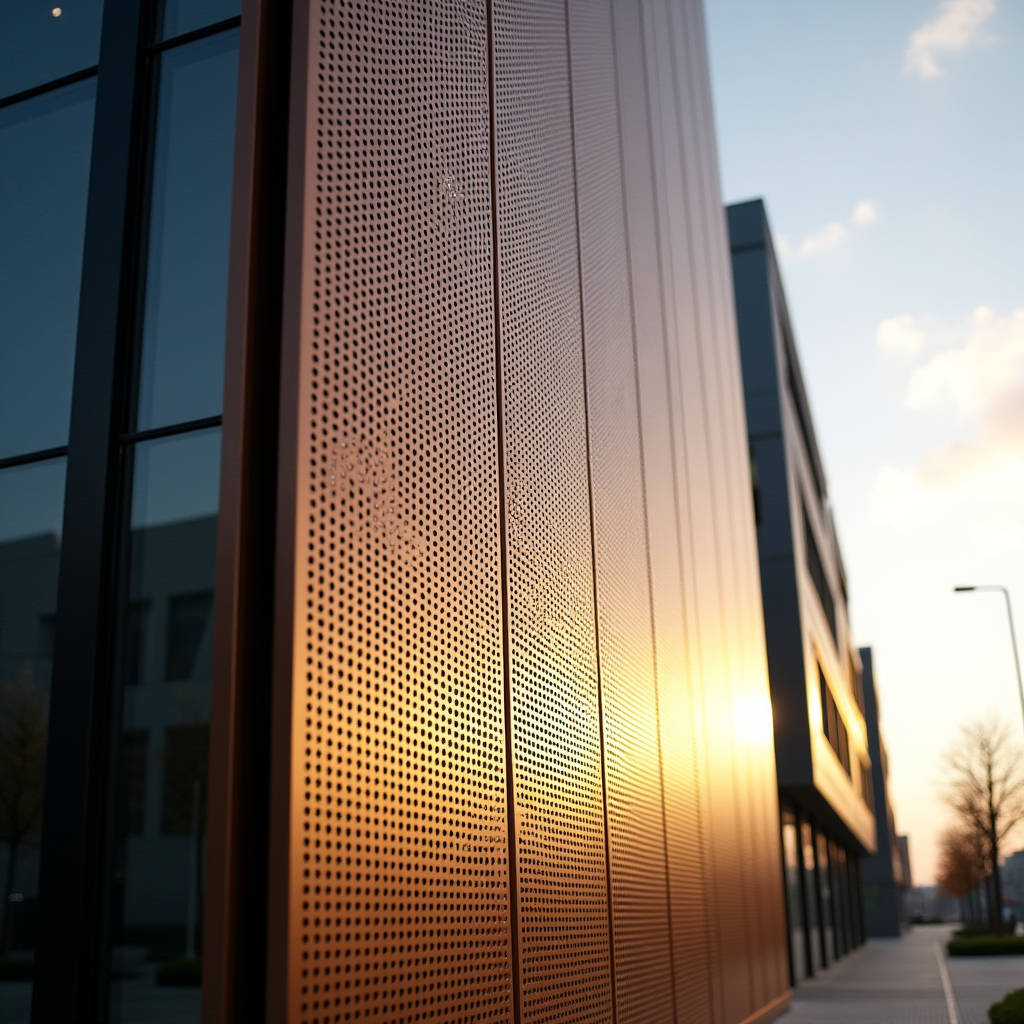
Perforated aluminum panel systems have moved from architectural accent to core façade strategy. The shift isn't about aesthetics alone. Engineering teams now specify these panels to solve multiple performance requirements simultaneously—solar shading, acoustic absorption, ventilation, and structural lightness—all within a single cladding layer. A 2.5mm or 3.0mm solid aluminium sheet with precision-punched perforations can reduce solar heat gain by 30–40% while maintaining outward visibility, a combination that laminated glass assemblies struggle to match at comparable cost. For procurement managers and façade contractors, the real conversation starts with material grade, perforation pattern engineering, and the supply chain reliability behind mill-finish to PVDF-coated delivery.
What Procurement Teams Get Wrong About Perforated Aluminum Panel Specs
Most tender documents we review contain at least one specification error that cascades into pricing confusion or on-site rejection. The most common: calling out "perforated aluminum panel" without defining the base material. A solid aluminium cladding panel—specifically 3003-H14 or 5052-H32 alloy—behaves nothing like an ACP sandwich under perforation stress. Punch 20% open area into a 3.0mm 3003-H14 sheet, and you retain roughly 85% of the original flexural stiffness. Do the same to a 4mm composite panel, and the core exposure introduces moisture ingress risks that no edge seal can fully mitigate over a 15-year façade lifecycle.
Three specification details that should appear in every inquiry:
- Alloy and temper. 3003-H14 covers 90% of architectural applications. For coastal projects with salt spray exposure, 5052-H32 offers superior corrosion resistance. The cost difference runs about 12–18% on raw material.
- Perforation open area percentage. This single number drives structural behavior, weight, and cost. 15% open area means 85% material remains. 35% open area requires thicker base stock to maintain panel flatness.
- Hole geometry and pitch. Round staggered (60° pattern) maximizes strength-to-openness ratio. Square straight-line patterns look cleaner but reduce the panel's effective section modulus by roughly 8–12% compared to staggered at identical open area.
Field Note: On a 2023 mixed-use tower in Dubai, the contractor submitted perforated panels with 28% open area in 2.0mm 3003-H14. Wind tunnel testing showed deflection exceeding L/90 under design load. The fix required stepping up to 3.0mm, adding roughly €22/m² to material cost but avoiding a six-week re-engineering delay. Always run open-area-adjusted structural calcs before finalizing PO thickness.
Perforation Pattern Engineering: Beyond Round Holes
The perforated aluminum panel market has matured well past the "round hole, standard pitch" default. Today's CNC punching and turret press lines handle custom geometries at production volumes that would have required laser cutting—and laser-level pricing—a decade ago. The practical implication for procurement: custom pattern tooling costs have dropped to roughly $800–$2,500 per design, amortized across the project square footage. For orders above 1,500 m², the per-unit tooling adder becomes negligible.
What matters more is the relationship between pattern, open area, and the panel's post-perforation flatness. This is where shop drawing review earns its value. A pattern with elongated slots oriented parallel to the panel's long axis will exhibit less oil-canning than the same slot pattern rotated 90°. The physics is straightforward: the remaining material bridges behave as micro-beams, and their orientation relative to the panel span determines whether they contribute to or detract from overall stiffness.
| Pattern Type | Typical Open Area Range | Flatness Retention | Best Application | Relative Cost Index |
|---|---|---|---|---|
| Round, 60° staggered | 12% – 40% | Excellent | General façade, solar shading | 1.0 (baseline) |
| Square, straight grid | 15% – 35% | Moderate | Interior feature walls, soffits | 1.05 – 1.15 |
| Elongated slot, horizontal | 20% – 45% | Good (span-dependent) | Parking structure screening | 1.10 – 1.25 |
| Custom logo/image perforation | 10% – 30% | Variable (requires FEA) | Branded architectural features | 1.30 – 1.80 |
| Micro-perforation (<3mm dia.) | 5% – 18% | Excellent | Acoustic absorption panels | 1.20 – 1.40 |
Coating Systems for Perforated Panels: The Edge Problem
Standard PVDF coating on a solid aluminium cladding panel follows a predictable quality assurance path: chromate conversion pretreatment, primer, color coat, clear coat—total dry film thickness 30–35 microns minimum per AAMA 2605. But perforated aluminum panel finishing introduces a complication that flat sheet coating doesn't face: edge coverage inside each hole.
When a 2.5mm panel is punched, each hole creates an internal cylindrical surface. That surface is bare aluminum. If the panel is post-punched (perforated after coil coating), every hole edge is unprotected. This is acceptable only for interior applications or when the panel is anodized rather than painted. For exterior façade use, the correct sequence is: punch first, then coat. The spray application—whether liquid PVDF or powder—must achieve adequate coverage on those internal edges. Reputable coaters run test coupons with identical perforation patterns and check edge coverage under 50x magnification before approving production.
Coating specification checklist for perforated panels:
- Specify pre-punch, post-coat sequence in the purchase order. This seems obvious but gets missed when procurement splits the punching and coating between two subcontractors.
- Require edge dry film thickness measurement on at least three holes per panel from the first article inspection report. Acceptable minimum: 20 microns on internal edges.
- For Kynar 500® PVDF systems, confirm resin-to-pigment ratio. 70% PVDF resin minimum by weight in the color coat. Some lower-cost fluoropolymer blends drop to 50% and lose significant gloss retention after 5–7 years of UV exposure.
- If the project is within 5km of a marine coastline, add a seawater-resistant sealer specification. Standard architectural PVDF alone won't prevent pitting corrosion on hole edges in salt-laden air beyond year 8–10.
Pro Tip: Request a 300mm × 300mm perforated sample with the exact hole pattern, alloy, thickness, and coating system specified for production. Conduct a 24-hour salt spray test (ASTM B117) on this sample. The cost is around $200 at any materials testing lab. It catches edge-coverage failures that visual inspection misses, and it's far cheaper than replacing 800 m² of installed panels three years later.
Acoustic Performance: What Perforated Aluminum Panels Actually Deliver
The acoustic function of a perforated aluminum panel depends entirely on what sits behind it. The panel itself—with its open area acting as a resistive layer—forms the front face of a Helmholtz resonator when paired with an air cavity and a solid backing. Tuning this system requires coordinating three variables: perforation percentage, panel thickness, and cavity depth. Get one wrong, and the absorption peak shifts away from the target frequency range.
For typical urban traffic noise (dominant frequencies 400–1,200 Hz), a configuration that works reliably: 2.5mm perforated aluminum panel with 20–23% open area, 2.0–3.0mm hole diameter, backed by 50mm of 60 kg/m³ mineral wool, with a 100mm air cavity behind the insulation. This assembly delivers a Noise Reduction Coefficient (NRC) of 0.65–0.80, tested per ASTM C423. For comparison, a non-perforated solid aluminium cladding panel over the same backing achieves NRC 0.10–0.15—essentially reflective.
What specifications often miss: the acoustic performance of the perforated panel system degrades if the holes become clogged with dust, pollution residue, or—in Middle Eastern projects—fine sand. Panels installed in dusty environments should specify minimum 3.0mm hole diameter. Anything smaller, and the maintenance burden shifts from annual pressure washing to quarterly manual cleaning. That operational cost lands on the building owner, but the specification decision sits with the design team at tender stage.
Supply Chain Reality: Lead Times, MOQs, and Packaging
A perforated aluminum panel order moves through five distinct stages: coil sourcing, sheet leveling and cutting, CNC punching, fabrication (folding/routing), and coating. Each stage has its own queue. The bottleneck is almost always CNC punching capacity, not coating. A factory running three turret punch presses can process roughly 600–800 m² of perforated panels per day at 20% open area. Drop the open area to 35%, and throughput drops to 400–500 m²/day because the machine spends more time punching per sheet.
Standard lead times from confirmed shop drawings:
- Standard patterns (round hole, 15–25% open area): 4–5 weeks to FOB port for orders up to 3,000 m².
- Custom patterns with new tooling: Add 10–14 days for tool fabrication and first-article approval.
- Large-scale projects (8,000+ m²): 6–8 weeks, often split across multiple production batches. The first container can ship at week 4 while the balance continues through fabrication.
Minimum order quantities vary by factory. For perforated aluminum panel production, most established manufacturers set MOQ at 300–500 m² per pattern. Below that threshold, the tooling setup cost dominates the per-unit price. Some suppliers—Futeng® among them—accept smaller runs for custom perforation patterns by nesting multiple projects onto shared sheet layouts, though this requires flexible scheduling and isn't always available during peak construction seasons.
Packaging deserves more attention than it typically receives in procurement specifications. Perforated panels are more vulnerable to transit damage than solid sheets. The perforation edges can catch on adjacent panels during container movement. The industry-standard packaging protocol: each panel separated by 2mm PE foam interleave, stacked in bundles of 20–25, wrapped in VCI (volatile corrosion inhibitor) film for ocean freight, and crated in fumigated plywood cases with steel edge protectors. For panels with PVDF color coats, specify that the protective film must be UV-stabilized and rated for minimum 90 days of outdoor exposure without adhesive transfer. Standard PE film degrades under tropical sun within 3–4 weeks and leaves residue that requires solvent cleaning.
Structural Attachment: Framing Systems and Tolerance Stack-Up
Perforated aluminum panel façades use the same substructure logic as solid cladding—aluminum extruded T-profiles or hat channels on adjustable brackets—but with one critical difference: wind load calculations must account for the reduced surface area. A panel with 30% open area experiences roughly 30% less direct wind pressure. This sounds like a structural advantage, and it is, but it creates a complication: the attachment clips and fasteners still see the full panel weight plus wind suction loads on the remaining solid area. You cannot simply downsize the substructure proportionally.
The practical approach most engineering teams follow: calculate wind load using the solid panel area (conservative), then apply the open-area reduction only to the panel's self-weight in the dead load combination. For seismic design, the reduced mass is beneficial; for wind design, the conservative approach avoids under-specifying fasteners.
Tolerance stack-up is where site teams encounter real problems. A perforated panel with 2,400mm × 1,200mm dimensions will have a fabrication tolerance of ±1.5mm on length and width per ISO 2768-m. The supporting aluminum frame has its own ±2.0mm over the same span. The concrete slab edge or steel embedment that the bracket anchors to adds another ±5.0mm. Sum these, and you're looking at ±8.5mm of cumulative variation. If the joint between adjacent perforated panels is specified at 15mm, that tolerance consumes over half the joint width, leaving visible irregularity.
Three field-proven solutions:
- Slotted bracket connections with ±10mm adjustment in all three axes. Adds roughly $4–6/m² to the substructure cost.
- Oversized panel joints of 20–25mm with black EPDM gaskets behind the open joint. The gasket visually masks irregularity.
- Laser-scanned as-built substrate before panel fabrication. The point cloud data feeds directly into panel dimensioning, eliminating the slab-edge tolerance variable. This adds $8–12/m² in scanning and modeling cost but can reduce on-site rework by 80% or more on complex geometries.
Cost Drivers: What Moves the Price Per Square Meter
Procurement managers evaluating perforated aluminum panel pricing need to understand that the base metal cost is only 35–45% of the final FOB price. The rest lives in value-added processing. Here's a realistic breakdown for a 2.5mm 3003-H14 panel with 20% open area, round staggered perforation, PVDF coating, at 2,000 m² order quantity:
| Cost Component | Approximate Share of FOB Price | Key Variable |
|---|---|---|
| Aluminum coil (2.5mm, 3003-H14) | 38–42% | LME aluminum price + rolling premium |
| CNC perforation | 18–25% | Open area %, hole count per m² |
| Fabrication (cut, fold, route) | 10–14% | Panel complexity, return leg depth |
| PVDF coating (Kynar 500) | 15–20% | Color, gloss level, number of coats |
| Packaging & FOB documentation | 5–8% | Destination, crate specification |
| Quality assurance & testing | 3–5% | Third-party test scope |
The LME aluminum price is publicly tracked and non-negotiable. The rolling premium—what mills charge to convert ingot to coil—varies by region and mill. For 3003-H14, the premium typically runs $280–$380/tonne above LME depending on order volume and mill relationship. The controllable cost levers are perforation pattern selection (simpler = faster machine time), coating color (standard RAL colors avoid color-matching surcharges), and order quantity (larger runs amortize tooling and setup).
Quality Inspection: What to Check Before Signing the Release
Third-party inspection of perforated aluminum panel shipments should follow a structured checklist. The most common defects found at FOB inspection, ranked by frequency across 200+ projects:
- Hole diameter deviation. Spec calls for 5.0mm ±0.1mm. Actual measurement shows 5.15–5.30mm. This happens when punch tooling wears past its service life. Acceptable tool life for architectural perforation: 50,000–80,000 hits before resharpening or replacement. Beyond that, hole edges become ragged and diameters drift.
- Coating thickness variation on perforated edges. As discussed earlier—the internal hole edges consistently read lower than the flat surface. Reject panels where edge DFT falls below 20 microns on more than 5% of measured holes.
- Panel flatness post-perforation. Perforation releases residual stresses in the aluminum sheet. A panel that was flat before punching may show 3–5mm of bow after. Acceptable flatness: ≤0.5% of the panel's diagonal dimension per Aluminum Association flatness tolerances for architectural sheet.
- Inter-panel color consistency. Measure Delta E across the batch using a spectrophotometer. For PVDF-coated architectural panels, Delta E ≤1.5 across the same batch is achievable and should be specified. Between batches, Delta E ≤2.5 is realistic.
For projects specifying high-gloss or metallic PVDF finishes on perforated panels, request a 10-panel mockup installed on the actual substructure at the factory. View it under natural daylight from multiple angles and at the expected viewing distance. Metallic flake orientation behaves differently on perforated versus solid surfaces, and the visual effect cannot be predicted from a small chip sample.
When Perforated Aluminum Panel Is the Wrong Call
Honest technical guidance means acknowledging where the product doesn't fit. Perforated aluminum panel systems are not the right solution when:
- Water tightness is the primary requirement. Perforated panels are open-joint rain screen elements. They manage water by draining it behind the panel face. If the specification demands a fully sealed pressure-equalized system, you need solid panels with gasketed joints—or a secondary waterproofing membrane behind the perforated screen that handles 100% of the water management.
- Budget is below approximately $85–95/m² FOB for a basic 2.5mm PVDF-coated perforated panel. Below this threshold, quality compromises on coating or perforation accuracy become inevitable. There are lower-cost perforated metal products—expanded metal mesh, for instance—but they are not equivalent to a fabricated perforated aluminum panel in flatness, edge quality, or coating durability.
- The design calls for perforation patterns with less than 8% open area. At very low open area percentages, the visual distinction between a perforated panel and a solid panel becomes negligible at typical viewing distances (10+ meters). The perforation cost adds no architectural value. Use solid aluminium cladding panels instead and save 15–20% on the processing cost.
Specifying Perforated Aluminum Panel for International Projects
Cross-border procurement adds regulatory and logistics layers that domestic projects bypass. Key considerations for international buyers:
Anti-dumping duties. Several jurisdictions—including the US (AD/CVD on Chinese aluminum sheet), the EU (registration requirements under the Carbon Border Adjustment Mechanism), and India (BIS certification for aluminum products)—impose trade measures that affect landed cost. Verify current duty rates with your customs broker before finalizing the procurement budget. The harmonized system code for perforated aluminum panel products typically falls under HS 7610.90, but confirm classification with a licensed customs specialist.
Testing and certification. Different markets require different compliance documentation. A project in the Gulf region typically requires Dubai Central Laboratory (DCL) or Abu Dhabi UPC approval. European projects need EN 13501 fire classification and CE marking under BS EN 13501-1. North American specifications reference AAMA 2605 for coatings and ASTM E84 for surface burning characteristics. Align the test scope with the destination market's requirements at the PO stage—retroactive testing after panels arrive on site is expensive and delays installation.
Incoterms. For perforated aluminum panel shipments, FOB (Free On Board) at the port of loading is the most common term for international orders. The buyer assumes freight, insurance, and import clearance risk. CIF (Cost, Insurance, Freight) shifts more responsibility to the supplier but adds 8–12% to the invoice value. For first-time buyers working with a new manufacturer, FOB with a nominated freight forwarder provides the most control over the logistics chain.
Perforated aluminum panel specification is a multi-variable optimization problem. The pattern that looks best in a rendering may not be the one that stays flat, coats evenly, and arrives on site within budget. The procurement teams that get this right treat the panel not as a commodity sheet product but as an engineered façade component—with structural, acoustic, coating, and logistics requirements that interact in ways that a single-line spec item cannot capture. The difference between a project that runs smoothly and one that generates variation claims lies in how thoroughly those interactions are addressed before the purchase order is issued.