Interior Aluminum Panels Technical Procurement Guide for Façade Contractors
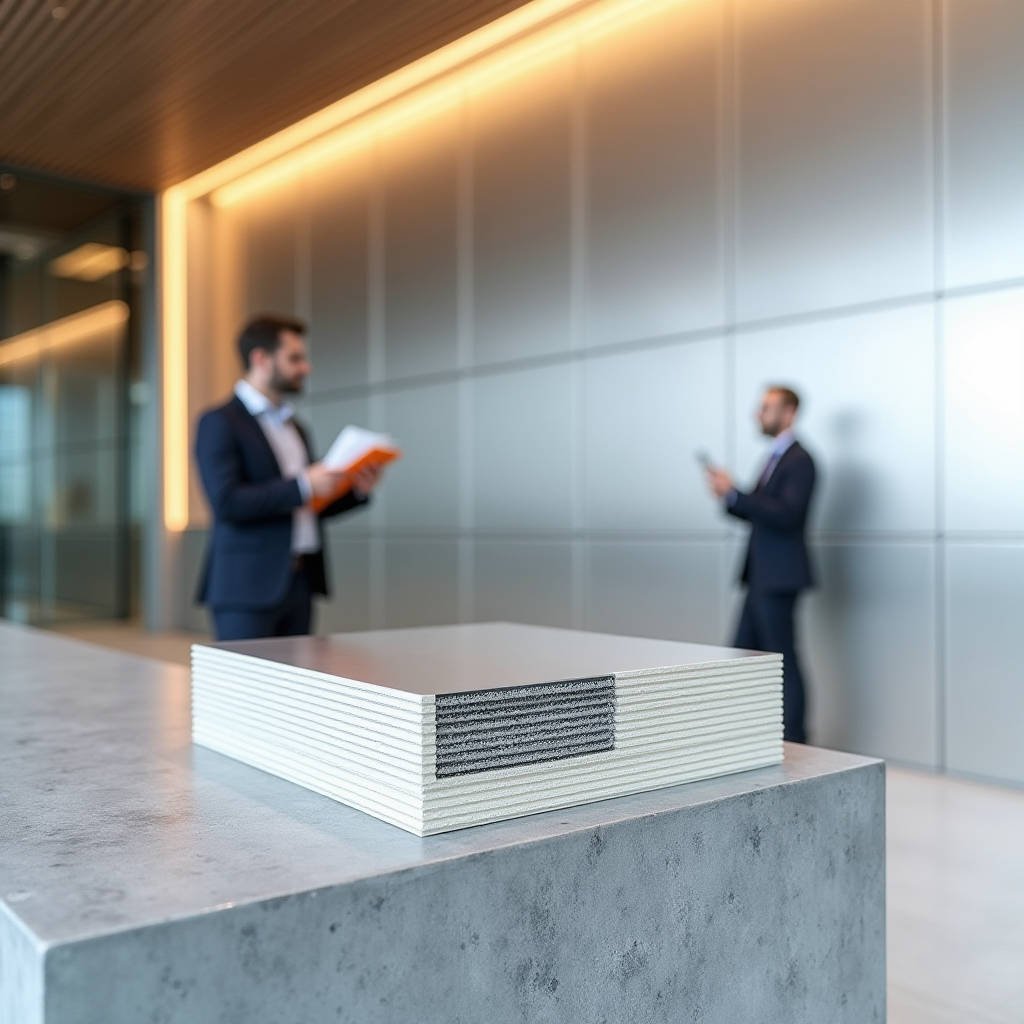
When a façade contractor first encounters a specification calling for interior aluminum panels, the immediate questions are rarely about aesthetics alone. They center on fire classification, gauge tolerances, and whether the mill finish will hold up inside a high-traffic lobby for 15 years without visible degradation. Procurement managers need to know that the 2.0mm or 2.5mm solid aluminium sheet specified on the drawing is exactly what lands on site — not a thinner substitute, not a composite core material passed off as solid. This article addresses those procurement realities directly, covering the technical benchmarks, coating systems, and supply chain considerations that determine whether interior aluminum panels perform as intended over the building's lifecycle.
What Gets Specified When Interior Aluminum Panels Enter the Drawing Set
Architects typically call out interior aluminum panels in three distinct applications: wall cladding for lobbies and atriums, column covers and beam wraps, and elevator cab interiors. Each application drives different gauge requirements. A 2.0mm solid aluminium sheet handles flat wall areas with standard stiffener spacing. Column wraps with tight radius bends often push the spec to 2.5mm or 3.0mm to prevent oil-canning and maintain flatness after fabrication. The specification sheet should always reference ASTM B209 for the base aluminium alloy — typically 1100, 3003, or 5052 depending on formability and strength requirements. 3003-H14 remains the workhorse for most interior applications, offering a balance of bendability and surface quality that fabricators appreciate.
What trips up some procurement teams is the gap between architectural intent and what's actually fabricatable. A 3.0mm panel with a 6mm return flange drawn at 90 degrees will crack unless the shop drawing accounts for the minimum bend radius — roughly 1.5 times material thickness for 3003 alloy. This is the kind of detail that separates a clean interior installation from one riddled with field modifications.
Field Note: When reviewing shop drawings for interior aluminum panels, check that the fabricator has specified the alloy and temper on every sheet. A drawing that simply says "aluminum panel" without alloy designation is a red flag. We've seen 1100 alloy substituted for 3003 on column covers — the softer material oil-canned within six months of installation, requiring full replacement at the contractor's expense.
Coating Decisions That Affect Both Budget and Lifespan
Interior aluminum panels don't face UV degradation the way exterior cladding does, but the coating selection still matters enormously. The two dominant paths are PVDF fluorocarbon (typically Kynar 500 or Hylar 5000 resin systems at 70% resin content) and polyester powder coating. PVDF on interior panels sounds like overkill until you consider the application: hospital corridors cleaned with aggressive disinfectants, airport terminals where panels get bumped by luggage carts, or high-humidity indoor pools where chloramines attack finishes. In these environments, a 2-coat PVDF system at 25–30 microns minimum dry film thickness provides chemical resistance that polyester simply cannot match.
For standard commercial interiors — office lobbies, retail spaces, convention centers — polyester powder coating at 60–80 microns delivers adequate durability at roughly 40% lower cost than PVDF. The trade-off is color stability. Polyester coatings can shift by Delta E 2–3 over five years under interior fluorescent lighting, which becomes visible on large uninterrupted wall planes. PVDF holds color within Delta E 1 over the same period. The specifier's decision should weigh the client's tolerance for gradual color drift against the upfront cost differential.
Futeng® has documented cases where their PVDF-coated interior aluminum panels in a Singapore hospital lobby showed zero measurable color shift after eight years of daily exposure to quaternary ammonium disinfectants — a testament to the Kynar 500 resin system's chemical inertness. This isn't marketing fluff; it's the result of resin chemistry that resists oxidation at a molecular level.
Fire Performance and Building Code Compliance
Solid aluminium cladding panels carry inherent fire advantages that procurement managers should understand when navigating code requirements. Pure aluminium (alloys 1100, 3003, 5052) is non-combustible per ASTM E136 and achieves an A1 classification under EN 13501-1. This is fundamentally different from aluminium composite panels, where the polyethylene core can contribute to fire spread — a distinction that has driven specification changes globally since the Grenfell Tower fire.
For interior applications, the relevant standards depend on jurisdiction. In North America, ASTM E84 (Surface Burning Characteristics) governs interior finish materials. Solid aluminium panels typically achieve Class A ratings with Flame Spread Index of 0 and Smoke Developed Index of 0–5. In the EU, EN 13501-1 classification A1 applies. In Australia, AS 1530.1 confirms non-combustibility. The key point for procurement: when a specification requires "non-combustible cladding," only solid aluminium panels — not ACP with fire-retardant cores — meet the strictest interpretation. Contractors submitting ACP on a non-combustible spec are risking rejection during submittal review.
Supply Chain Realities: Lead Times, MOQs, and Packaging
Interior aluminum panels procurement follows a rhythm that experienced buyers plan around. Standard lead times from Chinese manufacturers run 3–4 weeks for stock colors (RAL 9010, 9006, 7016) and 4–6 weeks for custom-matched colors requiring lab formulation. This assumes the factory has the specified gauge in inventory — 2.0mm and 2.5mm 3003-H14 are typically stocked, while 3.0mm may add 5–7 days for mill sourcing.
Minimum order quantities vary by factory size and setup. Smaller fabricators may require 100–200 square meters to start a production run. Larger mills serving the export market — Futeng® being one example — can process orders as low as 50 square meters for custom panel sizes, though the per-unit cost increases below 200 square meters due to setup amortization. For large-scale projects exceeding 5,000 square meters, lead times should factor in an additional 7–10 days for the coating line to maintain color consistency across multiple batches.
Packaging for export deserves its own line item in the purchase order. Interior panels with a Class A finish require PE film protection on the exposed surface, applied immediately after the coating cures. Panels should be packed in wooden crates with foam separators between each sheet. CIF shipments to the Middle East or Europe typically require 25–35 days transit. The packaging spec should explicitly state that panels must arrive with the protective film intact and no surface scratches exceeding 0.1mm depth — anything deeper will telegraph through the coating and show under interior lighting.
Pro Tip: Always specify that the protective film is UV-stabilized, even for interior panels. Crates can sit on job sites for weeks, and standard PE film degrades under indirect sunlight, leaving adhesive residue that requires solvent cleaning. The cost difference is negligible — roughly $0.15 per square meter.
Comparing Interior Aluminum Panel Finishes: A Practical Reference
The table below summarizes the key decision factors for the three most common interior aluminum panel finish systems. Use this as a quick reference during specification review or supplier qualification.
| Parameter | PVDF (Kynar 500) | Polyester Powder Coat | Anodized (Clear/Satin) |
|---|---|---|---|
| Dry Film Thickness | 25–35 microns (2-coat) | 60–80 microns | 10–25 microns (oxide layer) |
| Color Retention (5 yr) | Delta E ≤ 1.0 | Delta E 2.0–3.5 | N/A (metallic only) |
| Chemical Resistance | Excellent — resists acids, alkalis, solvents | Moderate — susceptible to strong cleaners | Poor — attacked by alkaline cleaners |
| Relative Cost (per m²) | 100% (baseline) | 55–65% of PVDF | 80–90% of PVDF |
| Scratch Resistance | Good (HB–H pencil hardness) | Very good (H–2H pencil hardness) | Poor — oxide layer is brittle |
| Typical Interior Application | Healthcare, airports, pools, high-traffic lobbies | Office interiors, retail, ceilings | Decorative accents, column covers |
| Repairability On-Site | Difficult — requires factory recoating | Moderate — touch-up kits available | Impossible — must replace panel |
Fabrication Tolerances That Show Up During Installation
The difference between interior aluminum panels that install smoothly and those that require field trimming comes down to fabrication tolerances. The industry benchmark for panel dimensions is ±0.5mm on length and width, with diagonal tolerance of ±1.0mm for panels up to 1,200mm. For larger panels — 1,500mm and above — the diagonal tolerance widens to ±1.5mm. These numbers come from AAMA 609 and 610 performance standards for architectural aluminum flat panels.
Flatness tolerances matter more for interior applications than exterior ones because interior lighting — especially grazing wall-wash fixtures — highlights even minor deviations. The standard tolerance is 0.8% of the panel's diagonal dimension. On a 1,500mm diagonal panel, that's 1.2mm of allowable deviation. For premium interior applications, some specifications tighten this to 0.5%, which requires the fabricator to use a precision leveling line before cutting and routing. This adds roughly 10–15% to the panel cost but eliminates the waviness that wall-wash lighting exposes.
Stiffener attachment is another area where fabrication quality varies. Stiffeners should be mechanically attached using aluminum MIG welding or structural adhesive, not simply spot-welded at a few points. The spacing between stiffeners typically runs 300–400mm on center for 2.0mm panels and can extend to 500mm for 2.5mm and 3.0mm gauges. The stiffener material should match the panel alloy to prevent galvanic corrosion — a detail that's often overlooked in interior specifications but matters in humid environments.
Quality Control: What to Inspect Before Shipment
Third-party inspection before shipment catches problems that become expensive change orders. The inspection checklist for interior aluminum panels should include coating thickness measurement using a calibrated eddy-current gauge per ISO 2360, color verification using a spectrophotometer with Delta E tolerance of ≤1.0 against the approved sample, and adhesion testing per ASTM D3359 (cross-hatch method, requiring classification 4B or 5B).
Surface quality inspection under controlled lighting — 500 lux minimum, simulating typical interior illumination — reveals scratches, orange peel, and color mottling that might not be visible under factory fluorescent lights. The acceptance criteria should reference ASTM D523 for gloss measurement: panels within a single batch should not vary by more than ±5 gloss units at 60° geometry.
For large projects, the specifier should require a pre-production sample — typically 2–3 full-size panels fabricated with the actual tooling that will run the production batch. This sample confirms not just color and finish but also the accuracy of the bending, routing, and stiffener attachment processes. Approving the pre-production sample in writing before the factory cuts the full order is standard practice among experienced procurement managers.
Cost Drivers Beyond the Square Meter Price
Bidding interior aluminum panels on a per-square-meter basis alone misses the variables that swing total project cost by 20–30%. Panel size is the biggest lever: standard sheet sizes (1,220mm × 2,440mm) yield minimal waste, while custom dimensions can push material utilization below 70%. Perforation patterns add 15–25% to fabrication cost depending on open area percentage and hole density. Edge returns, folded corners, and integrated stiffener channels all add labor hours that compound across thousands of panels.
Freight costs for interior panels are less than exterior curtain wall panels because interior panels are typically smaller and lighter — but the packaging requirements are more stringent. A single scratched panel on a lobby feature wall can hold up the entire interior fit-out schedule. Budgeting 3–5% of the panel cost for premium packaging and another 2–3% for third-party inspection is prudent for projects where schedule risk outweighs the incremental cost.
According to industry data from Statista, the global architectural metal cladding market has grown steadily, with solid aluminium products capturing an increasing share as fire safety regulations tighten worldwide. This trend reinforces the importance of sourcing interior aluminum panels from suppliers with documented quality systems — ISO 9001 certification is the baseline, but look for ISO 14001 and OHSAS 18001 as indicators of a well-managed factory that's less likely to cut corners on coating thickness or alloy grade.
Specification Language That Protects the Project
Weak specification language invites substitution. A strong interior aluminum panels specification includes these elements: alloy and temper (e.g., "3003-H14 per ASTM B209"), gauge with tolerance (e.g., "2.0mm nominal, -0/+0.1mm"), coating system with resin brand (e.g., "PVDF coating with 70% Kynar 500 resin, 2-coat system, 25 microns minimum DFT"), and flatness tolerance (e.g., "0.8% of diagonal maximum deviation").
The specification should also require the fabricator to submit mill test reports for the aluminium coil, coating batch certificates, and a written warranty covering coating adhesion and color stability for a defined period — typically 10 years for PVDF interior applications and 5 years for polyester powder coat. These documents create a paper trail that protects the contractor and the building owner if performance issues arise years after installation.
For projects following international standards, referencing ISO 12944 for corrosion protection and EN 485 for aluminium sheet tolerances provides a globally recognized framework that suppliers in China, Europe, and the Middle East can all work to. This is particularly important when interior aluminum panels are sourced from one region and installed in another, where local building inspectors may not be familiar with the supplier's domestic standards.
Getting interior aluminum panels right comes down to treating the specification not as a formality but as a technical document that defines every parameter affecting performance. The alloy, the gauge, the coating chemistry, the fabrication tolerances, and the packaging — each decision point has a cost implication and a performance consequence. Procurement teams that understand these interdependencies make better sourcing decisions, and contractors that enforce the specification during submittal review avoid the expensive discovery that what was ordered isn't what arrived on site.