Exterior Aluminum Panels Cost Drivers Every Façade Contractor Must Calculate Before Tendering
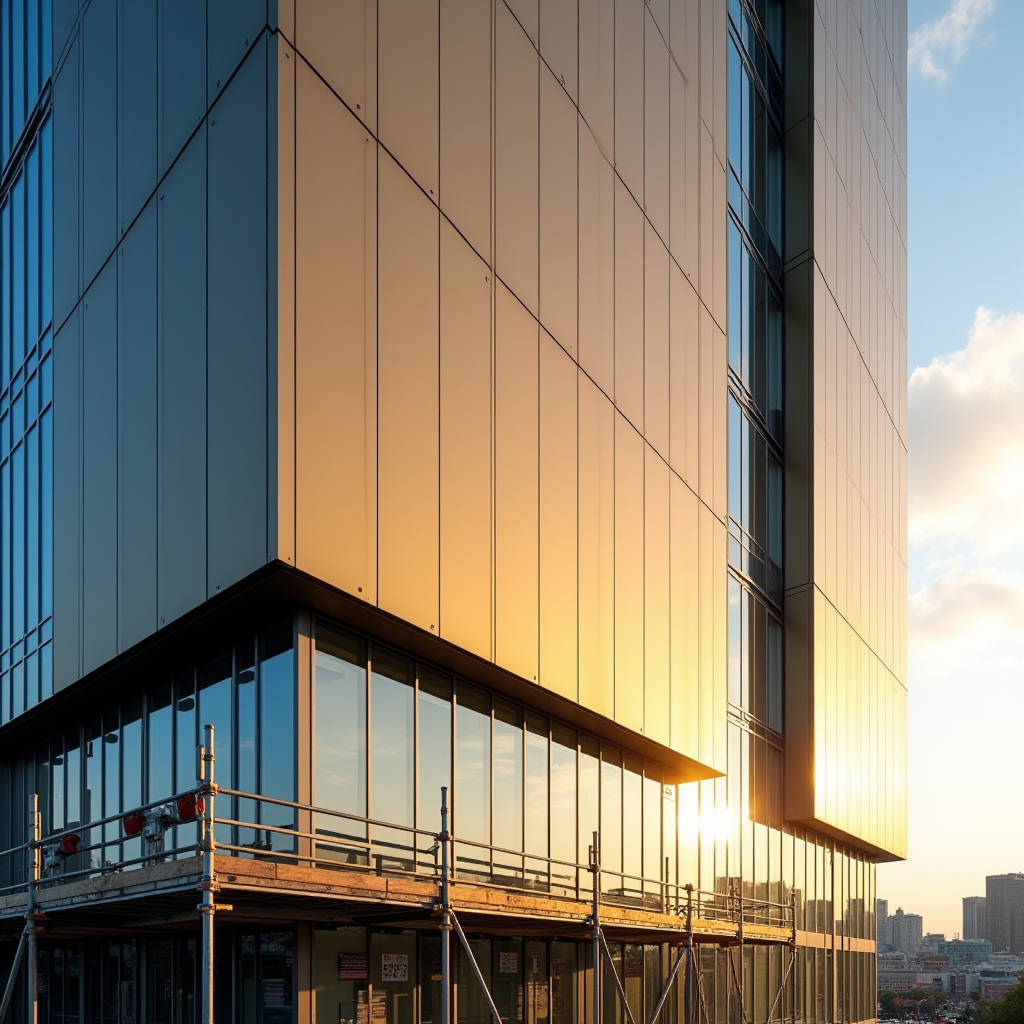
When a façade contractor in Dubai or a procurement lead in Frankfurt starts evaluating exterior aluminum panels for a high-rise envelope, the first question rarely hits the spec sheet. It hits the spreadsheet. What lands on the desk is a line-item cost per square meter that must hold up across 15,000 or 50,000 square meters of cladding surface. And that number shifts fast depending on alloy grade, paint system, panel thickness, and where the factory sits relative to the job site.
This article breaks down the real cost drivers behind solid aluminium cladding panels — not ACP, not honeycomb composites — across six procurement scenarios that mirror actual tender requirements. The numbers come from factory pricing data, freight logistics, and on-site feedback collected across projects in the Middle East, Southeast Asia, and Europe. No marketing fluff. Just the variables that determine whether your bid stays competitive or bleeds margin.
What Actually Drives the Price of Exterior Aluminum Panels
Most tender documents ask for "aluminium cladding" without specifying enough detail to lock pricing. That ambiguity costs money. A 2.0mm PVDF-coated panel with a simple flat profile runs a completely different cost structure than a 3.0mm unit with radiused edges, custom perforation, and a four-coat metallic finish. The procurement team that understands these variables before the RFQ stage controls the budget. The one that doesn't gets surprised at the revision stage.
Alloy Selection: 1100, 3003, or 5005
The base metal matters. 1100-H14 alloy offers the lowest raw material cost and works for interior liners or soffits where structural demands are minimal. But most exterior aluminum panels on commercial façades run on 3003-H14 or 5005-H14. The 3003 series adds manganese for moderate strength and better corrosion resistance — it's the workhorse for ventilated rainscreen systems. 5005-H14 pushes stiffness higher and accepts anodized finishes more uniformly, which matters when the architect specifies a consistent matte metallic look across 200 panels.
Price difference: 3003 typically runs 3–5% above 1100 at the mill level. 5005 adds another 4–7%. On a 20,000 m² project, that delta represents a line item worth negotiating early.
Thickness: 2.0mm vs 2.5mm vs 3.0mm
Panel thickness directly impacts material weight, which in turn affects freight cost, structural loading, and the supporting subframe design. A 2.0mm solid aluminium panel weighs roughly 5.4 kg/m². Step up to 2.5mm and you're at 6.75 kg/m². At 3.0mm, the panel hits 8.1 kg/m² — a 50% weight increase from the 2.0mm baseline.
For a curtain wall panel on a 40-story tower, that weight difference cascades into the mullion sizing, bracket spacing, and anchor load calculations. The structural engineer may need to upgrade the entire support system. The panel itself costs more, but the hidden cost lives in the subframe steel or aluminium extrusions. This is why many specification writers land on 2.5mm as the practical sweet spot: enough rigidity to minimize oil-canning without overloading the structure.
Field Note: On a recent mixed-use tower in Jeddah, the contractor switched from 3.0mm to 2.5mm solid aluminium cladding panels after wind load calculations showed the subframe could drop from 4mm to 3mm steel brackets. The panel cost saving was modest. The subframe saving was nearly 18% on the total envelope package. Always run the full system calculation, not just the skin cost.
Coating Systems and Their Cost Implications
Paint isn't paint. The coating system on exterior aluminum panels determines both upfront cost and long-term liability. Three systems dominate the global market, and each carries a distinct price point and performance profile.
PVDF Fluorocarbon: Kynar 500 vs. FEVE
The industry standard for high-end architectural cladding remains PVDF (polyvinylidene fluoride) coatings, specifically those based on Kynar 500 resin at a minimum 70% resin-to-pigment ratio. A three-coat PVDF system — primer, color coat, clear topcoat — delivers 30+ years of color retention and chalk resistance in most climate zones. Total dry film thickness typically runs 30–40 microns, with the clear coat adding UV shielding that metallic and pearlescent finishes absolutely require.
FEVE-based fluoropolymer coatings offer an alternative with slightly different application characteristics. They can achieve similar weathering performance but may require different curing parameters. The cost difference between Kynar 500 PVDF and FEVE systems runs about 8–12% depending on the color and the applicator's line setup. For projects specifying "PVDF coating" generically, the procurement team should clarify which resin system the quote includes.
Polyester Powder Coating
For interior applications or budget-driven exterior projects in mild climates, super-durable polyester powder coating provides a serviceable alternative at roughly 40–50% of the PVDF cost. Film thickness typically lands at 60–80 microns. The trade-off: color shift becomes noticeable after 5–7 years of UV exposure, and gloss retention drops faster than PVDF. Some specifiers use polyester on sheltered soffits and PVDF on the exposed façade to balance budget and performance.
Anodizing
Anodized finishes on 5005 alloy create a metallic surface that architects prize for its depth and uniformity. The process builds an aluminum oxide layer 15–25 microns thick that's integral to the metal itself — no adhesion issues, no peeling. Cost runs comparable to mid-range PVDF, but the catch is batch-to-batch color consistency. Anodizing tanks produce slight variations that become visible when panels from different production runs meet at a corner. For large façades, the specifier should mandate single-batch processing or accept a defined Delta E tolerance.
| Coating System | Typical Cost Index (vs. 3-coat PVDF) | Film Thickness | Expected Service Life (Exterior) | Best Application |
|---|---|---|---|---|
| 3-Coat PVDF (Kynar 500) | 100 (baseline) | 30–40 µm | 25–30 years | High-rise curtain wall, coastal façades |
| 2-Coat PVDF | 85–90 | 25–30 µm | 20–25 years | Mid-rise commercial, inland projects |
| FEVE Fluoropolymer | 92–108 | 30–40 µm | 25–30 years | Alternative to Kynar 500 spec |
| Super-Durable Polyester Powder | 40–55 | 60–80 µm | 10–15 years | Budget exterior, sheltered areas |
| Anodized (5005 Alloy) | 90–105 | 15–25 µm | 20–30 years | Premium architectural, uniform metallic look |
Fabrication Complexity: Where Labor Cost Multiplies
A flat rectangular panel costs X. The same panel with folded returns, stiffener ribs, and punched perforations costs 2X or more. Fabrication labor is the single largest variable inside the factory gate, and it's the one procurement managers most often underestimate.
Standard vs. Complex Geometries
Simple panels — flat sheets cut to size with folded edges on a CNC press brake — move through production quickly. A well-equipped factory with automated cutting and bending lines can process 800–1,200 m² per shift. But the moment the drawing calls for radiused corners, compound curves, or integrated sunshade fins, the throughput drops dramatically. A panel with a 200mm-radius curved edge might require a dedicated forming station and three times the labor minutes of a standard flat panel.
Perforated panels add another layer. The hole pattern — diameter, spacing, open area percentage — determines whether the panel runs on a turret punch (fast, limited to standard patterns) or requires CNC routing (slower, handles custom designs). A 30% open-area perforation pattern with 6mm holes on 12mm staggered centers can triple the machine time compared to a solid panel of the same dimensions.
Pro Tip: When tendering perforated exterior aluminum panels, always request the supplier's calculation of open area percentage and machine time estimate. Some factories quote a flat per-square-meter fabrication rate that doesn't reflect actual CNC hours. That leads to cost overruns when the pattern turns out denser than the estimator assumed. Ask for the CAM file preview.
Panel Size and Material Yield
Standard aluminium coil widths — typically 1,250mm, 1,500mm, and 2,000mm — dictate material yield. A panel dimension of 1,220mm x 3,050mm nests efficiently on a 1,250mm-wide coil. Change that to 1,350mm x 3,200mm and suddenly the factory is cutting from 1,500mm stock with significant drop-off waste. Material yield drops from 92% to maybe 78%. That waste gets priced into the quote. Smart specification writing considers standard coil widths when setting panel dimensions.
Freight, Packaging, and the Hidden Logistics Cost
Solid aluminium cladding panels travel badly if packed wrong. A scratched PVDF surface on a 3m x 1.5m panel isn't a touch-up job — it's a replacement. The logistics cost embedded in any international procurement of exterior aluminum panels breaks into three buckets: packaging materials, container optimization, and damage risk.
Sea-Worthy Packaging Standards
Standard export packaging for solid aluminium panels involves interleaving each panel with polyethylene foam or kraft paper, stacking on A-frame steel pallets, wrapping the entire unit in VCI (volatile corrosion inhibitor) film, and then boxing with plywood crating. For FOB shipments from East Asian factories to Middle Eastern or European ports, this packaging adds roughly $1.50–$3.00 per square meter depending on panel size and order volume.
Some contractors try to save on packaging. The result: panels arrive at the site with edge damage, surface scratches, or — worse — moisture trapped between panels that causes white rust on the aluminium surface. The replacement cost and schedule delay far exceed the packaging saving.
Container Loading and Freight Cost
A 40-foot high-cube container can hold roughly 1,800–2,200 m² of solid aluminium cladding panels depending on panel dimensions and packaging configuration. At typical ocean freight rates (which fluctuate wildly — $2,000 to $8,000 per container depending on the route and market conditions), the per-square-meter freight cost ranges from $1.00 to $4.50. This is why factory location relative to the project site matters enormously. A panel sourced from a factory close to the port with competitive container freight rates can deliver a 12–15% total cost advantage over the same specification sourced from a landlocked production base.
For projects in the GCC region, factories with established shipping routes to Jebel Ali or Dammam ports often provide the most predictable landed costs. Similarly, European projects benefit from suppliers with regular sailings to Rotterdam, Hamburg, or Antwerp. Lead time for standard production runs typically spans 20–30 days, with ocean transit adding another 15–25 days depending on the route.
Supplier Evaluation Beyond the Unit Price
The lowest per-square-meter quote rarely delivers the lowest total project cost. A supplier's real value emerges from quality consistency, documentation rigor, and the ability to handle revision cycles without blowing the schedule.
Quality Documentation and Traceability
Reputable manufacturers of solid aluminium cladding panels provide mill test certificates (MTC) for the aluminium coil, coating batch certificates showing film thickness and adhesion test results, and dimensional inspection reports for each production lot. These documents matter during the submittal review process and again at close-out. A supplier that can't produce traceable documentation creates risk for the contractor — and the contractor's retention money.
Key standards to reference in procurement specifications include ASTM B209 for aluminium sheet and plate, ISO 12944 for corrosion protection, and AAMA 2605 for high-performance PVDF coatings. Suppliers like Futeng® that maintain ISO 9001-certified production lines and in-house testing labs can typically provide this documentation package without delays.
Sample Approval and Color Matching
Before production starts, the contractor submits samples for architect approval. The critical metric here is Delta E — the numerical difference between the sample color and the specified standard. For solid-colour PVDF coatings, a Delta E below 1.0 is generally acceptable. For metallic finishes, the tolerance may widen to 1.5–2.0 because metallic flake orientation creates inherent variation. A factory that consistently hits Delta E ≤ 0.8 on solid colors saves the contractor weeks of back-and-forth during the approval cycle.
Minimum Order Quantity and Production Flexibility
Most solid aluminium panel factories set MOQs around 200–500 m² per color and specification. Smaller orders incur setup charges that inflate the unit cost. For large-scale projects exceeding 10,000 m², the MOQ becomes irrelevant, but production scheduling becomes critical. A factory running multiple production lines can allocate dedicated capacity to a single large project, reducing the risk of batch-to-batch color variation. Ask the supplier about their peak monthly capacity and current order book before placing a deposit.
Regional Cost Benchmarks: What the Market Actually Pays
Pricing for exterior aluminum panels varies by region, driven by local aluminium ingot costs, labor rates, and competitive dynamics. Based on factory pricing data and tender analysis across key markets, here are approximate benchmarks for standard 2.5mm solid aluminium cladding panels with 3-coat PVDF coating, flat profile, no perforation:
- East Asia (FOB): $28–$38/m² for standard colors; $35–$48/m² for metallic or custom colors
- Middle East (CFR): $35–$45/m² landed, reflecting freight from Asian production bases
- Europe (DDP): €40–€55/m² depending on local fabrication vs. imported panels
- North America: $42–$58/m² for domestically fabricated panels with AAMA 2605 compliance
These ranges assume order quantities above 5,000 m². Smaller orders will push toward the upper end or beyond. Complex geometries, perforation, and special finishes add 30–100% to the base fabrication cost depending on the specific requirements.
Making the Procurement Decision
Choosing exterior aluminum panels for a commercial façade involves more than comparing unit prices. The decision should weigh alloy grade, coating system, fabrication complexity, packaging standards, freight logistics, and the supplier's quality documentation track record. A panel that saves $3/m² on the factory quote but arrives with inconsistent color, surface defects, or missing test certificates costs far more in project delays and reputation damage than the upfront saving ever justified.
The contractors who consistently win competitive bids on cladding packages understand this total-cost equation. They specify clearly, request detailed breakdowns, verify factory certifications, and build realistic lead times into their program. They also know that solid aluminium cladding panels — properly specified, properly coated, and properly installed — deliver a façade that performs for three decades with minimal maintenance. That long-term value proposition matters more than any single line on the spreadsheet.