Mesh Aluminum Panel Specifying Perforation Coating and Structural Requirements for Façade Contractors
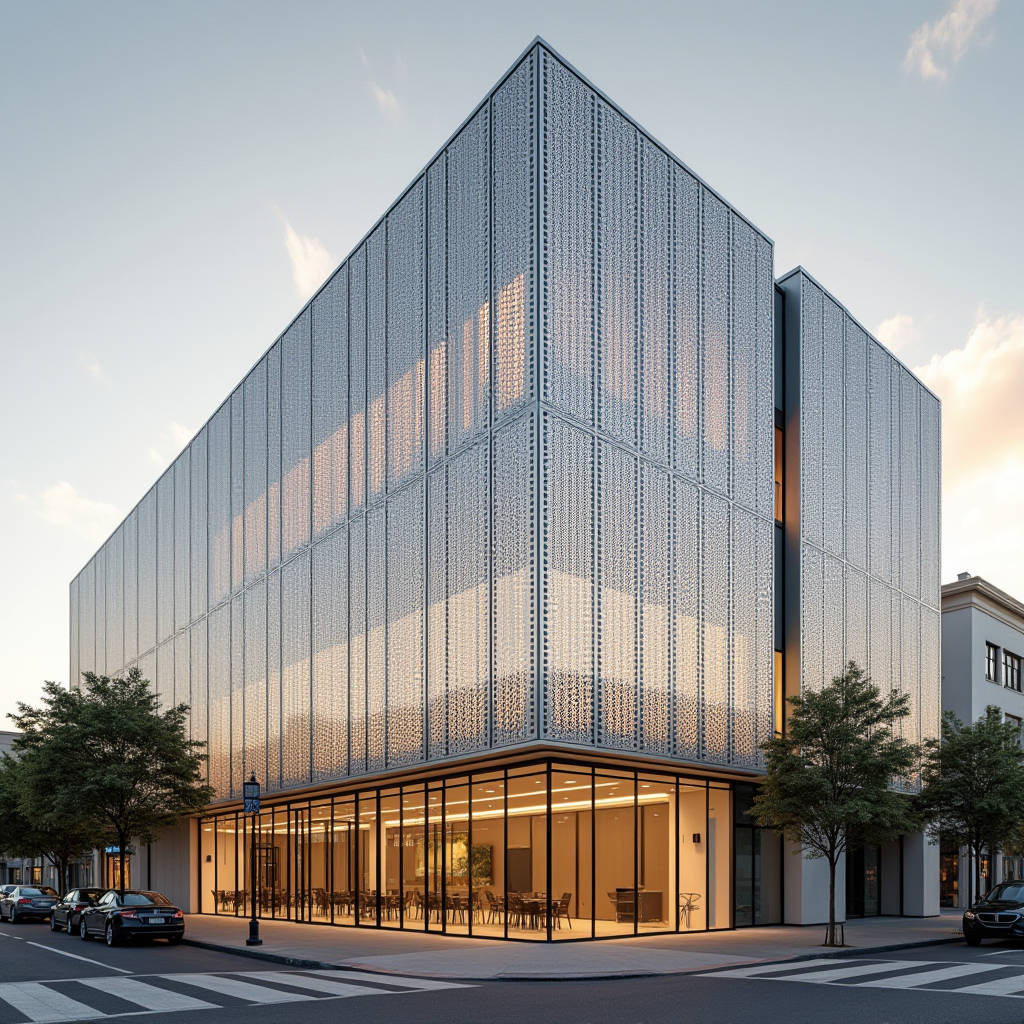
When a façade contractor asks about mesh aluminum panel, the real question is rarely about the product name itself. They are asking whether a perforated solid aluminium cladding panel can deliver the right open-area ratio, withstand wind load on a 40-story tower, and arrive on site without a single scratch that would trigger a rejection from the architect. The answer depends on three things: the alloy, the perforation method, and the coating system. Get any one wrong, and the entire batch can end up in a dispute that costs weeks of schedule delay.
What a Mesh Aluminum Panel Actually Is in Engineering Terms
In procurement documents and shop drawings, a mesh aluminum panel is a solid aluminium sheet — typically alloy 3003, 3004, or 5005 — that has been CNC-punched or laser-cut with a pattern of holes, slots, or custom geometries. It is not an expanded metal product. It is not a woven wire mesh. It is a monolithic sheet that starts as a flat coil, gets leveled, punched, formed, and coated. The term "mesh" refers to the visual effect of the perforation pattern, not the structural category.
The base material is always a solid aluminium cladding panel, which means the gauge is governed by project wind load calculations, not by a manufacturer's default stock. Common thicknesses for perforated panels are 2.0mm, 2.5mm, and 3.0mm. A 1.5mm sheet with 40% open area will flutter under moderate wind. For any panel exceeding 1.2m in width with perforation rates above 30%, 2.5mm is the practical minimum. We have seen 2.0mm panels pass structural calculations on low-rise buildings, but the margin is thin once you factor in edge stiffeners and the reduced stiffness from the holes themselves.
Field Note: When specifying perforated panels, always request the structural calculation to be run on the net section — the actual remaining aluminium after perforation — not the gross panel dimensions. Some fabricators run the calc on the full sheet and then apply the perforation pattern, which overestimates the panel's bending resistance by 15–25%. This is a common source of on-site deflection problems.
Perforation Methods and Their Effect on Panel Performance
There are three fabrication routes for producing a mesh aluminum panel, and the choice affects everything from lead time to edge quality to the final installed appearance.
CNC Turret Punching
Turret punching uses a programmable punch press with interchangeable tooling. It is the most common method for standard round holes between 3mm and 50mm diameter. The process is fast — a 1.2m × 2.4m panel with 30% open area in a staggered 8mm hole pattern can be punched in under 4 minutes. The downside is that each punch stroke leaves a slight burr on the reverse side. For exterior façade panels, the burr must be removed before coating, or the PVDF film will not adhere properly at the hole edges. This is a quality control point that separates experienced suppliers from commodity fabricators.
Laser Cutting
Laser-cut mesh aluminum panels offer cleaner edges and the ability to produce non-circular geometries — squares, hexagons, custom logos, parametric patterns. The heat-affected zone is minimal with modern fiber lasers, typically under 0.1mm. The trade-off is speed: laser cutting a complex pattern on a 3mm panel can take 15–25 minutes per sheet. For a project requiring 2,000 panels, this adds up. Laser cutting is best reserved for feature areas — entrance canopies, lobby screens, architectural accent walls — where the visual impact justifies the cost and lead time.
Stamping with Progressive Dies
For high-volume repetitive patterns, progressive die stamping is the most economical route. The tooling cost is significant — a single die set can run $8,000–$15,000 — but the per-panel cost drops dramatically once the die is amortized over 5,000+ units. This method is common in stadium cladding, parking garage screens, and large-scale commercial façades where the same panel type repeats across thousands of square meters.
Coating Systems for Perforated Solid Aluminium Panels
Coating a mesh aluminum panel is fundamentally different from coating a solid sheet. The hole edges must be covered, and the coating must not bridge or clog the perforations. This requires a specific spray technique and a coating system designed for edge coverage.
The industry standard for exterior architectural applications is PVDF (polyvinylidene fluoride) coating, typically a 3-coat or 4-coat system. The relevant specification is AAMA 2605, which requires a minimum total dry film thickness of 30μm for a 3-coat system and 35μm for a 4-coat system. For perforated panels, the 4-coat system is strongly recommended because the primer + barrier coat + color coat + clear coat sequence provides the best edge protection at the hole perimeters.
Kynar 500® resin must constitute at least 70% of the fluoropolymer content in the color coat. This is not a marketing claim — it is a chemical requirement verified by batch testing. Suppliers who cut the Kynar ratio below 70% will show color fade within 3–5 years, particularly in high-UV environments like the Middle East, Southeast Asia, and Australia. For projects in coastal zones, the pretreatment step becomes even more critical: a chromate conversion coating per ASTM D1730, followed by a minimum 5μm epoxy primer, is the minimum acceptable baseline.
| Property | 3-Coat PVDF System | 4-Coat PVDF System | FEVE Fluoropolymer (Alternative) |
|---|---|---|---|
| Total DFT (μm) | 30–35 | 35–45 | 30–40 |
| Edge Coverage on Perforations | Moderate | Excellent | Good |
| UV Resistance (AAMA 2605) | Passes | Passes with margin | Passes |
| Recommended for Coastal Projects | Not ideal | Yes | Yes (check salt spray rating) |
| Relative Cost Index | 1.0 (baseline) | 1.25–1.35 | 1.15–1.25 |
| Typical Warranty Duration | 15–20 years | 20–25 years | 20–25 years |
Open Area Ratio and Its Structural Consequences
The open area ratio — the percentage of the panel surface removed by perforation — is the single most important design parameter for a mesh aluminum panel. It determines the visual transparency, the ventilation performance, the wind load on the supporting structure, and the panel's own stiffness.
In practice, open area ratios for architectural façades fall into three bands:
- 10–20% open area: Used for decorative screening where the primary function is visual texture rather than transparency. The panel retains most of its bending stiffness. Standard 2.0mm gauge is often sufficient for spans up to 1.5m with edge stiffeners.
- 20–35% open area: The most common range for ventilated rainscreen façades and parking structure cladding. The panel provides partial visibility and significant airflow. Minimum 2.5mm gauge recommended. Wind tunnel testing should be considered for buildings above 60m.
- 35–50% open area: Used for acoustic screens, solar shading, and double-skin façades. The panel acts more like a screen than a solid cladding element. 3.0mm gauge is the practical minimum. The supporting subframe must be designed to carry the full wind load independently, because the panel contributes very little to the overall stiffness of the assembly.
Open area above 50% is achievable but enters the territory where the panel becomes fragile during handling and installation. At 60% open area, a 3.0mm panel with 10mm round holes on 12mm staggered centers will have web widths of just 2mm between adjacent holes. These narrow webs can buckle during bending or snap during transport. If the design calls for extreme open area, consider splitting the function: use a structural grid to carry the load and attach lightweight perforated infill panels.
Procurement Specifications: What to Write in the Tender
A well-written specification for mesh aluminum panel procurement prevents substitution disputes and ensures all bidders price the same scope. Based on projects we have supplied across Europe, the Middle East, and Southeast Asia, here are the key clauses that should appear in every tender document:
Material Specification
- Alloy: 3003-H14, 3004-H16, or 5005-H14 per ASTM B209
- Temper: H14 minimum for flat panels; H16 for panels with complex forming
- Thickness tolerance: ±0.08mm for 2.0mm gauge; ±0.10mm for 2.5mm and 3.0mm
- Perforation method: CNC turret punch or laser cut (state which is acceptable)
- Burr removal: All hole edges deburred to <0.05mm burr height before coating
Coating Specification
- System: 4-coat PVDF per AAMA 2605
- Kynar 500® or Hylar 5000® resin: minimum 70% of fluoropolymer content
- Pretreatment: Chrome phosphate conversion coating per ASTM D1730, or chrome-free alternative per Qualicoat specifications for EU projects
- Color: RAL or custom match; Delta E ≤ 1.5 for production batch vs. approved sample
- Gloss: 25–35 GU at 60° geometry unless otherwise specified
Fabrication Tolerances
- Panel dimensions: ±1.0mm on length and width
- Diagonal difference: ≤ 2.0mm
- Flatness: ≤ 0.5% of the panel's longest dimension
- Hole position accuracy: ±0.3mm from CAD pattern
Pro Tip: Always request a full-size mock-up panel before approving production. A 300mm × 300mm sample swatch does not reveal how the perforation pattern reads at full scale, nor does it show whether the coating coverage is uniform across a 2.4m sheet. The mock-up should be the actual panel size, with the actual coating system, mounted on a section of the actual subframe. This costs $300–$800 and saves $30,000–$80,000 in rework.
Packaging and Logistics for International Shipments
Perforated panels are more vulnerable to transport damage than solid sheets. The hole edges are stress concentrators. A panel that gets bent during handling will crack at the perforation lines, not at the solid edges. Packaging must be designed accordingly.
For FOB and CIF shipments, the standard packaging protocol for mesh aluminum panels includes:
- Each panel individually wrapped in PE film (minimum 40μm thickness) to prevent surface abrasion
- Interleaving with 3mm corrugated cardboard or foam sheet between adjacent panels
- Stacked on A-grade fumigated plywood pallets with edge protection angles
- Maximum stack height: 30 panels per pallet for 2.0mm gauge; 20 panels for 3.0mm gauge
- Full perimeter strapping with polyester straps (not steel, which can cut into panel edges)
- Container loading: pallets secured with dunnage bags; no direct contact between pallet and container wall
For projects in the Middle East during summer months, an additional precaution is necessary: the container interior temperature can exceed 65°C, which softens the PE film and can cause it to stick to the PVDF surface. Specify a release film interlayer for shipments to GCC countries between May and October.
Lead times for a typical 3,000m² mesh aluminum panel order run 4–6 weeks from approved shop drawings and color sample sign-off. This includes 2–3 weeks for material procurement (coil sourcing), 1–2 weeks for punching and forming, 1 week for coating, and 1 week for packaging and container loading. Rush orders can be compressed to 3 weeks with premium charges of 15–25%.
Installation Considerations That Affect Panel Design
The design of a mesh aluminum panel cannot be separated from its installation method. The perforation pattern interacts with the subframe in ways that solid panels do not. A few practical points that should be resolved during the shop drawing phase:
Subframe visibility. With open areas above 25%, the subframe behind the panel becomes visible. If the subframe is dark-colored galvanized steel and the panel is light silver metallic, the contrast will be obvious. Either specify a dark subframe finish, or design the perforation pattern so the subframe members align with unperforated zones of the panel.
Fastener placement. Rivets and screws cannot be placed in perforated areas — there is no material to fasten into. The panel's perimeter flange and any intermediate stiffeners must be designed with unperforated zones at all attachment points. This is obvious to experienced detailers but is frequently overlooked when the architect supplies a perforation pattern that runs edge-to-edge on the concept drawings.
Thermal movement. Aluminium expands at approximately 0.024mm per meter per degree Celsius. A 3m panel experiencing a 50°C temperature swing will expand 3.6mm. For perforated panels, the expansion is not uniform across the panel because the remaining aluminium web pattern creates differential stiffness. The fixing system must accommodate this movement. Use slotted holes at one end of each panel, and ensure the sealant joints are sized for the calculated movement range.
Quality Control Checks Before Shipment
Before accepting a production batch of mesh aluminum panels, the following QC checks should be performed and documented. A reputable supplier — such as Futeng®, which has supplied perforated solid aluminium cladding panels to projects across four continents — will provide a full inspection report with each shipment.
- Dimensional check: Random sample of 10% of panels measured for length, width, diagonal, and flatness against the approved shop drawings
- Coating thickness: DFT gauge readings at 5 points per panel, including at least 2 measurements at hole edges, per ASTM D7091
- Coating adhesion: Cross-hatch test per ASTM D3359, Method B; rating of 4B or 5B required
- Color consistency: Spectrophotometer reading; Delta E ≤ 1.5 across the entire batch
- Perforation accuracy: Overlay check of hole pattern against CAD file using a go/no-go template on 5% of panels
- Edge burr check: Visual inspection under 10× magnification on sample panels; no burr exceeding 0.05mm
For reference, the full AAMA 2605 specification for high-performance organic coatings on aluminium extrusions and panels is available at AAMA 2605 Standard. The ASTM B209 standard for aluminium and aluminium-alloy sheet and plate can be found at ASTM B209.
Cost Drivers and Budgeting Realities
Pricing for mesh aluminum panel varies significantly based on four primary factors. Understanding these helps procurement managers evaluate bids intelligently rather than simply comparing per-square-meter prices.
Perforation complexity. A standard staggered round hole pattern at 20% open area adds roughly $8–$15/m² to the base panel cost. A custom parametric pattern with variable hole sizes, laser-cut, at 35% open area can add $40–$70/m². The cost difference is driven by machine time, not material — the removed aluminium has minimal scrap value.
Panel size. Panels larger than 1.5m in any dimension require special handling equipment and have higher scrap rates during fabrication. The sweet spot for cost efficiency is panels between 0.8m and 1.2m in width, which can be processed on standard CNC turret punch machines without repositioning.
Coating color. Standard RAL colors in a 3-coat PVDF system are the baseline. Metallic and mica finishes require a 4-coat system and add 20–30% to the coating cost. Custom color matching to an architect-supplied sample adds a one-time lab fee of $500–$1,200 plus a 10–15% premium on the coating cost for the batch.
Order volume. The minimum order quantity (MOQ) for a custom mesh aluminum panel production run is typically 300–500m². Below this threshold, setup costs (machine programming, color matching, packaging) are amortized over too few square meters, and the per-unit price rises sharply. For projects under 200m², expect a 30–50% price premium over the standard rate.
For broader market context on aluminium pricing trends, the London Metal Exchange provides benchmark pricing data at LME Aluminium, and the Aluminium Association publishes industry statistics relevant to construction applications at The Aluminum Association.
Common Failure Modes and How to Prevent Them
Over years of supplying exterior aluminium façade panels, certain failure patterns repeat across projects. They are almost always preventable with proper specification and inspection.
Coating delamination at hole edges. This is the most common failure on mesh aluminum panel installations. The root cause is inadequate pretreatment on the hole edges, where the aluminium oxide layer is thicker due to the heat of punching. The fix: specify a post-punch chemical etch or mechanical brushing step before the pretreatment line. This adds roughly $3/m² and eliminates the most common warranty claim.
Panel flutter. Perforated panels with insufficient gauge or inadequate stiffener design will vibrate audibly in wind. This is not just a nuisance — it causes fatigue cracking at the fastener holes over time. The fix: require a dynamic wind analysis for panels on buildings above 30m, not just a static pressure calculation. The European standard EN 1991-1-4 provides guidance on wind actions for structures, available at BS EN 1991-1-4.
Galvanic corrosion at dissimilar metal contacts. When aluminium panels are mounted on steel subframes, the contact point must be isolated. Stainless steel fasteners (A2 or A4 grade) with EPDM washers are the standard solution. Carbon steel screws in direct contact with aluminium will cause pitting corrosion within 12–24 months in any environment with humidity above 60%.
Pattern misalignment across panel joints. If the perforation pattern is meant to read as a continuous field across panel joints, the panel layout must be coordinated with the pattern repeat. This means the panel width must be an exact multiple of the pattern pitch, and the joint gap must be accounted for in the pattern offset. This is a shop drawing coordination issue, not a fabrication issue, but it is the fabricator's responsibility to flag it when the architect's drawings do not account for it.
Making the Right Supplier Decision
Selecting a supplier for a mesh aluminum panel package involves more than comparing three quotes. The supplier's experience with perforated panels specifically — not just solid cladding — matters. Ask for project references where perforated panels were used on buildings of similar height and exposure. Request a factory audit report or conduct a video walkthrough of the production line. Verify that the coating line is certified by a major fluoropolymer resin supplier (PPG, AkzoNobel, Sherwin-Williams) for architectural applications.
The specification, the QC protocol, and the packaging standard are what determine whether the panels arrive on site looking like the approved sample. Price is a factor, but the cost of replacing 200 panels that failed color inspection is far higher than the $5–$10/m² saved by choosing the lowest bidder. In exterior aluminium façade work, the real cost of a bad decision shows up 18 months after handover, when the building owner notices the fade pattern on the south elevation.