Aluminum Facade Visual Mockup Validation for Solid Cladding Flatness and Color
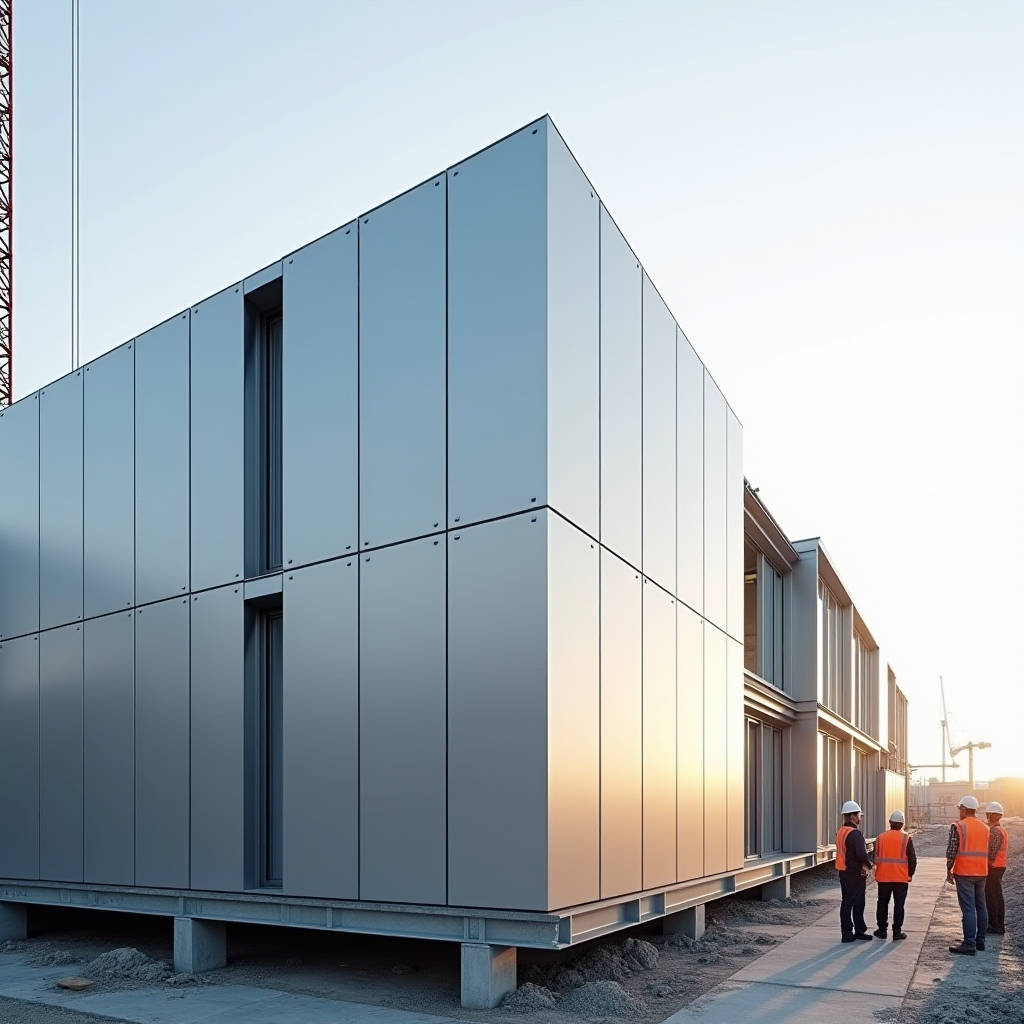
An Aluminum Facade Visual Mockup is where architectural intent collides with the physical realities of panel fabrication, joint detailing, and site tolerances. For general contractors, facade installers, and procurement leads, this full-scale or near-scale assembly is the single most reliable way to confirm that a solid aluminium cladding system will deliver the exact finish, shadow line, and color consistency promised in the CD set. Unlike a performance mockup that pushes air and water through the assembly, a visual mockup exists to resolve what the eye sees: panel flatness, seam alignment, reveal widths, corner returns, and the behavior of PVDF coatings under changing daylight. This article walks through what a properly scoped visual mockup should include, how to budget and schedule it, and where the process most often fails on real projects.
Why a Visual Mockup Matters More Than the Render
Renders and 3D walkthroughs flatten reality. They cannot reproduce the way a 2.0mm or 3.0mm solid aluminium panel reflects light at a 30-degree viewing angle, nor can they show how a 25mm open joint reads against a 12mm closed joint on the same elevation. The visual mockup closes that gap. It forces the facade team to commit to actual panel dimensions, actual fastener spacing, and actual sealant profiles before the production line starts cutting sheets.
For solid aluminium cladding specifically, the mockup is where you validate the rigidity story. A composite panel bends differently than a solid sheet, and the visual mockup is the place to confirm that your chosen 2.5mm or 3.0mm gauge holds its plane across a 1500mm span without oil-canning. That flatness check is not cosmetic; it determines whether the facade reads as a crisp, engineered surface or a wavy, low-bid compromise.
What a Complete Visual Mockup Should Cover
A visual mockup is not a single panel. It is a representative assembly that includes every condition the facade will repeat across the building. A well-scoped mockup should include:
- A corner return with the same folded edge and miter detail used in production
- At least one window-adjacent panel with the head, jamb, and sill transitions
- An open-joint condition and a closed-joint condition side by side
- A parapet or coping cap detail
- Two or three different coating colors or finishes if the palette is still contested
- A sample of the fastening pattern, whether screw-fixed or concealed clip
- The actual sealant color and tooling profile specified for the project
Each of these elements answers a specific question. The corner return confirms whether the folded edge radius matches the architect's expectation. The window condition confirms whether the panel-to-frame gap is buildable on site. The coating samples confirm whether the two-tone scheme reads as intended or creates an unintended moiré effect.
Coating and Color: The Mockup's Most Expensive Lesson
Color is where visual mockups earn their keep. PVDF coatings are applied in layers, and the final appearance depends on the substrate, the primer, the color coat thickness, and the clear topcoat. A 70% PVDF system with a total dry film thickness of 25 to 30 microns will perform differently than a 20 micron system under the same sky. The mockup lets the team see this before committing to a full production run.
It is also the place to settle the gloss question. A 30% gloss reads differently than a 15% gloss on a large uninterrupted plane, and the difference only becomes obvious at scale. The mockup should include panels at the actual production gloss level, not a color chip. Color chips are useful for palette selection; they are useless for confirming how a 1200mm by 3000mm expanse of solid aluminium behaves in direct sun.
Budgeting and Scheduling the Visual Mockup
Cost discipline starts with scoping. A visual mockup can be as small as a 2.4m by 2.4m corner assembly or as large as a full bay with multiple floors. The price scales with the number of conditions included, not just the square footage. A typical single-condition mockup with one corner, one window jamb, and two coating samples runs between USD 8,000 and USD 18,000 fabricated and installed, depending on the panel gauge and the complexity of the folding.
Schedule is the hidden cost. A visual mockup should be reviewed at least 60 days before the first production panel is released. That window allows for one revision cycle: the team sees the mockup, the architect requests a change to the joint width or the coating, and the fabricator re-runs the affected panels. Skipping this cycle to save two weeks on the front end routinely costs four to six weeks on the back end when field fixes are required.
| Mockup Scope | Typical Size | Fabrication Cost | Lead Time | Primary Risk Addressed |
|---|---|---|---|---|
| Single corner + closed joint | 2.4m x 2.4m | USD 8,000–12,000 | 3–4 weeks | Folded edge radius, flatness |
| Corner + window jamb + sill | 3.0m x 3.6m | USD 12,000–18,000 | 4–5 weeks | Panel-to-frame transitions |
| Full bay, two colors, open + closed joints | 4.8m x 3.6m | USD 20,000–35,000 | 6–8 weeks | Color consistency, joint rhythm |
| Parapet + coping + soffit return | 2.4m x 1.8m | USD 6,000–10,000 | 3 weeks | Water-shedding details, flashings |
These figures are fabrication and installation estimates for solid aluminium panels only. They exclude the structural subframe, which is usually a separate line item. On a typical high-rise, the visual mockup represents less than 0.5% of the total facade budget, which makes it one of the highest-return investments in the entire enclosure package.
Flatness and Oil-Canning: The Solid Aluminium Difference
Solid aluminium panels bring a specific flatness challenge that composite systems do not. A 3.0mm solid sheet with a stiffening profile welded or riveted to the back face will hold its plane across a large span, but the stiffener spacing must be engineered, not guessed. The visual mockup is the place to confirm that the stiffener layout prevents oil-canning under thermal cycling.
The AAMA 2605 standard for high-performance organic coatings on architectural aluminium is the reference point for the coating side of this question. It specifies the performance criteria for PVDF finishes intended for exterior use, including color retention and chalk resistance. The mockup lets the team verify that the specified coating system actually meets the visual expectation, not just the lab numbers. For joint and sealant behavior, the AAMA 800 series and the ASTM E283 air-leakage test methods provide the performance baseline that a visual mockup complements rather than replaces.
Documenting the Mockup for Production
A visual mockup that is not documented is a wasted expense. The review should produce a formal sign-off sheet that records, for each condition, the approved joint width, the approved coating color reference, the approved gloss level, and any deviations from the original drawing. That sign-off becomes the production standard. Every panel that leaves the factory is then checked against it.
Photography is part of the documentation, but it must be disciplined. Shoot the mockup at the same time of day and from the same angle on each review visit, so the team can compare lighting conditions rather than guessing whether a color shift was real or a camera artifact. Include a calibrated gray card in at least one frame per session to give the color team a reference point.
Where Visual Mockups Fail on Real Projects
The most common failure is scoping the mockup too small. A mockup that omits the corner return or the window jamb will not catch the exact problems that cause field rework. The second most common failure is treating the mockup as a one-time event. Facade conditions change as the design develops, and a mockup reviewed in month six is not a valid reference for a facade that was redesigned in month nine.
The third failure is skipping the mockup entirely to save money. On a solid aluminium facade, the cost of a single field rework order for misaligned joints or a rejected coating color routinely exceeds the cost of the mockup. Procurement teams that treat the visual mockup as an optional line item are making a decision that the site crew will pay for later.
Working with a Fabricator Who Understands Mockups
The value of a visual mockup depends heavily on the fabricator's willingness to build it honestly. A fabricator who builds a mockup with different tolerances than production, or who uses a thicker panel than specified to hide a flatness problem, is producing a misleading artifact. The mockup should be built to the exact production specification, including the same panel gauge, the same coating, and the same fastening method.
For procurement leads evaluating suppliers, the right question is not whether a fabricator can build a mockup, but whether they will build it to the production spec and stand behind the sign-off. Reliable suppliers such as Futeng® have built their reputation on producing solid aluminium cladding panels that hold their plane and their color across large production runs, which is exactly the behavior a visual mockup is designed to verify. The mockup is the point where the supplier's production discipline becomes visible to the entire project team.
Practical Recommendations
Scope the mockup to include every repeating condition, not just the prettiest corner. Budget for one revision cycle and schedule it so the revision happens before production starts. Document the approved conditions with disciplined photography and a formal sign-off. And hold the fabricator to the production specification, not a showroom version of it.
A visual mockup is not a formality. It is the cheapest place on the entire project to find out whether the facade will look the way the architect drew it and the way the client paid for it. On a solid aluminium cladding system, where the panel's rigidity and the coating's performance are the two things that define the finished surface, the visual mockup is where those two promises get tested against daylight, against tolerance, and against the reality of a production line.