Aluminum Panel Protective Film Removal Timing and Technique for Solid Cladding
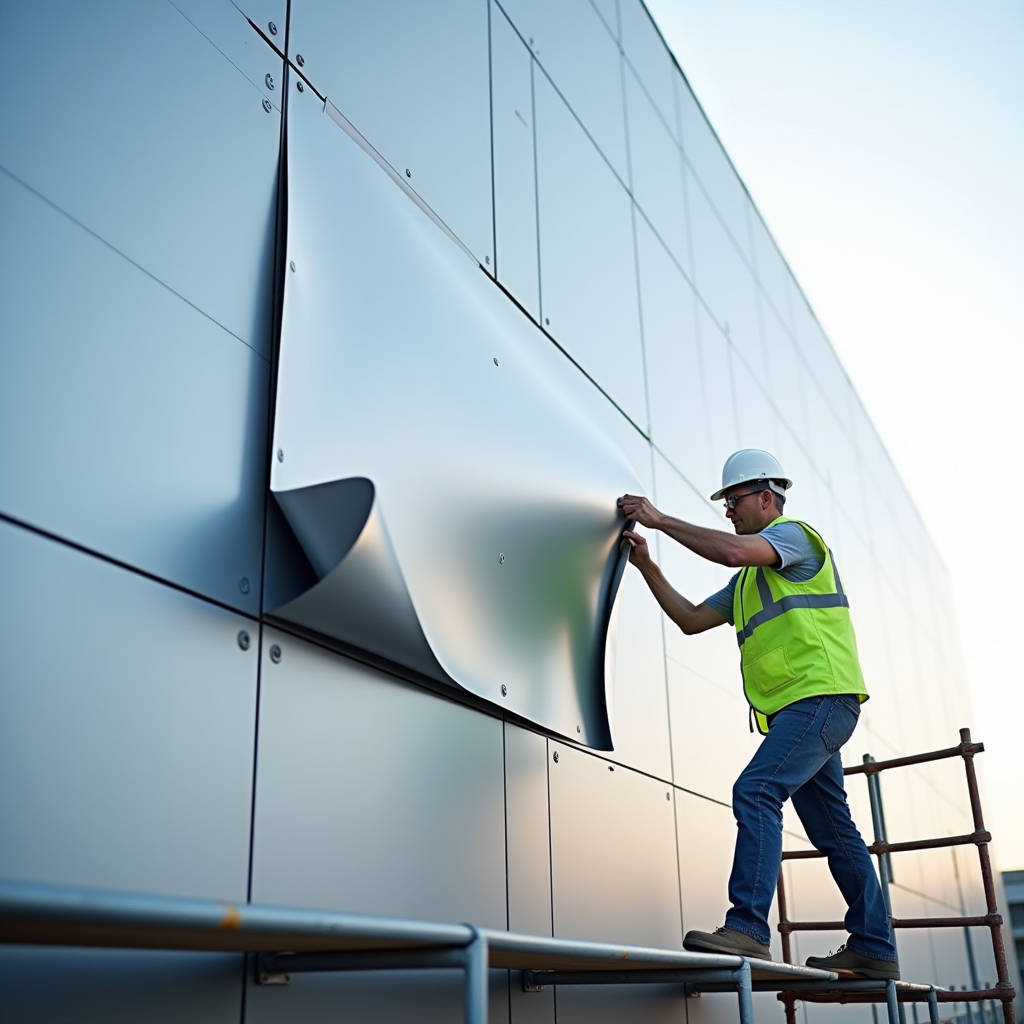
Aluminum Panel Protective Film Removal is one of the most underestimated steps in a solid aluminium cladding project, yet it decides whether a facade delivers a flawless finish or a costly callback. On solid aluminium panels, the film is a temporary polyethylene or PVC layer, typically 40 to 60 micrometers thick, bonded with a pressure-sensitive acrylic adhesive. Leave it on too long, expose it to sun, or pull it at the wrong angle, and the adhesive migrates into the PVDF coating, leaving ghosting, residue, or micro-scratches that no polishing can hide. This article focuses on the engineering reality of Aluminum Panel Protective Film Removal for solid aluminium sheets in commercial facades, covering timing windows, environmental limits, tool selection, and residue recovery, so contractors can set a removal protocol that protects the substrate and the schedule.
Why Solid Aluminium Panels Punish Poor Film Removal
Solid aluminium cladding panels carry a factory-applied PVDF or polyester coating that is fully cured before the protective film is laminated. The adhesive is designed to release cleanly within a defined window, usually 30 to 90 days from application. Beyond that window, two degradation paths appear. First, UV exposure cross-links the adhesive and raises its peel strength, so the film tears instead of peeling in one sheet. Second, heat cycles drive plasticiser migration into the coating, leaving a visible haze that reads as a colour shift under raking light.
Because solid aluminium panels are heavier and stiffer than thin composite skins, installers often stack them on racks for weeks before hoisting. That storage time is exactly where the film ages fastest. A panel that sat on a south-facing rack through a summer fortnight can already be past its safe removal window, even though the project calendar says it is on schedule.
The Removal Window: A Practical Engineering Table
Contractors need a reference they can put in a site binder. The table below summarises recommended removal timing for solid aluminium panels under typical exposure conditions, based on field data and coating supplier guidance.
| Exposure Condition | Safe Removal Window | Adhesive Risk Level | Recommended Action |
|---|---|---|---|
| Indoor storage, covered, below 25°C | Up to 120 days | Low | Standard peel, no heat required |
| Outdoor racking, shaded, temperate climate | 30 to 60 days | Moderate | Peel within 45 days, use low-angle pull |
| Outdoor racking, direct sun, summer | 10 to 30 days | High | Remove before racking or within 2 weeks |
| High humidity or coastal salt air | 14 to 45 days | High | Peel early, expect residue on edges |
| Film aged beyond 120 days | Not recommended | Critical | Use heat-assisted removal, verify coating |
These figures are planning guides, not guarantees. Every coating and adhesive combination behaves differently, so a 300 mm test peel on a sacrificial corner is the only reliable way to confirm the window on a specific batch.
Environmental Limits That Change the Outcome
Temperature is the single largest variable in Aluminum Panel Protective Film Removal. Below 10°C, the adhesive becomes brittle and the film snaps into strips, leaving a patchwork of residue. Above 40°C, the adhesive softens and smears rather than lifting. The practical band for clean removal is 15°C to 30°C, measured at the panel surface, not the air temperature.
Direct sunlight is a second factor. A panel face in full sun can run 20°C hotter than ambient, which pushes the adhesive into the smear zone even on a mild day. The reliable sequence is to remove film in the morning or on a shaded elevation, or to wet the face with clean water to hold surface temperature inside the band.
Humidity matters less for the peel itself but matters a lot for residue. In coastal or high-humidity sites, salt and moisture can sit under a lifted film edge and etch the coating before the film is removed. Panels delivered to a marine project should lose their film within days of delivery, not weeks.
Tool Selection and the Right Peel Mechanics
The mechanics of the peel are as important as the timing. Pull the film perpendicular to the panel and the adhesive stretches and tears. Pull at a low angle, roughly 15 to 30 degrees off the surface, and the adhesive releases along a clean front. This is the same principle used in tape removal and is documented in adhesive engineering literature.
For solid aluminium panels, the practical kit is deliberately small. A plastic scraper with a rounded edge lifts a starting corner without gouging the PVDF. A heat gun set to a low temperature, held at 150 to 200 mm from the surface and kept moving, softens stubborn adhesive without cooking the coating. A solvent approved for cured PVDF, applied to a lint-free cloth, lifts residual adhesive without attacking the coating. Steel scrapers, abrasive pads, and aggressive solvents have no place on a finished panel face.
One detail that separates professional crews from the rest is the starting corner. Panels arrive with the film cut at the factory edge. If that edge is buried under a joint or a return, the installer must lift a corner with a razor at a shallow angle, then switch to the plastic scraper. Cutting through the film with a blade risks scoring the coating, so the blade is only used to lift, never to slice along the face.
Residue Recovery Without Damaging the PVDF Coating
Even with correct timing, residue appears on edges, around punched holes, and on the reverse returns where the film was trimmed. The recovery sequence should escalate from gentle to aggressive, and stop at the first method that works. Start with a clean, dry microfiber cloth and firm pressure, which lifts light adhesive dust. If that fails, move to a mild solvent on a lint-free cloth, working in one direction and turning the cloth frequently so the lifted adhesive is not re-deposited. For stubborn spots, a low-temperature heat gun softens the adhesive, and the plastic scraper lifts it in a single pass.
The critical rule is that the PVDF coating is a cured polymer film, typically 20 to 30 micrometers thick, and it is not infinitely resistant. Abrasive pads, metal scrapers, and citrus-based solvents can dull or cloud the coating in seconds. Any crew that reaches for a steel blade on a visible face is trading a residue problem for a scratch problem that is far harder to fix.
Storage and Handling That Prevent the Problem
The cheapest fix for difficult Aluminum Panel Protective Film Removal is to never create the difficult condition in the first place. Panels should be stored flat on a clean, dry rack, tilted slightly to shed water, and protected from direct sun with a breathable cover. A breathable cover matters because a non-breathable tarp traps condensation against the film, which accelerates adhesive degradation and can leave water staining on the coating.
On site, the film should come off as late as possible in the installation sequence but early enough to stay inside the window. The practical compromise is to remove film from the visible face after the panel is fixed and the joint is set, while leaving the film on the reverse returns until the panel is fully installed. This protects the face during handling and keeps the adhesive window intact for the surfaces that remain exposed longest.
For panels that must be pre-fitted or held in a buffer stock, the film should be removed and replaced with a low-tack protective sheet if the panel is to be stored for more than a few days. This is a common practice in high-end architectural work and is worth the small labour cost on a premium facade.
Standards and Verification References
Solid aluminium cladding panels are manufactured and tested against recognised coating and weathering standards, and the removal protocol should align with those references. The PVDF coating performance is commonly verified against AAMA 2605 for high-performance architectural coatings, which covers film adhesion, colour retention, and weathering resistance. The aluminium substrate itself is specified against the relevant EN 485 or ASTM B209 series for flat rolled aluminium products. For the protective film and its adhesive, reference is often made to the adhesive tape testing methods in ASTM D3330, which quantify peel adhesion and help a contractor understand why a film behaves differently after storage.
Contractors should also verify the coating's solvent resistance before introducing any cleaning chemical. AAMA 2605 includes solvent rub test requirements, and a coating that passes those tests will tolerate a mild cleaning solvent, but it will not tolerate an abrasive. Checking the coating certificate against the proposed cleaning agent is a five-minute step that prevents a full-panel re-coat.
A Practical Site Protocol for Solid Aluminium Panels
A workable site protocol for Aluminum Panel Protective Film Removal on solid aluminium panels is short enough to be learned in one toolbox talk. Confirm the batch age and exposure history before peeling. Test a 300 mm corner on a sacrificial panel to verify the adhesive releases cleanly. Remove film in the 15°C to 30°C surface temperature band, working on shaded elevations or in the morning. Peel at a low angle with a plastic scraper, never a steel blade across the face. Escalate residue removal from dry cloth to solvent to low-heat, stopping at the first success. Inspect the face under raking light before the panel is sealed, because a ghost or a scratch is far cheaper to address before the joint is closed.
For projects where the film has aged past the safe window, the removal cost rises sharply. Heat-assisted removal with a controlled heat gun and a plastic scraper can recover most panels, but it adds labour and carries a small risk of coating damage. In that situation, a supplier with direct experience of film behaviour on solid aluminium sheets is a practical asset. Futeng® supplies solid aluminium cladding panels with factory-applied film and can advise on removal timing and residue handling for specific coating and adhesive combinations, which is useful when a project is running a tight schedule.
The engineering lesson is consistent across every project. Aluminum Panel Protective Film Removal is not a finishing chore to be rushed at the end of the installation; it is a scheduled operation with a defined window, environmental limits, and a tool discipline of its own. Treat it with the same rigour as the glazing or the joint sealant, and the facade keeps the clean, uniform appearance that the coating was designed to deliver. Treat it as an afterthought, and the most expensive part of the building envelope becomes the source of its most visible defect.