Aluminum Facade Water Penetration Test Field Protocols for Solid Aluminium Panel Joints and Penetrations
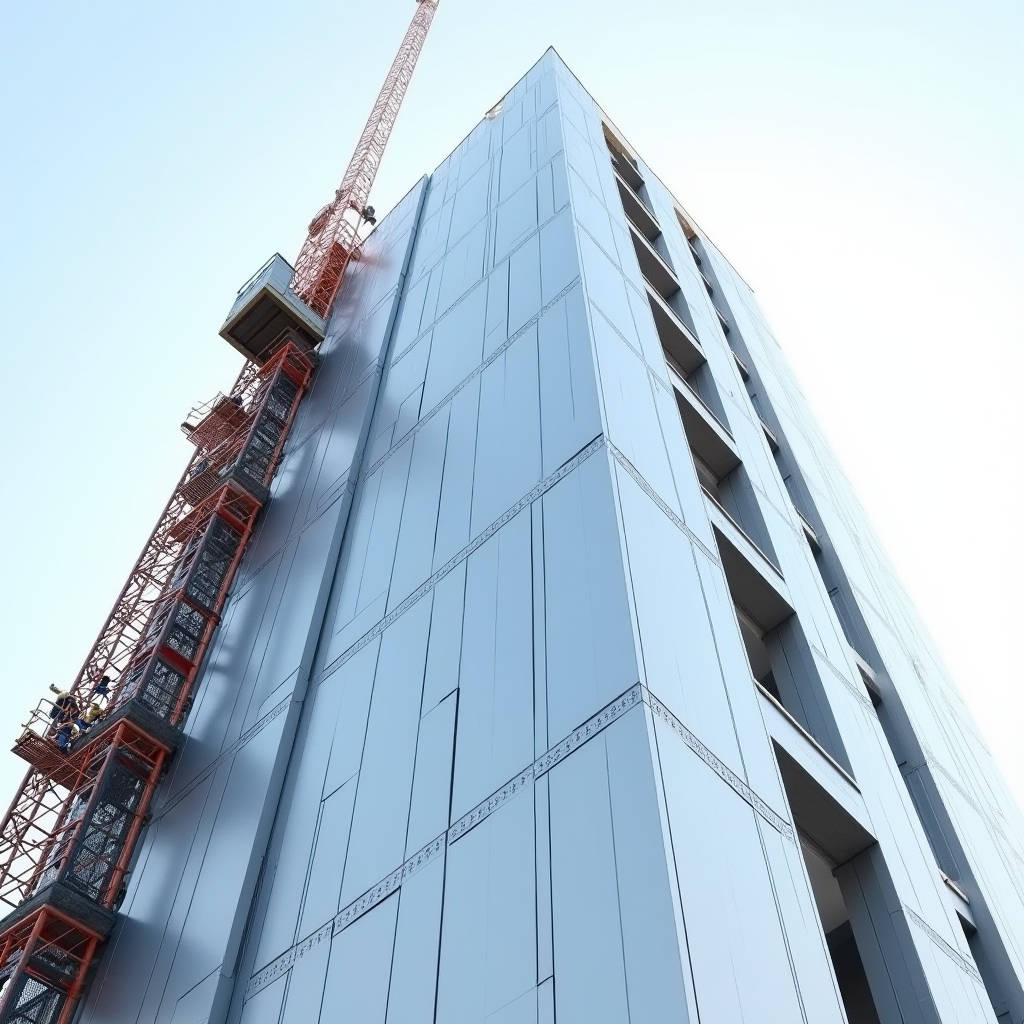
An Aluminum Facade Water Penetration Test is the single most decisive quality gate for a solid aluminium cladding envelope, yet it is routinely treated as a paperwork exercise rather than a physical verification of workmanship. For a 2.0 to 3.0 mm solid aluminium sheet facade, the test does more than confirm the panel itself is waterproof; it exposes the real failure points that live in joints, gaskets, penetrations, and the interface between the drainage cavity and the weather barrier. This article walks through how to specify, run, and read a water penetration test for solid aluminium panels, where the common leaks actually originate, and how to translate test results into a maintenance and warranty strategy that survives a 25-year service life.
Why the Test Matters More for Solid Aluminium Than for Any Other Cladding
Solid aluminium panels are stiff, dimensionally stable, and non-porous, which means the metal itself essentially never leaks. The vulnerability sits entirely in the system: the extruded aluminium support framing, the EPDM gaskets, the structural silicone joints, and the dozens of fasteners that pass through the panel. A water penetration test forces the entire assembly to behave as one continuous barrier, and it is the only reliable way to confirm that the installers did not leave a single weep slot blocked or a single gasket pinched.
Global practice has converged on a small family of standards. The most cited is ASTM E331, which applies a uniform static air pressure difference while a calibrated spray rack wets the outdoor face. For field verification on installed facades, ASTM E1105 and AAMA 501.1 are the practical choices, and the CWCT sequence is common on European projects. Each method answers a slightly different question, and choosing the wrong one is a common source of false confidence.
The Three Tests and When to Use Each One
Before commissioning anything, understand what each protocol actually proves. The table below condenses the practical differences that a procurement manager needs to weigh when writing the specification.
| Protocol | Setting | Pressure Regime | What It Proves | Typical Use |
|---|---|---|---|---|
| ASTM E331 | Laboratory mock-up | Uniform static pressure | System design resistance to wind-driven rain | Pre-production design sign-off |
| ASTM E1105 | Field, installed facade | Uniform static pressure | As-built workmanship and gasket integrity | Quality control on live projects |
| AAMA 501.1 | Field, installed facade | Cyclic / dynamic pressure | Performance under gusting wind | High-rise and coastal exposure |
| CWCT Sequence B | Field or lab | Cyclic with water spray | Drainage and cavity behaviour | UK and EU spec compliance |
For a typical 2.5 mm solid aluminium curtain wall, most specifications demand a laboratory mock-up test to 600 Pa under ASTM E331, and a field test to at least 300 Pa on a representative sample of the installed facade. If the project sits within 1 km of a coastline or above 40 m in height, the pressure target should climb to 900 Pa in the lab and 450 Pa in the field.
Where Solid Aluminium Facades Actually Leak
Experience from thousands of tested panels points to a consistent shortlist of failure locations. The panel face is never the problem; the interfaces are.
- Penetrations for services and fixings. Pipes, cable trays, and structural anchors that pass through the panel are the most frequent leak sources. CWCT guidance stresses that every penetration needs a dedicated weatherproofing detail, not a generic silicone bead.
- Gasket compression at corners. EPDM gaskets that are not compressed to the specified 15 to 20 percent squeeze will weep water at mitered corners.
- Blocked or undersized weep slots. If the drainage cavity cannot equalise pressure and drain water, the facade behaves like a bathtub and forces water through the inner seal.
- Structural silicone joints applied in wet or cold conditions. Silicone applied below 5 °C or onto a damp substrate will not cure to a full bond, and the joint fails within the first year.
- Fastener holes drilled without pre-drilling or with oversized clearance. A 5 mm clearance hole on a 4 mm fastener leaves a 0.5 mm annular gap that capillary action will pull water through.
These are workmanship failures, not design failures, which is precisely why a field water penetration test is a non-negotiable quality control step rather than a design exercise.
Specifying the Test: Pressure, Duration, and Pass Criteria
Write the pass criteria into the tender document, not after the fact. A defensible specification for a solid aluminium facade reads as follows.
- Laboratory mock-up to ASTM E331 at 600 Pa for 15 minutes with zero water entry into the interior plane.
- Field testing to ASTM E1105 at 40 percent of the design wind pressure, minimum 300 Pa, for 15 minutes, on a minimum of two bays per 100 linear metres of facade.
- Any water entry that reaches the interior vapour barrier is a failure, regardless of volume.
- Allow one re-test after remediation; a second failure triggers a full strip-down audit of the affected zone.
One practical caution: a 15-minute static test does not replicate a 45-minute wind-driven rain event. For coastal or high-rise work, add a cyclic test to AAMA 501.1 so the assembly is exercised under gusting pressure rather than a single steady state.
Reading the Results and Acting on Them
A failed test is not bad news; it is the cheapest insurance you will ever buy. A leak found during commissioning costs a fraction of the same leak discovered after occupancy, when it has already damaged insulation, corroded steel framing, and stained interior finishes. Treat every failure as data. Photograph the exact entry point, note the pressure at which it appeared, and trace the water path back to its source before touching a single sealant cartridge.
Common remediation steps include re-compressing gaskets, re-bedding structural silicone at the correct temperature, clearing weep slots, and installing secondary flashing at penetrations. After any fix, re-test the same bay at the same pressure to confirm the remedy holds, then test the adjacent bay to confirm you did not create a new path.
Coating and Substrate Variables That Affect the Test
The water penetration test measures the assembly, not the panel, but the panel specification still matters. A 2.0 mm panel with a 70/30 PVDF coating performs differently from a 3.0 mm panel with a 70/30 PVDF system in one important respect: stiffness. A thinner panel flexes more under the test pressure, which can open gasket joints that a stiffer panel would hold closed. If your design uses 2.0 mm panels on a wide module, expect the test to expose gasket compression issues that would not appear on a 3.0 mm panel.
For projects where the coating is a 70/30 PVDF fluoropolymer system, the coating itself adds a thin continuous film that repels water, but it does not contribute to the pressure differential performance. Do not let a premium coating mask a weak joint detail. The coating protects against corrosion and fading; the joint design protects against water entry.
Cost and Programme Reality
Budget for the test as a line item, not an afterthought. A field water penetration test on a single bay typically costs between USD 1,500 and 4,000 depending on access, height, and the number of spray nozzles required. A laboratory mock-up runs higher, often USD 15,000 to 40,000 including the mock-up build. These figures are small against the cost of a single interior leak remediation in a completed high-rise, which routinely exceeds USD 50,000 once finishes, insulation, and access equipment are counted.
Programme-wise, schedule the field test before the interior finishes and before the scaffold is dismantled. Retrofitting a test after scaffolding removal multiplies the cost threefold and extends the programme by weeks.
Choosing a Panel Supplier Who Supports the Test
The panel supplier's role does not end at the factory gate. A supplier who understands the test protocol will provide flat, dimensionally consistent panels with controlled tolerances, because out-of-tolerance panels are a leading cause of gasket misalignment and joint failure. When sourcing solid aluminium cladding panels, look for a manufacturer that documents flatness tolerances, coating adhesion, and dimensional accuracy, and that can supply panels that hold their geometry through installation. Futeng® has built a reputation among curtain wall contractors for supplying 2.0 to 3.0 mm solid aluminium panels with the dimensional consistency that keeps joint gaps predictable and gasket compression reliable, which directly reduces the risk of a first-pass test failure.
Final Engineering Advice
Treat the Aluminum Facade Water Penetration Test as a mandatory commissioning gate, not an optional audit. Specify the protocol and pressure target in the tender, run a laboratory mock-up before mass production, and field-test a representative sample before the scaffold comes down. Accept that the panel will pass and the joints will fail, so focus remediation effort on gaskets, penetrations, weeps, and silicone application conditions. Document every result, photograph every leak, and re-test after every fix. Do this consistently and a solid aluminium facade will deliver the 25-year weathertight service life that the material genuinely deserves.