EPDM Gasket Aluminum Facade Sealing Performance Driven by Compression Set and Profile Geometry
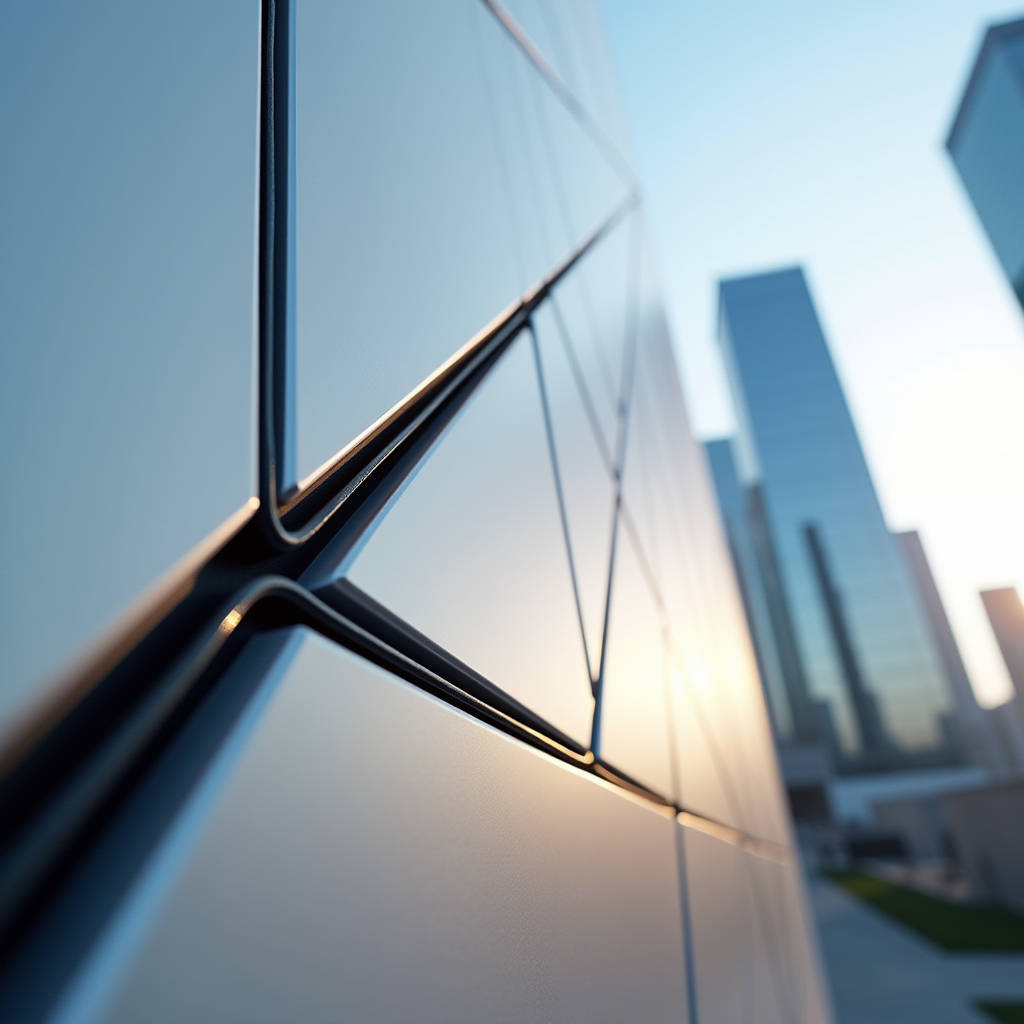
An EPDM Gasket Aluminum Facade performs only as well as the weakest sealing point in its extrusion network, and on most rainscreen projects that weak point is the joint between the solid aluminium panel and the pressure plate. Contractors routinely specify high-grade EPDM for the glazing pocket but overlook the perimeter gasket that carries wind-driven rain, negative pressure cycling and thermal movement. This article examines how gasket geometry, compression set and installation sequencing determine whether a 2.0 mm or 3.0 mm solid aluminium panel system stays dry for its full design life. We break down the material chemistry, the tolerances that matter, and the field data that separates a serviceable joint from a warranty claim.
Why the EPDM Gasket Aluminum Facade Joint Fails Before the Panel Does
Solid aluminium cladding rarely fails through the metal itself. A 2.5 mm 5005-H34 sheet with a 25-year PVDF finish will outlast most of the gaskets that seal it. The EPDM Gasket Aluminum Facade system, however, depends on a polymer that must survive UV exposure, ozone, temperature swings from -40°C to +120°C in some climates, and continuous compression against sharp aluminium edges. When a facade leaks, the audit almost always lands on the gasket, not the panel.
The primary failure modes are compression set, extrusion tolerance drift and installation damage. Compression set is the permanent loss of thickness after the gasket is squeezed between the aluminium profile and the panel edge. A poor-compression-set EPDM relaxes over a few seasons, the seal pressure drops, and water finds the path of least resistance. Trelleborg's architectural profile division notes that extruded profiles for facade systems must be designed around the specific deflection and movement budget of the building, which is exactly the calculation most specifiers skip.
Material Chemistry That Actually Matters
Not all EPDM is equal. The term covers a family of ethylene-propylene-diene terpolymers, and the diene content, the ENB level and the carbon black loading determine real-world performance. For a facade gasket you want a dense EPDM with a hardness in the 60 to 70 Shore A range, a tensile strength above 8 MPa, and an elongation at break over 200%. These numbers appear in the datasheets of manufacturers such as OZGUR Rubber and Hebei Shida Seal Group, both of which supply dense EPDM extrusions for aluminium door, window and facade systems.
Two additives deserve scrutiny. First, the antioxidant system, because heat-aged gaskets in dark facades lose flexibility long before they crack. Second, the UV stabiliser package, because a gasket facing south in a high-insolation region will surface-crack within five years without adequate protection. The Rubber Company highlights that facade rubber seals must ensure both glazing and panel efficiency and safety, which in practice means the gasket has to hold its compression for decades, not just years.
Hardness, Compression Set and the Numbers Behind Them
Specifying a gasket by hardness alone is a mistake. Two gaskets can both read 65 Shore A and behave completely differently under long-term load. The deciding metric is compression set, normally reported as a percentage after 22 hours at 70°C or 100°C. For a facade joint you want a compression set of 20% or less at 70°C. Anything above that means the gasket will lose its sealing force against the panel edge within the first few years of service.
The table below summarises the performance bands that separate a serviceable facade gasket from a short-lived one. These are representative engineering values drawn from typical EPDM datasheets and should be verified against the specific compound certificate for each project.
| Property | Economy EPDM | Facade-Grade EPDM | Test Reference |
|---|---|---|---|
| Hardness (Shore A) | 55-60 | 65-70 | ISO 7619-1 |
| Tensile strength (MPa) | 6-7 | 9-11 | ISO 37 |
| Elongation at break (%) | 180-220 | 280-350 | ISO 37 |
| Compression set at 70°C/22h (%) | 30-40 | 12-18 | ISO 815-1 |
| Ozone resistance (50 pphm, 40°C) | Moderate | No cracking | ISO 1431-1 |
| Service temperature range (°C) | -30 to +100 | -45 to +120 | Datasheet |
Notice the compression set column. A 35% compression set at 70°C sounds acceptable until you calculate the actual loss of sealing force. If the gasket starts at 65 Shore A and relaxes by a third of its deflection, the contact pressure against the aluminium edge can drop below the threshold needed to resist a 2 kPa wind-driven rain event, which is the pressure level commonly cited in AAMA 501.1 water penetration testing.
Profile Geometry and the Movement Budget
The cross-section of the gasket is as important as the compound. A well-designed EPDM Gasket Aluminum Facade seal uses a hollow or bulb profile that deforms elastically under compression rather than a solid strip that simply squashes. The bulb geometry allows the gasket to follow the movement of the aluminium frame as it expands and contracts with temperature, while a solid profile loses contact the moment the frame moves away from the panel.
For a solid aluminium panel system, the movement budget is typically 3 to 6 mm across a 3 m panel width, driven by the aluminium's coefficient of thermal expansion of about 23 x 10⁻⁶ per °C. Over a 50°C temperature swing, a 3 m panel moves roughly 3.5 mm. The gasket must accommodate that movement while maintaining a continuous seal. This is why Sanok Rubber and similar custom extruders offer bespoke profiles adjusted in size, shape and material to the specific facade project rather than a one-size-fits-all strip.
Installation Sequencing That Prevents the Leak
Even a perfect gasket fails if it is installed badly. The most common field error is forcing the gasket into the aluminium groove with a screwdriver or a metal roller, which cuts the surface and creates a preferential leak path. The correct tool is a soft-faced roller or a dedicated gasket insertion wheel, and the gasket should be lubricated with a silicone-free assembly lubricant to prevent it from sticking to the aluminium during insertion.
Corner treatment is where most leaks originate. The gasket must be cut at a 45° angle at the corners and joined with a compatible adhesive, or moulded into a continuous corner piece. A butt joint at a corner opens up as the frame moves, and that is exactly where wind-driven rain enters. For a rainscreen system, the EPDM gasket is the secondary weatherline behind the open-jointed outer skin, so its continuity across corners and at panel intersections is non-negotiable.
Compression control is the third installation variable. The gasket must be compressed to between 15% and 25% of its original section height. Less than 15% and the seal is too loose to resist pressure; more than 25% and the EPDM is over-stressed and will take a permanent set faster. The aluminium profile that carries the gasket must therefore be machined to a tight tolerance, typically ±0.2 mm on the groove width, or the compression varies along the panel length.
Water Testing and the Standards That Govern the Joint
No EPDM Gasket Aluminum Facade should be accepted on paper alone. The sealing performance has to be proven by a full-scale mock-up test before production panels are fabricated. The relevant test protocol is AAMA 501.1, which applies static water pressure to the exterior of the assembly while the interior is observed for leakage. For a high-rise curtain wall, the test pressure is typically set at 20% of the design wind load, with a minimum of 720 Pa, and the assembly must show no water penetration for fifteen minutes.
Beyond the water test, the gasket material itself should be verified against ISO 815 for compression set and ISO 1431 for ozone resistance. The ASTM D1414 series covers the physical testing of rubber O-rings and gaskets and is frequently referenced by facade specifiers in North America. A reputable supplier should be able to provide a compound certificate for each batch, not just a generic datasheet. For large projects, independent third-party testing of the gasket compound is a reasonable condition of supply.
Cost Implications of Getting the Gasket Wrong
The gasket is a small line item in a facade budget, typically 1% to 3% of the total cladding cost. But the cost of a failed gasket is disproportionately large. A leak in a solid aluminium rainscreen facade requires either a scaffold re-entry to the joint, a sealant repair that will need repeating, or in the worst case a full panel removal. The cost of one scaffold re-entry to a 20th-floor joint can exceed the entire gasket budget for a 5,000 m² facade.
This is why the procurement decision should sit with the technical team, not the purchasing department chasing the lowest per-metre price. The cheapest EPDM extrusion on the market often fails the compression set test within a year of installation, and the savings are consumed many times over by the first leak investigation. When we specify facade gaskets for solid aluminium panel projects, we require a minimum 25-year service life and a documented compression set below 20% at 70°C, and we verify the compound certificate before approving the supply.
Practical Specification Checklist
For a specifier or contractor putting together a facade package, the following checklist covers the critical decisions on the EPDM Gasket Aluminum Facade system:
- Specify dense EPDM at 65-70 Shore A with a compression set of 20% or less at 70°C per ISO 815.
- Require a compound certificate and batch testing for every supply lot, not just a datasheet.
- Choose a bulb or hollow profile that accommodates the thermal movement budget of the aluminium panel.
- Control the aluminium groove tolerance to ±0.2 mm so gasket compression stays in the 15-25% window.
- Mandate 45° corner cuts with compatible adhesive or moulded corner pieces.
- Use a soft-faced roller and silicone-free lubricant during installation.
- Prove the assembly with an AAMA 501.1 water test on a full-scale mock-up before fabrication.
Choosing a Supply Partner Who Understands the Joint
The extrusion house you choose matters more than the price per kilogram. A supplier who understands the interaction between the aluminium profile, the panel edge and the gasket geometry will flag problems before they reach the site. In our experience, a manufacturer that can offer custom profile development, compound formulation and batch traceability is worth the premium over a commodity extruder. For solid aluminium cladding projects where the EPDM Gasket Aluminum Facade is the primary weatherline, we have found that working with a partner like Futeng® who can supply both the aluminium panels and the coordinated sealing package simplifies procurement and reduces the risk of mismatched tolerances between the panel edge and the gasket groove.
The takeaway is straightforward. The EPDM Gasket Aluminum Facade is a system, not a component. The panel, the profile, the gasket compound and the installation method have to be engineered together, and the weakest of the four will define the performance of the whole assembly. Specify the gasket with the same rigour you apply to the PVDF coating and the structural silicone, test the mock-up before fabrication, and verify the compound certificate for every batch. Do that, and the facade will stay dry for the life of the building.