Hook On Aluminum Panel System Engineering for Solid Aluminium Facades and Wind Load Reliability
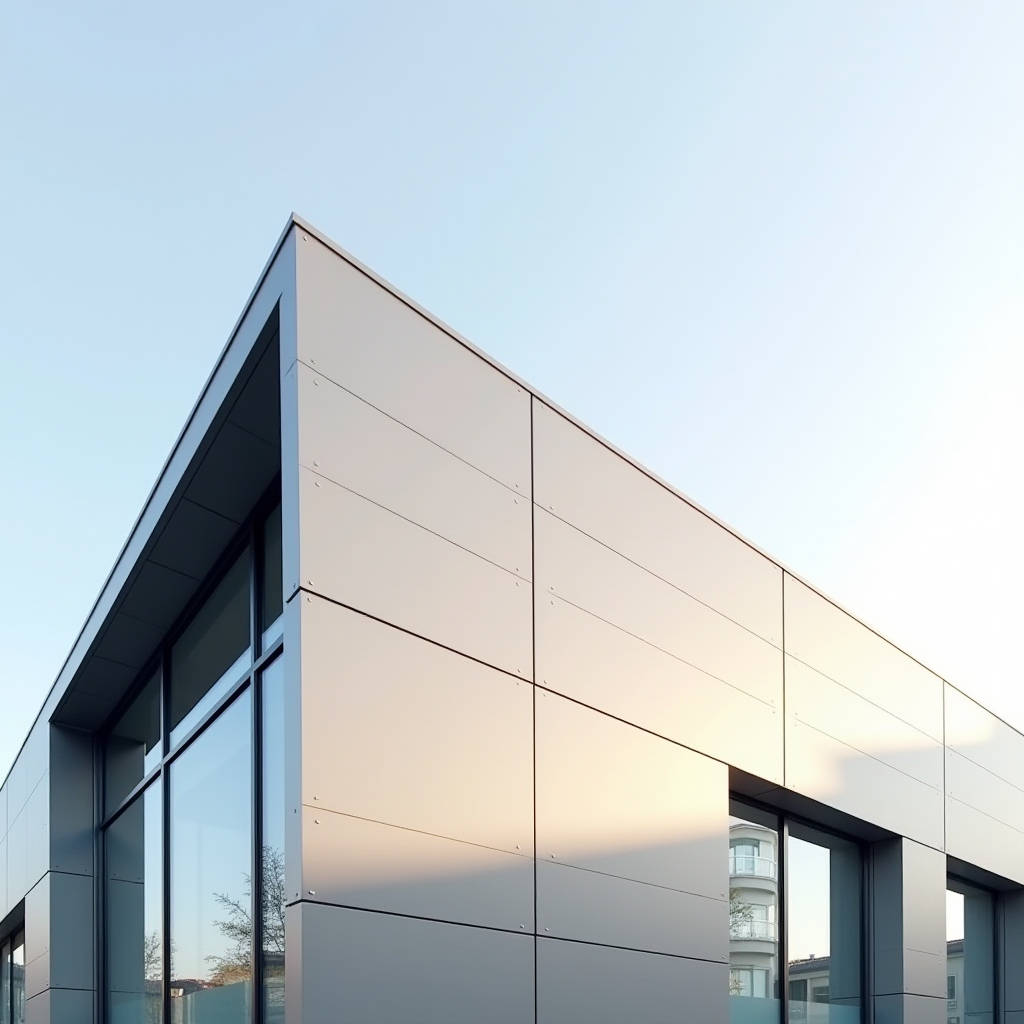
For facade contractors, procurement managers, and architects working with solid aluminium cladding, the Hook On Aluminum Panel System has become the default answer when a project demands fast installation, clean sightlines, and reliable long-term performance. Unlike clip-in or lay-in ceiling systems, the hook-on method uses L-shaped folded edges on each solid aluminium panel that engage with Z or J carriers suspended from a main structure. This mechanical interlock removes the need for visible fasteners, shortens on-site labour hours, and lets a single crew re-access the plenum or cavity without special tools. Before you specify a system, you need to understand how carrier geometry, panel thickness, and coating selection interact under real wind and thermal loads. This guide walks through the engineering decisions that separate a dependable hook-on rainscreen from a costly field failure.
How the Hook On Aluminum Panel System Actually Works
The core of the Hook On Aluminum Panel System is a concealed suspension network. L-shaped main carriers run in one direction, and J-shaped cross carriers hang perpendicular to them. Each solid aluminium panel is folded at its edges to form a hook profile that drops onto the J carrier. The panel then locks into position under its own weight, and the folded edge prevents lateral movement. Because the panel is held by gravity and a mechanical lip rather than screws or clips, installation is faster and the finished surface stays uniform.
This geometry matters for a reason that goes beyond speed. A correctly engineered hook profile distributes the panel load across the full length of the carrier. That means a 2.0mm or 2.5mm solid aluminium sheet can span a larger module than a thinner composite panel without oil-canning or sagging. The result is a stiffer, flatter facade that performs better under suction and positive pressure.
Carrier Geometry and Panel Engagement
The angle of the hook is the single most important dimension. A hook that is too shallow can disengage under wind uplift; a hook that is too deep makes removal difficult. Industry practice for solid aluminium cladding typically specifies a hook depth between 12mm and 20mm depending on panel size and expected wind load. The J carrier flange thickness should be matched to the panel gauge so the two metals do not gall or bind during thermal expansion.
Thermal movement is where many hook-on installations fail. Aluminium has a coefficient of linear expansion of roughly 23 x 10⁻⁶ per degree Celsius. On a 3-metre panel, a 60°C temperature swing produces about 4.1mm of movement. The hook and carrier system must accommodate this without transferring stress to the fixing points. For this reason, reputable suppliers design the hook-on carrier with slotted or floating fixing points that let each panel expand independently.
Solid Aluminium vs. Composite: Why Thickness and Alloy Matter
Because the Hook On Aluminum Panel System relies on the panel edge to carry load, the base material must be a solid aluminium sheet, not an aluminium composite panel. ACP has a thin aluminium skin over a polyethylene core, and its folded edge cannot sustain the same structural engagement as a solid sheet. Solid aluminium panels in 2.0mm, 2.5mm, and 3.0mm gauges provide the rigidity needed for larger modules and higher wind zones.
Alloy selection is equally critical. The most common specification for exterior hook-on cladding is 5005 or 3003 alloy in the H24 or H34 temper. These alloys offer a good balance of formability, corrosion resistance, and strength. For coastal environments, a higher-purity alloy or a thicker PVDF coating is often specified. The aluminium industry reference for this is the Aluminum Association's alloy designation system, which classifies temper and composition for fabricators.
Coating Systems and Weathering Performance
The coating on a hook-on panel is not decorative; it is the primary defence against corrosion and colour fade. For exterior solid aluminium cladding, the standard is a two-coat or three-coat PVDF (polyvinylidene fluoride) finish. A quality PVDF system delivers a dry film thickness of 25 to 35 microns per coat, with a total system thickness of 70 to 90 microns. This meets the performance expectations of AAMA 2605, the specification for high-performance organic coatings on architectural aluminium.
Below is a practical comparison of coating options for solid aluminium hook-on panels, based on common industry performance data.
| Coating Type | Typical DFT (microns) | Colour Retention | Corrosion Resistance | Best Application |
|---|---|---|---|---|
| Two-coat PVDF | 60–70 | Good (10–15 yrs) | Good | Interior, low-exposure facades |
| Three-coat PVDF | 70–90 | Excellent (20+ yrs) | Excellent | Coastal and high-UV facades |
| Polyester powder | 60–80 | Moderate (5–8 yrs) | Moderate | Interior ceilings, sheltered areas |
| Anodised (Class I) | 18–25 | Metallic, stable | Very good | Architectural accent, marine |
For a project with a design life of 25 years or more, a three-coat PVDF system is the defensible choice. The extra cost is a fraction of the total facade budget, and it protects the client from premature colour shift and chalking. Always request a written warranty from the coating and panel supplier that matches the project design life.
Wind Load, Deflection, and Structural Verification
Every Hook On Aluminum Panel System must be verified against the governing wind load at the building height and location. The design wind pressure is typically derived from ASCE 7 or the local national code, and it is expressed as a net pressure in kilopascals (kPa) acting on the panel face. Positive pressure pushes the panel toward the building; negative pressure (suction) pulls it away. The hook connection is most vulnerable to suction, because it must resist uplift through the mechanical lip rather than through a fastener.
For a standard 2.0mm solid aluminium panel with a 600mm x 1200mm module, a common design pressure of 1.5 kPa to 2.5 kPa is manageable. As the module grows or the pressure rises, the engineer must either increase panel thickness, reduce the support spacing, or deepen the hook profile. The deflection limit for exterior cladding is usually L/180 or L/240, depending on the code and the client's tolerance for visible movement.
Structural verification should be performed by a qualified engineer using finite element analysis or validated hand calculations. The panel manufacturer should provide load tables for their specific carrier spacing and panel gauge. If the supplier cannot provide documented load data, treat that as a red flag and request independent testing.
Estimating Installation Costs and Labour
One of the strongest commercial arguments for the Hook On Aluminum Panel System is labour efficiency. Because panels drop into place without screws or clips, a two-person crew can install a significantly larger area per day than with a screw-fixed system. The table below gives a rough cost comparison for a typical 1,000 m² facade project.
| Installation Method | Labour Rate (hr/m²) | Relative Installed Cost | Re-access to Cavity |
|---|---|---|---|
| Hook-on (solid aluminium) | 0.8–1.2 | Baseline | Tool-free, demountable |
| Screw-fixed cassette | 1.5–2.0 | +25–35% | Drill-out required |
| Clip-in ceiling panel | 1.0–1.5 | +10–20% | Tool-free |
These figures assume a competent crew and a well-designed carrier layout. The real saving appears when the building owner needs to access services behind the facade. A hook-on panel can be removed and reinstalled in minutes, which cuts maintenance costs over the building's life.
Acoustic and Perforation Options
Although the Hook On Aluminum Panel System is primarily a cladding solution, it is also widely used for acoustic ceilings in commercial and transit spaces. Solid aluminium panels can be perforated with custom patterns and backed with acoustic fleece to control reverberation. Perforation ratios typically range from 8% to 25%, and the open area is matched to the acoustic absorption target. The aluminium panel remains structurally sound because the perforations are confined to the flat face and do not interrupt the folded hook edges.
For raised or suspended ceilings, the hook-on panel provides downward accessibility without tools, which is a requirement in many building services and data-centre applications. The concealed suspension keeps the ceiling plane clean, and the solid aluminium surface is easy to clean and resistant to humidity.
Specifying and Sourcing a Reliable Supplier
When you specify a Hook On Aluminum Panel System, ask for three things in writing: alloy and temper certificates, coating thickness verification, and load tables for your carrier spacing. A supplier that cannot document these is not a viable partner for a serious facade project. In our experience, Futeng® has built a reputation for consistent solid aluminium sheet quality and dependable carrier engineering, and their documentation is a useful benchmark when comparing quotes. Treat the supplier as an engineering partner, not a commodity vendor, and verify their production capacity against your project timeline.
For quality assurance, reference the relevant standards before you commit. AAMA 2605 governs high-performance organic coatings, and the Aluminum Association's alloy designations define material composition. For structural design, the Eurocode 9 or the applicable national aluminium code provides guidance on member design and deflection limits. These references give your specification a defensible technical basis.
Final Engineering Advice
The Hook On Aluminum Panel System rewards careful specification. Lock down the carrier geometry, confirm the hook depth against your design wind pressure, select a solid aluminium gauge that prevents oil-canning, and choose a three-coat PVDF finish for exterior exposure. Verify every load claim with documented data, and build thermal movement allowances into the carrier layout. If you follow these steps, the system will deliver a flat, durable, and maintainable facade that meets the building's design life. The technology is proven; the discipline is in the details.