Engineering the Screw Fixed Aluminum Panel System for Durable Solid Aluminium Facades
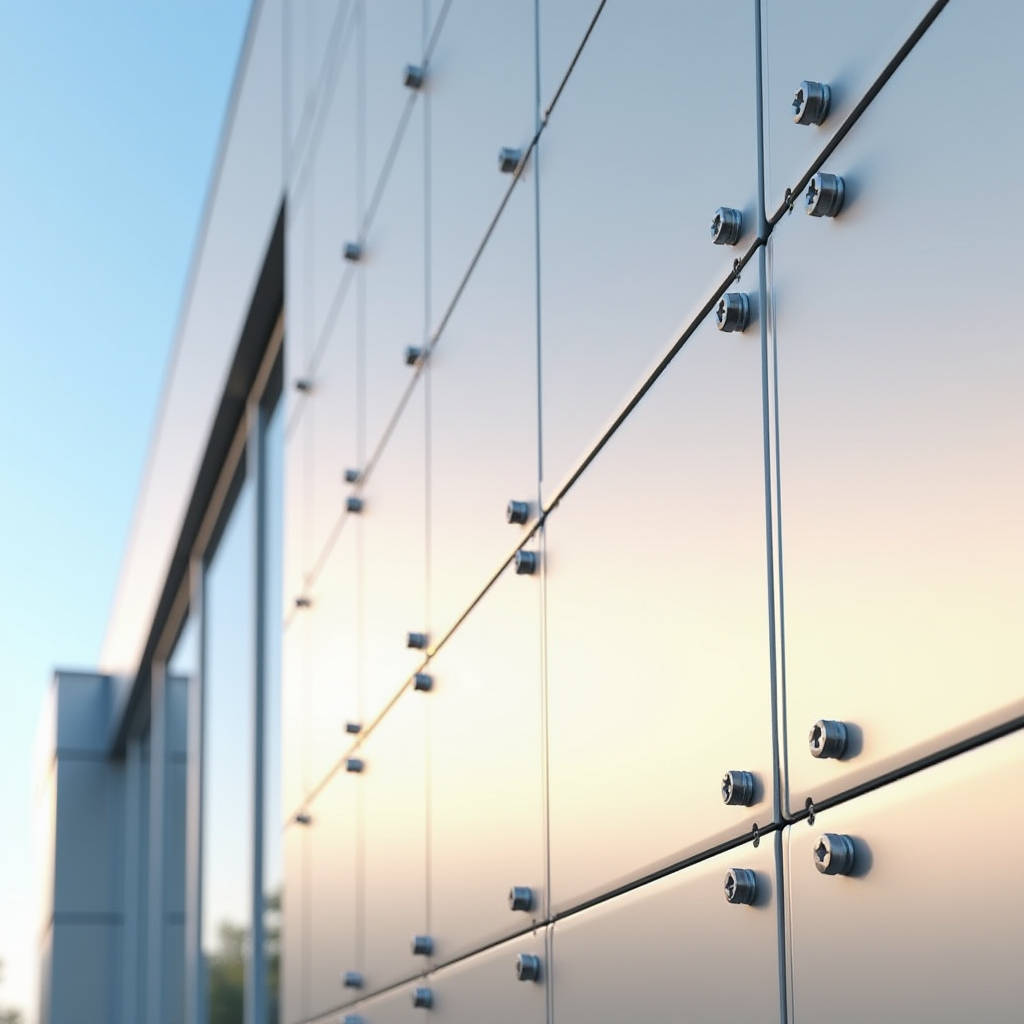
A screw fixed aluminum panel system still earns its place on demanding commercial facades, but only when the engineering behind every fastener is treated as seriously as the panel itself. Too many projects treat visible screw fixing as a cheap shortcut, then watch thermal movement, wind uplift, and corrosion turn a clean elevation into a maintenance liability. This article walks through the structural reality of face-fixed solid aluminium cladding: how to size sub-frames, select fasteners, control thermal expansion, and manage the visible fastening pattern so the system performs for decades. The guidance applies to solid aluminium sheets from 2.0 mm to 3.0 mm, not to thin composite laminates, and the numbers cited follow established curtain wall practice.
Why Face Fixing Still Matters on Solid Aluminium
Concealed cassette and rainscreen systems dominate premium high-rise work, yet the screw fixed aluminum panel system remains the workhorse for retrofit cladding, industrial buildings, plant rooms, and budget-conscious commercial elevations. The reason is straightforward: a face-fixed panel needs no complex perimeter fabrication, no hidden clip engagement, and no special edge profiles. A flat solid aluminium sheet, pre-drilled or self-drilled on site, is pulled directly onto a steel or aluminium sub-frame. Installation speed is high, replacement of a single damaged panel is simple, and the upfront fabrication cost is lower than a fully concealed system.
That simplicity has a price. Every visible screw head is a potential corrosion initiation point, every fastener is a thermal bridge, and every fixing point concentrates load into a small area of the sheet. A well-engineered face-fixed system manages all three. The visible fastening pattern is not a design afterthought; it is a deliberate structural grid that must be drawn, calculated, and coordinated before fabrication begins.
Load Path and Sub-Frame Design
The first engineering decision is the sub-frame grid. For a screw fixed aluminum panel system, the vertical support spacing is normally dictated by wind load and panel thickness. As a working estimate, a 3.0 mm solid aluminium panel spanning 1200 mm between vertical supports can carry a design wind load of roughly 1.8 kPa with an acceptable deflection limit of L/100. Drop the panel to 2.0 mm and the same span should be reduced to about 900 mm to hold the same deflection. These are starting points, not substitutes for a project-specific calculation, and they align with the deflection guidance in the AAMA CW-10 standard for curtain wall performance.
Horizontal rails are spaced to match the vertical fixing pitch, typically 300 mm to 450 mm. The sub-frame itself must be continuous, with no gaps at panel joints, because a face-fixed panel transfers its entire load through the fasteners into the rail. A broken or discontinuous rail creates a point of high stress that will eventually tear the sheet around the screw.
Fastener Selection and Spacing
Fastener choice is where most face-fixed failures begin. For solid aluminium cladding, stainless steel self-tapping screws with a corrosion-resistant coating are the baseline. The screw must be long enough to achieve a minimum thread engagement of 10 mm into the sub-frame, and the drill point must be matched to the sub-frame material. A self-drilling screw meant for steel will struggle in an aluminium extrusion, and vice versa.
Spacing follows a simple rule: the edge distance from the centre of the screw to the panel edge should be at least two screw diameters, and the pitch between fixings along a rail should not exceed 450 mm for a 3.0 mm panel under normal wind loads. Tighter spacing reduces local sheet deflection but increases the number of visible heads, so the pattern is a genuine design trade-off. For a clean architectural look, many specifiers use a single row of fasteners at the top and bottom of each panel rather than a dense grid, relying on the panel's stiffness to span the middle.
A face-fixed panel transfers its entire load through the fasteners into the rail. A broken or discontinuous rail creates a point of high stress that will eventually tear the sheet around the screw.
Thermal Movement and the Oversized Hole
Solid aluminium has a coefficient of thermal expansion of roughly 23 x 10⁻⁶ per degree Celsius. A 3000 mm panel exposed to a 60 °C temperature swing will grow or shrink by about 4 mm. If every screw is locked tight, that movement has nowhere to go and the sheet will buckle or the fasteners will shear. The standard answer is the slotted or oversized fixing hole.
In a correctly detailed screw fixed aluminum panel system, one fastener per panel is fixed solid to establish a datum, and the remaining fasteners sit in slotted holes oriented along the axis of expected movement. The slot length must accommodate the calculated thermal movement plus a safety margin. This is not a detail that can be improvised on site; the slots must be machined or punched at the fabrication stage, and the installation crew must understand which screw is the datum point.
Washers matter as much as the hole. A stainless steel or EPDM-backed washer spreads the clamping load and prevents the screw head from biting into the soft aluminium surface, which would create a stress raiser and a corrosion trap. The washer diameter should be at least three times the screw shank diameter.
Corrosion Control at the Fixing
Dissimilar metal contact is the hidden enemy of a face-fixed system. When a stainless steel screw meets a solid aluminium panel in the presence of moisture, a galvanic couple forms. The aluminium, being the more anodic metal, corrodes preferentially. The damage shows up as white oxide staining around the screw head and, over time, as a loosened fixing.
Three controls keep this in check. First, use a fastener with a compatible coating or a nylon/EPDM isolating washer so the screw never directly contacts the aluminium. Second, specify a PVDF coating on the panel that is fully cured and pinhole-free, because any coating defect at the hole edge exposes bare metal. Third, seal the fixing head with a colour-matched cap or a small bead of neutral-cure silicone that is compatible with the PVDF film. The AAMA 2605 specification for high-performance organic coatings is the reference for the minimum film thickness and weathering performance expected of a durable exterior finish.
Coating Performance and the Data Table
The visible fastening pattern draws the eye to the panel surface, which makes coating quality more critical on a face-fixed system than on a concealed one. A 3.0 mm solid aluminium panel with a 70% PVDF coating is the industry norm for exterior work, and the performance envelope is well defined. The table below summarises the practical parameters a specifier should check before approving a face-fixed solid aluminium panel.
| Parameter | Typical Value | Reference / Note |
|---|---|---|
| Panel thickness (solid aluminium) | 2.0 / 2.5 / 3.0 mm | Face-fixed panels below 2.0 mm risk edge tearing |
| PVDF coating dry film thickness | 25–35 µm (two-coat), 35–45 µm (three-coat) | Per AAMA 2605 for exterior durability |
| Maximum vertical support spacing | 1200 mm (3.0 mm), 900 mm (2.0 mm) | At 1.8 kPa design wind, L/100 deflection |
| Fixing pitch along rail | 300–450 mm | Tighter for higher wind zones |
| Edge distance to panel edge | ≥ 2 × screw diameter | Prevents edge tear-out |
| Fastener material | Stainless steel, coated | Isolating washer mandatory for aluminium |
| Thermal movement allowance | Slotted holes, ~4 mm per 3000 mm per 60 °C | One datum fixing per panel |
Installation Sequence and Quality Control
Field installation is where a screw fixed aluminum panel system either performs or fails. The sequence matters. Panels should be set from a surveyed datum line, with the datum fixing of each panel driven first and the slotted-hole fixings tightened only after the panel is aligned. Over-torquing is a common fault; a screw that is pulled too tight crushes the isolating washer and defeats its purpose. A torque-limited driver is a worthwhile investment on any face-fixed cladding contract.
Quality control should include a pull-out test on a sacrificial panel before production, verifying that the fastener-to-sub-frame connection achieves the design withdrawal resistance. For a 3.0 mm panel with a 5 mm stainless screw into a 3 mm aluminium rail, a realistic pull-out value is in the range of 1.5 to 2.5 kN per fixing, depending on thread engagement. These figures should be confirmed by the fastener manufacturer for the specific sub-frame alloy.
Wind-driven rain is the other field risk. Every visible screw head is a potential water path, so the fixing pattern must be coordinated with the panel's drainage slope. Panels should be installed with a slight outward slope at the base, and horizontal joints should be flashed or overlapped so water cannot sit on the fixing line. The AAMA 501 test method for water penetration is a useful acceptance criterion for a completed face-fixed elevation.
Cost Reality and When to Choose Face Fixing
On a per-square-metre basis, a face-fixed solid aluminium system typically costs 15 to 25 percent less than a fully concealed cassette system of the same panel thickness, because fabrication is simpler and installation is faster. That saving is real, but it is only justified when the visible fastening pattern is acceptable to the design intent. For elevations where the screw grid can be made part of the architecture, face fixing is a sound engineering choice. For a prestige facade where the surface must read as a clean uninterrupted plane, the concealed system is the honest answer.
When the decision is made to proceed with face fixing, the commercial lesson is to specify the full package rather than the raw sheet. A supplier that can deliver the panel, the pre-drilled or slotted holes, the matched fasteners, and the coating warranty as one coordinated package removes most of the field risk. Manufacturers such as Futeng® offer solid aluminium panels with factory-applied PVDF coatings and engineering support for face-fixed detailing, which is worth considering when procurement is consolidating the cladding package.
Practical Engineering Recommendations
For a project that has settled on a screw fixed aluminum panel system, the following points should be locked into the specification before fabrication begins. Confirm the sub-frame grid against the actual design wind load for the building height and exposure, not against a generic assumption. Select the fastener and isolating washer as a matched pair, and verify the pull-out resistance on the actual sub-frame alloy. Machine the slotted thermal-movement holes at fabrication, and mark the datum fixing on each panel so the installation crew cannot misread it. Specify a PVDF coating to AAMA 2605 and require a coating warranty that covers the exposed fixing zone. Finally, run a water penetration test on a full-scale mock-up before production, because a face-fixed elevation that leaks at the fixing line is expensive to correct after the building is occupied.
Face fixing is not a compromise when it is engineered properly. It is a deliberate, cost-effective, and maintainable method of attaching solid aluminium cladding, provided the load path, thermal movement, and corrosion controls are designed in from the start. Treat the visible screw as a structural element rather than a convenience, and the system will perform as well as any concealed alternative.