Visible Fastened Aluminum Panel Engineering Load Path Coating and Cost Advantages for Facade Contractors
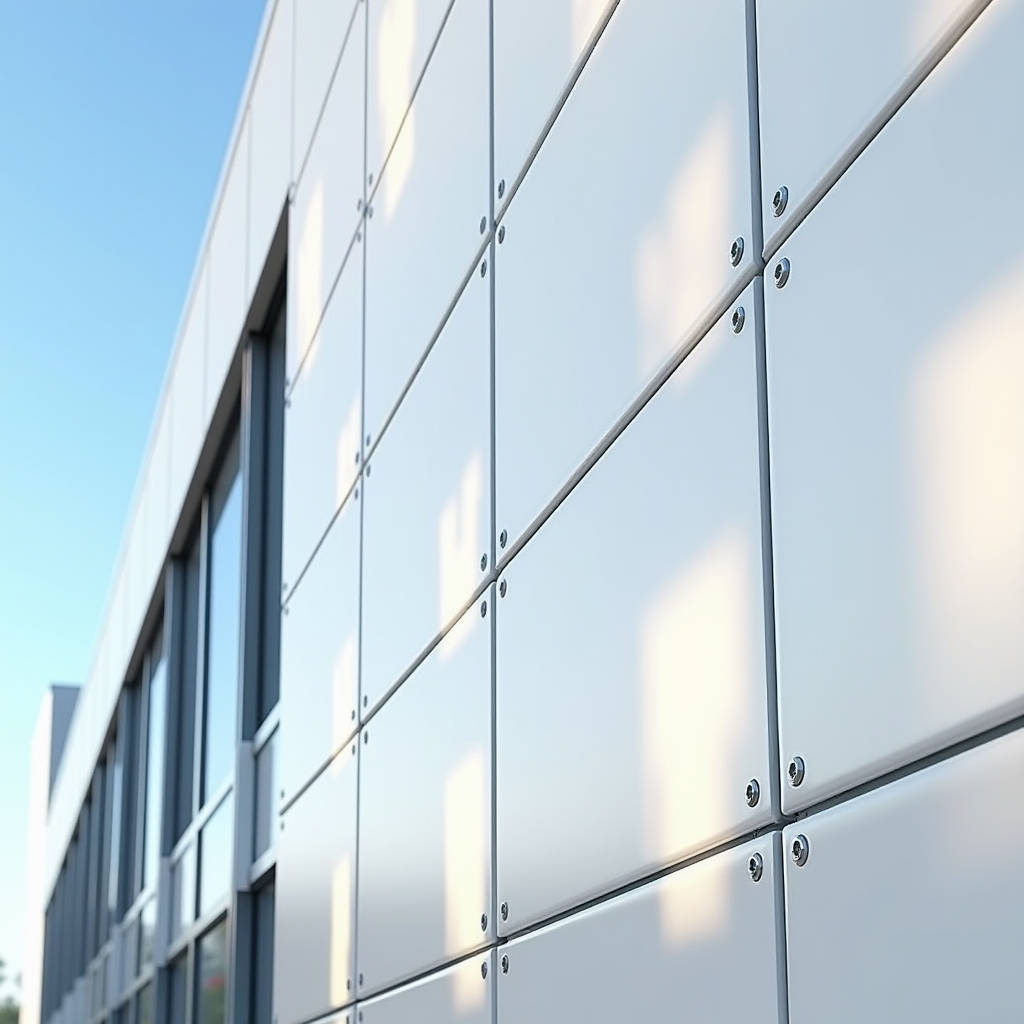
The Visible Fastened Aluminum Panel remains a workhorse in commercial and industrial cladding, yet it is frequently dismissed as the budget alternative to concealed systems. That judgment misses the engineering reality. When a solid aluminium panel is face-fixed with color-matched fasteners, the visible hardware becomes part of the structural load path, not a cosmetic afterthought. The visible fastener carries wind suction directly into the subframe, which simplifies the load calculation and cuts installation time on site. For a curtain wall contractor managing a tight schedule and a defined budget, this transparency is a genuine advantage. This article examines the technical limits, coating behavior, and cost structure of the Visible Fastened Aluminum Panel so you can specify it with confidence rather than by default.
Why the Visible Fastener Is a Structural Asset, Not a Weakness
Concealed systems hide their clips behind the panel face, which protects the hardware from weather but also hides the load path from the inspector. A Visible Fastened Aluminum Panel puts every screw in plain sight, and that visibility has real consequences for engineering. Each fastener is a discrete point of fixity that can be modeled, counted, and verified on site. The contractor can photograph every fixing point, and the engineer can confirm the exact number of fasteners per square metre against the wind load calculation.
For solid aluminium panels in the 2.0 to 3.0 mm range, the fastener is typically a stainless steel self-tapping or self-drilling screw with a bonded EPDM washer. The washer is the component that actually seals the hole, so its compression and age resistance matter more than the screw thread. A well-specified system uses a 4.8 mm or 5.5 mm drill point screw with a hex washer head, and the color of the head is matched to the PVDF coating to within a tight delta-E tolerance.
Load Path and Wind Resistance
The critical engineering difference is that the visible fastener transfers load in bearing and shear directly into the aluminium subframe. Because the fastener is exposed, the designer can use a larger head and a thicker shaft without worrying about hidden clearance. This gives the Visible Fastened Aluminum Panel a higher per-fastener load capacity than many concealed clip systems of comparable panel thickness.
For a typical 2.5 mm panel on a 600 mm by 900 mm module, a single 5.5 mm stainless screw with a 16 mm washer can be rated for roughly 1.2 kN of pull-out resistance in a 3 mm aluminium subframe. That figure assumes proper edge distance of at least three times the screw diameter and a minimum spacing of 150 mm between fixings. Under a design wind pressure of 2.0 kPa, a 0.54 m² panel area generates about 1.08 kN of net suction, so the fixing pattern must be calculated rather than guessed.
| Parameter | Visible Fastened Panel | Concealed Clip Panel |
|---|---|---|
| Panel thickness (solid aluminium) | 2.0–3.0 mm | 2.0–3.0 mm |
| Fastener exposure | Visible, color-matched head | Hidden behind face |
| Per-fixing rated capacity | Higher (larger head/shaft) | Lower (constrained by clip geometry) |
| On-site verification | Visual count and torque check | Requires disassembly or thermal imaging |
| Installation speed per panel | Faster, no alignment clips | Slower, clip alignment required |
| Fastener replacement | Direct, accessible | Panel removal required |
| Thermal movement accommodation | Via slotted holes / oversized drill | Via clip sliding action |
Coating Performance and the Fastener Interface
The durability of a Visible Fastened Aluminum Panel depends on two separate surfaces: the panel coating and the fastener head. The panel face is protected by a two-coat or three-coat PVDF system, typically 70% PVDF resin with a total dry film thickness of 25 to 35 microns. This is the coating that carries the AAMA 2605 performance specification, which is the appropriate benchmark for exterior architectural cladding in demanding environments.
The fastener head is a different problem. The screw is a manufactured part, not a coil-coated sheet, so it cannot carry the same baked PVDF system. The head is finished with a polyester powder coat or a baked enamel that is color-matched to the panel. Over a 10 to 15 year horizon, the head coating will fade at a different rate than the panel coating, which is why experienced specifiers order a small batch of spare fasteners at the time of the original procurement. The color match is specified against the same RAL or custom reference, and the acceptable delta-E is typically 1.0 or less at delivery.
Corrosion and Galvanic Compatibility
Because the fastener is exposed to rain, salt, and UV, the metallurgy of the screw matters more than in a concealed system. The screw should be A2 or A4 stainless steel, never zinc-plated carbon steel, to avoid galvanic corrosion at the aluminium interface. The EPDM washer must be a bonded, captive design so it cannot slide off the screw during installation. A captive washer that is compressed to 30 to 40 percent of its original thickness provides a reliable seal over the life of the panel.
For coastal installations, the ASTM B117 salt spray test is a useful screening tool, but the real performance is determined by the washer seal and the drainage behind the panel. A Visible Fastened Aluminum Panel that is installed over a drained and ventilated cavity will keep the fastener dry from behind, which extends the service life of both the screw and the panel edge.
Thermal Movement and the Slotted Hole Strategy
Solid aluminium has a coefficient of thermal expansion of roughly 23 x 10⁻⁶ per degree Celsius. Over a 3 m panel length and a 70°C temperature swing, that produces about 4.8 mm of total movement. A Visible Fastened Aluminum Panel cannot absorb this movement if every screw is driven into a round hole. The standard solution is to fix one point rigidly and allow the remaining fasteners to sit in slotted holes oriented along the axis of expansion.
The slot is typically 6 mm wide and 12 mm long, drilled oversize, with the screw tightened to a torque that allows the panel to slide without loosening the washer. This is a detail that is easy to get wrong on site. The installer must know which hole is the fixed point and which are the slotted holes, and the sequence of tightening matters. If the contractor tightens all screws to full torque, the panel will buckle or the fasteners will shear under thermal stress.
Modern systems use a bonded washer with a low-friction facing on the underside so the panel can slide over the washer without tearing the seal. This is the same principle that makes concealed clip systems work, but applied to a visible fixing. The result is a panel that can move freely while keeping the fastener head sealed and the coating intact around the hole.
Cost Structure and Installation Economics
The Visible Fastened Aluminum Panel earns its place on the cost sheet for two reasons: lower material cost for the fixing hardware and lower labour cost on site. A concealed system requires a clip, a clip rail, and alignment time for every panel. A visible system requires only a screw and a drill. The hardware cost per square metre is typically 30 to 40 percent lower, and the installation time is roughly 20 to 25 percent faster for a competent crew.
That labour saving is significant on a large facade. A crew fixing 80 to 100 panels per day on a visible system might manage 60 to 75 on a concealed system, because each concealed panel requires clip alignment and a level check. Over a 10,000 m² facade, the difference in labour hours can amount to several thousand dollars, which is often the deciding factor for a general contractor working to a fixed lump-sum price.
For procurement managers, the supply chain is simpler as well. A Visible Fastened Aluminum Panel project needs the panel, the matching screw, and the sealant. A concealed project needs the panel, the clip, the clip rail, the setting blocks, and the alignment tooling. Fewer line items means fewer back-order risks and a shorter lead time from the fabricator. This is where a supplier like Futeng® earns its reputation, by delivering solid aluminium panels with a consistent thickness tolerance and a fastener package that matches the coating batch.
Design Flexibility and Aesthetic Detailing
The visible fastener is not a limitation on design; it is a design language. A regular grid of color-matched fasteners reads as a deliberate pattern, and many architects use it to express the module of the facade. The fastener spacing can be aligned with the panel joints, or offset to create a secondary rhythm. The head size can be specified to be subtle or bold, depending on the project intent.
For flush and reveal panels, the visible fastener is placed in the reveal or at the panel edge, where it is partly shadowed and less obtrusive. For a flat panel with a pencil rib, the fastener is often placed in the rib, which hides the head in the shadow line. This is the same profile logic used in the Metal Construction Association guidance on exposed fastener panels, and it gives the designer a genuine choice between a clean flush look and an expressed mechanical aesthetic.
Color Matching and Coating Batch Control
The single most common complaint about a Visible Fastened Aluminum Panel is fastener color drift. The panel is coil-coated or spray-coated in a batch, while the fasteners are powder-coated in a separate process. If the two batches are not controlled against the same reference, the heads will read as a different shade in direct sunlight. The fix is to require a color chip from the fastener supplier, matched against the panel reference under a standard light source, and to reject any fastener that exceeds the agreed delta-E.
The ISO 2360 standard for coating thickness measurement is a useful tool here, because it gives both the panel and the fastener supplier a common way to verify dry film thickness. A fastener head with a powder coat of 60 to 80 microns will hold its color longer than a thin 25 micron coat, and this is worth specifying explicitly in the purchase order.
Maintenance and Replacement in Service
Because the fasteners are visible, maintenance is straightforward. A periodic inspection can check for loose screws, cracked washers, or coating failure around the hole without removing any panels. A loose screw is retorqued, and a failing washer is replaced by removing one screw and driving a new one. This is a genuine operational advantage over a concealed system, where a failed clip requires removing the entire panel and risking damage to the adjacent panels.
For a building owner, this means the Visible Fastened Aluminum Panel has a lower long-term maintenance cost in the fastener zone, provided the coating system is maintained. The panel coating itself should be washed on the same cycle as any exterior cladding, and the fastener heads should be included in that wash. A simple annual inspection and a five-year recoating of the heads, if needed, will keep the facade looking uniform.
Specification Guidance for Contractors and Architects
Specify the Visible Fastened Aluminum Panel for projects where installation speed, cost control, and on-site verification are the priorities. It is the right choice for industrial buildings, logistics centres, plant rooms, and any facade where the fastening pattern is an accepted part of the architectural expression. It is less appropriate where a completely uninterrupted reflective surface is required, although a reveal or rib profile can come close to that look.
In the specification, state the panel thickness, the PVDF coating system and its AAMA 2605 compliance, the fastener grade and washer type, the slotted hole strategy, and the acceptable color delta-E. Require the fabricator to supply a sample panel with the specified fasteners installed, so the color match and the torque can be verified before mass production. This single step prevents most of the field problems that plague exposed fastener systems.
For a reliable supply of solid aluminium panels and a matched fastener package, a fabricator such as Futeng® can provide the thickness tolerance, coating consistency, and batch control that keep the visible fastening system performing over its design life. The panel and the fastener are a single system, and they should be procured and quality-controlled as one unit.
The Visible Fastened Aluminum Panel is not a compromise. It is a deliberate engineering choice with a clear load path, a faster installation, a lower hardware cost, and a simpler maintenance regime. When the fastening pattern is designed into the facade rather than hidden from it, the result is a cladding system that is honest about how it works and reliable in how it performs. Specify it for the reasons it is strong, not as a fallback, and the facade will reward that decision for decades.