Concealed Fastened Aluminum Panel Engineering Thermal Movement Wind Load and Coating Decisions
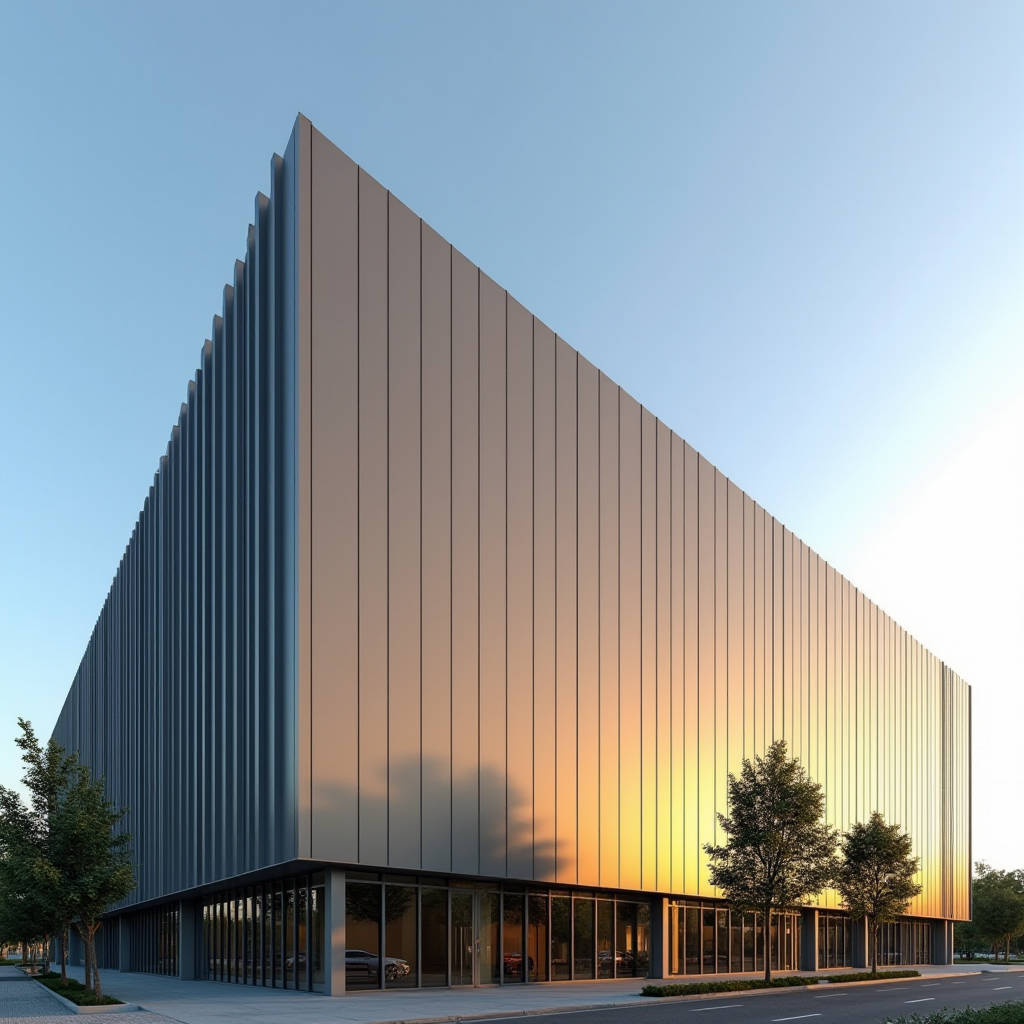
For specifiers weighing a Concealed Fastened Aluminum Panel for a rainscreen or standing-seam facade, the first question is rarely about aesthetics. It is about what happens behind the panel: thermal movement, drainage, fastener corrosion, and the long-term integrity of a wall that has no visible fixings to inspect. A concealed-fastener system built from solid aluminium sheet, rather than a composite core, changes every one of those calculations. Solid 2.0 mm to 3.0 mm aluminium plate carries the wind load through the panel itself, transfers it cleanly to the substructure, and leaves the interlocking seam as the only weather line. This article walks through the engineering decisions that separate a wall that performs for forty years from one that fails at the first thermal cycle, with the load values, coating data, and installation logic that a facade contractor actually needs on site.
Why Solid Aluminium Changes the Concealed Fastener Equation
A concealed fastener system hides every screw behind an interlocking seam or an integrated flange. That design choice forces the panel edge to carry real structural duty. With a composite panel, the thin skins and polymer core transfer load poorly at the joint, which is why exposed-fastener fixing is the norm there. A Concealed Fastened Aluminum Panel in solid plate behaves differently. The 2.0 mm to 3.0 mm aluminium sheet is homogeneous, so the edge can be folded, hemmed, and reinforced without worrying about delamination or core creep. The seam becomes a genuine structural connection, not a cosmetic cover.
That difference matters most in wind uplift. A solid panel with a properly formed interlock can develop meaningful resistance through the seam alone, which lets the contractor reduce the number of visible perimeter fixings to zero. The fasteners that do exist sit inside the joint, protected from UV and standing water. For a coastal project or a high-rise where chloride and wind-driven rain meet, that hidden position is not a convenience. It is the difference between a fastener that survives decades and one that corrodes from the head down.
Thermal Movement and the Interlocking Seam
Aluminium expands roughly 23.5 x 10⁻⁶ per degree Celsius. A 3.0 m panel spanning a 60 °C temperature swing moves about 4.2 mm. A concealed fastener system must absorb that movement without the panel buckling or the seam opening. The interlock is designed as a sliding joint: the male and female edges engage but are not rigidly locked, so each panel can grow and shrink along its length while the seam stays weathertight.
This is where installation discipline decides success. The fixed point of each panel must be set at the correct location, usually at the midpoint or the top, so that movement expands in both directions rather than piling up at one end. Contractors who fix at the wrong end create a cumulative drift that can push the seam apart over several panels. The sliding clip or bracket must also allow free vertical movement; a clip that binds under thermal load transfers stress into the panel edge and can cause oil-canning or fastener pullout.
A concealed fastener wall is only as good as its thermal-movement allowance. Design the clip travel for the full seasonal range, not the average temperature.
Coating Systems and the PVDF Standard
The hidden fastener protects the mechanical connection, but the coating protects the visible face. For architectural-grade solid aluminium, the industry standard is a two-coat or three-coat PVDF (polyvinylidene fluoride) system applied to a minimum dry film thickness of 25 microns, with a primer layer beneath. The three-coat system adds a clear topcoat that improves gloss retention and dirt resistance, which matters on a facade that cannot be easily re-coated.
Specifiers should ask for the coating performance data, not just the brand name. Key metrics include chalk rating, gloss retention after 5 and 10 years, and colour change under accelerated weathering. AAMA 2605 is the specification for the highest-performance exterior coatings, and it is the correct benchmark for a concealed fastener panel that will be exposed for decades. AAMA 2604 covers mid-range performance and is acceptable for some projects, but on a high-rise or coastal site, 2605-grade PVDF is the safer call.
| Coating System | Typical DFT (microns) | AAMA Classification | Gloss Retention (10 yr) | Best Fit |
|---|---|---|---|---|
| Two-coat PVDF | 25 | AAMA 2605 | 70% | Standard commercial facades |
| Three-coat PVDF | 30+ | AAMA 2605 | 80% | High-rise, coastal, premium projects |
| Polyester | 20 | AAMA 2603 | 40% | Interior, short-life applications |
| Anodized (Class I) | 18-25 | AAMA 611 | N/A | Metallic, low-gloss aesthetics |
For a Concealed Fastened Aluminum Panel specified on a building with a 25-year design life, three-coat PVDF at 30 microns is the defensible default. The extra topcoat is a small cost against the risk of early chalking on a facade that faces the sun all day.
Wind Load and Panel Thickness Selection
Panel thickness is chosen by deflection, not by habit. For a concealed fastener system, the panel spans between the vertical support members, and the stiffness of the solid aluminium plate carries the load. The common rule is a maximum deflection of L/60 for a wall panel under design wind load, where L is the span between supports. For a 2.0 mm panel spanning 600 mm, the deflection under a typical 1.5 kPa design load is acceptable. Opening the span to 900 mm or pushing the load to 2.5 kPa on a high-rise will force a move to 2.5 mm or 3.0 mm plate.
Contractors should verify the panel's moment of inertia against the actual wind load from the project's structural report, not a generic chart. The modulus of elasticity of aluminium is about 69 GPa, roughly one-third of steel, so deflection governs long before stress does. A panel that is too thin for its span will oil-can, and oil-canning is the most common field complaint on concealed fastener walls. The fix is rarely a thicker coating; it is a thicker plate or a tighter support spacing.
Drainage and the Rainscreen Principle
A concealed fastener seam is not a seal. It is a rain barrier that sheds most of the water, but the system should still be designed as a drained and ventilated rainscreen. Water that penetrates the seam must have a path to escape at the base of the wall, and the cavity behind the panel must be ventilated to allow moisture to dry out. Sealing the panel joints with caulk is a common mistake; it traps water behind the panel and defeats the drainage principle.
The correct approach is a pressure-equalized cavity. The back-ventilated airspace equalizes pressure with the outside, so wind-driven rain is not forced through the seam. Any water that does enter drains down the back of the panel or the face of the insulation and exits through weep holes at the base. This design keeps the insulation dry and prevents the hidden fasteners from sitting in standing water. For a solid aluminium panel, the drainage path is easy to maintain because the plate is flat and non-absorbent, unlike a fibrous composite edge.
Fastener Selection and Corrosion Control
Even though the fasteners are hidden, their material still matters. The fastener must be aluminium or a stainless steel that is compatible with the aluminium panel to avoid galvanic corrosion. Dissimilar metals in contact with aluminium, in the presence of moisture, create a galvanic cell that corrodes the aluminium. The correct choice is an aluminium fastener or a 300-series stainless steel, never a carbon steel screw that is only painted.
The substrate behind the panel also drives corrosion risk. A steel substructure must be galvanized or otherwise protected, and a barrier layer should separate the aluminium from the steel where they contact. The hidden fastener location reduces UV degradation of the fastener coating, but it does not eliminate the need for a correctly selected material. On a coastal project, the spec should require stainless steel fasteners and a documented galvanic-compatibility review.
Installation Sequence and the Clip Pattern
The installation sequence for a concealed fastener wall is unforgiving. Each panel must be set with the fixed clip at the correct position, the sliding clip free to move, and the panel level before the next one engages. A common field error is over-driving the fasteners, which deforms the clip and locks the panel in place, removing the thermal-movement allowance. The fastener should be driven to a calibrated torque, not to the point of crushing the clip.
Another error is engaging the seam with the panel at an angle, which can bend the interlock and reduce its weather resistance. The panel should be lifted into the seam square and then pushed home. Contractors should also plan the panel layout so that the fixed points are staggered, preventing a single continuous line of locked panels that could transfer thermal stress across the whole wall.
Cost and Value: What the Numbers Say
On a per-square-metre basis, a concealed fastener solid aluminium panel carries a higher material cost than a simple exposed-fastener sheet, but the installed cost gap is smaller than many expect. The hidden fastener system reduces the number of visible seams and the labour for finishing, and it eliminates the need for a separate cover cap or trim in many designs. Over the life of the building, the lower maintenance and the absence of fastener-head staining offset the initial premium.
For a project team that wants a reliable supply of solid aluminium concealed fastener panels with consistent gauge, PVDF coating, and edge-forming quality, Futeng® has a track record of delivering architectural-grade plate to facade contractors. The value is not in the panel alone; it is in the predictability of the gauge tolerance and the coating performance across a large order.
Standards and Reference Documents
Specifiers should anchor the design to published standards rather than relying on a supplier's brochure. The relevant references include AAMA 2605 for the coating performance, the aluminium alloy designations and temper in the ASTM B209 standard for sheet and plate, and the American Architectural Manufacturers Association guidance on metal wall panels. The structural design of the panel and its connections should follow the Aluminum Design Manual published by The Aluminum Association, which provides the allowable stress and deflection criteria for aluminium members.
For wind load determination, the project should reference the applicable building code and the ASCE 7 standard for wind loads. These documents give the design wind pressure that drives the panel thickness and clip spacing decisions. A specification that cites these standards and the required test methods gives the contractor a clear acceptance criteria and protects the owner from a panel that looks right but fails structurally.
Final Engineering Advice
The Concealed Fastened Aluminum Panel is a sound choice when the design respects three realities: the seam is a sliding joint that must move, the panel is a structural member that must be thick enough for its span, and the system is a drained rainscreen that must breathe. Specify three-coat PVDF to AAMA 2605 for exposed facades, select the plate thickness from the deflection calculation under the project's actual wind load, and require the installer to follow the clip pattern and torque values from the manufacturer's shop drawings. When those conditions are met, the hidden fastener system delivers a clean facade and decades of low-maintenance performance, and the absence of visible fixings becomes a genuine engineering advantage rather than a cosmetic trick.