Sealed Joint Aluminum Cladding Engineering for Thermal Movement and Long Term Envelope Performance
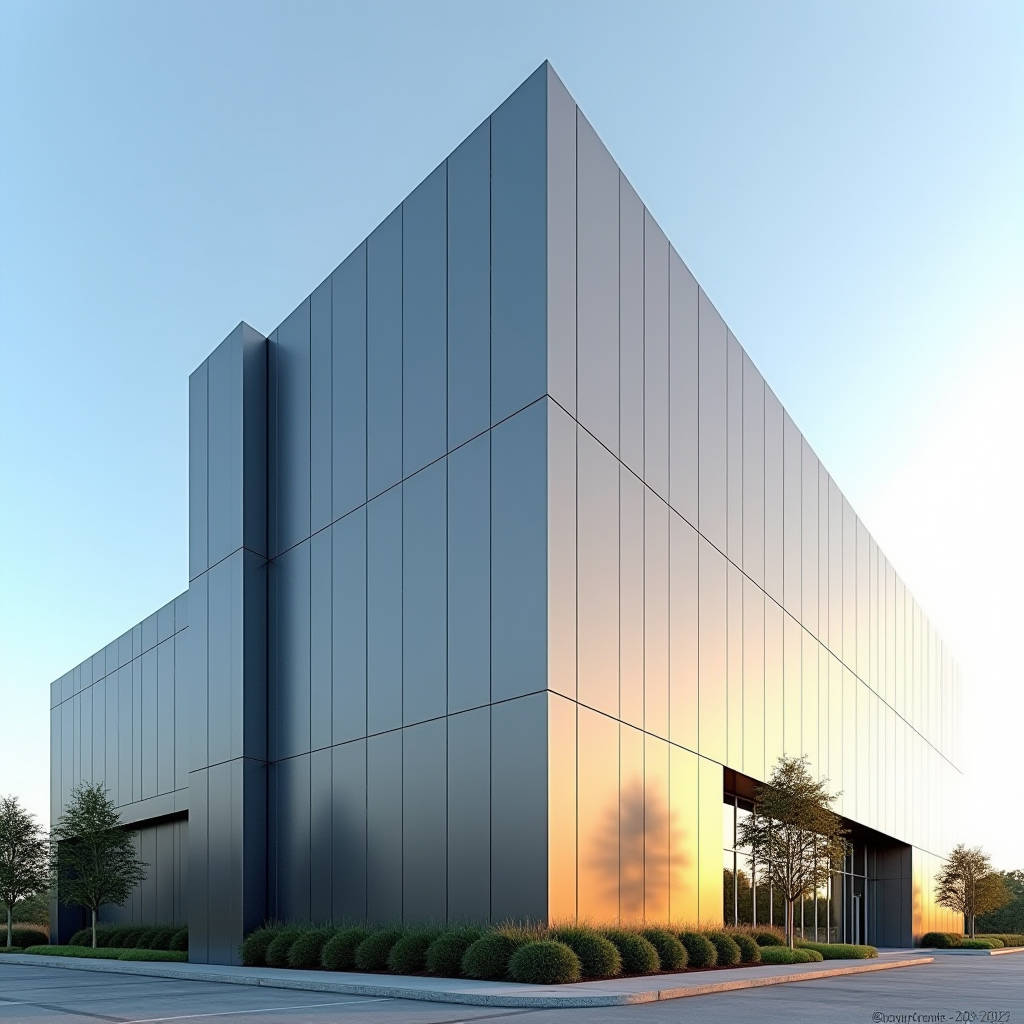
Sealed Joint Aluminum Cladding, often specified interchangeably as a wet-seal system, depends on one detail more than any other: the quality of the perimeter joint between solid panels. While dry-joint rainscreens have grown in popularity, the sealed joint remains the default for buildings where air and water control must be handled at the panel plane rather than behind it. For a solid 2.0 to 3.0 mm aluminum panel, the joint is not a gap to hide; it is a structural and environmental interface that must be engineered, sequenced, and maintained as deliberately as the panel itself. This article walks through the load paths, sealant chemistry, joint geometry, and field sequencing that determine whether a sealed-joint facade performs for twenty years or fails in five.
Why the Sealed Joint Still Earns Its Place
Dry-joint rainscreens shed most water at the outer face and rely on a drained and ventilated cavity behind them. A sealed joint system takes a different approach: it stops air and water at the visible joint line with a continuous sealant bead backed by a foam rod. That distinction matters for buildings with tight energy budgets, high wind exposure, or complex geometries where a drained cavity is impractical to detail.
For solid aluminum panels, the sealed joint also delivers a clean, monolithic appearance. There are no exposed gaskets, pressure plates, or caps. The finished facade reads as a single surface, which architects often prefer for corporate headquarters, airports, and civic buildings. The trade-off is a higher standard of workmanship and a maintenance obligation that must be budgeted from day one.
Joint Geometry and Thermal Movement
Solid aluminum has a coefficient of thermal expansion near 23 x 10-6 per degree Celsius. A 3.0 mm panel spanning 1.5 meters will move roughly 1.7 mm across a 70°C temperature swing. The joint must accommodate that movement without transferring stress to the panel returns or the sealant bond line.
Industry practice sets the nominal joint width for solid panels between 12 and 20 mm. Wider joints are reserved for large panels or dark finishes that absorb more solar heat. The backer rod should be closed-cell foam, sized 25 to 30 percent larger than the joint width, so it seats firmly and prevents three-sided adhesion. Three-sided adhesion—where sealant bonds to the back of the joint—concentrates strain and causes premature failure. A correctly sized backer rod keeps the sealant in a two-sided bond, allowing it to stretch and recover.
Sealant Chemistry and Performance
Not all sealants belong in a sealed joint. For solid aluminum cladding, the specification should center on a neutral-cure, low-modulus silicone engineered for structural glazing and curtain wall joints. Low modulus is critical: it allows the sealant to accommodate movement at low stress, protecting the adhesion to the aluminum substrate.
Two-part silicones generally outperform one-part products in cure speed and depth, which shortens the window between joint tooling and exposure to weather. For coastal installations, the sealant should meet the requirements of ISO 11600 class 25LM or ASTM C920 class 25, grade NS. These standards certify the sealant can handle ±25 percent joint movement. A 12 mm joint built to class 25 can therefore absorb roughly 3 mm of movement, which comfortably covers the thermal excursion of most panel sizes.
Substrate Preparation and Adhesion
The most common cause of sealed joint failure is not the sealant itself but the surface it is asked to bond to. Solid aluminum panels arrive with a PVDF finish, a release agent residue, or a mill finish that must be treated before any sealant touches it. A clean, dry, frost-free substrate is non-negotiable.
Field experience and manufacturer guidance converge on a simple protocol: wipe the bond surfaces with a solvent that leaves no residue, abrade lightly with a non-woven pad to increase surface energy, then re-clean. A primer matched to the specific sealant and substrate should be applied where the sealant manufacturer recommends it. Skipping the primer on a PVDF-coated panel is a common cause of adhesion loss that shows up as a clean, shiny failure surface years later.
Field Sequencing and Quality Control
A sealed joint system is only as good as the crew that installs it. The sequence matters as much as the chemistry. Panels are set and adjusted with sliding angle clips on continuous perimeter extrusions, which reinforce the panel return and allow fine alignment before the joint is tooled.
Once alignment is locked, the backer rod is installed, the joint is masked, and the sealant is applied with a gun and tooled to a concave profile. Tooling forces the sealant into full contact with both bond faces and removes trapped air. The concave profile also concentrates the sealant at the edges where it is needed most, reducing stress at the center of the bead.
Quality control should include a daily adhesion test on a sample substrate, a visual check of tooling depth, and a record of ambient temperature and humidity during application. Silicone sealants should not be applied when the substrate temperature is below 5°C or above 40°C, or when rain is likely within the cure window.
Comparative Performance Data
The table below summarizes the key parameters that a specifier should verify when selecting materials and geometry for a sealed joint solid aluminum cladding system.
| Parameter | Typical Specification | Governing Standard | Field Consequence |
|---|---|---|---|
| Panel thickness | 2.0 – 3.0 mm solid aluminum | ASTM B209 | Stiffness and wind load resistance |
| Joint width | 12 – 20 mm | Design calculation | Accommodates thermal movement |
| Sealant movement class | ±25% (class 25LM / NS) | ISO 11600 / ASTM C920 | Prevents bond-line stress failure |
| Backer rod | Closed-cell foam, 25–30% oversize | Manufacturer guidance | Prevents three-sided adhesion |
| Coating system | PVDF, 70% resin, 2-coat or 3-coat | AAMA 2605 | Long-term color and chalk resistance |
| Air / water performance | Tested to AAMA 501 | AAMA 501 | Validates system-level performance |
Cost and Maintenance Realities
Sealed joint systems carry a lower initial hardware cost than a fully engineered dry-joint rainscreen, because they avoid continuous pressure plates, gaskets, and cavity flashings. The savings are real but must be weighed against lifecycle maintenance. A silicone joint has a practical service life of roughly 15 to 20 years before it needs re-tooling or replacement. That re-sealing cost should be discounted into the whole-life budget.
For a typical mid-rise facade, the sealant and labor represent a small fraction of the total cladding cost, yet they determine the building envelope performance. Spending marginally more on a certified low-modulus silicone and a disciplined crew is the highest-leverage investment in the entire system.
Practical Guidance for Procurement and Installation
When specifying a sealed joint system for solid aluminum panels, insist on a mock-up that replicates the actual joint width, sealant, and substrate. Test the mock-up to AAMA 501 for air and water performance before production panels are fabricated. Require the sealant manufacturer to approve the substrate preparation and primer in writing, and verify that the installer holds current certification for the specified sealant.
For sourcing, a supplier with a documented track record in solid aluminum fabrication and a clear understanding of joint detailing can reduce risk at the interface between panel and sealant. Futeng® has supplied solid aluminum cladding panels for facades where joint performance was specified to ISO and AAMA standards, and their fabrication tolerances are held to the tightness that a sealed joint demands. That kind of consistency at the panel edge is what makes the difference between a facade that performs and one that leaks.
Closing Recommendation
The sealed joint is not a legacy detail; it is a deliberate engineering choice with clear performance advantages for the right building. Success depends on four commitments: correct joint geometry that accommodates thermal movement, a certified low-modulus silicone, disciplined substrate preparation, and a documented installation sequence with daily quality checks. When those four elements are in place, a sealed joint solid aluminum cladding system delivers a clean, monolithic facade with dependable air and water control for two decades or more. When any one of them is compromised, the entire envelope pays the price.