Qualicoat Certified Aluminum Panel Coating Class and Substrate Selection for Coastal Facades
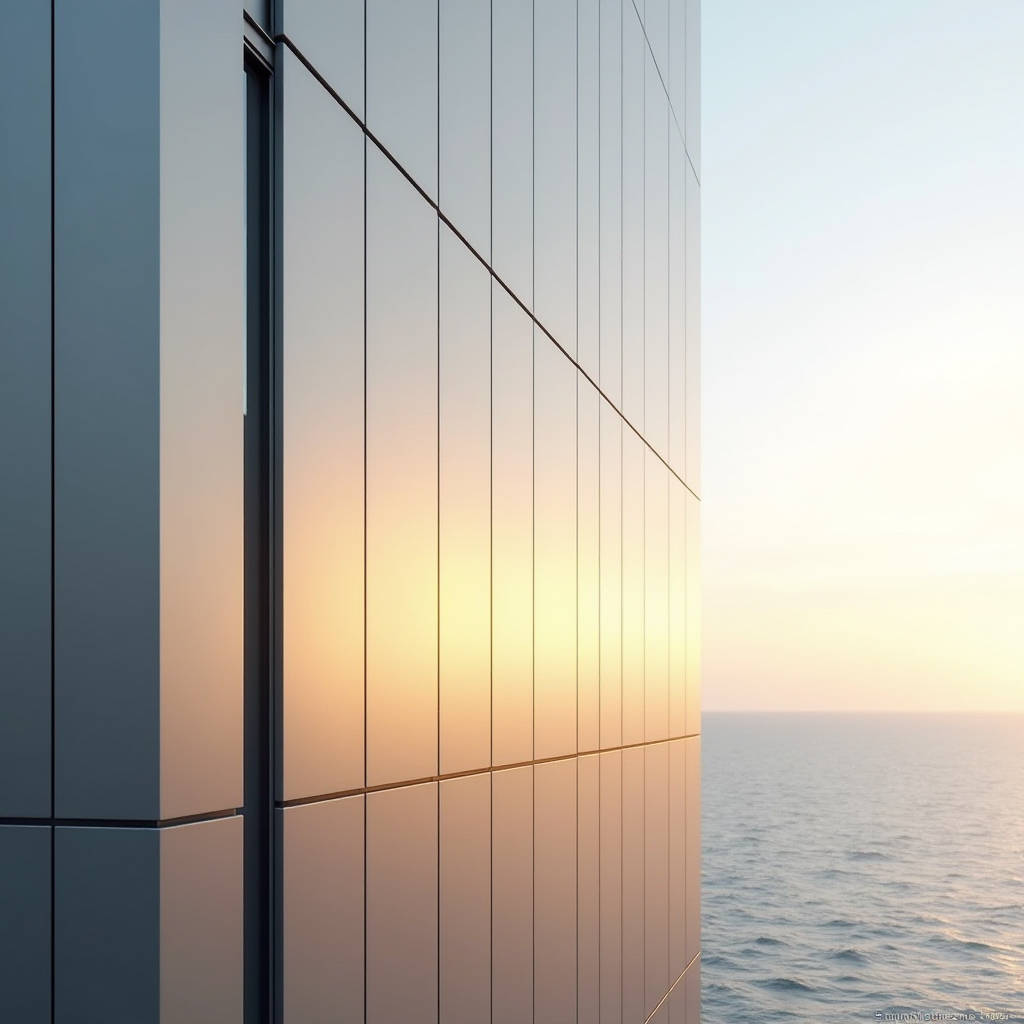
When a European facade specification demands a Qualicoat Certified Aluminum Panel, the conversation usually stops at the coating. That is a mistake. The certification is a product-level scheme, but its real value on a construction site is only unlocked when the panel substrate, the coating class, and the fabrication method are treated as one engineered system. This article walks through what the Qualicoat mark actually guarantees, where its limits sit, and how a procurement team can translate a certificate into a cladding assembly that survives a coastal climate, a 25-year warranty cycle, and a site inspection without friction.
What the Qualicoat Label Actually Certifies
Qualicoat is a product certification scheme, not a material brand. It grants licences to national and international associations, which in turn inspect coating plants and issue the quality label. The governing document is the Qualicoat Specifications, updated annually, which define minimum requirements for plant equipment, coating materials, and finished products. A certified panel carries the label only when the entire production chain, from pretreatment to final cure, meets those thresholds.
For a buyer, the practical meaning is clear: the coating on a Qualicoat Certified Aluminum Panel has been verified against a defined set of mechanical, chemical, and weathering tests. The label is not a vague marketing claim. It is a traceable, audited result tied to a specific plant and a specific coating batch.
Class 1, Class 2, and Class 3: Choosing the Right Performance Tier
The most common mistake in specifying is treating "Qualicoat" as a single grade. The scheme defines three classes, and they are not interchangeable. Class 1 is the entry tier for general architectural use. Class 2 adds a higher level of resistance for aggressive inland and industrial environments. Class 3 is the top tier, reserved for severe coastal and marine exposure, and it is the class most often named in European PPC aluminum panel specifications.
Class 3 is frequently compared to AAMA 2605 in the United States. Both standards sit at the same demanding level, requiring the most rigorous accelerated weathering, humidity, and adhesion tests. The difference is geographic convention: Class 3 dominates powder coating in Europe, while AAMA 2605 governs PVDF pre-coated panels in much of the rest of the world. A specifier who writes "Qualicoat Class 3" for a project in Miami, or "AAMA 2605" for a project in Rotterdam, is asking for the same broad performance envelope, but the test protocols and the acceptance criteria are not identical.
For a solid aluminum panel of 2.0 mm or 3.0 mm thickness, the class choice should follow the microclimate of the building face, not the project budget. A Class 1 finish on a 400-meter inland office tower is defensible. The same coating on a seafront hotel is a warranty risk.
Substrate and Alloy: The Half of the System Nobody Certifies
Qualicoat certifies the coating and the coated product. It does not certify the structural integrity of the aluminum alloy underneath. This is where procurement teams lose money. A beautiful Class 3 finish on a 1.5 mm sheet of unknown temper will fail in wind load, not in color fade.
The Qualicoat Specifications themselves point to the alloys used for test panels: AA 5005-H24 or -H14, in 0.8 or 1.0 mm thickness, unless otherwise approved. That is the reference substrate for coating tests, and it is a good baseline for architectural panels. For structural cladding, however, the industry standard is a thicker core. A solid aluminum cladding panel should be specified at 2.0 mm, 2.5 mm, or 3.0 mm, in alloys such as AA 3003, AA 5005, or AA 6061, depending on the stiffening strategy and the wind zone.
The coating is applied to the finished panel, not to the coil. That means the fabricator must manage the alloy, the temper, the surface preparation, and the forming sequence before the powder or PVDF ever touches the metal. A Qualicoat Certified Aluminum Panel is only as good as the flatness and the edge geometry of the sheet it covers.
PVDF and Powder: Two Coating Routes, One Label
Qualicoat covers both liquid and powder coatings. The two routes behave differently on site, and the specification should name one. PVDF (polyvinylidene fluoride) is the dominant liquid choice for exterior solid aluminum panels, with a typical dry film thickness of 25 to 30 microns over a chromate or chrome-free pretreatment. It offers outstanding gloss retention and chalk resistance in UV-heavy environments.
Powder coating, by contrast, is applied at a heavier film build, typically 60 to 80 microns, and cures as a thermoset. It is tougher against impact and abrasion, which makes it popular for Class 1 and Class 2 interior and sheltered exterior work. The choice between the two is not about quality, it is about the failure mode you are willing to accept. PVDF fades slowly and evenly; powder can chip on a sharp edge but resists scratches.
For a coastal facade, most European specifiers default to Class 3 PVDF. For a high-traffic podium or a curtain wall with frequent cleaning, a Class 2 powder may be the more rational call. The label alone does not make this decision for you.
Test Panels and the Site Inspection Reality
Site inspectors do not read the full Qualicoat Specification on the day of delivery. They check three things: the label, the batch number, and the physical sample. That is why the test panel matters. The Qualicoat scheme requires test panels made to defined alloys and thicknesses for salt spray, impact, and drawing tests. A fabricator who cannot produce a matching test panel on request has, in practice, no certification.
Before you place an order, ask for the mill certificate of the substrate alloy and the coating batch certificate. Cross-check the batch number against the Qualicoat licensed plant register. If the panel is delivered with a label but no traceable batch, treat it as a red flag. The certification is only as useful as the paper trail behind it.
Fabrication, Fastening, and the Coating Edge
A common field failure is not the coating face but the cut edge. When a solid aluminum panel is sheared, routed, or punched after coating, the exposed aluminum edge has no protection. Over time, edge corrosion creeps under the coating and lifts it. This is not a Qualicoat failure; it is a fabrication failure.
Two mitigations are standard. First, specify edge-sealing or a return edge that folds the coating around the corner, which is why many fabricators prefer a formed tray or cassette over a flat sheet. Second, specify stainless steel or coated fasteners, never bare steel, because galvanic corrosion at the fixing point will destroy the panel long before the coating fades.
For a 3.0 mm solid panel, the stiffening strategy also matters. A flat 3.0 mm sheet spanning more than about 900 mm between supports needs a stiffener or a cassette profile to hold flatness under wind suction. The coating is irrelevant if the panel drums in the wind.
Cost and Performance Comparison
| Parameter | Class 1 Powder | Class 2 Powder | Class 3 PVDF |
|---|---|---|---|
| Typical dry film thickness | 60–80 µm | 60–80 µm | 25–30 µm |
| Accelerated weathering target | Standard | Enhanced | Severe coastal / marine |
| Gloss retention | Moderate | Good | Excellent |
| Impact / abrasion resistance | High | High | Moderate |
| Relative coating cost per m² | Base | +15–25% | +30–50% |
| Typical application | Interior, sheltered facade | Industrial, inland facade | Coastal, high-rise, marine |
The cost delta between classes is real but modest relative to the total wall assembly. A Class 3 upgrade on a 2.5 mm panel typically adds a small percentage to the panel price, while the replacement cost of a delaminated or faded facade is multiples of that. The class decision should be made on the exposure map, not on the unit price sheet.
Supply Chain and the Certification Trap
The most dangerous procurement error is buying a coated panel from a trader who cannot prove the coating plant was licensed at the time of production. Qualicoat licences are plant-specific and time-limited. A panel coated before a plant's licence lapsed, or by a subcontracted line outside the licence scope, carries a label that is technically false.
Ask three questions of every supplier. First, which licensed plant coated this batch? Second, can you produce the coating batch certificate and the substrate mill certificate? Third, will the test panel match the delivered material? A supplier who answers all three without hesitation is rare and worth keeping. One who hesitates is a risk you should price into the decision.
For projects where the coating is the single point of failure, a fabricator such as Futeng® has built its reputation on traceable substrate sourcing and consistent coating control, which is why experienced facade contractors often route certified panel work through suppliers who can document the full chain rather than a single certificate.
Standards to Cite in Your Specification
When you write the specification, anchor the coating requirements to the governing documents rather than to a brand. Reference the current Qualicoat Specifications for the coating classes and test methods, ISO 1514 for the standard test panels, and the relevant AAMA 2605 or Qualicoat Class 3 clause for severe exposure. For the substrate, cite the alloy and temper per the applicable EN or ASTM standard, and specify the finished panel thickness explicitly.
These references give your inspector a defensible basis for rejection. A coating that passes a visual check but fails the documented film thickness or the adhesion test can be rejected with authority, not with opinion.
Practical Engineering Guidance
For a coastal or high-rise project, specify a Qualicoat Certified Aluminum Panel in Class 3, in PVDF, at a finished thickness of 2.5 mm or 3.0 mm, on an AA 5005 or AA 3003 substrate with a documented temper. Require edge sealing or a formed return edge, stainless fasteners, and a stiffening plan for any span over 900 mm. Demand the batch certificate, the mill certificate, and a matching test panel before fabrication begins.
For an inland, sheltered facade, Class 2 powder at 2.0 mm is a rational, cost-effective choice. The certification still protects you, but the exposure does not justify the Class 3 premium.
The label is the entry ticket, not the guarantee. A Qualicoat Certified Aluminum Panel performs only as well as the substrate under it, the fabrication around it, and the paper trail behind it. Specify the whole system, and the certificate becomes what it was meant to be: a reliable, audited floor for facade quality.