Choosing Between AAMA 2603 2604 and 2605 for Your Solid Aluminum Facade
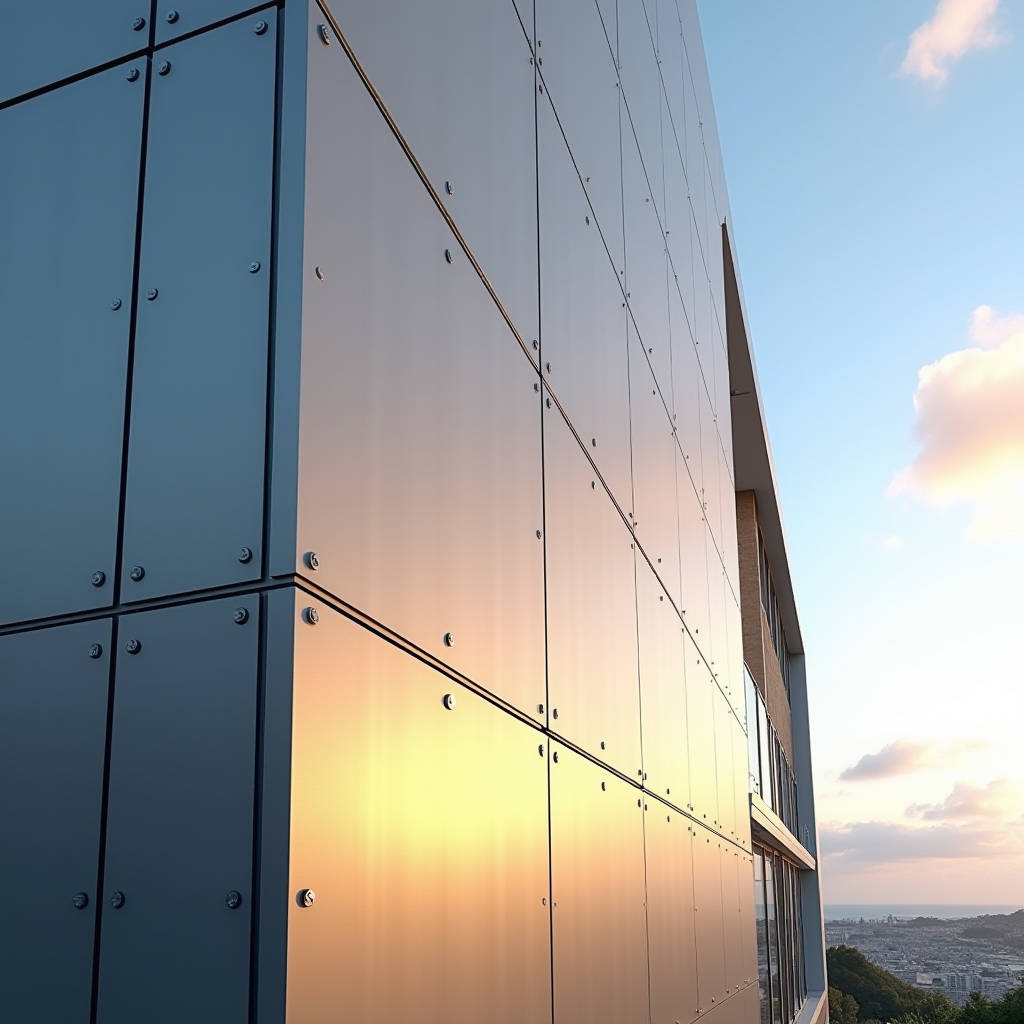
When a facade specification calls for an AAMA Standard Aluminum Facade, the real engineering question is not whether the coating meets a standard, but which of the three performance tiers—AAMA 2603, 2604, or 2605—actually matches the project's exposure, service life, and maintenance budget. These three documents define the entire lifecycle of a solid aluminum cladding panel, from the film thickness of the PVDF finish to the accelerated weathering hours it must survive. Get the tier wrong and you either overpay for performance you will never use or specify a coating that fades and chalking within a decade on a coastal tower. This article walks through the measurable differences between the tiers, the test protocols behind each, and how to write a substitution-proof specification for solid aluminum sheets.
Why the Coating Tier, Not the Panel, Defines the Facade
Solid aluminum cladding panels are dimensionally stable, non-combustible, and recyclable, but their visible performance over 20 to 40 years is decided almost entirely by the finish. The AAMA Standard Aluminum Facade framework separates finishes into three ascending tiers of durability. AAMA 2603 is a basic performance specification for interior or lightly exposed applications. AAMA 2604 raises the bar for exterior use in moderate climates. AAMA 2605 is the highest tier, reserved for severe exposures where the coating must survive decades of UV, salt, and industrial pollution without losing gloss or color.
The distinction matters commercially as much as technically. A 2.0 mm solid aluminum panel with a 2605 PVDF finish costs meaningfully more than the same panel with a 2603 polyester coating, yet the two panels look identical in a sample rack. Without a precise specification, a contractor can substitute a lower-tier finish and pocket the difference, leaving the owner with a facade that fails long before the building envelope is meant to be replaced.
The Three Tiers Under the Microscope
Each tier in the AAMA Standard Aluminum Facade family is defined by a set of accelerated test thresholds. The most consequential are film thickness, gloss retention, color change, chalk resistance, and resistance to chemicals and abrasion. The table below condenses the practical engineering differences that a procurement team should verify on the mill certificate.
| Property | AAMA 2603 | AAMA 2604 | AAMA 2605 |
|---|---|---|---|
| Typical resin system | Polyester / low-cost PVDF | PVDF (70% resin) | PVDF (70% resin) |
| Dry film thickness | 18–25 µm | 25–30 µm | 30–35 µm over primer |
| Accelerated weathering (QUV) | 400 hours | 1,000 hours | 4,000 hours |
| Gloss retention after weathering | Not specified | ≥ 50% | ≥ 70% |
| Maximum color change (ΔE) | Not specified | ≤ 5.0 | ≤ 5.0 (typically lower) |
| Chalk resistance rating | Not specified | ≥ 8 | ≥ 8 |
| Typical service life | 3–7 years | 10–15 years | 20–30 years+ |
| Typical application | Interior, sheltered | Exterior, temperate | Coastal, industrial, high-rise |
The 4,000-hour QUV requirement in AAMA 2605 is the single most demanding accelerated test in the architectural coating world. It is roughly four times the exposure required by AAMA 2604 and ten times that of AAMA 2603. For a coastal high-rise in a salt-laden environment, that difference translates directly into years of visible performance before gloss loss or chalking becomes an aesthetic issue.
Reading the Environment Before You Specify
The choice between 2604 and 2605 should be driven by the microclimate at the building site, not by habit. A low-rise office in a dry inland city may perform perfectly with AAMA 2604, saving the owner a meaningful premium. The same building placed within two kilometres of a coastline, or in an industrial zone with sulfur emissions, should move to AAMA 2605. The relevant guidance is laid out in the AAMA 2605 specification itself, which states that the standard is intended for exterior applications where high gloss and color retention are required in severe environments.
For procurement, the practical rule is to tie the coating tier to the building's orientation and exposure. South and west elevations in the southern hemisphere, or any elevation facing the prevailing salt wind, deserve the top tier. North-facing sheltered elevations on the same project can sometimes justify a lower tier, though most specifiers prefer a single coating standard across the whole envelope to simplify warranty and maintenance.
Writing a Substitution-Proof Specification
Substitution disputes are the most common source of facade cost overruns. A specification that says "PVDF coating" is not a specification at all, because it does not pin the finish to a performance tier. The AAMA Standard Aluminum Facade framework gives you the language to close that loophole. Write the requirement as "solid aluminum panels, 2.0 mm nominal thickness, finished with a 70% PVDF resin system meeting AAMA 2605, with a dry film thickness of 30–35 µm over a corrosion-inhibiting primer."
Then require the mill certificate to state the standard, the film thickness, and the batch test results for gloss retention and color change. A supplier that cannot produce a certificate naming the specific tier is signalling that the finish was not tested to that level. This is where a reliable partner such as Futeng® earns its place on the approved list, because the coating line is documented and the test data is traceable back to the batch.
Beyond the Coating: Panel Thickness and Fire Performance
The AAMA Standard Aluminum Facade conversation tends to focus on coatings, but the substrate matters just as much. Solid aluminum panels are typically supplied in 2.0, 2.5, and 3.0 mm thicknesses. The thicker panels are stiffer and reduce the number of stiffening ribs required, which can lower fabrication and installation cost even though the raw material cost is higher. For a rainscreen system with large panel modules, a 3.0 mm panel often proves more economical once the rib count and labour are factored in.
Fire performance is another reason solid aluminum is preferred over composite panels in high-rise and public buildings. Solid aluminum is non-combustible and, when finished with a coating that meets the relevant fire classification, contributes nothing to flame spread. The European framework, EN 13501-1, classifies such systems as A2, and the same logic applies under the AAMA Standard Aluminum Facade approach: the coating must not degrade the inherent fire safety of the metal substrate. Specifiers should verify that the complete assembly, including gaskets and insulation, meets the project's fire classification, not just the bare panel.
Anodizing as an Alternative Finish
For projects that want a metallic, non-painted aesthetic, anodizing is a legitimate alternative to PVDF. The relevant document is AAMA 611, which covers anodized architectural aluminum. Anodic films are produced by an electrochemical process and are integral to the metal surface, which gives them excellent abrasion resistance. However, anodized finishes are more sensitive to color consistency across large batches and to chemical staining in aggressive environments. For a curtain wall where the architect wants a uniform silver or bronze tone, anodizing can be excellent, but it demands strict control of the anodizing bath parameters across the entire production run.
The trade-off is straightforward. PVDF gives you a wider color palette and better color consistency across large panels, while anodizing gives you a harder, more metallic surface that is prone to variation. The decision belongs to the design team, but the procurement team should know that the two finishes are tested under different AAMA documents and cannot be interchanged without re-approval.
Cost Modelling Across the Service Life
Life-cycle cost, not first cost, should drive the tier decision. A 2605 finish costs roughly 15 to 25 percent more than a 2604 finish on the same panel, but the difference is small relative to the cost of re-coating or replacing a facade. Re-coating a high-rise requires scaffolding, surface preparation, and downtime, often exceeding the original coating cost by several times. When the analysis is stretched over a 30-year horizon, the premium for the top tier is frequently the cheaper option.
A practical budget estimate for a typical facade works out as follows. Assume a 10,000 square metre envelope with 2.5 mm solid aluminum panels. At current market rates, the coated panel supply sits in the range of USD 55 to 75 per square metre depending on the tier and finish. The 2605 premium over 2604 adds roughly USD 8 to 15 per square metre, or USD 80,000 to 150,000 across the project. Against a re-coating exercise that could cost several million dollars, that premium is a fraction of the risk it removes.
Verifying Compliance on Delivery
Compliance is not confirmed by a certificate alone. The receiving team should spot-check film thickness with a portable dry-film gauge on a sample of panels from different batches. The AAMA 2605 requirement of 30–35 µm is measurable in minutes on site. Color should be checked against the approved sample under standard lighting, and any deviation beyond the agreed tolerance should trigger a hold on that batch. These checks take an hour of labour but can prevent a full facade rework that would take months.
For international shipments, the coating standard should be written into the purchase order as a contractual requirement, not left as an assumption. The mill certificate should name the AAMA Standard Aluminum Facade tier explicitly, and the coating line's test reports should be attached to the shipping documents. A supplier that treats the standard as a marketing phrase rather than a testable requirement should be flagged immediately.
Practical Guidance for the Procurement Team
Start the specification with the environment, not the budget. Map the site's exposure to salt, UV, and industrial pollution, then select the tier that the environment demands. Write the tier into the contract as a named AAMA standard with a film-thickness range, and require traceable test data. Verify on delivery with a film gauge and a color check. Finally, treat the coating tier as a life-cycle decision, because the 15 to 25 percent premium for the top tier is trivial compared with the cost of a premature re-coating.
The AAMA Standard Aluminum Facade framework exists to give architects, contractors, and owners a common language for durability. Used correctly, it eliminates ambiguity, prevents substitution, and protects the building's appearance for decades. Used loosely, it is just a phrase on a drawing. The difference is in the detail of the specification and the discipline of the verification.