ASTM Standard Aluminum Panel Spec Guide for Facade Procurement and Fabrication
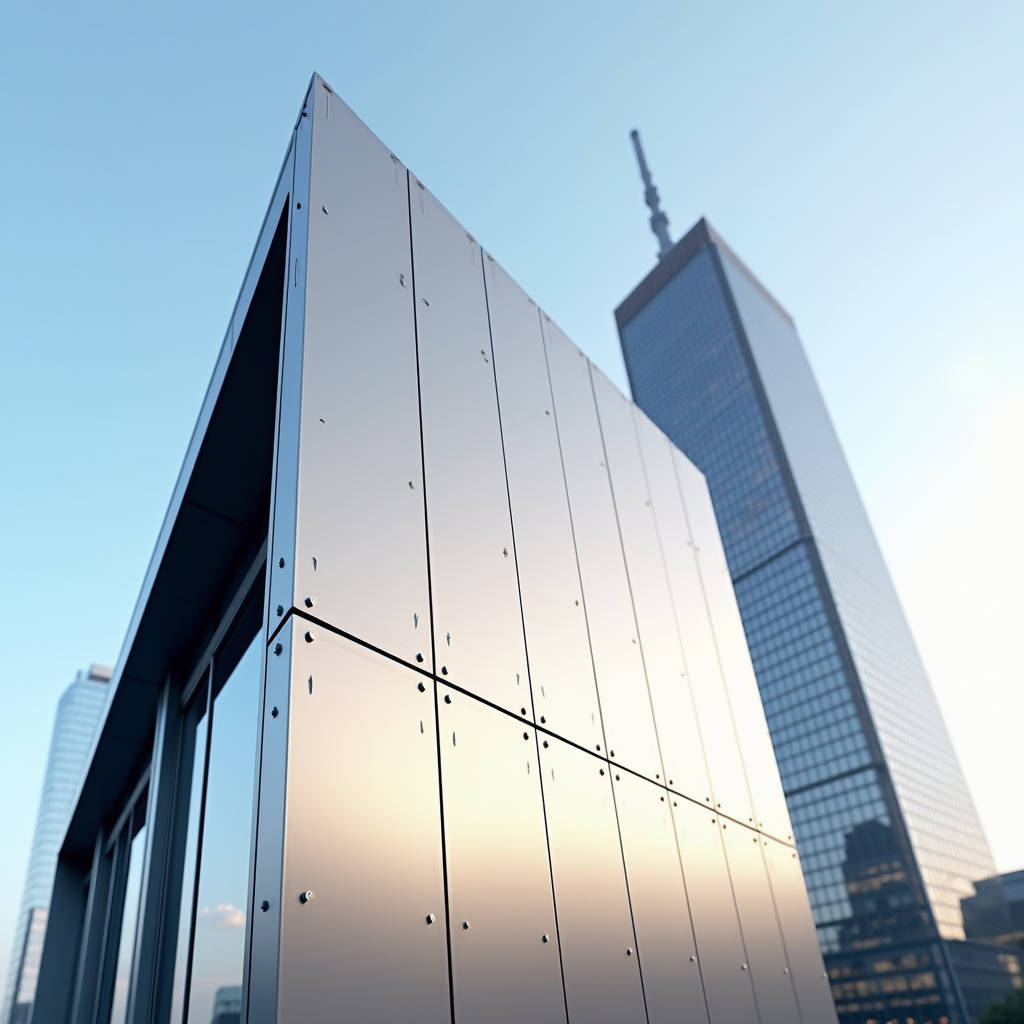
An ASTM Standard Aluminum Panel is not a single product designation. It is a procurement shorthand that most facade contractors misuse, and the gap between what they specify and what actually ships can cost a project weeks of rework. The confusion starts with ASTM B209, the governing specification for aluminum and aluminum-alloy sheet and plate, which defines the alloy, temper, mechanical properties, and dimensional tolerances of the raw coil or plate. But B209 says almost nothing about the finished cladding panel: it does not govern the PVDF coating, the stiffening ribs, the edge returns, or the fabrication tolerances that turn a flat sheet into a rainscreen unit. This article walks through the exact clauses of B209 that matter on a curtain wall project, how to translate them into a working purchase order, and where the standard stops so you know what you must add yourself.
What ASTM B209 Actually Governs
ASTM B209 is the base document referenced by nearly every global aluminum plate and sheet specification. It covers flat sheet, coiled sheet, and plate in the alloy and temper combinations listed in its tables, and it defines the finishes available for each. For architectural cladding, the practical relevance sits in three places: the alloy and temper table, the mechanical property table, and the dimensional tolerance table. A facade contractor who orders "ASTM Standard Aluminum Panel" without pinning down alloy and temper is handing the mill a blank check.
Alloy and Temper Selection
The most common architectural alloys are 3003, 5052, and 6061. Each behaves differently under wind load, welding, and anodizing. 3003-H14 is the workhorse for formed panels because it balances formability with strength and is inexpensive. 5052-H32 offers higher yield strength and better corrosion resistance in coastal environments. 6061-T6 is used where structural stiffness matters, but it is harder to form and more prone to cracking during deep draws. The B209 tables list the minimum tensile and yield strengths for each alloy and temper, and those numbers are what your structural engineer should use in the wind-load calculation, not a generic "aluminum" value.
Dimensional Tolerances
B209 sets flatness, thickness, width, and length tolerances for the sheet and plate. For a 3.0 mm panel, the standard thickness tolerance is typically ±0.15 mm, but the exact value depends on the alloy and temper. Flatness tolerance matters more than most buyers realize: a coil that meets B209 flatness can still show oil canning once it is brake-formed into a panel with a large unsupported flat face. The standard does not guarantee a ripple-free finished panel, which is why stiffening and fabrication method remain your responsibility.
Where B209 Stops and the Panel Spec Begins
An ASTM Standard Aluminum Panel, in the sense of a complete rainscreen unit, is governed by a chain of documents. B209 covers the raw material. The coating is governed by AAMA 2605 for high-performance PVDF systems, which specifies film thickness, adhesion, and accelerated weathering. The fabrication, including edge returns, corner welds, and stiffener attachment, is not covered by any single ASTM standard and is usually written into the project specification or a proprietary fabrication standard. The installation is covered by the AAMA curtain wall manual and the project's structural drawings.
This is the single most common source of disputes. A buyer who writes "ASTM Standard Aluminum Panel" into the spec and assumes the supplier will deliver a coated, stiffened, tested unit is wrong. The supplier can truthfully deliver a bare 5052 sheet that meets B209 and walk away. The finished panel spec must be written separately, and it must name the coating standard, the stiffener layout, the edge return depth, and the fabrication tolerance.
Building a Defensible Purchase Order
To turn the standard into a working contract, your purchase order should carry at least the following clauses. Each one maps to a specific requirement that a mill or fabricator can verify and sign off.
- Alloy and temper: e.g., 5052-H32 or 3003-H14, stated explicitly.
- B209 edition: reference the current edition, e.g., ASTM B209/B209M-21a, so the supplier cannot use an older revision.
- Coating standard: AAMA 2605 for exterior PVDF, with a specified dry film thickness (typically 25 µm primer plus 2 × 20 µm topcoat).
- Panel thickness: nominal value plus the B209 tolerance, e.g., 3.0 mm ±0.15 mm.
- Flatness limit: a stricter flatness requirement than B209 if the panel has large unsupported faces.
- Fabrication tolerance: edge return depth, corner weld quality, and stiffener spacing.
- Testing and certification: mill test certificates per B209 and coating test reports per AAMA 2605.
Coating Performance Comparison
The coating is where the panel's real-world lifespan is decided, and it is the area where an ASTM Standard Aluminum Panel is most often underspecified. The table below compares the three common architectural coating tiers so you can match the spec to the project's exposure.
| Coating System | Reference Standard | Dry Film Thickness | Accelerated Weathering | Typical Use |
|---|---|---|---|---|
| Polyester (PE) | AAMA 2603 | ~20 µm total | Limited, lower gloss retention | Interior, short-term exterior |
| Siliconized polyester (SMP) | AAMA 2604 | ~25 µm total | Moderate, 5-year warranty range | Mid-rise exterior |
| PVDF (70% Kynar) | AAMA 2605 | 25 µm primer + 40 µm topcoat | High, 20+ year warranty range | High-rise, coastal, long-life facades |
For a high-rise curtain wall, AAMA 2605 is the defensible choice. The cost premium over SMP is roughly 15–25% on the coating line, but the gloss retention and chalk resistance over a 20-year horizon usually justify it. If the project is in a marine or industrial environment, the PVDF system is close to mandatory regardless of the budget.
Estimating Cost and Lead Time
Accurate budgeting starts with understanding that the raw sheet is a small fraction of the finished panel cost. As a working estimate, a 3.0 mm 5052 panel with a 2605 PVDF coating, stiffeners, and edge returns typically lands in the range of USD 45–70 per square meter at the fabricator's gate, depending on panel size, coating color, and order volume. The raw material share is roughly 30–35%, coating 15–20%, fabrication and stiffening 30–35%, and testing and packaging the remainder. Lead time for a coated, fabricated panel is commonly 4–8 weeks from coil order, so the coating and alloy decision should be frozen early in the design phase.
Panel size drives cost more than alloy does. A panel with a large unsupported flat face requires more stiffeners and a tighter flatness spec, which pushes fabrication cost up. Standardizing panel widths and using a consistent stiffener spacing across the facade can cut fabrication cost by 10–15% and shorten the schedule. When you are sourcing at scale, a supplier with dedicated forming and coating lines, such as Futeng®, can hold tighter tolerances and shorter lead times than a general job-shop fabricator, which matters on a fast-track curtain wall package.
Verifying Compliance on Delivery
Accepting a shipment without verification is how tolerance disputes start. On delivery, three checks catch most problems. First, confirm the mill test certificate matches the alloy, temper, and thickness on the purchase order. Second, measure the coating film thickness with a magnetic gauge on a sample panel; a 2605 system should read close to the specified 65 µm total. Third, check flatness and edge return depth against the fabrication spec. Any deviation should be documented before the panels are lifted onto the scaffold, because rework after installation is far more expensive than rejection at the dock.
Reference Standards Worth Keeping On File
Keep the current editions of these documents in your project folder. They are the backbone of any defensible aluminum panel specification.
- ASTM B209/B209M-21a — aluminum and aluminum-alloy sheet and plate.
- AAMA 2605 — high-performance organic coatings on aluminum extrusions and panels.
- ISO 6361 — wrought aluminum and aluminum alloys, sheet, strip, and plate.
- ASTM E84 — surface burning characteristics, relevant for interior panel applications.
Practical Engineering Advice
Write the alloy, temper, coating standard, and fabrication tolerance into the spec before you send out the RFQ. Treat B209 as the raw material baseline, not the finished product definition, and add the coating and fabrication clauses yourself. Confirm the wind-load values your structural engineer used match the B209 mechanical properties for the exact alloy and temper you selected. Verify compliance at delivery with a documented inspection. And when you are sourcing at volume, choose a supplier whose forming and coating lines can hold the tolerances you actually need, rather than the loosest ones the standard permits. An ASTM Standard Aluminum Panel is only as good as the specification that surrounds it, and that specification is yours to write.