CE Certified Aluminum Facade Documentation and Engineering Data for Solid Panel Procurement
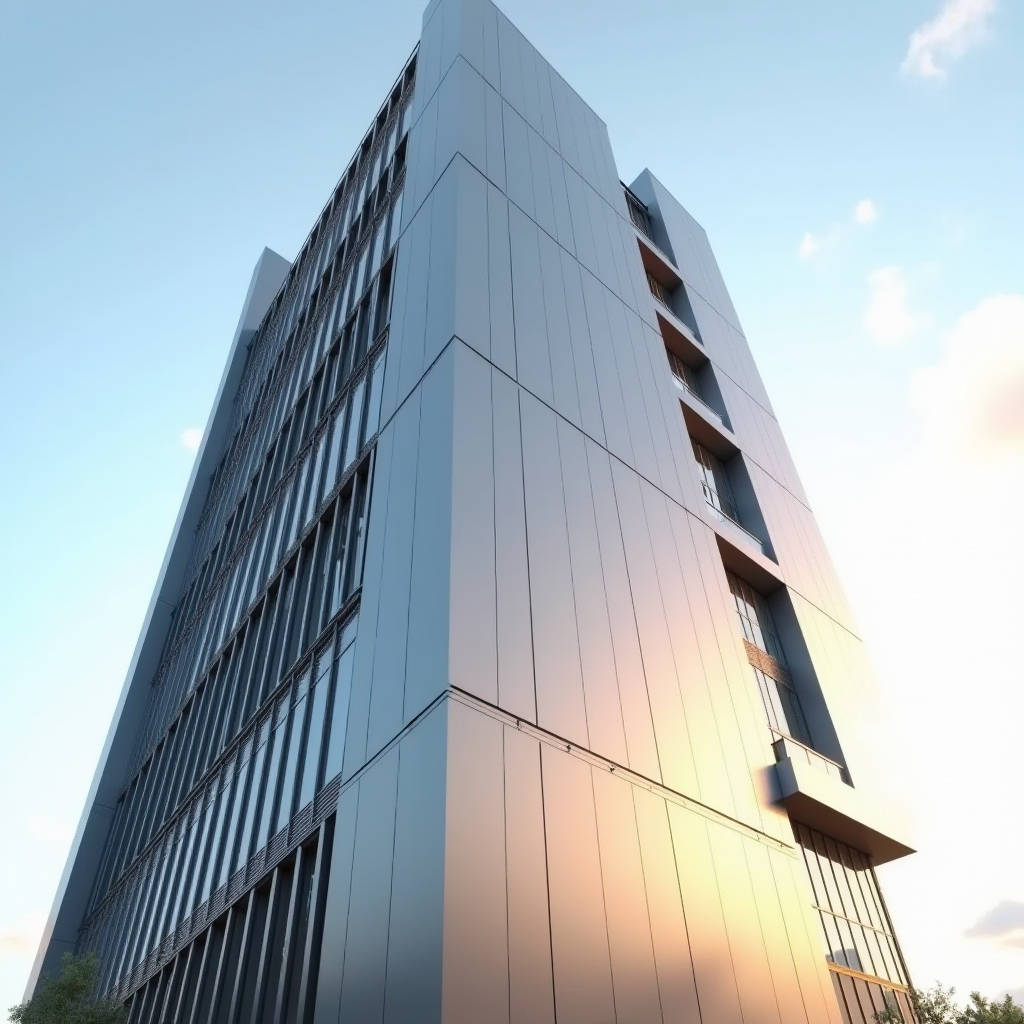
A CE Certified Aluminum Facade is the single most defensible specification choice for international contractors who need to prove compliance, not just claim it. Across the EU, and increasingly in the Gulf, Southeast Asia, and North Africa, procurement teams are being asked to produce documented evidence that their cladding meets EN 13501 fire classification, EN 13830 structural performance, and EN 1090 fabrication standards. The CE mark on a solid aluminium cladding panel is that evidence. But here is the practical problem most buyers overlook: a certificate on paper means nothing unless the factory, the coating line, and the test laboratory behind it are real. This article walks through what CE certification actually verifies for solid aluminium panels, the engineering data you should demand, and the cost and performance trade-offs that separate a compliant facade from a decorative one.
What CE Certification Verifies for a Solid Aluminium Panel
CE marking under the Construction Products Regulation (CPR, EU 305/2011) is a declaration that a product meets the harmonised technical specifications relevant to its intended use. For a solid aluminium facade panel, that declaration covers four measurable areas, not marketing language.
- Mechanical resistance and stability: Flatness tolerance, flexural strength, and resistance to wind suction and pressure, typically verified against EN 13830 for curtain walling and EN 1991-1-4 for wind actions.
- Fire safety: Reaction to fire classification under EN 13501-1. A solid aluminium panel with a non-combustible core and PVDF coating typically achieves A2-s1,d0, which is the classification most high-rise specifications demand.
- Durability and coating performance: Adhesion, colour retention, and corrosion resistance of the PVDF or powder coating, verified against AAMA 2605 and EN 13523 series.
- Environmental and health requirements: Content of hazardous substances and release of dangerous substances into indoor air, aligned with the CPR's basic requirements for hygiene and environment.
For a solid aluminium sheet, the meaningful distinction is that there is no combustible core to fail. Unlike a composite panel, a 2.0–3.0 mm solid aluminium plate is homogeneous metal. That makes the A2 classification structurally honest, and it is why the CE Certified Aluminum Facade specified on fire-risk projects is almost always a solid panel specification.
Demand the Test Report, Not Just the Certificate
Every serious supplier can produce a CE certificate. The difference between a reliable factory and a trading intermediary shows up in the underlying documentation. Insist on the following before you place an order.
- EN 13501-1 fire classification report from a notified body, not a factory self-declaration. Check the substrate thickness and coating type listed on the report match your exact panel specification.
- EN 13830 or EN 1991-1-4 wind load calculation sheet showing the panel's allowable deflection at your project's design wind pressure. A 3.0 mm panel and a 2.0 mm panel are not interchangeable under load.
- AAMA 2605 test data for the PVDF coating, including 10-year accelerated weathering, salt spray resistance, and impact resistance. The coating film thickness should be 25–30 microns of PVDF resin, not a thinner industrial coating.
- Mill test certificates for the base alloy. The industry standard is 3003 or 5005 series aluminium, with temper H24 or H14. A certificate that does not state the alloy and temper is not a certificate.
This documentation stack is what separates a genuinely CE Certified Aluminum Facade from a panel that merely carries a sticker. Procurement teams that skip this verification step are the ones who discover the problem at site inspection, when replacing a facade is no longer an option.
Engineering Data That Should Be on Your Desk
Solid aluminium panels are specified at 2.0, 2.5, or 3.0 mm thickness depending on module size and wind load. The table below summarises the practical performance envelope for a typical 1200 mm wide panel with a PVDF coating, which covers most curtain wall and rainscreen applications.
| Panel Thickness | Typical Module (W x H) | Max Design Wind Pressure | Deflection Limit (L/100) | Coating System | Typical Use |
|---|---|---|---|---|---|
| 2.0 mm | 1200 x 2400 mm | 1.2 kPa | ~12 mm | PVDF 25 µm (AAMA 2605) | Low-rise, internal shading |
| 2.5 mm | 1200 x 2400 mm | 1.8 kPa | ~12 mm | PVDF 25–30 µm (AAMA 2605) | Mid-rise rainscreen |
| 3.0 mm | 1200 x 3000 mm | 2.5 kPa | ~15 mm | PVDF 30 µm (AAMA 2605) | High-rise, high wind zones |
These figures are indicative and must be re-verified against a wind tunnel or code-based calculation for your specific site. The point of the table is to show that thickness and coating are engineering decisions, not aesthetic preferences. A contractor who orders 2.0 mm panels for a 40-storey tower in a coastal wind zone has made a structural error, not a cost-saving one.
Coating Systems and Long-Term Cost of Ownership
The coating is the part of the facade that fails first, and it is also the part most often under-specified. For a CE Certified Aluminum Facade, the coating decision is a 20-to-30-year commitment because re-coating a installed facade is effectively a full replacement.
- PVDF (70% Kynar 500 resin): The standard for exterior solid panels. Expect 25–30 microns, excellent colour retention, and resistance to chalking and fading over decades. This is the coating specified in AAMA 2605.
- Polyester powder: Lower initial cost, but limited to 5–10 years of exterior durability before chalking and colour shift become visible. Acceptable for interior or sheltered locations only.
- Anodised finish: Natural metallic look with good corrosion resistance, but limited colour range and higher sensitivity to handling damage during installation.
On a life-cycle cost basis, the PVDF option at a slightly higher first cost nearly always wins because it avoids a premature re-coating or replacement cycle. The AAMA 2605 specification is the reference document for this decision, and it is worth reading in full before you approve a coating substitution.
Installation Systems and the Hidden Cost of Fixings
The panel is only half the facade. The substructure, brackets, and fixings carry the load and must also meet the same fire and structural requirements. Two common approaches dominate solid panel installation.
- Hidden-frame (screw-fixed) system: Panels are screwed to an aluminium or steel subframe with concealed fixings. Lower material cost, faster installation, but the thermal bridge through the bracket needs detailing.
- Cassette (hook-on) system: Panels are folded into cassettes with a hook-and-pin connection to the subframe. Higher fabrication cost, but allows thermal break, easier panel replacement, and better tolerance control on large modules.
For a high-rise project, the cassette system is usually the safer engineering choice because it accommodates thermal movement and allows individual panel replacement without disturbing neighbours. The cost delta is roughly 15–25% on the fixings and fabrication side, which is a small price for the maintenance flexibility it buys over a 30-year service life.
Fire Performance: Why the Solid Panel Is the Safer Specification
Fire safety is where the CE Certified Aluminum Facade earns its keep. Under EN 13501-1, a solid aluminium panel with a PVDF or powder coating and no combustible core typically achieves A2-s1,d0 classification. That means limited combustibility, negligible smoke production, and no flaming droplets. For buildings above 18 metres, or in any jurisdiction following the post-Grenfell regulatory tightening, this classification is increasingly mandatory.
The EU Construction Products Regulation and the associated EN 13501 standard are the regulatory backbone here. A panel that cannot document A2-s1,d0 will be rejected at the design review stage on many projects, regardless of how good it looks. Specifying a solid panel from the outset removes this entire class of risk from your programme.
Quality Control and the Factory Audit
A CE certificate is only as good as the factory's ongoing quality system. The certification body will audit the production line, but the audit is periodic, not continuous. The buyer's protection is a documented incoming inspection protocol.
- Verify coating thickness on every batch with an eddy-current gauge, targeting 25–30 microns of PVDF.
- Check flatness tolerance against the EN 485 standard for aluminium sheet, typically within 2–3 mm over a 1200 mm width.
- Confirm the alloy and temper from the mill certificate against your order, and reject any substitution without written approval.
- Sample-test adhesion and salt spray resistance on a per-container basis, not just at the start of production.
For buyers who want a supplier with a documented and repeatable process, manufacturers such as Futeng® operate solid aluminium panel lines with CE, ISO 9001, and AAMA 2605 compliance, and they can produce the full documentation stack on request. The value of a supplier like Futeng® is not the certificate itself, but the consistency of the process behind it, which is what actually protects your project schedule and your liability.
Regulatory Trends That Will Affect Your Next Tender
Three regulatory movements are reshaping facade procurement and will affect how you write your next specification.
- Mandatory fire classification documentation: More jurisdictions now require the EN 13501-1 report to be submitted with the tender, not after award. If your supplier cannot produce it at bid stage, disqualify them early.
- Digital product passports: The EU's push toward digital product passports means facade materials will increasingly need machine-readable compliance data. A supplier who can provide structured data alongside the certificate is ahead of the curve.
- Stricter environmental declarations: Environmental Product Declarations (EPDs) are becoming a tender requirement on public projects. Verify your supplier can issue an EPD for the solid panel, including the coating and alloy content.
These are not distant possibilities; they are already appearing in tender documents in the EU and the Gulf. A CE Certified Aluminum Facade specification that includes these documentation requirements today will save you from re-tendering tomorrow.
Practical Specification Advice
Bringing this together, the engineering guidance for a procurement team is straightforward. Specify solid aluminium panels at 2.5 or 3.0 mm for exterior high-rise work, insist on PVDF coating to AAMA 2605, and require the full documentation stack of EN 13501-1, EN 13830, and mill certificates at bid stage. Choose a cassette or hidden-frame system based on your maintenance strategy, not just first cost. And audit the factory's process, not just its certificate.
For reference, the ISO 9001 quality management standard and the ASTM weathering test methods underpin much of the coating and durability verification that supports a reliable CE declaration. A supplier who can trace its panels from alloy to finished coating with documented test evidence is the partner who will keep your facade compliant for the full life of the building.
The CE Certified Aluminum Facade is not a marketing badge. It is a contractual promise backed by test data, and the contractors who treat it that way are the ones who deliver facades that pass inspection, survive the weather, and hold their value for decades.