LEED Compliant Aluminum Facade Credits Built on Recycled Content and EPD Documentation
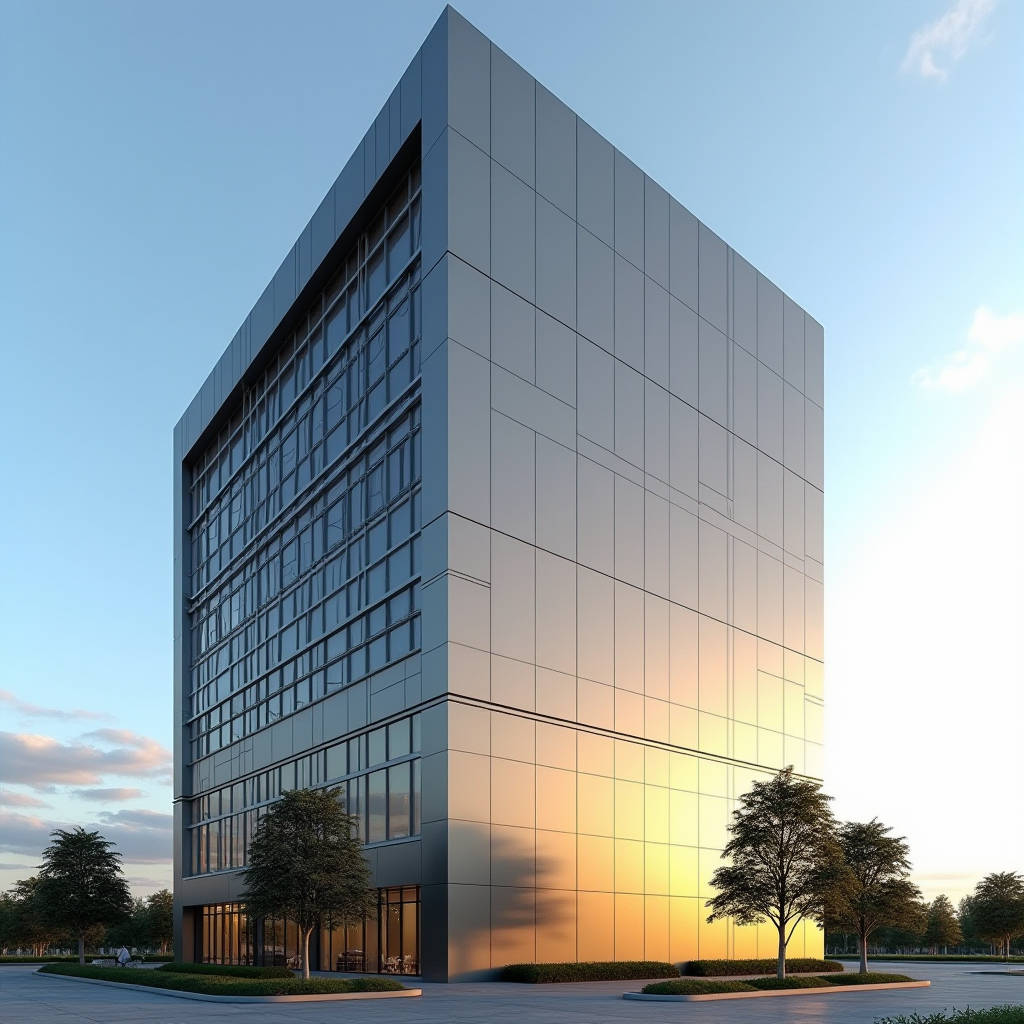
For procurement teams and facade contractors chasing LEED certification, the single most contested specification line is often the embodied carbon of the building envelope. A LEED Compliant Aluminum Facade built from solid aluminium cladding panels answers that line with verifiable numbers rather than marketing claims. The decisive factor is not the panel itself but the recycled content you can document, the coating system you choose, and the EPD you can hand to the LEED reviewer. Solid panels in 2.0, 2.5, or 3.0 mm thickness behave differently from composite alternatives in thermal performance, wind load resistance, and end-of-life recyclability. This article walks through the specific LEED v4.1 and v5 credit pathways that a solid aluminium facade can realistically secure, the coating and substrate choices that move the needle, and the documentation trail that turns a good panel into a certified one.
Why Solid Aluminium Panels Earn LEED Points That Composite Panels Cannot
LEED v5 has shifted weight toward the Materials and Resources (MR) and Human Health categories. A solid aluminium cladding panel is monometallic, which means its entire mass is recyclable without a separation step. Composite panels carry a polymer core that must be stripped before the aluminium skins can re-enter the melt stream, and that extra step often disqualifies the material from the highest recycled-content claims. For a 10,000 m² facade, the difference in end-of-life recovery is measurable in tonnes of diverted waste.
The recycled content story is where solid panels shine. Secondary aluminium requires roughly 5% of the energy of primary smelting, and that energy saving converts directly into embodied carbon reductions. A 3.0 mm solid panel at 60% post-consumer recycled content can cut the facade's upfront carbon by a meaningful margin compared to a 40% recycled-content composite. The LEED reviewer does not take your word for it; they audit the mill certificate and the supplier declaration.
Mapping the LEED v4.1 and v5 Credit Pathways
Not every LEED credit is equally reachable with a solid aluminium facade. The realistic targets are concentrated in a few categories, and knowing where to spend specification effort saves your project team weeks of chasing marginal points.
| LEED Credit / Category | What Solid Aluminium Delivers | Documentation Required | Typical Point Contribution |
|---|---|---|---|
| MR - Building Product Disclosure (EPD) | Verified industry-wide or product-specific EPD for the panel | EPD from a program operator such as UL Environment or EPD International | 1-2 points |
| MR - Sourcing of Raw Materials | Post-consumer recycled content in the aluminium substrate | Recycled content declaration and mill certificate | 1-2 points |
| MR - Material Ingredients | PVDF coating with low-VOC formulation and no heavy-metal pigments | HPD or ingredient declaration from the coating supplier | 1 point |
| EA - Optimize Energy Performance | Reflective PVDF coating reducing solar heat gain on the envelope | Energy model results and coating solar reflectance data | 3-6 points (project dependent) |
| EQ - Low-Emitting Materials | No volatile organic compounds released from the panel surface | Indoor air quality test reports where panels are interior-facing | 1 point |
The EPD credit is the most reliable entry point because it is documentation-driven rather than performance-driven. An EPD is valid for five years and must be issued by a verified program operator, so check the date on any certificate your supplier hands you before you build the credit strategy around it.
Coating Systems and the Solar Reflectance Question
The coating does more than protect the substrate; it shapes the energy performance story that feeds the Optimize Energy Performance credit. A 70% PVDF (polyvinylidene fluoride) coating applied at 25 to 30 microns dry film thickness is the industry standard for solid aluminium cladding. The pigment choice determines the solar reflectance index (SRI), and a high-SRI finish reduces the cooling load on the building.
For a light-coloured solid panel with a high-SRI PVDF finish, the facade can contribute to the heat island reduction credit and improve the energy model. The practical number to specify is an SRI of at least 82 for steep-slope or vertical applications, which aligns with the LEED heat island reduction threshold. Darker architectural finishes still perform well on durability but surrender the SRI benefit, so the design team should weigh aesthetic intent against the energy credit.
The coating also carries a human health story. Modern PVDF systems are formulated without lead chromate and heavy-metal pigments, and the solvent carrier is baked off during the coil or spray line cure. A coating supplier that provides an HPD (Health Product Declaration) makes the Material Ingredients credit substantially easier to claim.
Embodied Carbon and the Recycled Content Calculation
The fastest way to cut the embodied carbon of a LEED Compliant Aluminum Facade is to raise the recycled content of the substrate. The calculation is straightforward: the declared recycled content is the percentage of the panel's aluminium mass that comes from secondary sources, split between post-consumer and post-industrial fractions. LEED gives more weight to post-consumer content because it represents material diverted from the waste stream after a product's useful life.
For a 1,000 m² facade using 3.0 mm solid panels, the aluminium mass is roughly 8.1 tonnes. Moving from 40% to 70% recycled content shifts roughly 2.4 tonnes of aluminium from primary to secondary sourcing. At an embodied carbon saving of about 8 to 10 kg CO₂e per kilogram of primary aluminium avoided, that single specification change saves in the order of 19 to 24 tonnes of CO₂e for that 1,000 m² area. Scale that to a 15,000 m² tower and the number becomes a headline on the project's carbon report.
Suppliers such as Futeng® routinely certify recycled content on their solid aluminium cladding panels, and the declaration should be backed by a mill certificate that traces the ingot source. Ask for the certificate before you commit the credit strategy, because a verbal assurance will not survive a LEED audit.
Chrome-Free Pretreatment and the Human Health Credit
The surface preparation step before coating is where legacy environmental problems hide. Traditional chromate conversion coatings introduce hexavalent chromium into the process stream, which is a concern for both worker safety and the Material Ingredients credit. Chrome-free pretreatment processes have matured to the point where they deliver equivalent corrosion resistance on solid aluminium without the heavy-metal baggage.
Specifying a chrome-free pretreatment is a low-cost, high-signal decision. It simplifies the HPD documentation, removes a hazardous material from the supply chain, and aligns with the LEED v5 emphasis on human health. The corrosion performance is validated under the same accelerated weathering standards, so there is no durability trade-off for the environmental gain.
End-of-Life Design: Dismantlability and the Circular Economy
LEED v5 rewards materials that are designed for disassembly and recovery. A solid aluminium cladding panel fastened with mechanical fixings can be removed from the facade at end-of-life without destroying the panel, which keeps the material in the recycling loop. The monometallic composition means the recovered panel feeds directly into the secondary aluminium stream with no separation process.
This is a genuine differentiator against composite systems, which are typically bonded and cannot be cleanly separated. When the project team asks how the facade supports the building's long-term circularity goals, the answer is the mechanical fixing detail and the monometallic panel. Document the dismantlability in the project's material documentation, and the circular economy story writes itself.
Documentation Checklist That Survives an Audit
The LEED reviewer is not looking for enthusiasm; they are looking for a traceable documentation trail. Build the following package before you submit:
- A product-specific or industry-wide EPD issued by a verified program operator, valid within its five-year window.
- A recycled content declaration from the panel supplier, backed by a mill certificate tracing the ingot source.
- An HPD or ingredient declaration from the coating manufacturer, confirming low-VOC and heavy-metal-free formulation.
- Coating test data showing SRI values and compliance with AAMA 2605 for high-performance exterior finishes.
- Corrosion test reports validating the chrome-free pretreatment under the relevant ASTM B117 salt spray protocol.
Cross-check the EPD date, because a certificate that expired last quarter will not pass review. Most project teams lose the credit not on performance but on paperwork that lapsed.
Performance Standards That Anchor the Specification
The technical claims in your LEED submission should sit on published standards. The coating durability argument rests on AAMA 2605, which is the highest performance specification for exterior architectural coatings and covers the 70% PVDF systems used on solid panels. Corrosion resistance is validated under ASTM B117 for salt spray exposure. The EPD methodology follows ISO 14025 for Type III environmental declarations, and the recycled content claims align with ISO 14021 self-declared environmental claims. The aluminium substrate itself should meet the composition limits in the relevant EN 573 series for wrought aluminium alloys. Anchoring the specification to these standards gives the LEED reviewer a familiar reference and shortens the review cycle.
Practical Specification Guidance for the Project Team
For a facade contractor or procurement manager, the practical sequence is to lock the substrate recycled content first, then the coating, then the documentation. The recycled content is the largest single lever on embodied carbon and the easiest to verify. The coating choice determines the energy and human health credits, and the documentation package is what actually converts performance into points.
Specify solid aluminium panels at 2.0, 2.5, or 3.0 mm depending on the wind load and the panel module size. For a typical unitized curtain wall module, 3.0 mm is the safe choice for spans beyond 1,200 mm, while 2.0 mm suits smaller infill panels. Confirm the PVDF film thickness at 25 to 30 microns and request the AAMA 2605 test report. Confirm the recycled content percentage in writing and secure the EPD before the design freeze.
The LEED v5 trajectory is clear: embodied carbon and human health are moving to the centre of the rating system. A LEED Compliant Aluminum Facade built from solid, high-recycled-content panels with a chrome-free pretreatment and a documented EPD is the most defensible path to those points. The technology is mature, the standards are published, and the documentation trail is straightforward. The projects that secure the credits are the ones that treat the paperwork as seriously as the panel thickness.