Thermal Performance of Green Building Aluminum Panel Systems for Facade Contractors
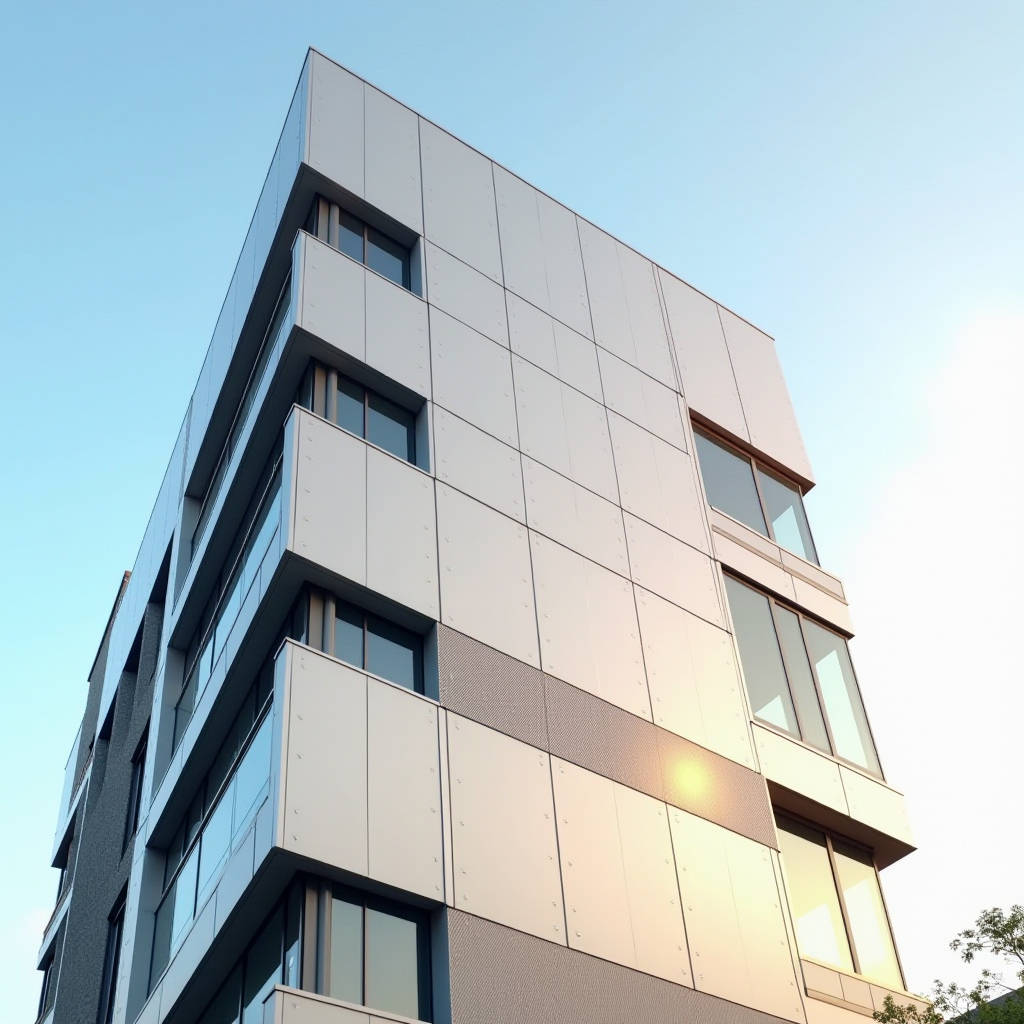
When a curtain wall spec calls for a Green Building Aluminum Panel, the conversation usually stops at recyclability and recycled content. Those matter, but they miss the harder engineering problem: aluminium is a high-conductivity metal, and in a fully glazed or metal-clad facade that conductivity becomes a thermal liability. A solid aluminium cladding panel that ignores thermal bridging will quietly bleed the building's energy budget, no matter how much post-consumer scrap sits in its alloy. This article focuses on the thermal performance of solid aluminium panels in green building envelopes, the coating and insulation strategies that keep them energy-positive, and the certification data that actually moves a LEED or BREEAM score. We will work through the numbers a facade contractor needs before signing off on a 2.0 mm or 3.0 mm panel system.
Why Thermal Performance Decides the Green Building Aluminum Panel Conversation
Aluminium's thermal conductivity sits around 200 W/m·K, roughly ten times that of steel and a thousand times that of a typical insulated panel core. Left unmanaged, a solid aluminium rainscreen transfers heat directly from the exterior skin to the interior structure through every bracket and fastener. In a cooling-dominated climate that adds latent load to the HVAC plant; in a heating climate it drives condensation risk at the interior face. The green building case for aluminium therefore rests on how the panel is coated, how it is insulated, and how the support system interrupts the heat path.
Three levers control the thermal story of a solid aluminium facade:
- Solar reflectance and thermal emittance of the PVDF coating — high solar reflectance keeps summer heat off the building, while low emittance in the infrared band reduces night-time radiative losses in cold climates.
- Back-ventilated cavity design — a drained and ventilated air gap behind the panel removes trapped moisture and moderates the temperature swing between skin and insulation.
- Thermal-break substructure — continuous insulation plus thermally broken brackets cut the conductive path from panel to structural steel.
These are not abstract ideals. They are measurable inputs to the building's energy model and to the prescriptive paths of ASHRAE 90.1 and the International Energy Conservation Code. A facade contractor who can quantify them on paper earns the engineer's trust faster than one who only promises "green" materials.
Coating Science: Where the Green Building Aluminum Panel Earns Its Energy Credits
The PVDF (polyvinylidene fluoride) topcoat is the primary weather barrier and the primary thermal control surface on a solid aluminium panel. The standard specification for architectural coatings is AAMA 2605, which demands a dry film thickness of 70 microns (2.8 mils) minimum and sets accelerated weathering thresholds of 10,000 hours of QUV exposure. A 2.0 mm or 3.0 mm panel finished to AAMA 2605 keeps its gloss and colour for two decades, which matters because premature recoating or replacement is a hidden carbon cost.
For green building work, the coating's optical properties matter as much as its durability. A standard dark PVDF finish with a solar reflectance index (SRI) below 20 absorbs heat and pushes cooling loads up. A cool-roof or cool-wall formulation with a white or light metallic finish can push SRI above 80. The U.S. Green Building Council's LEED v4.1 heat island reduction credit rewards surfaces with an SRI of at least 64 for low-sloped roofs and 39 for walls, so a high-SRI solid aluminium panel can contribute directly to that credit.
The table below summarises the practical difference between coating families on a solid aluminium cladding panel:
| Coating family | Typical SRI | Solar reflectance | Thermal emittance | AAMA spec | Typical payback context |
|---|---|---|---|---|---|
| Standard dark PVDF | 15–30 | 0.20–0.35 | 0.85–0.90 | AAMA 2605 | Heating-dominated climates |
| Light metallic PVDF | 45–65 | 0.45–0.60 | 0.80–0.88 | AAMA 2605 | Mixed climates |
| Cool-wall white PVDF | 80–100 | 0.70–0.85 | 0.85–0.92 | AAMA 2605 | Cooling-dominated climates |
| Anodised (natural) | 20–40 | 0.30–0.45 | 0.75–0.85 | AAMA 611 | Architectural aesthetic priority |
Note that anodised finishes, while recyclable and durable, generally underperform PVDF on solar reflectance. For a green building project chasing an energy model target, a cool-wall PVDF on a 3.0 mm solid panel is usually the safer engineering call.
Insulation and the Ventilated Cavity: The Hidden Half of the Equation
A Green Building Aluminum Panel is only as green as the wall assembly behind it. The panel itself is a weather skin; the thermal resistance lives in the continuous insulation and the air cavity. The industry norm for a rainscreen assembly is a ventilated cavity of 20 to 40 mm, drained at the base and vented at the top. That cavity does two jobs: it lets any incidental moisture escape, and it equalises pressure so wind-driven rain cannot force water past the panel joints.
For the insulation layer, mineral wool and rigid polyisocyanurate (PIR) are the two common choices behind a solid aluminium rainscreen. Mineral wool offers fire resistance and vapour permeability; PIR offers a higher R-value per millimetre. The choice is a fire-safety and condensation engineering decision, not a marketing one. In a high-rise facade, the local code and the project's fire engineering strategy will dictate which is acceptable, and a solid aluminium panel with a non-combustible core and mineral wool behind it is the conservative specification for tall buildings.
Thermally broken brackets are the third element. A standard stainless or galvanised bracket conducts heat straight through the insulation. A thermally broken bracket inserts a low-conductivity polymer shim between the panel rail and the structural support, cutting the thermal transmittance of the fixing point by 40 to 60 percent. On a facade with thousands of brackets, that saving is real and measurable in the energy model.
Recyclability and the Life-Cycle Carbon Case
Aluminium's recyclability is the strongest single argument for its green credentials. Recycling aluminium consumes roughly 5 percent of the energy required to smelt primary metal, and the metal can be recycled indefinitely without loss of properties. A solid aluminium cladding panel is a single-alloy product, which makes it far easier to recycle at end of life than a composite panel, where the aluminium skins must be separated from the polymer core. That separation step is a real cost and energy penalty in the recycling stream, and it is one reason solid panels carry a cleaner life-cycle story.
The Aluminum Association's Aluminum in Green Buildings guides, developed with the support of its member producers, walk architects through how aluminium products contribute to green building certification systems and codes. The guides cover environmental product declarations (EPDs), which are now expected documentation on any serious green building tender. A supplier that can provide a third-party EPD for its solid aluminium panel, showing recycled content and embodied carbon per square metre, is ahead of the market.
For a practical estimate, a 3.0 mm solid aluminium panel weighs roughly 8.1 kg per square metre. If the panel carries 30 percent post-consumer recycled content, the embodied carbon per square metre drops noticeably versus a primary-metal panel, and that reduction is captured in the EPD and in the project's whole-life carbon assessment. Contractors who track these numbers can defend a marginally higher panel price against a genuinely lower carbon footprint.
Certification Alignment: What the Green Building Aluminum Panel Must Document
Green building certification is a documentation exercise as much as a construction one. For LEED v4.1, a solid aluminium facade can contribute to several credits:
- Heat island reduction — via high-SRI coatings on the wall surface.
- Building life-cycle impact reduction — via EPDs and recycled content.
- Energy performance — via the reduced cooling load from a cool-wall coating.
- Materials and resources — via declaration of recycled content and responsible sourcing.
BREEAM and the Living Building Challenge follow similar logic, rewarding transparency over marketing. The documentation a contractor should request from a panel supplier includes the EPD, the AAMA 2605 test report, the coating's SRI certificate, and a mill certificate confirming the alloy and recycled content. A supplier that cannot produce these documents will struggle to support a certification claim, however green the product looks.
For projects targeting net-zero operational carbon, the combination of a high-SRI solid aluminium panel, a ventilated cavity, and continuous insulation is one of the most practical ways to cut cooling energy without sacrificing the clean, modern aesthetic that architects want from a metal facade. The aluminium industry's own standards bodies, including the European Aluminium Association and the Aluminum Association, publish guidance on how aluminium products feed into these certification systems, and a well-documented panel assembly is straightforward to integrate.
Practical Specification Guidance for the Facade Contractor
When you write the specification for a Green Building Aluminum Panel, anchor it in numbers, not adjectives. Specify the panel thickness (2.0, 2.5, or 3.0 mm), the PVDF coating to AAMA 2605 with a minimum dry film thickness of 70 microns, the SRI target for the finish, the cavity depth, the insulation type and thickness, and the thermal-break requirement for brackets. Ask for the EPD and the recycled-content declaration in the tender documents, not as an afterthought.
For a project where the cooling load dominates, a cool-wall white or light metallic PVDF finish on a 3.0 mm solid panel is the conservative choice. For a heating-dominated climate, a darker finish with a robust insulated assembly may serve the energy model better, and the lower SRI is acceptable because the heat gain is beneficial in winter. The engineering decision is always climate-specific, and a supplier that understands this nuance is worth more than one that pushes a single "green" finish.
Futeng® supplies solid aluminium cladding panels in 2.0, 2.5, and 3.0 mm thicknesses with AAMA 2605 PVDF coatings and documented recycled content, and their technical team can provide the EPD and coating certificates a certification audit requires. For a facade contractor managing a tight energy model, having a supplier who can hand over the thermal and life-cycle data early is a practical advantage, not a marketing one.
The green case for a solid aluminium panel is not that aluminium is inherently sustainable, it is that a well-specified panel assembly measurably reduces operational energy, carries a clean recycling story, and survives two decades without recoating. That is the engineering argument that wins a green building tender, and it is the one worth putting in front of the architect and the energy consultant before the first panel is fabricated.