BREEAM Compliant Aluminum Facade Documentation Guide for Contractors and Assessors
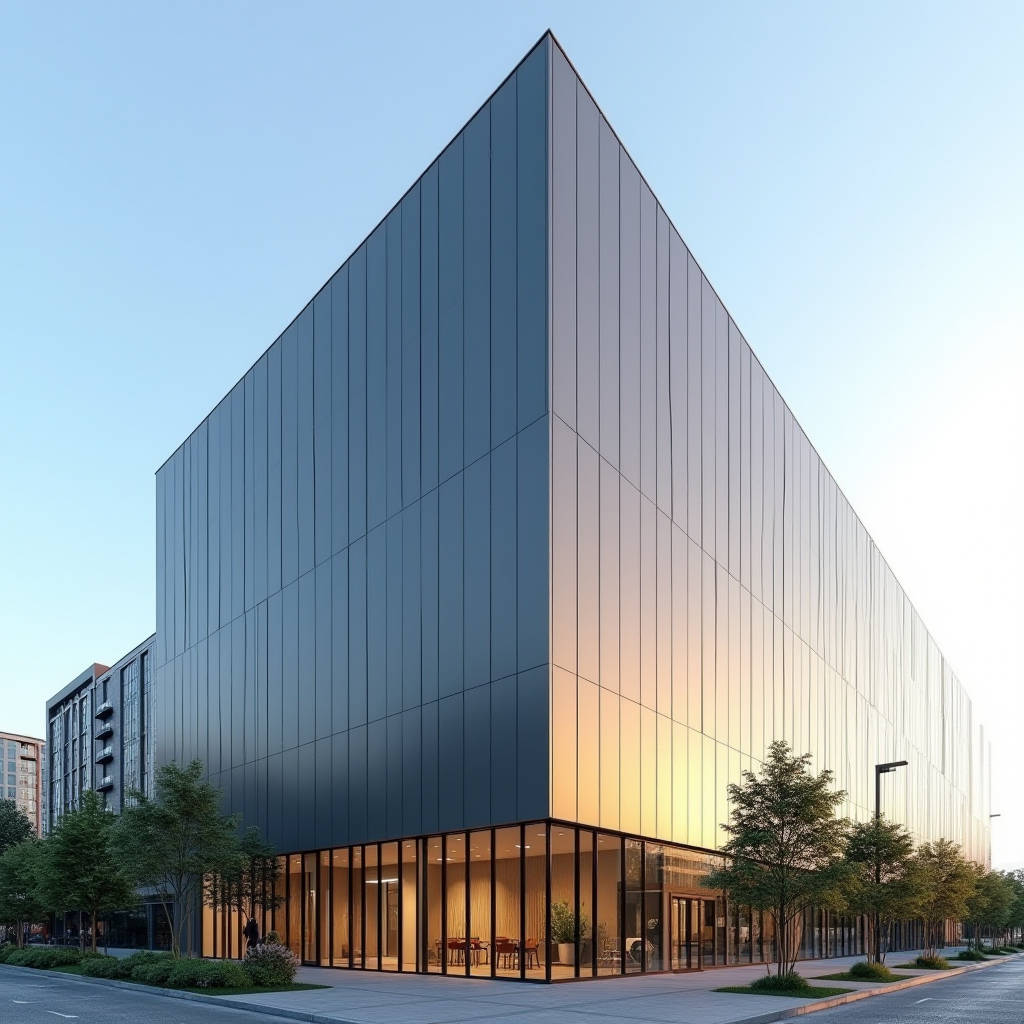
BREEAM Compliant Aluminum Facade projects fail most often at the audit stage, not on site. Contractors routinely specify a solid aluminium cladding panel that meets the thermal target, then lose points on embodied carbon, coating durability, and documentation that was never collected. The gap between a workable facade and a BREEAM-compliant one is usually paperwork and material provenance, not engineering. This article walks through the specific credit categories that a solid aluminium panel facade can actually influence, the data you must generate before ordering, and the calculation methods that hold up under third-party verification. The goal is practical: give your procurement and site teams a checklist they can hand to a BREEAM assessor without a rewrite.
Why Solid Aluminium Panels Earn Credits That ACP Cannot
BREEAM assessors treat aluminium as a high-embodied-carbon material by default. The certification system rewards projects that prove otherwise through recycled content, verified Environmental Product Declarations (EPDs), and responsible sourcing. A solid 3.0mm aluminium sheet carries a measurable, auditable recycled-content story. A 4mm aluminium composite panel carries the same claim on its skins, but the polyethylene core adds a polymer fraction that complicates both the EPD boundary and the end-of-life calculation. For a project chasing BREEAM credits, the solid panel simplifies the math: one material, one alloy, one recycling stream.
For a 1,000m² facade using 3mm solid aluminium, switching from a low-recycled-content alloy to one with 75-85% post-consumer scrap reduces embodied carbon by roughly 2-4 tonnes of CO&sub2; equivalent. That figure is not a marketing estimate; it tracks published EPD data from major European rolling mills. The EPD itself is valid for five years and must come from a programme operator verified under ISO 14025. If your supplier cannot produce a current, third-party-verified EPD with a clear system boundary, the credit is not defensible regardless of the material's actual performance.
Mapping BREEAM Credits to Facade Components
BREEAM's credit structure differs by scheme, but the facade-relevant categories stay consistent across the New Construction, Refurbishment, and In-Use versions. The table below maps each credit to the specific solid aluminium panel specification that earns it.
| BREEAM Credit | Facade-Relevant Requirement | Solid Aluminium Panel Specification |
|---|---|---|
| Mat 01 (Materials) | Life-cycle assessment and embodied carbon | 3.0mm panel, 75%+ recycled content, verified EPD per ISO 14025 |
| Mat 03 (Responsible Sourcing) | Certified supply chain | Aluminium Stewardship Initiative (ASI) certified rolling mill |
| Mat 06 (Resilience) | Robustness of external materials | PVDF coating per AAMA 2605, 70µm total film thickness |
| Ene 01 (Energy) | Reduced thermal bridging and U-value | Thermally broken carrier system, panel acts as rain-screen |
| Wst 01 (Construction Waste) | Diverting waste from landfill | Off-site CNC fabrication, pre-cut panels, scrap return programme |
| Hea 01 (Visual Comfort) | Glare and daylight control | Low-gloss PVDF finish (30-40% gloss) to limit reflectance |
Each row requires a different kind of evidence. Mat 01 needs the EPD file and a life-cycle assessment summary. Mat 03 needs mill certificates and chain-of-custody documentation. Mat 06 needs a coating test report from an accredited laboratory. Collect these in a single facade compliance folder from the day you place the order, not when the assessor asks for them.
Coating Durability: The Credit Most Facades Lose
BREEAM Mat 06 rewards materials that resist degradation because durable cladding avoids premature replacement, which is itself an embodied-carbon event. For solid aluminium panels, the coating is the durability boundary. The industry benchmark is AAMA 2605, which requires a 70µm minimum total dry film thickness for the PVDF system, a 3,000-hour salt spray test, and a 10-year Florida exposure requirement. A 2.0mm panel with a 25µm PVDF coat may pass a basic spec, but it will not survive the accelerated weathering data that a BREEAM assessor expects.
Specify the full system, not just the resin. A compliant PVDF system on a solid aluminium facade includes a chromate or chrome-free conversion layer, a primer, and a topcoat, with the total film thickness verified by a dry-film gauge on site. Ask for the coating supplier's test certificates against AAMA 2605 and ASTM B117 for salt spray. If the coating fails at 3,000 hours, the panel will fail the resilience credit and, more importantly, fail your client in year eight when the colour starts to chalk.
Thermal Performance and the Rain-Screen Detail
Solid aluminium panels are not insulation. They are the outer leaf of a ventilated rain-screen system, and BREEAM's energy credits reward the whole assembly, not the panel alone. The U-value that matters is the one through the complete wall build-up, including the thermal break in the carrier brackets. A 3.0mm panel with a 20mm air gap and 100mm of mineral wool behind it will outperform a 4mm composite panel on the same bracket only if the bracket itself is thermally broken.
For a BREEAM Outstanding target, the facade system should achieve a U-value below 0.30 W/m²K for the opaque wall area. This is achievable with a thermally broken aluminium sub-frame and a continuous insulation layer, but it requires the panel manufacturer and the bracket supplier to share load and deflection data. The panel's flatness tolerance, typically ±1.5mm across a 1,500mm span under EN 485, determines the air gap consistency, which in turn affects the thermal performance. Ask for the deflection calculation before you commit to a panel thickness.
Embodied Carbon: The Calculation That Decides the Grade
Shift from a compliance-first mindset to a credit-stacking approach, where every facade component is audited for its contribution to BREEAM points, asset value, and legal defensibility.
That recommendation, increasingly common in BREEAM guidance, means you should treat the facade as a point-scoring system rather than a single product purchase. The embodied carbon calculation for a solid aluminium facade is straightforward: multiply the panel mass by the EPD's global warming potential (GWP) value, then subtract the end-of-life recycling credit. A 3.0mm panel weighs roughly 8.1 kg/m². At an EPD GWP of 6.5 kg CO&sub2;e per kg for 75% recycled content, the facade contributes about 52 kg CO&sub2;e per square metre before recycling credits. Compare that to a 25% recycled content alloy at 11 kg CO&sub2;e per kg, and the difference is roughly 36 kg CO&sub2;e per square metre.
For a 10,000m² project, that single material decision saves about 360 tonnes of CO&sub2;e. That is the difference between a BREEAM Excellent and an Outstanding rating on the Mat 01 credit alone. The recycling credit at end of life is substantial because aluminium retains its value through infinite recycling loops, a fact that the BREEAM methodology explicitly recognises. Document the recycling stream in the project's waste management plan to secure the credit.
Responsible Sourcing and Chain of Custody
BREEAM Mat 03 awards points for materials sourced from responsible supply chains. For aluminium, the recognised standard is the Aluminium Stewardship Initiative (ASI) Performance Standard, which covers governance, environmental, and social criteria across the value chain. A solid aluminium panel mill with ASI certification gives your project a direct path to this credit. Ask for the mill's ASI certificate number and the chain-of-custody documentation that traces the alloy back to the smelter.
If your supplier cannot provide ASI certification, the next best evidence is a documented responsible sourcing policy aligned with ISO 20400 for sustainable procurement. The assessor will look for a paper trail, not a promise. Keep the mill certificates, the delivery notes, and the batch numbers in the compliance folder. A single missing delivery note can void the credit for the entire facade.
Construction Waste and Off-Site Fabrication
BREEAM Wst 01 rewards diverting construction waste from landfill. A solid aluminium panel facade supports this credit in two ways. First, specify pre-cut panels fabricated off-site to the exact dimensions of the elevation grid. This eliminates on-site cutting waste, which for a 3.0mm panel typically runs 5-8% of material when cut on site. Second, arrange a scrap return programme with the fabricator, because aluminium offcuts carry real resale value and a documented recycling route.
For a 5,000m² facade, on-site cutting would waste roughly 250-400m² of 3.0mm panel, or 2-3 tonnes of aluminium. Off-site fabrication reduces that to near zero, and the offcuts that do occur are returned to the mill's recycling stream. Record the waste diversion rate as a percentage of total facade material weight. BREEAM assessors accept a diversion rate above 90% for the full credit, and a solid aluminium programme can comfortably exceed that.
Visual Comfort and Glare Control
BREEAM Hea 01 covers visual comfort, and a highly reflective facade can fail it. A high-gloss PVDF finish with a reflectance above 50% can create glare in neighbouring buildings and on the site's own interior spaces. Specify a low-gloss finish in the 30-40% gloss range, measured per ASTM D523, to keep the facade within acceptable luminance limits. This is a specification detail that costs nothing but protects an otherwise easy credit.
For projects in dense urban contexts, also consider the panel's colour and its solar reflectance. A light-coloured, low-gloss panel reduces both glare and the urban heat island effect, which can support additional credits in the Land Use and Ecology category. The coating supplier's colour card should include the gloss value and the solar reflectance index for each option.
Documentation: The Real Deliverable
A BREEAM Compliant Aluminum Facade is only as good as its evidence file. Before you place the order, require the following from your panel supplier: a current EPD valid within five years, ASI certification or a responsible sourcing policy, AAMA 2605 coating test certificates, mill certificates with alloy and recycled content, and batch-level traceability. On site, record the dry-film thickness of the coating on every second panel, photograph the installation against the approved shop drawings, and log every offcut returned for recycling.
Futeng® has supplied solid aluminium cladding panels for BREEAM-tracked projects across the Middle East and Europe, and the recurring lesson is that assessors value a complete, organised compliance folder over any single technical claim. The panel itself is a commodity; the documentation is what converts it into a certified asset. Build the folder as you build the facade, and the audit becomes a formality.
Practical Guidance for the Specification
For a project targeting BREEAM Excellent or Outstanding, specify a 3.0mm solid aluminium panel with 75% minimum recycled content, a 70µm PVDF system tested to AAMA 2605, a low-gloss finish, and a thermally broken carrier system. Require the EPD, ASI certification, and coating certificates in the tender. On site, enforce the dry-film thickness check and the off-site fabrication requirement. The panel price is a small fraction of the total facade cost, and the credits it secures are worth far more than the premium for the higher-grade specification.
The engineering is settled. The material is proven. The difference between a facade that passes BREEAM and one that fails is the discipline of collecting the right data at the right time. Treat the compliance file as a deliverable with its own deadline, and the BREEAM Compliant Aluminum Facade stops being a risk and becomes a predictable, documented outcome.