Durable Aluminum Cladding Coating Thickness and Panel Gauge for Long Life Facades
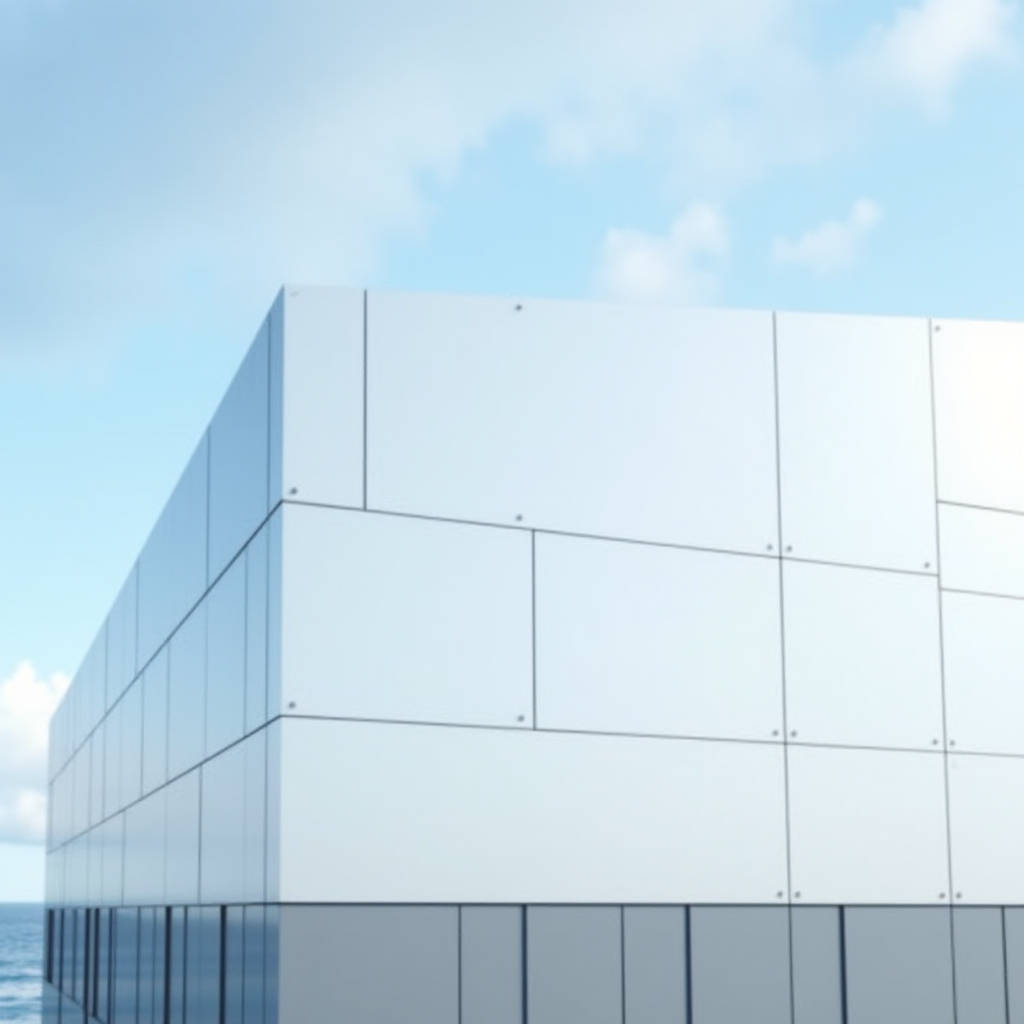
Durable Aluminum Cladding is frequently specified for its corrosion resistance and flatness, yet many facade contractors discover that the real performance gap between a 20-year building skin and a 5-year repair cycle sits in the coating system, not the metal core. A solid 2.5mm or 3.0mm aluminum sheet with a properly cured PVDF finish behaves differently from a thin-gauge panel under coastal salt, industrial fallout, and thermal cycling. This article walks through the coating thickness, pretreatment, and installation variables that determine whether Durable Aluminum Cladding actually delivers on its rated life, with engineering data that procurement teams can use during specification review.
Why Coating Chemistry Decides the Real Service Life
Solid aluminum panels are inert and dimensionally stable, but the exposed surface is what the environment attacks first. A bare alloy reacts with moisture and chlorides, forming a natural oxide that offers limited protection. The PVDF (polyvinylidene fluoride) topcoat is the layer that absorbs UV radiation, resists chalking, and blocks ionic penetration. The difference between a 70/30 PVDF resin formulation and a polyester alternative shows up in gloss retention and color shift within the first three years on a south-facing elevation.
Specifiers should verify the dry film thickness (DFT) of the finish, not just the brand name of the resin. A 25-micron topcoat over a 5-micron primer is the industry baseline for exterior solid aluminum panels, but coastal projects benefit from a 30-micron topcoat and an additional anti-corrosion primer layer. The table below summarizes the typical performance envelope for the three most common coating systems found on Durable Aluminum Cladding panels.
| Coating System | Typical DFT | Gloss Retention (10 yrs) | Salt Spray Resistance | Typical Application |
|---|---|---|---|---|
| Polyester (PE) | 20–25 µm | ~50% | Moderate | Interior, sheltered facades |
| 70/30 PVDF | 25–30 µm | ~80% | High | Standard exterior cladding |
| PVDF + anti-corrosion primer | 30–35 µm | ~85% | Very high | Coastal, industrial, high-UV |
Coil coating, where the liquid PVDF is applied to the aluminum strip before cutting, delivers a more uniform film and better edge coverage than post-formed spray finishing. This is one of the reasons solid aluminum panels from a coil-coating line consistently outperform field-painted or batch-sprayed products in accelerated weathering tests. Procurement teams should request the coating certificate and the batch number for each delivery, not just a generic datasheet.
Pretreatment and Edge Protection Are Non-Negotiable
The adhesion between the aluminum substrate and the PVDF layer depends entirely on the pretreatment chemistry. A chrome-free zirconium or titanium-based conversion coating creates a micro-rough surface that the primer can mechanically lock into. Skipping or thinning this step to save cost is the most common cause of blistering and delamination seen on facade panels after five to seven years. The AAMA 2605 specification, which governs high-performance organic coatings on aluminum, requires a minimum pretreatment and a specific salt spray performance that many budget products fail to meet.
Edge protection is equally critical. When a solid panel is cut, routed, or drilled, the bare aluminum at the cut edge becomes a corrosion initiation point. For Durable Aluminum Cladding exposed to coastal wind-driven rain, the installer should specify a sealed edge detail or a panel with a factory-applied edge primer. The difference between a sealed and unsealed edge can be measured in decades of service life on a 3.0mm panel.
Panel Thickness and Flatness Under Wind Load
Solid aluminum cladding is specified in 2.0mm, 2.5mm, and 3.0mm thicknesses, and the choice directly affects both flatness and the required substructure spacing. A 2.0mm panel with a 600mm support grid will show oil-canning under moderate thermal load, while a 3.0mm panel on the same grid remains visually flat. The modulus of the sheet and the restraint system determine the deflection, and engineers should run the wind load calculation against the actual panel thickness rather than assuming a standard value.
For a high-rise facade at 50 meters, the design wind pressure often exceeds 1.5 kPa. At that load, a 2.5mm panel with a 500mm support spacing keeps deflection within the L/90 limit commonly used in curtain wall practice. The table below gives a practical starting point for support grid spacing based on panel thickness and wind pressure.
| Panel Thickness | Wind Pressure (kPa) | Max Support Spacing (mm) | Deflection Ratio |
|---|---|---|---|
| 2.0 mm | 1.0 | 500 | L/90 |
| 2.5 mm | 1.5 | 600 | L/90 |
| 3.0 mm | 2.0 | 700 | L/90 |
These values assume a continuous aluminum substructure with proper thermal break detailing. The flatness of the finished wall is also a function of the panel's residual stress from the forming process. A panel that has been stretch-leveled before coating will hold its shape far better than one cut from a coil with internal stress. This is a detail that is rarely visible in a sample but becomes obvious across a large elevation.
Thermal Movement and Fixing Strategy
Solid aluminum has a coefficient of thermal expansion of roughly 23 × 10⁻⁶ per degree Celsius. On a 3-meter panel, a 60°C temperature swing produces about 4mm of movement. If the fixing system restrains that movement, the panel will bow, pop rivets, or stress the substructure. The correct approach is a sliding fixing detail that allows the panel to expand and contract freely while keeping it positively attached to the frame.
Hidden fixing systems, where the panel is engaged on a concealed rail, are preferred for large-format Durable Aluminum Cladding because they eliminate visible fasteners and allow the panel to move independently. Visible screw-fixed systems require oversized holes and a neoprene washer to accommodate movement, but they are more prone to water ingress at the fixing point. The choice between the two affects both the aesthetics and the long-term weathertightness of the assembly.
Fire Performance and Non-Combustibility
Because solid aluminum panels are a single homogeneous metal sheet, they are classified as non-combustible under ISO 1182 and typically achieve an A2-s1,d0 rating in the European classification system. This is a significant advantage over composite panels, which carry a combustible core. For high-rise projects and buildings with strict fire codes, the non-combustibility of the solid panel removes a layer of risk from the facade specification.
The coating itself is also engineered to be low-smoke and low-heat-release. The PVDF film will char and degrade under direct flame, but it does not contribute to flame spread across the facade. This behavior is documented in the ASTM E84 surface burning characteristics test, where solid aluminum panels consistently fall into the Class A range. Procurement teams should request the fire test certificate for the specific panel thickness and coating used on the project, because the rating is tied to the full assembly.
Corrosion Resistance in Coastal and Industrial Zones
Salt-laden air and industrial pollutants attack aluminum differently. Chlorides promote pitting corrosion, while sulfur dioxide accelerates surface etching. The PVDF coating is the primary defense, but the alloy grade also matters. A 5000-series alloy with added magnesium offers better marine corrosion resistance than a 3000-series alloy, and a specifier should confirm the alloy designation on the material certificate.
For a coastal project within 500 meters of the shoreline, the panel should be specified with a 30-micron PVDF topcoat and an anodized or conversion-coated substrate. The AAMA 2605 salt spray requirement of 4000 hours is a reasonable benchmark for this environment. Panels that only meet the lower AAMA 2603 standard will show visible corrosion at the edges within a shorter period, particularly where the coating has been cut.
Installation Quality and the Human Factor
No coating or alloy specification can compensate for poor installation. The most common field failures in Durable Aluminum Cladding come from improper fastener torque, missing thermal break pads, and inadequate drainage behind the panel. A ventilated rainscreen cavity, where the panel is mounted on a subframe with a 20–40mm air gap, allows moisture to drain and the panel to dry out, which extends the life of the coating significantly.
Contractors should also verify that the panel edges are not in direct contact with steel or concrete, because galvanic corrosion will occur at the junction. A neoprene or EPDM gasket at every contact point is a low-cost insurance policy against a premature failure. The installation sequence should be documented and photographed, because warranty claims are often decided on the evidence of correct installation practice.
Lifecycle Cost and Procurement Considerations
When comparing Durable Aluminum Cladding against alternative materials, the lifecycle cost is dominated by maintenance frequency rather than the initial panel price. A correctly specified and installed solid aluminum facade with a 70/30 PVDF coating can remain maintenance-free for 20 years, while a lower-grade coating may require recoating or panel replacement within eight years. The difference in net present value is substantial for a building owner.
For procurement teams managing large volumes, consistency of supply matters as much as the unit price. A reliable supplier should be able to deliver matched batches with identical coating lot numbers and documented mechanical properties. Futeng® is one manufacturer that maintains a coil-coating line and a documented quality control process for solid aluminum panels, which gives specifiers a dependable reference point when evaluating sourcing options for a large facade package.
Final Specification Guidance
The engineering evidence points to a clear set of decisions for a durable facade. Specify a 2.5mm or 3.0mm solid aluminum panel with a 70/30 PVDF coating at a minimum 25-micron topcoat, a verified chrome-free pretreatment, and a sealed edge detail. Require the AAMA 2605 certificate and the fire test report for the exact assembly. Design the substructure with a support spacing that matches the panel thickness and the calculated wind pressure, and use a sliding fixing system with a ventilated cavity. These choices, applied consistently, are what separate a facade that performs for two decades from one that fails at the first maintenance cycle.
The coating chemistry, the pretreatment, the panel thickness, and the installation practice work as a single system. Changing any one variable without adjusting the others shifts the performance envelope. A facade is a long-term investment, and the specification should be written to match the actual environmental exposure, not a generic marketing claim. That is the practical definition of Durable Aluminum Cladding that survives field conditions.