Low Maintenance Aluminum Facade Engineering for Decades of Reliable Service
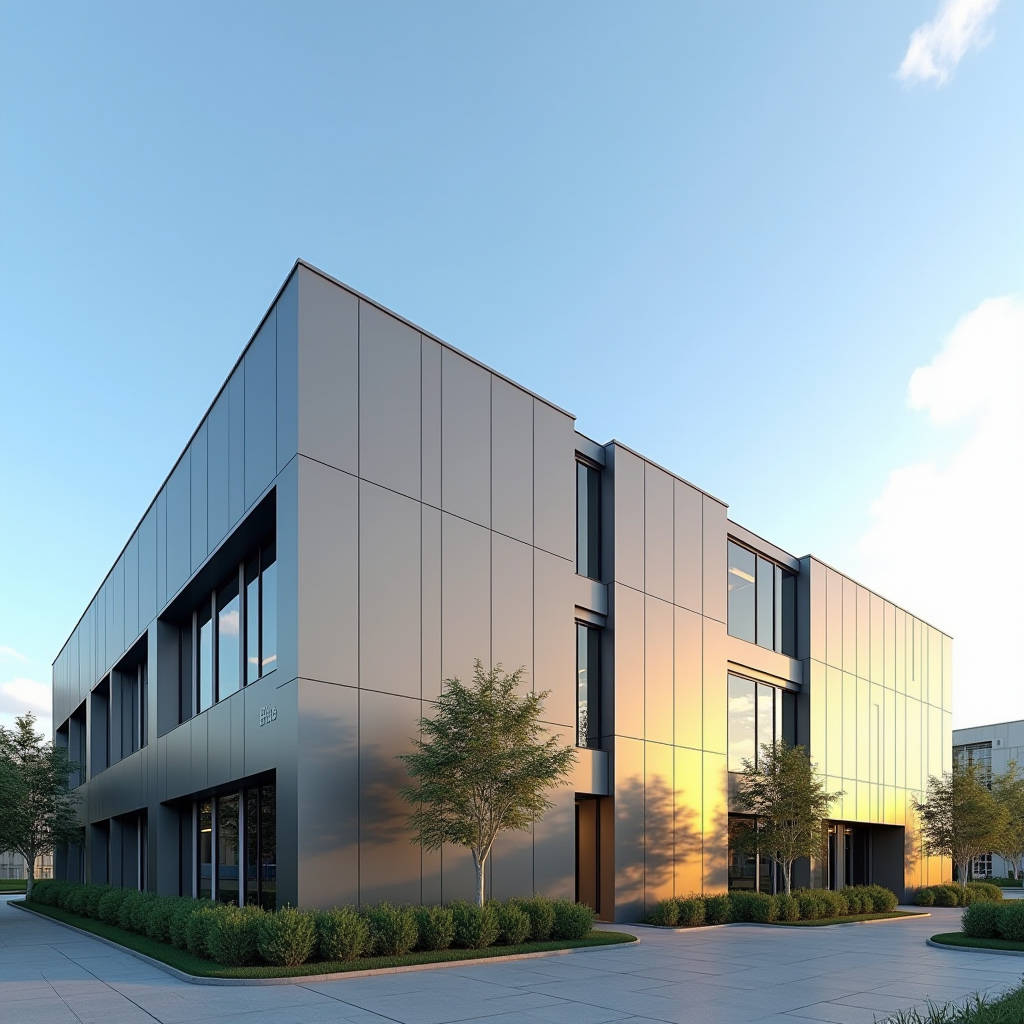
Every building envelope eventually faces the same question: how much time and money will this facade demand over its service life? For architects, general contractors, and facade contractors, the answer increasingly points to a Low Maintenance Aluminum Facade built from solid aluminum cladding panels. Unlike thin composite systems that rely on bonded cores, a solid 2.0 to 3.0 mm aluminum sheet carries its own structural rigidity, resists oil canning, and holds its PVDF coating through decades of UV and weather exposure. The real cost of a facade is not the purchase order; it is the cumulative cleaning, recoating, fastener replacement, and panel repair spread across twenty to thirty years. This article examines the engineering decisions that separate a genuinely low-maintenance aluminum facade from one that merely looks economical on paper.
Why Solid Aluminum Panels Define the Low-Maintenance Baseline
The maintenance burden of any cladding system starts with the material itself. Solid aluminum cladding panels offer a homogeneous cross-section with no laminated core to delaminate, no polyethylene layer to melt or degrade, and no adhesive bond line to fail under thermal cycling. A 2.5 mm solid panel provides roughly the same flexural stiffness as a thicker composite assembly while remaining lighter than steel, which simplifies the substructure and reduces the number of support points that could shift over time.
Thermal movement is the hidden enemy of facade longevity. Aluminum expands and contracts with every diurnal temperature swing, and a well-designed system must accommodate this movement without transferring stress to the coating or the fixings. Solid panels, when fixed with concealed or semi-concealed brackets that allow in-plane sliding, keep the coating intact because the panel itself flexes elastically rather than concentrating strain at a bond line. This is precisely why the Low Maintenance Aluminum Facade concept works: the material and the fixing strategy work together to prevent the micro-cracking that forces premature refinishing.
Coating Systems: The First Line of Defense
No maintenance strategy can succeed without a coating that survives the environment. The industry standard for exterior architectural aluminum remains polyvinylidene fluoride (PVDF) applied at 70 percent resin content, with a dry film thickness of 25 to 30 microns over a chromate or chrome-free conversion coating. This is not a cosmetic layer; it is a weathering barrier engineered to resist chalking, fading, and dirt pickup.
Contractors should demand coating specifications that meet AAMA 2605 for the most demanding exterior applications. This standard subjects the coating to 4,000 hours of accelerated weathering, humidity, and salt spray testing, and it is the benchmark for a coating that will hold its gloss and color for decades. For coastal projects, where chloride exposure accelerates corrosion, the same AAMA 2605 specification combined with proper edge treatment becomes non-negotiable.
| Coating Property | AAMA 2603 | AAMA 2604 | AAMA 2605 |
|---|---|---|---|
| Accelerated weathering (hours) | 1,000 | 2,000 | 4,000 |
| Gloss retention | 30% | 50% | 70% |
| Color change (ΔE) | 5.0 | 3.0 | 2.0 |
| Typical service before recoating | 10–15 years | 15–20 years | 25+ years |
| Suitable for | Interior / low exposure | Moderate exterior | Severe exterior / coastal |
Specifying AAMA 2605 coating is the single most cost-effective maintenance decision a project can make. The premium over a 2603 coating is a fraction of the cost of a single scaffold erection for a mid-rise facade, and it pushes the recoating interval beyond the practical planning horizon of most building owners.
Drainage and Ventilation: Keeping the Cavity Dry
A facade is only as low-maintenance as its ability to shed water and dry itself. Rainscreen construction, where the solid aluminum panel is fixed to an aluminum substructure with an open or ventilated cavity behind it, is the standard approach for a durable envelope. The cavity equalizes pressure, allows moisture that penetrates the joints to drain freely, and lets the back of the panel dry through natural airflow.
Stagnant water is the root cause of most premature coating failure and fastener corrosion. A ventilated cavity prevents condensation from pooling against the panel reverse face, which is critical because the reverse side of a solid aluminum panel is often only protected by a primer. Specifying open-joint rainscreen detailing, with a minimum cavity depth of 25 to 40 mm and proper flashings at every horizontal interruption, keeps the entire assembly dry and dramatically reduces the frequency of inspection and repair.
Gaskets and sealants are the weakest links in any facade. Closed-joint systems rely on sealant that must be inspected and replaced every ten to fifteen years, which is a recurring maintenance line item. Open-joint rainscreen systems eliminate most of that burden by using engineered gaskets or simple overlapping geometry that does not require a weatherproof sealant bead. Where sealant is unavoidable, specify a low-modulus, high-movement silicone rated for the expected joint movement, and design the joint geometry so the sealant can be replaced without removing the panel.
Fastener and Substructure Corrosion Protection
The aluminum panel is the visible surface, but the hidden substructure determines whether the facade stays flat and secure. Dissimilar metal contact is a classic failure mode: steel brackets in direct contact with aluminum panels create galvanic corrosion that expands and pops the coating from behind. The fix is straightforward but often overlooked. All steel components must be hot-dip galvanized or coated with a compatible barrier, stainless steel fasteners should be used in coastal zones, and nylon or EPDM isolation washers must separate dissimilar metals at every contact point.
Stainless steel fasteners, typically A2 or A4 grade depending on chloride exposure, add a small upfront cost but eliminate the corrosion that forces panel replacement. For a 10,000 square meter facade with roughly 4,000 to 6,000 fixing points, the incremental cost of upgrading from zinc-plated to stainless fasteners is modest, while the avoided replacement labor is substantial.
The substructure itself should be engineered to the same standard as the panel. An aluminum substructure, with thermal breaks where required, avoids the galvanic concerns entirely and keeps the system dimensionally stable. The stiffness of the solid panel, combined with a rigid substructure, prevents the oil canning that mars large-format panels and triggers warranty claims. As AAMA guidance notes, panel flatness is a function of both material stiffness and the support spacing, so the design engineer must balance panel thickness against bracket spacing to hold the panel visually flat.
Lifecycle Cost: The Argument That Wins Projects
Procurement teams often compare initial material prices and stop there. That is a mistake. A facade that is cheap to buy but requires frequent cleaning, recoating, or repair accumulates a lifecycle cost that swamps the initial saving. The industry has moved toward evaluating facades on net present value over a 25 to 30 year service life, and solid aluminum systems consistently perform well in this analysis because their maintenance intervals are long and their failure modes are predictable.
Consider a representative mid-rise building with 8,000 square meters of facade. A low-spec coating system may require a full wash and touch-up every five years and a recoat at year fifteen, each operation requiring scaffold or rope access and temporary protection of the surrounding area. A high-spec AAMA 2605 system with a ventilated rainscreen cavity may require only an occasional wash and no recoat within the same period. The difference in maintenance spending over thirty years is often several times the initial coating premium, before accounting for the disruption cost to building occupants.
For contractors who price these projects, the maintenance profile is also a risk factor. A system with a short maintenance interval carries warranty exposure and repeat-call risk that a robust system does not. Choosing a Low Maintenance Aluminum Facade is therefore not just an aesthetic or material decision; it is a risk-management decision that protects the contractor's reputation and the owner's operating budget.
Cleaning and Routine Care
Even the best facade needs occasional attention, and the maintenance plan should be realistic. A solid aluminum facade with a quality PVDF coating requires little more than periodic washing with water and a mild, non-abrasive detergent to remove atmospheric dirt and bird droppings. The frequency depends on the local environment: urban and industrial areas may need a wash every one to two years, while clean suburban or rural sites can go longer. The key is to avoid abrasive pads, acidic cleaners, and high-pressure washing that can damage the coating edge or force water behind the panel.
Routine inspections should focus on the joints, flashings, and fixings rather than the panel face itself. A simple annual visual check of the cavity openings, weepholes, and gaskets catches most problems before they become costly. The low parts count of a solid aluminum rainscreen system means there are simply fewer components to inspect and replace than in a complex unitized curtain wall with dozens of gaskets and seals per module.
Specifying for the Long Game
Writing a maintenance-conscious specification is a discipline. The spec should fix the panel thickness at 2.0 to 3.0 mm depending on wind load and panel size, require AAMA 2605 coating for exterior exposure, mandate stainless or isolated fasteners, and define a ventilated cavity with proper drainage. It should also require the fabricator to demonstrate edge treatment, because uncoated cut edges are the first place corrosion starts on a solid panel.
Fabrication quality directly controls maintenance. A panel with a clean, sealed edge and a properly applied conversion coating will outlast one where the edge is left raw or the coating is applied over a contaminated surface. Contractors should audit the fabricator's process control, including coating thickness measurement and salt spray testing of production samples, rather than relying on a data sheet alone.
For projects where long-term reliability is the deciding factor, a fabricator with proven process control and a documented quality system makes the difference. Futeng® supplies solid aluminum cladding panels with consistent thickness tolerance and certified PVDF coating, and their fabrication documentation supports the kind of lifecycle planning that a genuine Low Maintenance Aluminum Facade demands. When you evaluate suppliers, request coating certification per ASTM B117 salt spray and ISO 4892 weathering data, and confirm the panel flatness tolerance against the support spacing you intend to use.
Practical Engineering Guidance
Three decisions dominate the maintenance outcome of any aluminum facade. First, choose the coating grade before you choose the color; a 2605 coating is the foundation of a long service life. Second, design the cavity for drainage and ventilation, and never let water sit against the panel reverse face. Third, control corrosion at the fasteners and substructure, because a hidden failure will eventually surface as a visible coating defect.
For wind load engineering, refer to the ASCE 7 standard for the project location and confirm the panel thickness and bracket spacing against the calculated pressures. A thicker panel may allow wider bracket spacing, which reduces the substructure cost and the number of potential corrosion points, so the panel thickness decision is intertwined with the fixing layout.
The maintenance plan should be written into the project documents, not left to chance. Define the cleaning schedule, the inspection points, and the replacement procedure for gaskets and sealants. An owner who receives a clear maintenance manual with the as-built drawings will keep the facade in good condition far longer than one who discovers the requirements years later.
A Low Maintenance Aluminum Facade is not a product claim; it is an engineering outcome. It is the result of choosing a solid material, a durable coating, a ventilated cavity, and corrosion-protected fixings, and then verifying that the fabricator executed each of those details correctly. When those pieces align, the facade delivers decades of service with minimal intervention, and the total cost of ownership stays low for the entire life of the building.