Polyamide Thermal Strip Aluminum for Solid Cladding Facades Thermal Break Engineering and Specification
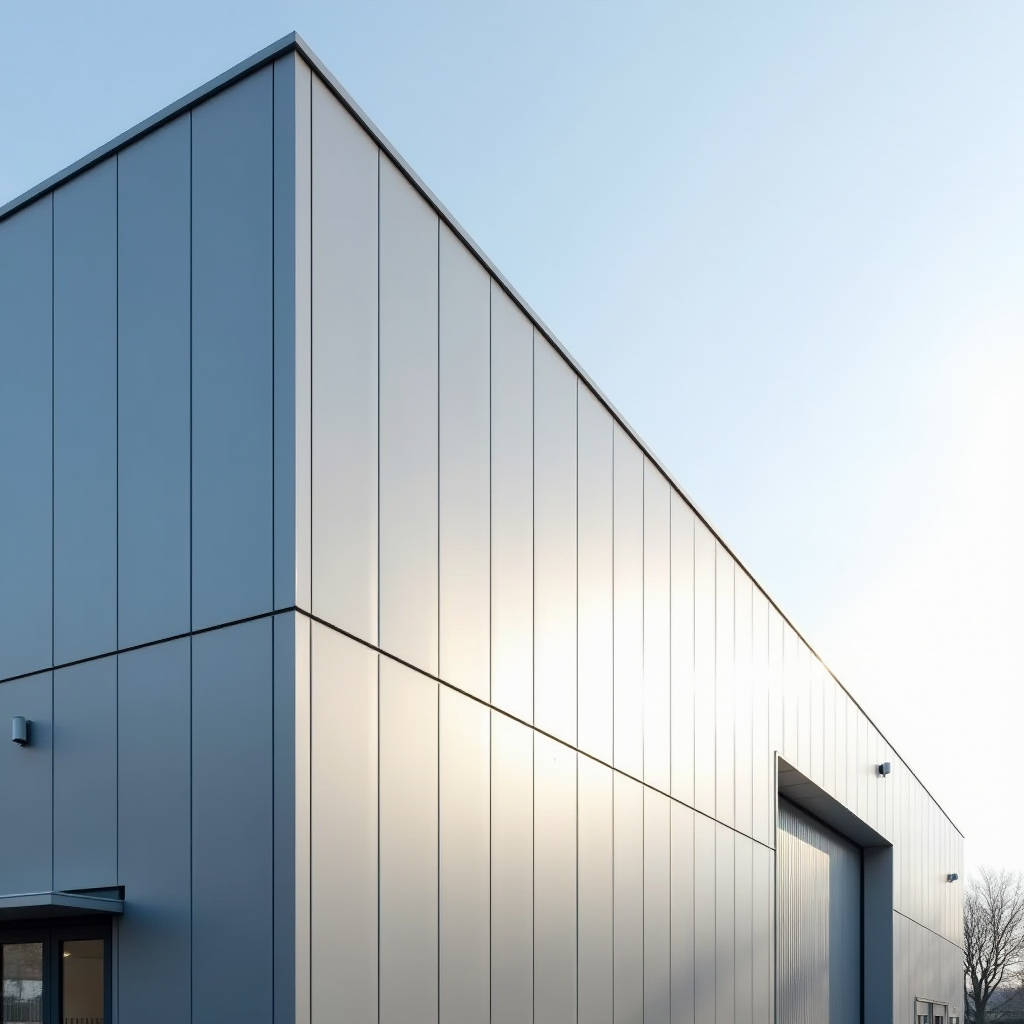
When a solid aluminium cladding panel is fixed directly to a steel or concrete subframe, the metal acts as a fast thermal bridge that can drain heat from the building envelope at roughly 237 W/mK. Polyamide Thermal Strip Aluminum systems solve this by inserting a low-conductivity PA66 barrier between the panel and its fixing structure, cutting heat loss at the anchorage points without sacrificing the flat, rigid appearance that architects expect from solid sheet. This article walks through how thermal break strips are engineered, how they change the way a solid aluminium rainscreen is detailed, and what the numbers look like when you compare a broken and an unbroken assembly across a full facade.
Why a Solid Panel Needs a Thermal Break
Solid aluminium cladding panels are prized for their flatness, dimensional accuracy and long service life, but aluminium is a poor insulator. A 2.0 mm or 3.0 mm solid sheet transfers heat roughly 500 times faster than the polyamide strip that separates it from the supporting structure. On a cold winter night, the difference shows up as condensation, cold spots on interior surfaces and higher heating loads. The same problem appears in reverse in hot climates, where solar gain on a dark PVDF panel can push heat straight through the frame into the interior.
The thermal break is not an optional add-on. It is a structural and thermal component that sits between the inner and outer aluminium profiles, and in a solid cladding context it often sits between the panel carrier and the bracket. Because the strip is load-bearing, the material choice matters just as much as the thermal performance.
How Polyamide Thermal Strip Aluminum Is Built
The standard material is PA66 polyamide reinforced with 25% glass fibre. The glass content gives the strip the stiffness and creep resistance it needs to carry the weight of a solid panel over decades, while the polyamide base keeps thermal conductivity low. A typical thermal conductivity for a glass-reinforced PA66 strip is around 0.3 W/mK, which is roughly 800 times lower than the aluminium it separates.
Assembly follows a three-step process that has been used in North America for more than a decade and in Europe for over thirty years:
- Knurling – the inner faces of the aluminium profiles are rolled with a knurling wheel to create a mechanical key.
- Roll-in – the polyamide strip is pressed into the knurled cavity under controlled force.
- Locking – the profile is crimped or rolled so the strip is mechanically locked in place and cannot pull out under load.
For a solid cladding panel, the same strip technology is applied to the bracket and carrier system rather than the window frame. The carrier profile is extruded in two halves, the strip is inserted, and the two halves are locked together. The panel is then fixed to the carrier, and the whole assembly is anchored to the subframe.
Thermal Performance Numbers That Matter
Thermal break strip performance is measured by the Uf value of the complete profile assembly, not by the strip alone. The table below compares a solid aluminium cladding assembly with and without a polyamide thermal break, using realistic values for a 2.5 mm solid panel on a standard aluminium bracket.
| Parameter | Aluminium Only (No Break) | PA66 Strip (25% Glass Fibre) |
|---|---|---|
| Thermal conductivity of material | 237 W/mK | 0.30 W/mK |
| Uf of bracket assembly (approx.) | 3.8–4.2 W/m²K | 1.6–2.0 W/m²K |
| Condensation risk at interior face | High | Low |
| Linear thermal bridge at joint (psi value) | 0.35–0.45 W/mK | 0.08–0.12 W/mK |
| Relative heat loss through fixings | 100% | 35–45% |
| Structural shear strength of strip | N/A | 60–80 N/mm² |
These figures are engineering estimates for a typical bracket system. The exact values depend on the strip geometry, the number of fixings per square metre and the panel weight, so a project-specific calculation is always required before sign-off.
Structural Behaviour Under Wind Load
A thermal break strip is not just an insulator. It is a structural member that transfers shear and moment from the panel to the subframe. The glass fibre orientation in the strip controls its strength. In high-performance struts, fibres are oriented in three directions so the strip resists load in both the vertical and horizontal planes. This matters on a tall facade where wind suction can exceed 2.0 kPa and the panel must stay flat without the strip creeping or relaxing.
Creep is the main long-term concern. A polyamide strip under permanent load will slowly deform if the temperature is high and the load is continuous. For dark-coloured panels in direct sun, the strip can see surface temperatures above 70 °C. Selecting a PA66 grade with 25% glass fibre and verifying its long-term creep modulus against the panel weight is the difference between a facade that stays flat for thirty years and one that sags after five.
Moisture, Condensation and the Dew Point
The most visible benefit of a thermal break is the way it moves the dew point. In an unbroken aluminium assembly, the interior face of the metal can drop below the dew point of the room air, producing condensation that stains finishes and promotes corrosion. With a polyamide strip in place, the interior surface stays warmer, so the dew point is pushed into the insulated cavity where any moisture can be drained away.
This is particularly important for solid cladding panels in high-humidity environments such as swimming pools, food processing plants and coastal buildings. The combination of a thermal break and a properly drained cavity keeps the aluminium dry and protects the PVDF coating from the kind of edge corrosion that appears when condensation sits against a cut edge.
Coating and Finish Compatibility
Solid aluminium cladding panels are normally finished with a PVDF coating, typically 25–30 microns total dry film thickness, applied over a chromate or chrome-free pre-treatment. The polyamide strip must survive the same powder-coating or liquid-coating process without losing its dimensional stability. PA66 strips are engineered to hold their dimensions during the curing cycle, which typically runs at 180–200 °C for around 20 minutes. If the strip distorts during curing, the thermal break is compromised before the panel ever leaves the factory.
Suppliers such as Futeng® have built their reputation on matching the strip grade to the coating process so that the assembly stays true after the oven. This is one of those details that never appears in a marketing brochure but shows up in the field as a panel that fits perfectly on site.
Standards and Specification References
When you specify a Polyamide Thermal Strip Aluminum assembly, the relevant references are the AAMA and ASTM documents that govern thermal performance and structural testing. The following are the references most commonly cited in curtain wall specifications:
- AAMA 507 – performance requirements for thermally broken aluminium framing systems.
- ASTM C1363 – steady-state thermal transmission properties by means of the heat flow meter apparatus.
- ISO 10077-2 – thermal performance of windows, doors and shutters, calculation of thermal transmittance.
- NFRC 100 – procedure for determining fenestration product U-factors.
These standards give you a defensible basis for the performance you specify and for the laboratory test report you should request from the strip supplier before the facade is approved.
Cost and Payback Considerations
A thermal break adds cost to the bracket system, typically 15–25% on the fixing hardware, which translates to a small percentage of the total facade cost. The payback comes from reduced heating and cooling loads, from the elimination of condensation damage, and from being able to meet energy codes that would otherwise force a thicker or more expensive wall assembly. On a large commercial project, the energy saving alone often justifies the strip within the first few years of operation.
There is also a risk-management angle. A facade that fails to meet the specified U-value at handover can trigger penalties, rework and legal disputes. Locking the thermal break performance into the specification with a test report protects the contractor as much as the building owner.
Practical Specification Advice
For a solid aluminium cladding project, the following points should be in the specification:
- Specify PA66 with a minimum glass fibre content of 25% and a documented long-term creep modulus.
- Require a Uf value for the complete bracket assembly, not just the strip.
- Ask for a laboratory test report that follows ISO 10077-2 or AAMA 507.
- Verify that the strip survives the coating cure cycle without dimensional distortion.
- Check the psi value of the linear thermal bridge at the joint between panels.
Engaging a supplier such as Futeng® early in the design phase lets you match the strip geometry to the actual panel weight and wind load rather than adapting the design to a stock profile. That early engagement is where the real engineering value is captured.
Final Recommendations
Polyamide Thermal Strip Aluminum is not a marketing feature. It is a structural and thermal component that changes the way a solid cladding facade performs, both thermally and over its service life. The strip lowers the Uf value of the fixing assembly, moves the dew point away from the interior, and resists the shear and creep loads that a solid panel imposes. Specify PA66 with 25% glass fibre, verify the performance with a laboratory test, and confirm the strip is compatible with the coating process. Do that, and the thermal break becomes a quiet, reliable part of a facade that performs for decades.