High Strength Aluminum Cladding Alloy Thickness and PVDF Coating for Wind Loaded Facades
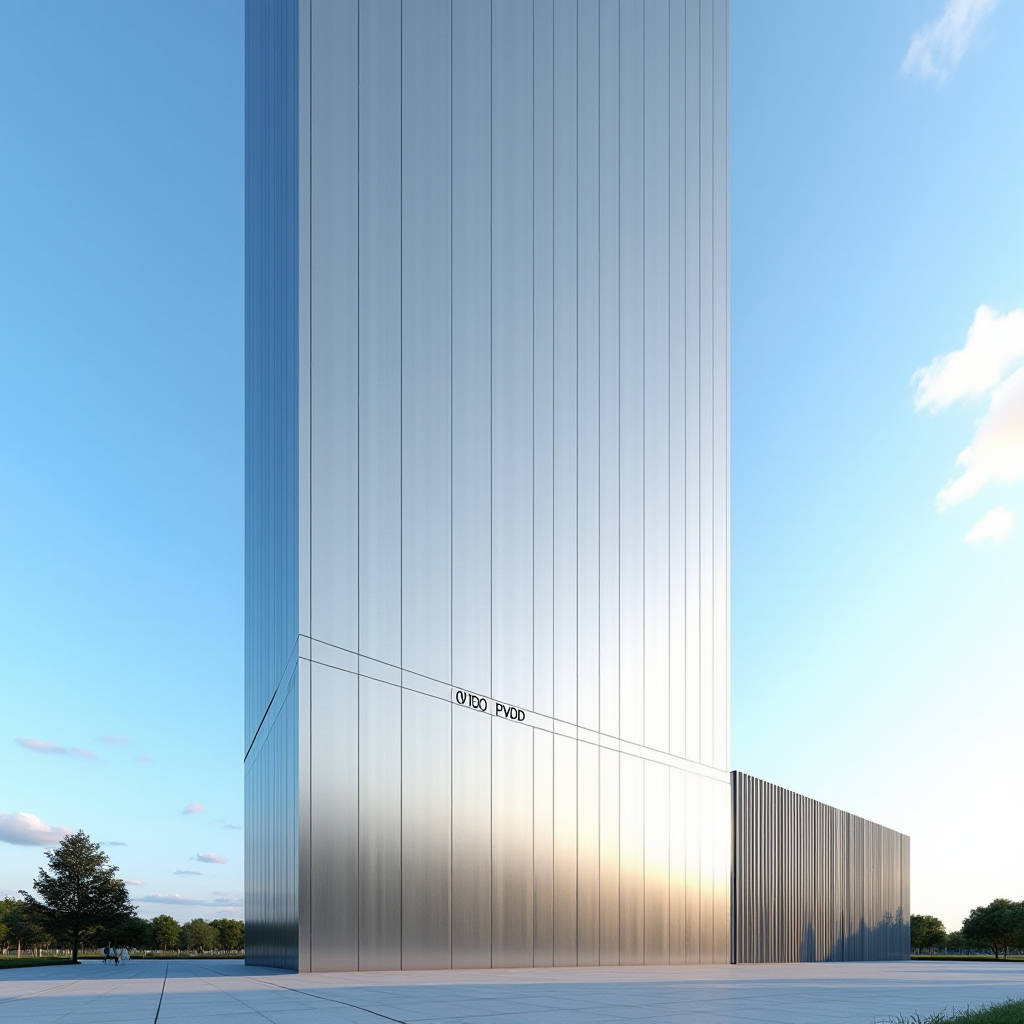
High Strength Aluminum Cladding is frequently specified for tall buildings because the alloy itself does the heavy lifting before any coating or finish is applied. Project teams that treat cladding as a purely aesthetic skin routinely underestimate how much the panel substrate contributes to wind-load resistance, deflection control, and long-term dimensional stability. The engineering reality is that a 3.0 mm solid aluminium sheet, alloyed with magnesium and manganese, behaves as a structural diaphragm that transfers lateral forces to the sub-frame, while a lighter or thinner panel would force the framing system to absorb that load. This article examines the alloy selection, thickness verification, coating durability, and installation economics that determine whether a facade actually performs to its rated strength, and it gives procurement teams a practical checklist for qualifying suppliers on real engineering data rather than marketing claims.
Why Alloy Chemistry Drives Structural Performance
Pure aluminium has a tensile strength of roughly 90 to 120 MPa, which is adequate for decorative trim but marginal for a wind-exposed facade on a 40-storey tower. The cladding industry solves this by adding magnesium, manganese, and in some series silicon and copper, to shift the alloy into the 200 to 300 MPa range. The most common choices for solid panels are the 3xxx series (manganese hardened) and the 5xxx series (magnesium hardened), with 5052 and 5083 being the workhorses for marine and coastal environments because of their resistance to salt corrosion.
When a specification sheet says High Strength Aluminum Cladding, the buyer should ask which alloy and which temper are behind that claim. A 5052-H32 panel and a 1100-H14 panel are both aluminium, but their yield strengths differ by more than 50 percent. That difference changes the required panel thickness, the sub-frame spacing, and ultimately the cost of the entire rainscreen system. The ASTM B209 standard governs the allowable mechanical properties for these sheet alloys, so any supplier claiming a specific strength value should be able to point to a certified mill test certificate that matches the grade and temper stated on the drawing.
Thickness Selection Under Real Wind Loads
Structural engineers rarely specify cladding thickness by habit. They calculate the design wind pressure from the local building code, apply the appropriate gust factor and pressure coefficients, then check deflection limits against the panel's flexural rigidity. The governing equation is simple: rigidity scales with the cube of thickness, so moving from 2.0 mm to 3.0 mm increases stiffness by more than three times while adding only 50 percent more material weight.
For a typical 1200 mm by 2400 mm panel supported on four edges, the practical guidance is straightforward. A 2.0 mm panel works for low-rise projects in sheltered zones where design wind pressure stays below roughly 1.2 kPa. Mid-rise buildings in open terrain, or any project above 30 metres, usually justify a 2.5 mm panel. High-rise towers, coastal sites, and corners of buildings where pressure coefficients spike call for 3.0 mm. The table below summarises the typical envelope for each thickness.
| Panel Thickness (mm) | Typical Alloy / Temper | Design Wind Pressure (kPa) | Max Recommended Panel Span (mm) | Typical Building Height |
|---|---|---|---|---|
| 2.0 | 5052-H32 | Up to 1.2 | 900 | Low-rise, sheltered |
| 2.5 | 5052-H32 | 1.2 to 2.0 | 1100 | Mid-rise, open terrain |
| 3.0 | 5052 / 5083 | 2.0 to 3.5 | 1300 | High-rise, coastal |
| 3.0 (reinforced) | 5083-H116 | Above 3.5 | 1500 | Super-tall, exposed corners |
These figures assume a four-edge supported rainscreen with a ventilated cavity and standard 50 mm by 50 mm aluminium sub-framing. If the architect insists on larger panel modules or hidden fixings, the engineer must either increase thickness or reduce the support spacing. The point for procurement is that a thickness written on the drawing is meaningless without the supporting wind-load calculation, and a good supplier will request the project's design pressure before confirming a panel specification.
Coating Systems and Long-Term Weathering
Strength means nothing if the surface fails within a decade. The two dominant coating families for solid aluminium panels are PVDF (polyvinylidene fluoride) and powder coating. PVDF, applied at a dry film thickness of 25 to 30 microns over a primer, is the industry benchmark for exterior facades because its fluoropolymer resin resists UV degradation, chalking, and colour fade far better than polyester or acrylic systems. The AAMA 2605 specification is the most demanding performance level, requiring a 10-year Florida and Arizona exposure test before a coating can be certified.
Powder coating is cheaper and more flexible in colour matching, but its outdoor durability is typically rated to AAMA 2603 or 2604, which is a lower bar. For a facade that must hold its warranty for 20 to 25 years, AAMA 2605-rated PVDF is the safer specification. The coating comparison below gives procurement teams a quick reference for what each system actually guarantees.
| Coating System | Dry Film Thickness | AAMA Rating | Typical Warranty | Best Use |
|---|---|---|---|---|
| PVDF (70% resin) | 25-30 microns | 2605 | 20-25 years | High-rise, coastal, long warranty |
| Powder (polyester) | 60-80 microns | 2603 | 5-10 years | Interior, low-rise, budget |
| Powder (polyurethane) | 60-80 microns | 2604 | 10-15 years | Mid-rise, moderate exposure |
Beyond the resin, the pre-treatment matters just as much. A chromate or chrome-free conversion coating creates the adhesion layer between the aluminium and the primer. If a supplier skips this step to cut cost, the coating delaminates within a few years regardless of the topcoat chemistry. A responsible specification should require the coating line to be qualified under ISO 12944 or the equivalent, and the buyer should ask for the coating applicator's certification rather than accepting a generic claim of "PVDF coating".
Installation Economics and Life-Cycle Cost
High Strength Aluminum Cladding is not the cheapest facade material on a per-square-metre basis, but the installed cost story is more nuanced. Solid aluminium panels arrive flat, are cut, folded, and punched in the shop, then installed as a drained and ventilated rainscreen. Compared with a fully glazed curtain wall, the aluminium system is significantly lighter, which reduces the structural steel tonnage in the building frame and shortens crane time on site.
A practical cost comparison for a mid-rise project in a typical urban market shows the trade-offs. The material cost per square metre for a 3.0 mm PVDF-coated solid panel is higher than for a composite panel, but the fabrication is simpler because there is no core to manage, and the scrap rate in the shop is lower. Installation labour is comparable, and the maintenance interval is longer because the PVDF surface does not require frequent recoating. Over a 30-year life cycle, the total cost of ownership of a well-specified solid aluminium rainscreen is often equal to or lower than cheaper alternatives that need mid-life replacement.
For a 10,000 m² facade, a 3.0 mm solid aluminium system typically adds 8 to 12 percent to the initial envelope cost versus a 2.0 mm composite alternative, but it removes the need for a mid-life panel replacement and keeps the building's insurance premium lower because the material is non-combustible.
Fire Safety and Non-Combustibility
Solid aluminium panels are non-combustible by nature. A single-sheet aluminium facade, with no polymer core, passes the reaction-to-fire tests required by most international building codes, including the European EN 13501-1 classification at the A2-s1,d0 level. This matters for public buildings, hospitals, schools, and high-rise residential towers where fire resistance is a hard regulatory requirement rather than an optional upgrade.
The absence of a combustible core also simplifies the cavity design. Because the panel itself does not contribute fuel to a fire, the rainscreen cavity can be designed with standard fire-stopping and cavity barriers without the extra engineering that a combustible core would demand. For a procurement manager, this translates into a shorter approval cycle and fewer surprises during the building control review.
Qualifying a Supplier on Engineering Data
The market is crowded with suppliers who all claim high strength, but the difference between a reliable partner and a risky one shows up in the paperwork. A credible manufacturer of solid aluminium panels should provide a mill test certificate for every coil, a coating certification from the applicator, and a structural test report for the specific panel and fixing configuration. Futeng® has built its reputation in this segment by supplying certified 5052 and 5083 sheets with AAMA 2605-rated PVDF finishes and by sharing the underlying test data with engineering teams before a single panel is ordered.
Buyers should ask five questions before placing an order. First, what is the exact alloy and temper, and can the supplier show the corresponding mill certificate? Second, what is the actual dry film thickness of the coating, and which AAMA level does it meet? Third, can the supplier provide a deflection calculation for the proposed panel size under the project's design wind pressure? Fourth, what is the tolerance on panel flatness and thickness? Fifth, what is the stated warranty, and what does it actually cover beyond colour fade?
These questions separate a fabricator from a genuine materials partner. A supplier that cannot answer them with documentation is likely quoting a generic product that may not match the structural assumptions in the engineer's design. The cost of a wrong panel specification is rarely the panel itself; it is the rework, the delayed programme, and the liability if the facade fails under a design wind event.
Practical Recommendations for Project Teams
For a high-rise or coastal project, specify 3.0 mm 5052 or 5083 solid aluminium with a 70 percent PVDF coating rated to AAMA 2605. Require the supplier to confirm the design wind pressure and panel span before fabrication. For mid-rise work in sheltered terrain, a 2.5 mm panel with the same coating will usually satisfy the deflection criteria at a lower cost. In every case, insist on documented mill certificates and coating certifications, and verify the panel's non-combustibility classification against the applicable local code.
The engineering data behind High Strength Aluminum Cladding is not a marketing abstraction. It is a set of measurable properties, alloy grades, coating thicknesses, and structural calculations that determine whether a facade stands for decades or fails in its first major storm. Procurement teams that anchor their decisions to these numbers, and to suppliers like Futeng® who publish them, will build facades that perform exactly as designed.