Recyclable Aluminum Facade Engineering for Closed-Loop Value and a 50 Year Service Life
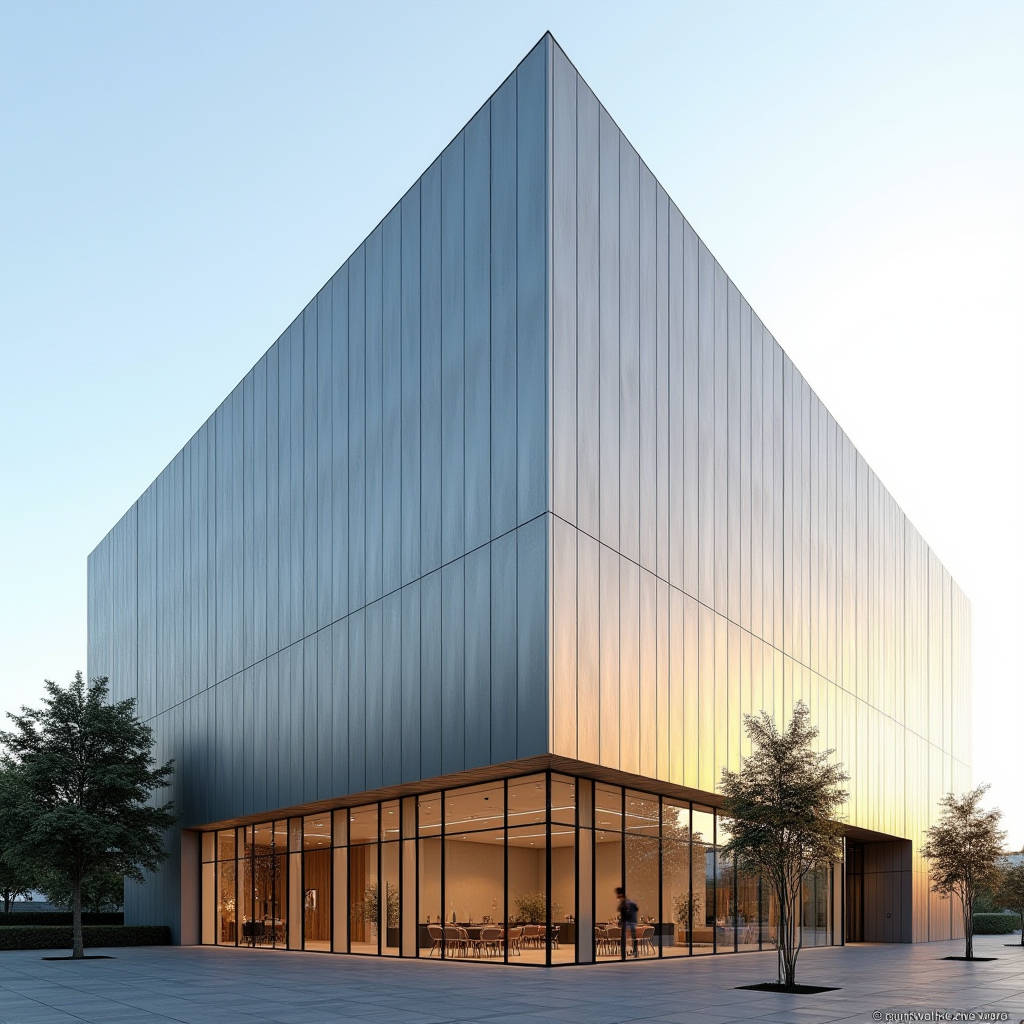
When a facade specification calls for a Recyclable Aluminum Facade, procurement teams and facade contractors often focus on the recycled content percentage and the coating warranty. Those numbers matter, but they do not tell the full story. The real engineering question is how recycled alloy composition, PVDF film thickness, and joint detailing interact to deliver a 50-year service life without compromising the closed-loop value of the metal at end of life. This article examines the measurable performance parameters that separate a genuinely circular solid aluminium cladding system from a marketing claim, and it provides the data you need to write a defensible specification.
Defining Circularity in Solid Aluminium Cladding
A Recyclable Aluminum Facade is not simply a panel stamped with a recycled-content certificate. For solid aluminium cladding sheets, circularity has three distinct layers. First is the post-consumer scrap ratio in the alloy, which typically ranges from 30% to over 90% depending on the mill and the alloy series. Second is the coating system, because a heavily pigmented or non-strippable finish can contaminate the remelt stream. Third is the dismantling logic, meaning whether the panel can be removed without bonded insulation or adhesive residues that force downcycling.
Each of these layers carries a different cost and a different carbon consequence. A 2.5 mm solid panel with 75% post-consumer content carries roughly 40% lower embodied carbon than a primary-alloy equivalent of the same thickness, according to life cycle assessment data published by major European aluminium producers. The savings are real, but they only materialise if the coating and the fixing system allow the panel to return to the remelt furnace cleanly.
Alloy Selection and the Closed-Loop Constraint
Most solid cladding panels are produced from the 3000-series (Al-Mn) or 5000-series (Al-Mg) alloys. The 5000 series offers superior corrosion resistance in coastal environments, while the 3000 series is more forgiving in the forming and flatness control stages. The circularity constraint enters here: post-consumer scrap carries trace elements such as iron, silicon, and copper. If the specification demands a tight alloy window, the mill must blend primary metal to dilute these impurities, which erodes the recycled-content advantage.
For a facade contractor, the practical takeaway is to specify the alloy series and the recycled-content percentage together, not separately. A 5000-series panel with 85% post-consumer content is a different product from a 3000-series panel with the same percentage, and the flatness tolerance and welding behaviour will differ. Request the mill certificate and verify the actual composition against the AAMA 2605 performance requirements before approving the sample.
Coating Systems and Their Impact on Remelt Value
The PVDF coating is the most common finish for solid aluminium cladding, and it directly affects the recyclability of the panel at end of life. A standard PVDF system is applied at a dry film thickness of 25 to 30 microns over a 5 micron primer. This organic layer must be stripped before remelting, and the stripping process is economically viable only when the coating is a standard formulation. Specialty coatings with metallic pigments, anti-graffiti topcoats, or thick fluoropolymer layers add cost to the recycling step and can reduce the recovered metal value by a measurable margin.
For projects where the Recyclable Aluminum Facade will be dismantled and returned to a remelt furnace, specify a standard PVDF system and document the stripping protocol in the O&M manual. The table below compares the coating options that a facade contractor will realistically evaluate.
| Coating System | Dry Film Thickness | Typical Warranty | Remelt Compatibility | Relative Cost |
|---|---|---|---|---|
| Standard PVDF (70/30) | 25-30 µm + 5 µm primer | 20-25 years | High (standard strip) | Baseline |
| PVDF with metallic pigment | 30-35 µm | 20 years | Moderate (pigment residue) | +15-20% |
| Polyester (PE) | 20-25 µm | 10-15 years | High | -20% |
| Anodised (Class 1) | 18-25 µm oxide | 25-30 years | High (no organics) | +10% |
| Anti-graffiti topcoat over PVDF | 35-40 µm total | 20 years | Low (extra layer) | +25-30% |
Panel Thickness, Flatness, and the 50-Year Assumption
Solid panels are supplied in 2.0 mm, 2.5 mm, and 3.0 mm thicknesses. The choice is driven by wind load, panel size, and the deflection limit specified in the project code. A 2.0 mm panel with a 1200 mm span and a 1/60 deflection limit will typically satisfy a 1.2 kPa wind load, while a 3.0 mm panel with the same span can carry roughly twice that load before the deflection criterion is exceeded. The recycled-content percentage does not change these structural figures, because the modulus of aluminium is essentially constant across recycled and primary alloys.
What does change is the flatness tolerance. Recycled alloys with higher iron content can exhibit slightly different residual stress after quenching, which shows up as oil-canning on large panels. For architectural-grade work, specify a flatness tolerance of 1.5 mm per metre and require a sample panel to be inspected under raking light before full production. A reliable supplier such as Futeng® will provide the mill certificate and a pre-production sample for this verification.
Joint Detailing and Dismantling Logic
The recyclability of a facade assembly depends heavily on how the panels are fixed. Wet-sealed joints with silicone and foam backer rods are difficult to separate cleanly at end of life. Open-jointed rainscreen systems with mechanical fixings, by contrast, allow each panel to be unclipped and removed without cutting or adhesive removal. For a project where the Recyclable Aluminum Facade is intended to return to the remelt furnace, the open-joint rainscreen approach is the most defensible specification.
This choice has a measurable cost consequence. A mechanically fixed, open-jointed system typically adds 8-12% to the installed cost compared with a wet-sealed system, because of the additional substructure and the tighter tolerances required on the panel edges. The payback comes at end of life, both in the recovered metal value and in the reduced demolition labour. For a 10,000 square metre facade, the difference in recovered metal value between a cleanly dismantled system and a downcycled one can exceed the installation premium.
Embodied Carbon and the Verification Chain
Procurement teams increasingly require an Environmental Product Declaration (EPD) for the cladding system. The EPD should state the recycled content, the embodied carbon per square metre, and the assumed end-of-life recycling rate. Cross-check these figures against the ISO 14025 standard for EPDs and the ISO 14040 life cycle assessment framework. A credible EPD will show the carbon contribution of the coating system separately from the alloy, because the coating can account for 10-15% of the total embodied carbon of a finished panel.
For contractors who need a quick benchmark, a 2.5 mm solid aluminium panel with 75% recycled content and a standard PVDF coating typically carries an embodied carbon of 8-11 kg CO2e per square metre, depending on the transport distance from the mill to the fabrication shop. The same panel made from primary alloy would carry roughly 15-18 kg CO2e per square metre. These figures are consistent with the life cycle data published by the International Aluminium Institute and the European Aluminium association, and they provide a defensible baseline for a tender comparison.
Specification Checklist for a Circular Facade
Before you finalise the specification for a Recyclable Aluminum Facade, verify the following points in the tender documents:
- State the alloy series and the recycled-content percentage together, and require a mill certificate confirming both.
- Specify a standard PVDF coating at 25-30 µm dry film thickness and document the stripping protocol for end-of-life recovery.
- Choose an open-jointed, mechanically fixed rainscreen system where the project budget allows, to preserve dismantling value.
- Require an EPD prepared to ISO 14025 and ISO 14040, with the coating contribution shown separately.
- Set a flatness tolerance of 1.5 mm per metre and inspect a pre-production sample under raking light.
- Confirm the coating warranty and the performance requirements against AAMA 2605 for the project's environmental exposure.
Engineering Guidance for the Project Team
The circularity of a solid aluminium cladding system is an engineering decision, not a marketing label. The recycled-content percentage is the starting point, but the coating formulation, the fixing method, and the dismantling protocol determine whether that recycled content actually returns to the furnace at end of life. For a facade contractor, the most reliable path is to specify the alloy and coating together, require the EPD and mill certificate, and design the joint system for clean removal.
When the project demands a documented circularity story, engage a supplier that can provide the full verification chain from mill certificate to EPD. A fabricator such as Futeng® can support this with certified material documentation and pre-production samples, allowing the project team to hold the circularity claim to the same standard as the wind load calculation. The result is a Recyclable Aluminum Facade that performs structurally for five decades and returns its metal value cleanly when the building reaches the end of its useful life.