How the PVDF Coating Layer Determines a Sustainable Aluminum Facade Lifecycle
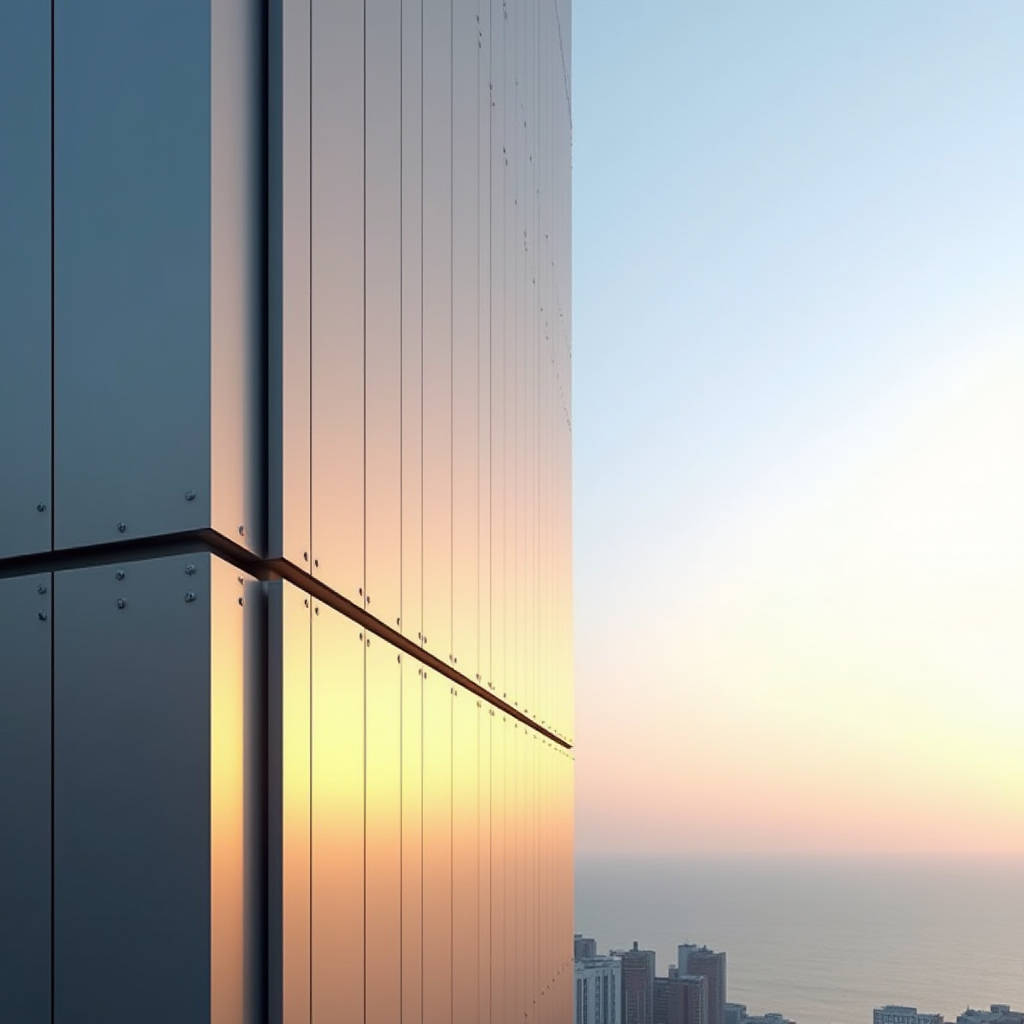
When procurement teams evaluate a Sustainable Aluminum Facade, the conversation usually stops at recycled content and end-of-life recyclability. Those matter, but they skip the part that actually determines a building's environmental footprint over 30 years: the coating system. PVDF (polyvinylidene fluoride) paint is the industry default for solid aluminium cladding panels, yet its embodied carbon, service life, and repairability vary widely depending on how the film is formulated and applied. This article examines the coating layer as a sustainability lever, comparing PVDF against powder coating and anodizing through lifecycle data, and it outlines what a specifier should verify before signing off on a facade package.
Why the Coating Layer Decides the Lifecycle Story
A solid aluminium panel is a sandwich of three assets: the alloy core, the surface finish, and the fabrication. The surface finish is the only one directly exposed to UV, salt, acid rain, and cleaning chemicals. If the film fails at year eight, the panel gets stripped, re-coated, or replaced — and the embodied carbon of the original panel is effectively doubled. The coating therefore controls the practical service life of a Sustainable Aluminum Facade more than the substrate does.
Independent weathering data backs this up. AAMA 2605, the highest-performance specification for organic coatings on architectural aluminium, requires a 70% gloss retention and a maximum colour change of 5 ΔE after 10 years of Florida exposure. AAMA 2604 lowers that to 50% gloss retention and 10 ΔE. The gap between these two tiers is not cosmetic; it is a measurable difference in film durability that translates directly into maintenance cycles and re-coating frequency.
PVDF Versus Powder Versus Anodize: The Numbers
Three coating families dominate solid aluminium cladding panels. Each has a distinct environmental profile that a lifecycle assessment should capture.
| Parameter | PVDF (70% resin, 2-coat) | Polyester Powder | Anodizing (Class I, 20–25 µm) |
|---|---|---|---|
| Typical film thickness | 25–30 µm (min 20 µm per AAMA 2605) | 60–80 µm | 20–25 µm oxide layer |
| Florida exposure rating | AAMA 2605 (highest) | AAMA 2603/2604 | AA-M10C22A41 (AAMA 611) |
| Gloss retention after 10 yrs | ≥70% | 50–60% | N/A (colour shift over time) |
| Colour stability | Excellent, low ΔE | Moderate, higher ΔE | Good but limited palette |
| Repairability on site | Touch-up possible, colour match risk | Easier touch-up | Not repairable; strip and re-anodize |
| Embodied carbon per m² (approx.) | 0.9–1.3 kg CO₂e | 0.7–1.0 kg CO₂e | 1.5–2.2 kg CO₂e (energy-intensive bath) |
| Typical service life | 25–30 years | 12–18 years | 20–30 years |
The table reveals a trade-off that most marketing material glosses over. Powder coating has the lowest embodied carbon per square metre, but its shorter service life and lower gloss retention mean the building owner pays for a re-coat or replacement sooner. Anodizing offers excellent corrosion resistance but consumes more energy in the bath and cannot be touched up on site, which is a real problem for a facade that needs a panel replaced after a decade. PVDF sits in the middle on embodied carbon yet wins on longevity and repairability, which is why it remains the default for a Sustainable Aluminum Facade on high-rise and coastal projects.
Three-Coating Versus Two-Coating: A Hidden Carbon Variable
Within the PVDF family, the number of coats changes both durability and embodied carbon. A standard two-coat system applies a primer plus a topcoat. A three-coat system adds a clear coat or a second colour layer, which boosts film integrity and gloss retention but adds roughly 10–15% more coating weight per panel. For a 100,000 m² facade, that difference is meaningful in both cost and carbon.
Specifiers should also check the PVDF resin content. AAMA 2605 requires a minimum of 70% PVDF resin by weight in the topcoat. Some suppliers dilute the resin to cut cost, which lowers the film's UV resistance and shortens its life. Verifying the resin content through a coating certificate or a batch test report is one of the cheapest ways to protect the lifecycle performance of a Sustainable Aluminum Facade without adding a single kilogram of material.
Circular Economy: Coating as the Barrier to Recycling
Aluminium is infinitely recyclable, but only if the coating is removed before remelting. A PVDF or powder film contains fluoropolymers and pigments that contaminate the melt if not stripped. In practice, most facade panels are shredded and remelted with the coating intact, which means the recycled alloy carries a slightly higher impurity load. This is not a fatal flaw — the aluminium industry routinely handles coated scrap — but it does mean the "recyclable" claim on a facade brochure is only as strong as the downstream recovery process.
Designers can improve this by specifying panels with a known coating system and by documenting the coating type in the building's material passport. When the facade is eventually deconstructed, the recycler knows exactly what to strip. This is a small specification detail with a disproportionate effect on the circular economy outcome of a Sustainable Aluminum Facade.
What to Verify Before You Sign the Coating Spec
Procurement teams often accept a coating certificate at face value. A few checks will separate a genuine AAMA 2605 system from a paper claim:
- Request the actual coating certificate from the paint manufacturer, not a summary from the panel supplier. The certificate should state the PVDF resin content and the film thickness range.
- Confirm the minimum dry film thickness is 20 µm for the topcoat and that the total system meets the 25–30 µm range. A thinner film saves the supplier money but erodes gloss retention.
- Ask for a Florida exposure test report or a Weatherometer (QUV) data sheet that matches the claimed service life. A 25-year claim without a 10-year exposure dataset is a red flag.
- Check whether the coating is applied post-fabrication or pre-fabrication. Post-fabrication coating on bent and cut edges covers the cut edges, which are the first place corrosion starts on a solid aluminium panel.
- Verify the colour match tolerance against the approved sample under standard daylight conditions. A ΔE of more than 1.5 between panels from different batches will be visible on a large facade.
These checks take an afternoon and can prevent a re-coating project that costs more than the original panel supply. On large contracts, a supplier such as Futeng® that applies PVDF post-fabrication and provides batch-level coating certificates gives the procurement team a verifiable path to a durable, low-maintenance facade.
Coastal and Industrial Environments: Where the Coating Earns Its Keep
Not every project needs the same coating. A facade 200 metres from the sea faces salt spray that attacks the film edge and any exposed cut edge. A suburban office building with moderate UV exposure can safely use a lower-spec system and save money. Matching the coating specification to the microclimate is a legitimate sustainability decision because it avoids over-specifying (wasted embodied carbon) and under-specifying (premature failure).
For coastal projects, the spec should require a minimum of 25 µm total film, a three-coat system with a clear coat, and edge sealing on all cut panels. For interior or sheltered applications, a two-coat system at AAMA 2604 is defensible. The point is that a Sustainable Aluminum Facade is not a single product; it is a set of decisions that should be tuned to the site.
Lifecycle Cost: The Argument That Wins Over Clients
When a client pushes back on the premium for a high-grade PVDF system, the lifecycle cost calculation settles the debate. Consider a 50,000 m² facade with a 30-year horizon:
- A two-coat AAMA 2605 PVDF system at a 25-year service life costs roughly $85–$110 per m² installed, with no re-coating within the horizon.
- A polyester powder system at a 15-year service life costs $70–$90 per m² installed, but requires a re-coat or panel replacement at year 15, adding $40–$60 per m² in present value.
- The PVDF system's total 30-year cost is lower by roughly 15–20%, before accounting for the carbon cost of the second coating cycle.
This is the argument that moves a procurement decision from "cheapest first cost" to "lowest whole-life cost." It is also the argument that aligns a Sustainable Aluminum Facade with the embodied-carbon targets that many developers now report to investors and regulators.
Standards and References for the Specification
Three documents anchor a defensible coating specification. AAMA 2605 sets the performance bar for high-performance organic coatings on architectural aluminium. AAMA 611 covers anodized aluminium. ISO 12944, while aimed at steel, provides useful guidance on atmospheric corrosivity categories that can be applied to aluminium coating selection. The European Aluminium Association publishes lifecycle data on aluminium building products that supports embodied-carbon calculations. These references give a specifier a shared language with the coating supplier and remove guesswork from the decision.
Closing Recommendation
The coating is the quiet determinant of a Sustainable Aluminum Facade's true environmental performance. Recycled content and end-of-life recovery get the headlines, but a film that fails at year eight doubles the carbon of the panel it protects. Specify a coating that matches the site's corrosivity and UV exposure, verify the resin content and film thickness through certificates, and choose post-fabrication application so cut edges stay protected. Do that, and the facade's service life, maintenance cost, and circular-economy outcome all improve without a single extra panel being produced.