Specifying an Impact Resistant Aluminum Panel for Coastal and Industrial Facades
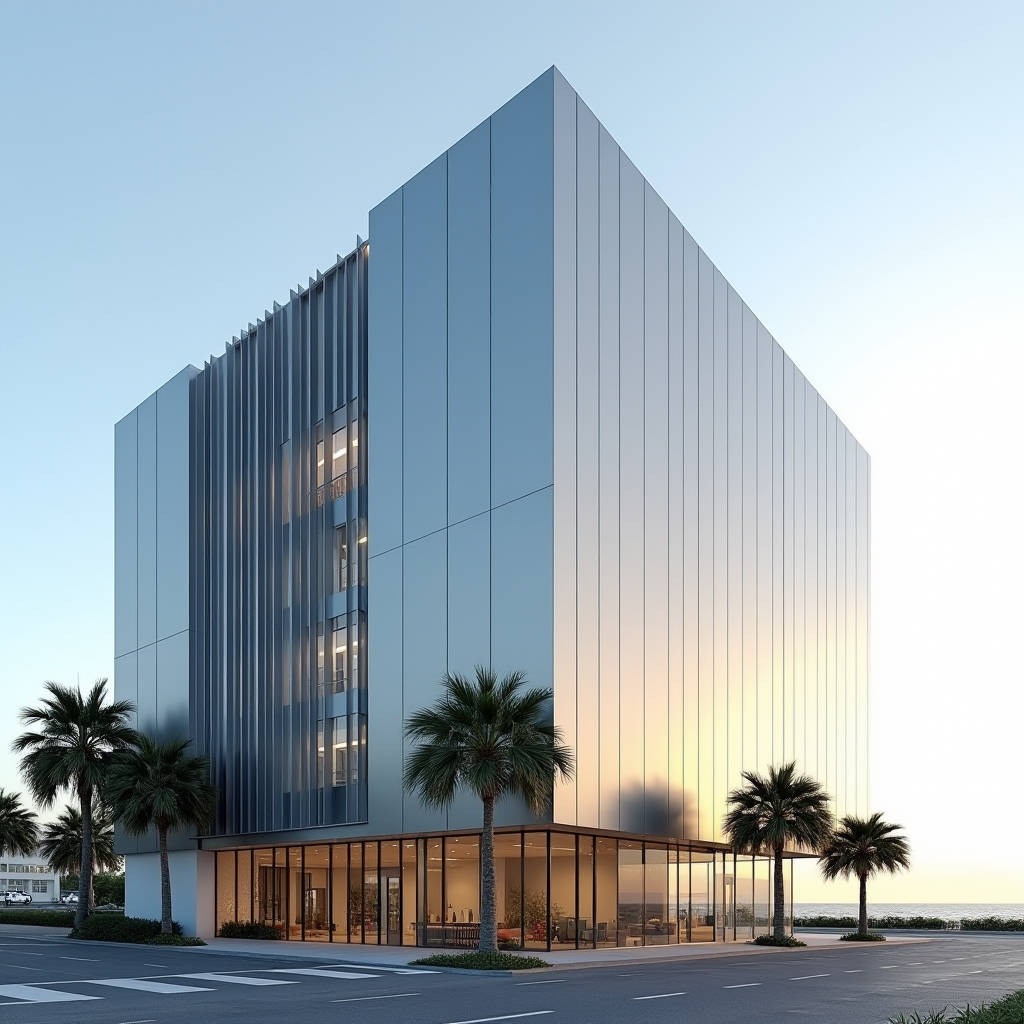
Impact Resistant Aluminum Panel systems have moved from a niche specification to a baseline requirement for coastal and high-traffic commercial facades, yet too many projects still treat them as a single, interchangeable product class. The reality is that impact performance is governed by a chain of decisions: the alloy and temper of the solid aluminum substrate, the thickness of the plate, the coating system, and the way the panel is anchored to the structural frame. A 2.0 mm Impact Resistant Aluminum Panel that passes a laboratory missile test can fail in service if the attachment clips are undersized or the drainage detail traps moisture. This article breaks down the engineering variables that actually determine whether a solid aluminum cladding panel survives a hurricane, a forklift strike at a loading dock, or decades of thermal cycling, and gives procurement teams the numbers they need to write defensible specifications.
What Makes a Solid Aluminum Panel Impact Resistant
Impact resistance in a solid aluminum cladding panel is not a single property but a combination of energy absorption, deflection control, and local indentation resistance. When a projectile or a moving object strikes the face of the panel, the substrate must deform plastically without cracking, and the coating must remain bonded so that corrosion cannot initiate at the impact site. Three variables dominate the outcome.
Alloy and Temper Selection
The 5000-series alloys, particularly 5052 and 5083, are the workhorses for impact-rated solid aluminum panels. Their magnesium content delivers a favorable balance of strength and formability, and they retain ductility at the cold temperatures that coastal climates can reach. The H32 and H34 tempers are common because they offer a stable yield strength without the excessive hardness that can make a panel brittle under a sharp localized blow. A 5083-H32 plate at 3.0 mm thickness will typically show a yield strength near 215 MPa and an elongation above 10 percent, which means the panel can absorb a significant impact before the substrate tears.
Plate Thickness and Stiffness
Thickness is the most direct lever a specifier controls. For a standard curtain wall infill, 2.0 mm is the practical minimum for a solid panel that must resist wind-borne debris. When the panel spans more than 1.2 meters between supports, or when the facade is in a high-velocity hurricane zone, 2.5 mm to 3.0 mm becomes necessary. The stiffness of a flat plate scales with the cube of its thickness, so a move from 2.0 mm to 3.0 mm delivers roughly 3.4 times the flexural rigidity for the same support spacing. That increase directly reduces the deflection that would otherwise transfer load into the framing system.
Coating Integrity Under Impact
A coating that cracks or delaminates at the point of impact opens the substrate to galvanic and pitting corrosion. PVDF coatings, applied at a dry film thickness of 25 to 30 microns over a chromate or chrome-free pretreatment, provide the flexibility and adhesion needed to survive deformation without exposing the metal. The ASTM D2794 impact test and the ASTM D3359 cross-hatch adhesion test are the standard ways to verify that a coating will stay in place when the panel is dented. Specifying a minimum reverse-impact value of 50 inch-pounds on a 2.0 mm panel is a reasonable threshold for coastal work.
Matching the Panel to the Building Code
The most demanding impact requirements in North America come from the Florida Building Code and the Miami-Dade County product approval program. These codes classify wind-borne debris into small missiles and large missiles, and each classification drives a different test protocol. A solid aluminum panel that passes the small-missile test may not survive the large-missile test, so the specification must name the exact code requirement before the panel is fabricated.
| Test Parameter | Small Missile (FBC TAS 201) | Large Missile (FBC TAS 201) |
|---|---|---|
| Missile type | 2 g steel ball | 4.1 kg timber member |
| Impact velocity | 39.6 m/s | 15.2 m/s |
| Number of impacts | 9 per zone | 2 per zone |
| Typical panel thickness | 2.0 mm | 2.5 to 3.0 mm |
| Pass criteria | No penetration, no opening | No penetration, no opening |
| Typical application | Mid-rise, protected zones | Ground floor, high-velocity zones |
The large-missile test is the one that separates a true impact-rated panel from a decorative cladding product. A 4.1 kg timber member traveling at 15.2 m/s carries enough energy to buckle a thin composite panel, but a 3.0 mm solid aluminum plate with proper stiffening ribs will absorb the blow through plastic deformation and remain in place. The specifier should require that the panel assembly, including its attachment system, is tested as a unit rather than the bare sheet alone.
Attachment and Framing Are Half the Battle
An Impact Resistant Aluminum Panel is only as strong as its connection to the building. The panel-to-frame attachment transfers impact loads into the structural system, and a poorly designed clip or a fastener with inadequate edge distance will fail long before the aluminum plate yields. For solid aluminum panels, the two dominant attachment methods are concealed clip systems and through-fastened systems.
Concealed Clip Systems
Concealed clips create a clean, uninterrupted facade and are favored for architectural projects. Each clip typically carries a working load of 2.5 to 4.0 kN depending on the clip gauge and the panel thickness. The risk is that a clip system relies on the panel being stiff enough to distribute a concentrated impact across multiple clips. If the panel is too thin, a single clip can be overloaded and pull out. The engineering rule of thumb is to keep the clip spacing at or below 600 mm for a 2.5 mm panel in a hurricane zone.
Through-Fastened Systems
Through-fastened panels use exposed fasteners that pass directly into the substrate or into the framing. They are mechanically simpler and more forgiving under impact because the fastener engages the full panel thickness. The trade-off is a visible fastener pattern and a higher risk of corrosion at the fastener hole if the sealant is not maintained. For industrial applications such as loading docks and equipment enclosures, where impact frequency is high and appearance is secondary, through-fastening is often the more durable choice.
Industrial and High-Traffic Applications
Impact resistance matters beyond hurricane zones. Warehouses, manufacturing plants, parking structures, and equipment enclosures all subject wall panels to repeated contact from vehicles, pallets, and machinery. In these settings, the panel must survive not a single dramatic event but a lifetime of low-velocity impacts. Solid aluminum plate panels are well suited here because they have no core that can crush or delaminate, unlike laminated constructions. A 2.5 mm 5052 panel in a warehouse aisle can take a glancing blow from a forklift mast and deform locally without requiring immediate replacement, which keeps the facility operational and reduces downtime.
The corrosion resistance of the aluminum substrate is another advantage in industrial environments. Chemical exposure, washdown water, and atmospheric pollutants attack the edges and cut edges of a panel first. A panel with a PVDF coating on both faces and a sealed edge treatment will resist this attack far longer than a bare or single-sided coated product. For aggressive chemical environments, specifying a 5083 alloy with a higher magnesium content improves resistance to stress corrosion cracking.
Performance Data You Can Take to a Supplier
When you issue an enquiry for an Impact Resistant Aluminum Panel, the response should contain specific numbers, not marketing language. The following table summarizes the performance expectations a procurement team should verify against the supplier's test reports.
| Property | Target Value | Test Standard |
|---|---|---|
| Yield strength (3.0 mm 5083-H32) | ≥ 215 MPa | ASTM E8 |
| Elongation | ≥ 10% | ASTM E8 |
| PVDF dry film thickness | 25 to 30 microns | ASTM D1400 |
| Coating adhesion | No delamination, Class 5B | ASTM D3359 |
| Coating impact resistance | ≥ 50 inch-pounds reverse | ASTM D2794 |
| Large-missile impact | No penetration | FBC TAS 201 |
These figures are realistic baselines, not aspirational marketing claims. A reputable fabricator such as Futeng® can supply panels that meet or exceed these values, and a competent supplier will provide mill certificates and independent test reports rather than asking you to take the numbers on faith. For a large coastal project, requiring third-party verification of the impact test is a low-cost way to protect the investment.
Cost Considerations and Lifecycle Value
The upfront cost of a solid aluminum impact panel is higher than a thin composite alternative, but the lifecycle math often favors the solid plate. A thicker solid panel resists dents that would otherwise require panel replacement, and it avoids the delamination risk that can force a full facade redo on a composite system. On a 10,000 square meter facade, the incremental cost of moving from 2.0 mm to 2.5 mm solid aluminum is typically 8 to 12 percent of the panel budget, yet it can extend the service life by a decade or more in a harsh environment. Procurement teams should model the total cost of ownership, including maintenance, replacement, and downtime, rather than comparing only the initial material price.
Weight and Structural Loads
Solid aluminum panels weigh more than composite alternatives, and that weight must be carried by the framing system. A 3.0 mm solid panel weighs roughly 8.1 kg per square meter, compared with about 5.5 kg for a 4 mm composite panel. The additional dead load is usually manageable, but it must be included in the structural calculations, especially for high-rise applications where wind and dead loads accumulate. The specifier should confirm that the curtain wall mullions and anchors are sized for the actual panel weight rather than a generic assumption.
Practical Specification Advice
For a project in a hurricane-prone region, specify a 2.5 mm or 3.0 mm 5083-H32 solid aluminum panel with a PVDF coating at 25 to 30 microns, verified against the FBC large-missile test as a complete assembly. For an industrial facility, a 2.5 mm 5052 panel with through-fastened attachment and sealed edges will deliver the durability you need at a lower cost than a hurricane-rated assembly. In both cases, require the supplier to provide mill certificates, coating test reports, and impact test documentation, and verify that the attachment system is rated for the same impact load as the panel itself.
The single most common mistake in impact-rated cladding is treating the panel as an isolated component. The panel, its coating, its attachment, and the supporting frame form one load path, and the weakest link determines the system's performance. By specifying the alloy, thickness, coating, and attachment as an integrated assembly, and by holding the supplier to documented test evidence, you can build a facade that survives the impact it was designed for. The ASTM E8 tensile standard, the ASTM D2794 impact test, and the Florida Building Code test protocols give you the framework to write a specification that is both defensible and achievable. The AAMA guidance on aluminum curtain wall performance and the ISO 9001 quality management framework round out the documentation you should expect from a qualified fabricator.