Typhoon Proof Aluminum Curtain Wall Verified Impact Cyclic Pressure and Coating Criteria for Coastal Facades
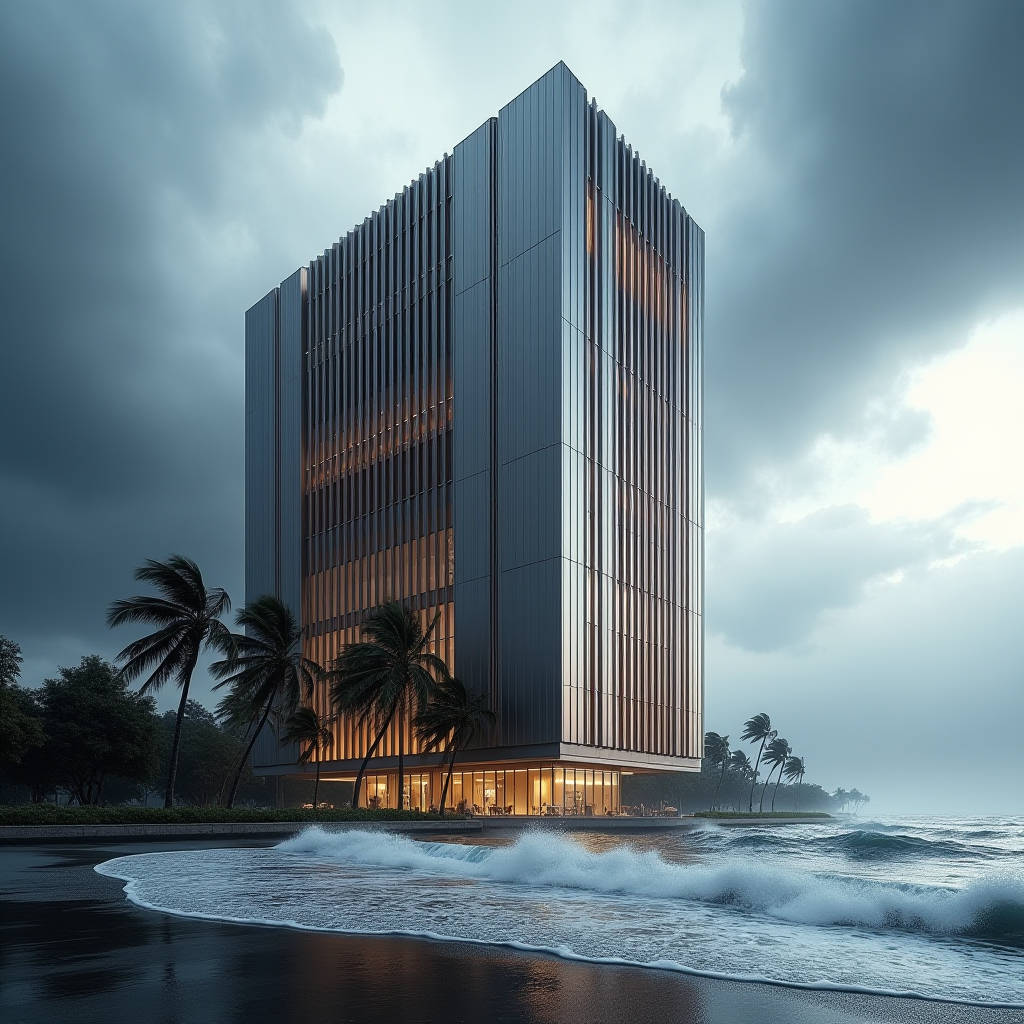
When a typhoon makes landfall, the curtain wall is the first line of defense between a building envelope and the storm. A Typhoon Proof Aluminum Curtain Wall does more than resist wind pressure; it must survive wind-borne debris impact, sustained pressure cycling, and water intrusion under extreme conditions. For coastal projects across Southeast Asia, the Pacific Rim, and the Caribbean, specifying a solid aluminum panel system with verified structural performance is not optional. The engineering challenge is that typhoon zones demand a different design logic than standard wind-load facades, and the difference shows up in panel thickness, anchorage detailing, and test protocols. This article walks through the measurable criteria that separate a typhoon-rated solid aluminum curtain wall from a conventional one, so procurement teams and facade contractors can evaluate systems on data rather than marketing claims.
Why Solid Aluminum Panels Outperform in Typhoon Zones
The core of a Typhoon Proof Aluminum Curtain Wall is the cladding panel itself. Solid aluminium cladding panels, typically 2.0 mm, 2.5 mm, or 3.0 mm thick, behave differently under dynamic wind loading than lightweight composite panels. A solid sheet has uniform stiffness across its entire cross-section, which means bending stress distributes evenly and the panel resists flutter and oil-canning under gust loads. In a typhoon, wind speed does not stay constant; it pulses. A solid aluminum panel absorbs those pulses without localized buckling, which is why structural engineers favor it for high-exposure facades.
Panel stiffness is a function of thickness cubed. Doubling the panel thickness from 2.0 mm to 3.0 mm increases flexural rigidity by roughly 3.4 times. That arithmetic matters when a facade engineer runs deflection checks against the design wind pressure. For a typical typhoon zone with a basic wind speed of 55 m/s, the design pressure on a corner zone can exceed 4.5 kPa. A 2.5 mm solid panel with intermediate stiffeners handles that load with acceptable deflection, while a thinner panel would require a denser subframe grid that drives up cost and erection time.
Structural Design Criteria for Typhoon Exposure
Designing a Typhoon Proof Aluminum Curtain Wall starts with the local wind code. Most coastal jurisdictions reference the International Building Code and its wind provisions, which in turn draw on ASCE 7. For typhoon-prone regions, the design wind speed is often set at a 700-year return period, which is more demanding than the 50-year return period used for ordinary buildings. The facade must be checked for both strength and serviceability, with allowable deflection typically limited to L/180 for mullions and L/240 for transoms under positive pressure.
Beyond static pressure, typhoon design requires checking for wind-borne debris. In the United States, this is governed by the Florida Building Code and the TAS 201, 202, and 203 test protocols, which simulate a wind-borne debris event followed by pressure cycling. Outside the United States, ISO 16932 and the ASTM E1886/E1996 standards provide the framework for impact and cyclic pressure testing. A serious supplier tests its solid aluminum curtain wall to these protocols, not just to a static wind load calculation.
The anchorage is where many typhoon failures begin. The curtain wall must transfer lateral load from the mullion to the slab edge through a bracket system capable of resisting the factored design force. For a solid aluminum panel system in a high-wind zone, the bracket and anchor bolts should be rated for the full design pressure, and the connection to the concrete slab must be checked for pullout and shear. Stainless steel anchors with a minimum embedment depth are standard practice, and the engineer should verify the slab edge thickness before specifying the bracket spacing.
Impact Resistance and Glazing Strategy
A Typhoon Proof Aluminum Curtain Wall is only as strong as its weakest component, and in many systems the glazing is that component. For areas with wind-borne debris risk, the glazing must be laminated, typically with a polyvinyl butyral or SentryGlas interlayer, so that even if the outer lite cracks, the interlayer holds the fragments and keeps the pressure differential from building inside the building. The solid aluminum panels themselves are inherently impact-resistant, which is an advantage where the design uses opaque spandrel panels in the lower zones that are most exposed to flying debris.
The framing system must also resist the impact. A conventional stick-built curtain wall with thin pressure plates may fail at the joint under a debris strike, even if the glass survives. Typhoon-rated systems use heavier mullions, deeper engagement between the panel and the frame, and gaskets that are mechanically retained rather than friction-fit. The test standard ASTM E1886 requires a missile to strike the assembly before the pressure cycling begins, so the entire system, not just the glass, must be engineered for the impact event.
Water Intrusion Under Extreme Pressure
Water intrusion is a different failure mode from structural collapse, but it is equally damaging to a building. Under typhoon conditions, wind-driven rain can exceed 200 mm per hour, and the pressure differential across the facade can push water through any gap in the drainage path. A Typhoon Proof Aluminum Curtain Wall must use a pressure-equalized design, where the interior and exterior of the cavity are vented so that no sustained pressure difference exists to drive water inward.
The drainage system must handle the volume. Weep holes and drainage slots are sized to carry away the water that enters the cavity, and the internal gutters must be sloped so water flows to the exterior rather than pooling. The test standard for water penetration is ASTM E331, which applies a static pressure difference, but typhoon zones should also require the dynamic water test in AAMA 501.1, which simulates the pressure cycling of a storm. A system that passes the static test can still leak under cyclic pressure, so the spec should demand the more demanding test.
Coating and Corrosion Resistance for Coastal Salt
Typhoon zones are almost always coastal, which means the facade is exposed to salt-laden air. A Typhoon Proof Aluminum Curtain Wall must carry a coating system that resists both UV degradation and salt corrosion. The industry standard is a 70 percent PVDF resin coating, applied at a minimum dry film thickness of 25 microns over a properly pretreated surface. The coating is tested to AAMA 2605, the highest performance specification, which covers color retention, chalk resistance, and corrosion resistance over a 10-year accelerated weathering period.
For the most aggressive coastal environments, some projects specify an anodized finish or a dual-coat system. The solid aluminum panel itself is inherently corrosion-resistant because aluminum forms a protective oxide layer, but the cut edges and the connection points are where corrosion starts. The spec should require that all exposed fasteners be stainless steel and that dissimilar metal contact be avoided to prevent galvanic corrosion. A supplier that documents its coating warranty and its salt-spray test results gives the procurement team a verifiable basis for selection.
Unitized versus Stick-Built Construction
The erection method affects both the structural performance and the project schedule. A stick-built Typhoon Proof Aluminum Curtain Wall is assembled piece by piece on site, which gives the contractor flexibility but puts the critical sealing and joint work in the hands of field crews. A unitized system is fabricated in the factory, with the panels, framing, and glazing assembled into a single unit that is hoisted and fixed to the slab. Unitized construction moves the quality-critical work into a controlled environment, which is a significant advantage for a typhoon-rated system where joint integrity is everything.
Unitized systems also shorten the on-site schedule because factory production and civil construction run in parallel. For a large coastal project, that can compress the facade program by several weeks, which is a real cost saving when the building is on a tight delivery date. The trade-off is that unitized systems require more precise slab tolerances and a more careful logistics plan, since each unit is preassembled and must fit exactly. The choice between the two should be made on the basis of the project size, the site access, and the contractor's experience with each method.
Comparative Performance Data
The table below summarizes the key performance parameters that a procurement team should verify when evaluating a solid aluminum curtain wall for a typhoon zone.
| Parameter | Standard System | Typhoon-Rated System |
|---|---|---|
| Design wind speed | 50-year return, ~40 m/s | 700-year return, ~55 m/s |
| Panel thickness | 2.0 mm solid aluminum | 2.5-3.0 mm solid aluminum |
| Impact test | Not required | ASTM E1886 / TAS 201 missile |
| Cyclic pressure test | Not required | ASTM E1996 / TAS 203 |
| Water test | ASTM E331 static | AAMA 501.1 dynamic cyclic |
| Coating spec | AAMA 2604 | AAMA 2605, 70% PVDF |
| Anchorage | Standard bracket | Stainless, verified pullout |
| Deflection limit | L/240 mullion | L/180 mullion under higher load |
Procurement Checklist for a Typhoon-Rated Facade
When evaluating suppliers for a Typhoon Proof Aluminum Curtain Wall, the procurement team should request documentation rather than accept verbal assurances. The supplier should provide independent test reports for impact resistance, cyclic pressure, and water penetration, not just a calculation sheet. The coating should carry a documented AAMA 2605 warranty, and the panel thickness should be verified against the shop drawings. The supplier should also provide a structural calculation package signed by a licensed engineer that matches the local wind code.
For projects in the most demanding typhoon corridors, working with a manufacturer that has delivered comparable coastal projects is a practical advantage. A supplier such as Futeng®, which produces solid aluminium cladding panels in 2.0 to 3.0 mm thicknesses with verified PVDF coating, can provide the documentation and fabrication capacity that a large coastal contract requires. The evaluation should focus on the test data and the track record, not on the lowest unit price, because a facade failure in a typhoon is a catastrophic and expensive event.
Final Engineering Recommendation
A Typhoon Proof Aluminum Curtain Wall is defined by verified performance, not by a product name. The specification should require solid aluminum panels of at least 2.5 mm thickness in the highest-exposure zones, a pressure-equalized framing system, laminated impact-resistant glazing, and a coating system that meets AAMA 2605. The assembly should be tested to the impact and cyclic pressure protocols that match the local code, and the anchorage should be engineered for the full factored design load. When these criteria are documented and verified, the facade delivers the performance that a typhoon demands, and the building owner gets protection that survives the storm.