Anti Corrosion Aluminum Panel Coating Specs That Decide Coastal Facade Lifespan
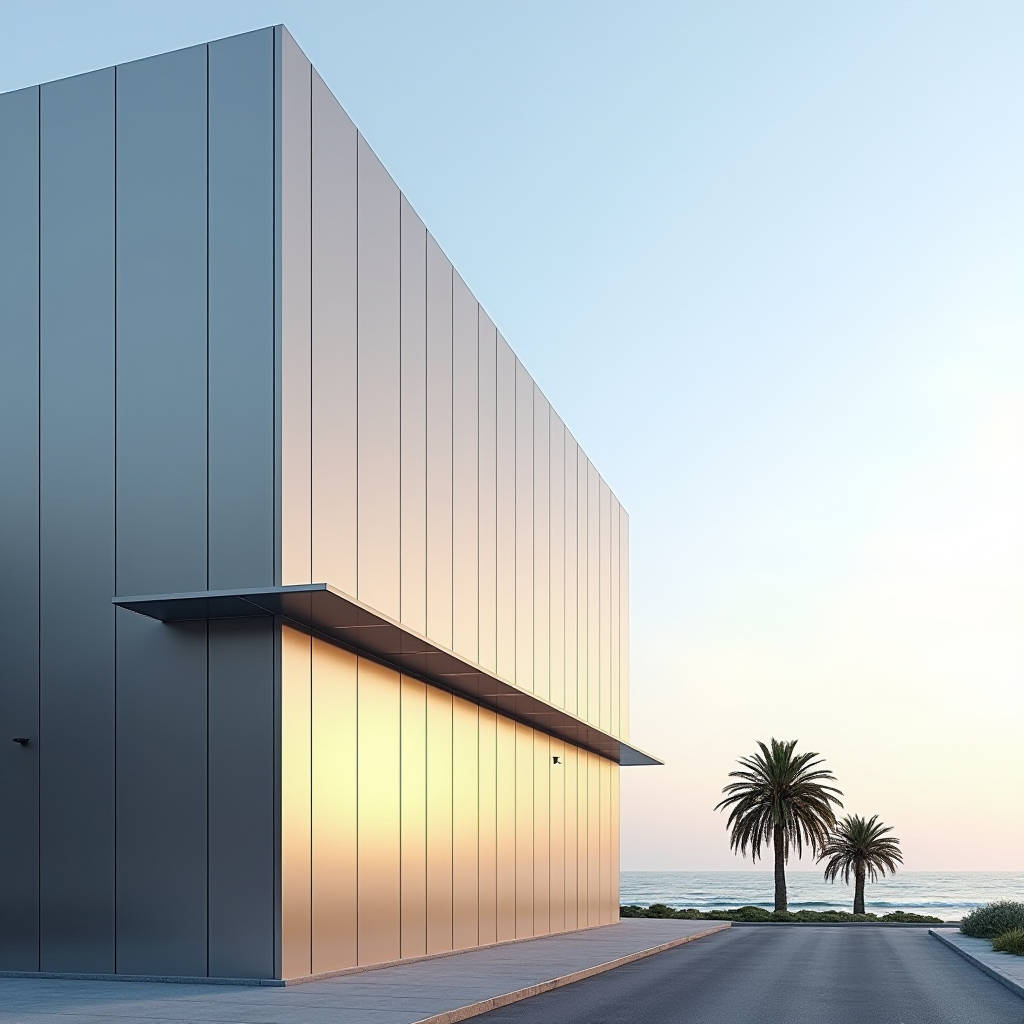
An Anti Corrosion Aluminum Panel is only as reliable as the coating system that protects it, and too many facade specifications fail long before the metal does. The aluminum itself forms a passive oxide film within minutes of exposure, but in coastal salt spray, industrial sulfur fallout, or high-humidity microclimates, that natural barrier is quickly overwhelmed. The difference between a cladding that lasts thirty years and one that streaks and pits within eight often comes down to a handful of decisions made at the specification stage: alloy selection, pretreatment chemistry, coating thickness, and edge sealing. This article walks through the engineering logic behind those choices, gives you defensible numbers for your next tender, and flags the failure points that inspection reports keep finding on otherwise sound buildings.
Why the Oxide Layer Is Not Enough
Pure aluminum resists corrosion because its surface oxidizes instantly into Al₂O₃, a dense film roughly 2 to 4 nanometers thick that self-repairs when scratched. That mechanism is genuinely useful, but it is also fragile in aggressive environments. Chloride ions from marine air penetrate the oxide through micro-pores and trigger localized pitting, while acid rain and industrial SO₂ lower the local pH and dissolve the film faster than it can reform. The practical consequence is that a bare, uncoated panel in a coastal zone will develop visible pitting within a few years, even though the alloy itself is nominally corrosion resistant.
This is why the entire industry treats the Anti Corrosion Aluminum Panel as a system, not a material. The substrate, the conversion coating, the primer, the topcoat, and the cut edges all carry responsibility. A 2.5 mm panel with a flawless PVDF finish can still fail at the saw-cut edge if that edge is left unprotected, because the exposed cross-section has no oxide layer and no coating. Smart fabricators now specify edge sealing or return the panel edges so the painted face wraps around the cut.
Alloy Selection Sets the Ceiling
Not every aluminum alloy behaves the same way under corrosion stress. For exterior cladding, the 5000-series marine grades dominate the specification sheets, and for good reason. Alloy 5052 and 5083 carry magnesium as the primary alloying element, which raises strength without sacrificing formability, and they resist chloride attack far better than the 3000-series or the softer 1000-series used in cheaper panels.
A 5052-H32 panel in a 2.0 to 3.0 mm thickness range delivers a yield strength around 193 MPa and an elongation of roughly 12 percent, which is enough for most wind-load and thermal-movement scenarios. For severe coastal or offshore projects, 5083 pushes corrosion performance further with a slightly higher magnesium content. The trade-off is cost and forming difficulty, so the selection should be driven by the actual chloride exposure of the site, not by habit.
| Alloy | Primary Addition | Yield Strength (MPa) | Chloride Resistance | Typical Use |
|---|---|---|---|---|
| 1100 | None (pure) | ~105 | Poor | Interior, decorative |
| 3003 | Manganese | ~145 | Moderate | General architectural |
| 5052 | Magnesium | ~193 | Good | Coastal cladding |
| 5083 | Magnesium | ~228 | Excellent | Marine, offshore |
Pretreatment Is the Silent Decider
Every coating failure you will ever investigate traces back to a pretreatment problem. The oxide film that protects aluminum also prevents paint from bonding, so the surface must be converted chemically before any coating is applied. The industry standard is a chromate conversion coating, which produces a thin, electrically conductive layer with excellent adhesion and self-healing properties. Environmental regulations have pushed many shops toward chrome-free zirconium or titanium-based pretreatments, and these can perform well, but they require tighter process control and do not offer the same corrosion-inhibiting chemistry.
The ASTM B449 standard governs chromate conversion coatings on aluminum and is the reference most facade specifiers cite. When you qualify a supplier, ask for the pretreatment chemistry, the bath concentration, the temperature, and the dwell time on the production line. A 30-second difference in immersion can change the coating weight from 40 to 80 milligrams per square foot, and that number correlates directly with salt-spray hours.
Coating Systems and Realistic Lifetimes
The coating is where most of the anti-corrosion budget goes, and the choice between PVDF, polyester, and anodizing changes both performance and price. Polyester (usually 60 percent resin) is cheap and glossy but degrades under UV and chalking within a decade, making it a poor fit for a 25-year facade warranty. Anodizing creates a thick oxide layer by electrochemical means, typically 15 to 25 microns, and is excellent for corrosion resistance, but it is limited to a narrow color range and shows fingerprints and water streaks.
For exterior cladding, the dominant specification is a two-coat or three-coat PVDF system based on 70 percent Kynar 500 or Hylar 5000 resin. The American Architectural Manufacturers Association standard AAMA 2605 sets the highest performance bar, requiring 4,000 hours of salt-spray exposure without blistering, a 10-year Florida exposure rating, and a minimum dry film thickness of 70 microns for the two-coat system. AAMA 2604 is the mid-tier spec at 30 microns, and AAMA 2603 is the entry level. If your project is near the coast, AAMA 2605 is not a luxury; it is the difference between a 20-year and a 40-year service life.
In coastal testing, a 70-micron PVDF system over a chromate pretreatment typically survives 4,000 hours of neutral salt spray per ASTM B117 with no blistering, while a 30-micron polyester system fails at roughly 800 hours. That is a five-fold difference in corrosion resistance from a single coating decision.
Fastener and Galvanic Corrosion Traps
Corrosion rarely starts on the panel face. It starts where the panel meets a different metal. When stainless steel fasteners are used with aluminum, the galvanic couple is acceptable because both metals are noble enough and the area ratio is small. The problem appears when galvanized steel, copper, or carbon steel touches aluminum directly. The less noble metal in the couple corrodes rapidly, and in the case of copper against aluminum, the aluminum becomes the sacrificial anode and dissolves quickly.
The ISO 12944 atmospheric corrosion categories give you a practical way to grade the site. C1 is heated interiors, C2 is rural, C3 is urban, C4 is industrial and coastal, and C5 is high-salinity industrial or offshore. For a C4 or C5 site, specify 316 stainless steel fasteners, install isolating washers between dissimilar metals, and never let aluminum panels drain water onto carbon steel components. The drainage path is a detail most drawings ignore, and it is where the first rust streaks appear.
Edge Sealing and Fabrication Quality
Saw-cut edges expose the aluminum cross-section, and this is the single most common corrosion initiation point on modern facades. A 3.0 mm panel edge has a surface area roughly equal to a long strip of bare metal, and if the coating does not wrap the edge, chloride ions attack it directly. Two fabrication strategies solve this. The first is to return the edges, bending the painted face around the cut so the coating protects the profile. The second is to apply a protective edge sealant or a two-part epoxy edge coat after cutting.
The European standard EN 13501 and the AAMA 2605 requirements both assume the coating covers the visible surfaces, but neither fully governs the cut edge, so the responsibility falls on the fabricator's quality system. When you audit a supplier, check how they handle cut edges, whether they deburr before coating, and whether they inspect edge coverage with a thickness gauge. A panel that looks perfect from the street can be corroding silently at every edge joint.
Maintenance That Extends the Spec
Even a correctly specified Anti Corrosion Aluminum Panel needs a maintenance regime, and the interval depends on the site category. In a C2 rural environment, a wash every 12 to 18 months is enough to remove settled dust and biological films. In a C4 coastal or industrial zone, quarterly rinsing with fresh water is recommended, because salt crystals and acid particles concentrate in sheltered areas and accelerate localized attack. The cleaning agent matters too; alkaline detergents and abrasive pads strip the topcoat and shorten its life, so use a mild non-ionic cleaner and soft cloths or low-pressure water.
Inspection should focus on the same spots every time: panel edges, fastener heads, drainage weeps, and the shadowed areas behind horizontal joints. These are where the coating is thinnest and where moisture lingers. A simple annual visual check with a flashlight and a 10x loupe catches most developing problems before they become structural.
Cost Reality and Payback
There is a real price difference between a compliant system and a cheap one, and the gap is worth quantifying. A 2.5 mm 5052 panel with a 70-micron AAMA 2605 PVDF finish and chromate pretreatment typically costs 15 to 25 percent more than the same panel with a 30-micron AAMA 2603 polyester finish. Over a 25-year building life, that premium buys roughly 15 to 20 additional years of corrosion performance, avoids a premature re-cladding at year 12, and preserves the facade warranty. The payback is not marginal; it is the difference between a maintenance liability and an asset.
For a mid-size project of 8,000 square meters of cladding, the coating upgrade adds roughly 8 to 12 percent to the total cladding package cost, yet it removes the single largest source of warranty claims in coastal construction. Procurement teams that push the spec down to save 10 percent on the panel are usually the same teams that approve a re-clad budget a decade later. Futeng® has supplied 5052-based panels with AAMA 2605 finishes to coastal projects across Southeast Asia and the Middle East, and the recurring lesson from those sites is that the coating spec, not the alloy, is what separates a 30-year facade from a 10-year one.
Practical Specification Checklist
- Confirm the site corrosion category (ISO 12944 C1 to C5) before choosing the coating.
- Specify 5052 or 5083 alloy for coastal and industrial exposure; reserve 3003 for sheltered interiors.
- Require chromate pretreatment to ASTM B449, or a documented chrome-free equivalent with salt-spray validation.
- Demand a 70-micron two-coat PVDF system meeting AAMA 2605 for exterior coastal work.
- Use 316 stainless fasteners with isolating washers at every dissimilar-metal joint.
- Specify edge returning or edge sealing for all cut panels.
- Write a cleaning and inspection schedule matched to the site category.
The engineering conclusion is straightforward. An Anti Corrosion Aluminum Panel performs exactly as well as the weakest link in its protective chain, and that chain is almost never the aluminum. Alloy, pretreatment, coating thickness, fastener compatibility, and edge protection each carry a measurable share of the corrosion risk, and each can be specified with numbers rather than hope. When you write the next tender, put the salt-spray hours, the coating thickness, and the fastener grade into the technical schedule, and hold the fabricator accountable to them. That is the discipline that keeps a coastal facade clean for thirty years, and it is the discipline that separates engineering from guesswork.