Corrosion Resistant Aluminum Facade Coastal Design Alloy Coating and Drainage Parameters
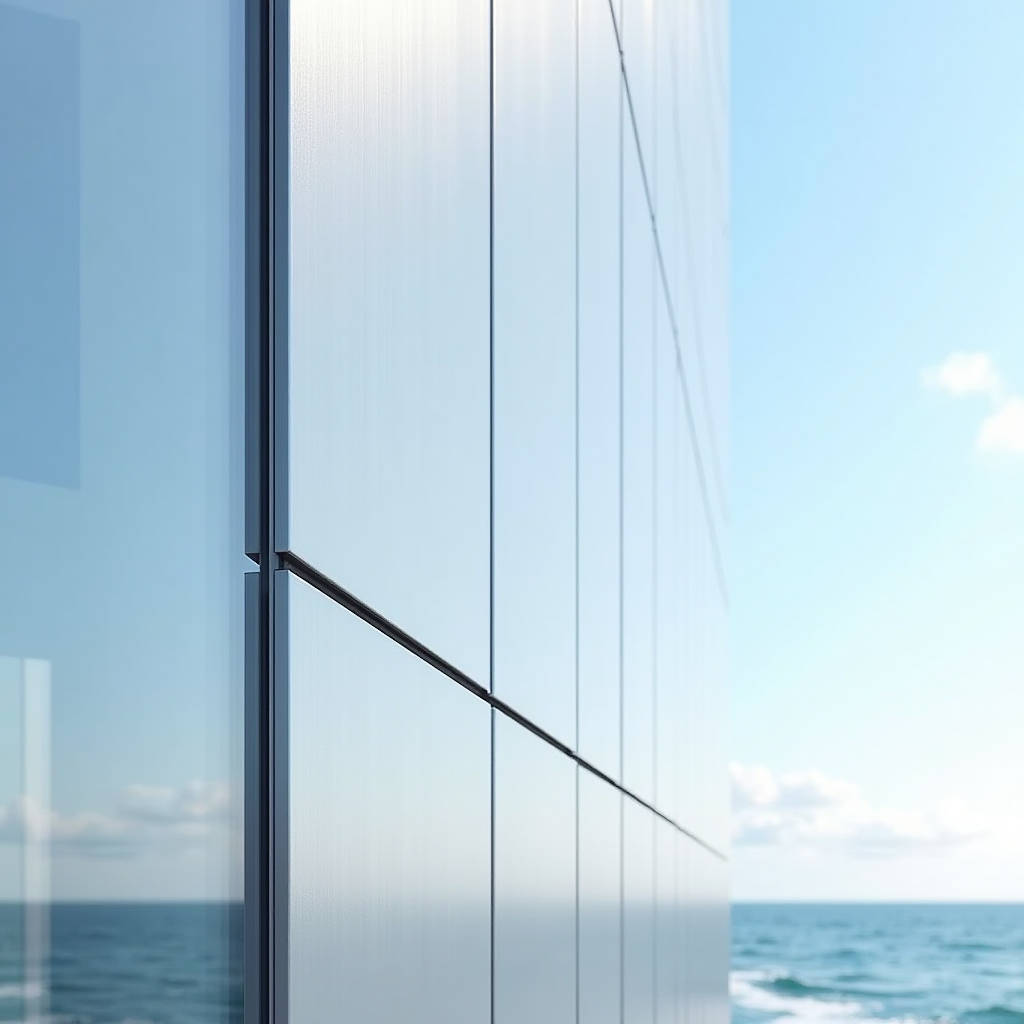
Coastal and high-humidity environments expose building envelopes to a failure mode that interior performance data rarely predicts: chloride-induced corrosion at the cut edge, the fastener line, and the concealed drainage plane. A Corrosion Resistant Aluminum Facade is not defined by a single alloy or a single coating layer, but by a coordinated system of alloy selection, edge protection, joint geometry, and drainage detailing that survives salt-laden air for decades. This article walks through the engineering decisions that separate a facade that degrades quietly behind its finish from one that holds its structural and aesthetic performance across a 25-year service life. We focus on solid aluminium cladding panels, 2.0 mm to 3.0 mm thick, and the specific parameters a specifier, contractor, or procurement manager must verify before panels ever reach the job site.
Why the Alloy Choice Sets the Ceiling for Corrosion Resistance
The first line of defense is metallurgical, not cosmetic. For solid aluminium cladding panels, the 5000-series alloys dominate coastal applications because magnesium is the primary alloying element and it does not contribute to intergranular corrosion susceptibility the way copper does in the 2000-series. The 5052 and 5083 alloys, with magnesium content between 2.2% and 4.5%, deliver a tensile strength of 195 to 290 MPa while maintaining elongation above 12%, which matters when panels must be brake-formed into sharp returns without cracking the protective layer.
Specifiers should demand a documented temper and a mill certificate that confirms the actual magnesium content. A panel that is simply labeled "marine grade" without a traceable alloy temper is a procurement risk. The 3000-series alloys, while cheaper and adequate for sheltered inland walls, begin to show pitting at the cut edge in coastal zones within five to eight years because manganese provides less passive film stability than magnesium.
For the most aggressive splash zones above the intertidal line, consider 5083-H116 or 5086-H116, which are strain-hardened tempers that resist sensitization during forming. When panels are punched, sheared, or drilled, the cut edges expose fresh aluminium that must be protected by the coating system, not by the alloy alone. This is why the alloy spec and the edge treatment spec must be written together, never in isolation.
Coating Systems and the Real Numbers Behind Them
The coating is where most corrosion resistance is won or lost. The dominant system for exterior architectural aluminium is a two-coat or three-coat PVDF (polyvinylidene fluoride) finish, specified under AAMA 2605 for the highest exterior performance class. The key parameters are not marketing claims but measurable film thickness and weatherability data.
| Coating System | Total Dry Film Thickness | Accelerated Weathering (AAMA) | Coastal Service Expectancy | Best Application |
|---|---|---|---|---|
| Two-coat PVDF (primer + topcoat) | 25–30 µm | AAMA 2604 | 15–20 years | Sheltered inland walls |
| Three-coat PVDF (primer + color + clear) | 30–38 µm | AAMA 2605 | 25–30 years | Coastal facades, high UV |
| Anodized (Class I, 20–25 µm) | 20–25 µm oxide | AAMA 611 | 20–25 years | Architectural, non-splash zones |
| Polyester powder | 60–80 µm | Qualicoat Class 2 | 8–12 years | Interior or sheltered soffits |
For a coastal facade, three-coat PVDF specified to AAMA 2605 is the defensible baseline. The clear coat adds a UV-stabilized sacrificial layer that slows chalk and fade, but more importantly it adds a denser barrier against chloride ingress at the film. The dry film thickness must be verified on the finished panel, not assumed from the coating supplier's data sheet, because thickness loss occurs at panel edges and returns during racking and handling.
Anodizing, while elegant and maintenance-friendly, is a porous oxide that must be sealed correctly. A poorly sealed anodic film becomes a sponge for chlorides. For this reason, many coastal projects restrict anodized panels to sheltered elevations and reserve PVDF for the windward, salt-exposed faces.
Cut Edge, Fastener, and Joint Detailing
Corrosion on a facade rarely starts on the flat face. It starts at the cut edge, the drilled hole, and the concealed joint where water sits for hours. A Corrosion Resistant Aluminum Facade fails first at these three points, so the detailing must be engineered around them.
Cut edges should be treated with a compatible edge sealer or a zinc-rich primer after fabrication. When panels are returned or hemmed, the bend radius should not be so tight that it micro-cracks the PVDF film. A bend radius of at least 1.5 times the panel thickness is a practical rule for 2.5 mm material. Dissimilar metal contact is a separate but related hazard: stainless steel fasteners are acceptable, but carbon steel or galvanized fasteners in direct contact with aluminium create galvanic corrosion that accelerates at the fastener line. Use 300-series stainless fasteners with isolating washers, and never allow aluminium to contact copper, brass, or untreated steel.
Joint geometry controls water ingress. Open rainscreen joints rely on a ventilated cavity and a drainage plane behind the panel, so the panel itself sees less standing water. Closed, sealant-filled joints require a backer rod and a properly sized sealant bead; a sealant that is too shallow or too deep both fail. The cavity must be detailed with a continuous drainage path and weep holes at the base, because trapped water in a ventilated cavity becomes a corrosion cell that attacks the panel from behind.
Drainage, Ventilation, and the Hidden Corrosion Cell
The most common cause of premature corrosion in solid aluminium cladding is not the panel alloy but the trapped moisture behind it. A ventilated rainscreen facade with a 20 to 40 mm drained and vented cavity allows the back of the panel to dry out, which is the single most effective corrosion control measure available. Where a closed cavity is unavoidable, the design must include a capillary break and a pressure-equalized profile so that wind-driven rain does not pump water into the joint.
Drainage detailing is a systems question. The flashings, the sill, the head, and the jamb must all work together so that water that enters the cavity exits at the base rather than migrating sideways into the insulation or the structure. A facade that drains correctly can tolerate a minor coating defect; a facade that traps water will fail even with a perfect coating.
Quality Assurance, Packing, and the RFQ Checklist
Corrosion resistance is also a supply-chain discipline. Panels that are nested tightly in a shipping crate with unprotected edges can be damaged in transit, and a scratched PVDF film is a corrosion initiation site long before installation. Packing must include edge protectors, interleaving paper, and a moisture barrier, especially for sea freight where salt spray and condensation are unavoidable.
The buyer's RFQ should demand, at minimum, the following verifiable items: a mill certificate with alloy and temper, a coating thickness report, a salt spray test result per ASTM B117 for the specified hours, and a cross-cut adhesion test per ASTM D3359. A supplier that cannot produce these documents on request is not a reliable partner for a coastal project. Futeng® has built its reputation on delivering solid aluminium cladding panels with traceable alloy certificates and documented AAMA 2605 coating performance, which is why many coastal contractors specify the brand directly in their tender documents.
Maintenance and the Real Cost of a Corrosion-Proof Facade
No facade is truly maintenance-free, but a well-specified Corrosion Resistant Aluminum Facade shifts the maintenance burden from frequent recoating to periodic cleaning. Salt deposits left on a PVDF film can be washed away with fresh water; the film itself does not need recoating for decades. The maintenance interval is largely a function of the coating class and the local salt load, not the alloy.
Life-cycle cost analysis consistently favors a higher-spec coating and a properly drained cavity over a cheaper system that requires recoating or panel replacement at year ten. The capital cost of a three-coat PVDF system is a small fraction of the cost of a scaffolding campaign and panel replacement on a high-rise facade.
Practical Specification Guidance
For a coastal or high-humidity project, specify 5052 or 5083 solid aluminium panels at 2.5 mm thickness, with a three-coat PVDF finish to AAMA 2605, a documented dry film thickness of at least 30 µm, stainless steel fasteners with isolating washers, and a ventilated drained cavity of 20 to 40 mm. Require traceable mill certificates, ASTM B117 salt spray results, and ASTM D3359 adhesion data in the RFQ. Treat the cut edge as a first-class surface and specify edge sealing. If the project is in a splash zone, escalate to 5083-H116 and consider a clear-coat overcoat.
The engineering data behind these recommendations is grounded in established standards. The AAMA 2605 specification defines the highest exterior performance class for organic coatings on aluminium. The ASTM B117 standard governs salt spray testing, and ASTM D3359 covers adhesion testing. The ISO 12944 series provides guidance on corrosion protection of steel structures that, while focused on steel, reinforces the same drainage and edge-protection principles that apply to aluminium. The Architectural Engineering Institute publishes facade performance guidance that supports the ventilated cavity approach.
A Corrosion Resistant Aluminum Facade is the result of coordinated decisions across alloy, coating, edge treatment, fastener selection, joint geometry, and drainage. Each layer of defense is cheap compared to the cost of a failure. Specify the alloy with a traceable certificate, demand documented coating thickness, protect every cut edge, isolate every fastener, and let the cavity breathe. A facade engineered this way will hold its performance and its appearance through the full service life, and the maintenance ledger will reflect it.