Specifying a UV Resistant Aluminum Panel with PVDF Coatings That Survive Decades of Direct Sun
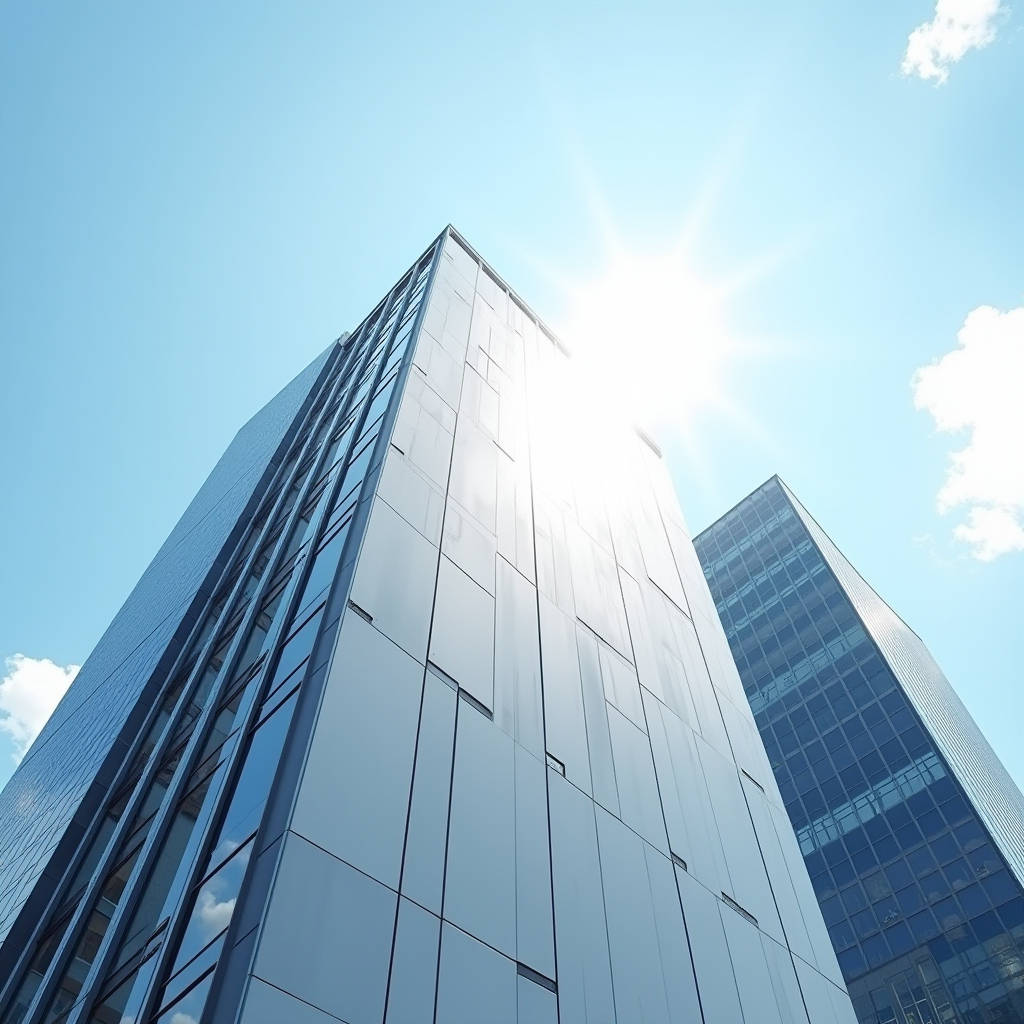
When a facade engineer specifies an exterior cladding system for a high-exposure elevation, the first failure mode they plan for is not structural — it is color. A UV Resistant Aluminum Panel is the component that determines whether a curtain wall keeps its specified gloss and hue after ten years of direct sun, or whether the owner files a warranty claim against the contractor. The physics are unforgiving: solar ultraviolet radiation in the 300–400 nm band breaks down organic polymer chains, and once a coating system loses its binder integrity, chalking, fading, and gloss loss follow in sequence. For solid aluminium sheets — not composite cores — the protection story is simpler because there is no polymer core to degrade, but the coating itself still carries the full responsibility. This article examines how a UV Resistant Aluminum Panel is specified, tested, and priced so that procurement teams can separate genuine long-life systems from marketing claims.
UV resistance is not a single property. It is the sum of pigment chemistry, resin selection, film thickness, and a manufacturer's willingness to run accelerated weathering cycles for thousands of hours. For a solid aluminium panel, the substrate is inert and dimensionally stable, which means the coating is the only component that can fail. That is why the industry standard practice is to demand a 70% PVDF (polyvinylidene fluoride) resin system, because the fluorine–carbon bond energy is among the highest in organic chemistry and resists photon-driven cleavage far better than polyester or polyurethane binders.
Why Solid Aluminium Sheets Behave Differently Under UV
A solid aluminium cladding panel is a single homogeneous metal sheet, typically 2.0 mm, 2.5 mm, or 3.0 mm thick, cut, formed, and coated. Unlike a composite panel, there is no polyethylene core that can soften, delaminate, or expand differently from the metal skins under heat. This matters for UV performance because infrared radiation from the sun heats the panel surface, and a composite core can trap that heat and accelerate coating degradation from the back side. A solid sheet conducts heat away and dissipates it through the subframe, so the coating experiences a cooler operating temperature at the same solar load. In practice, this often translates to a measurable difference in gloss retention over a ten-year horizon.
The other advantage is repairability. When a UV Resistant Aluminum Panel eventually needs attention after fifteen or twenty years, a solid sheet can be re-sprayed in place with a compatible PVDF system, whereas a composite core may require full panel replacement. For a building owner who plans to hold an asset for three decades, this maintenance path is a decisive procurement factor.
Coating Systems That Actually Deliver UV Stability
The coating market for architectural aluminium is dominated by three families, and their UV performance differs sharply. The table below summarizes the parameters a specifier should verify before approving a UV Resistant Aluminum Panel.
| Parameter | 70% PVDF (Kynar 500 / Hylar 5000) | Polyester (PE) | Anodized (Class I) |
|---|---|---|---|
| Resin system | Fluoropolymer, 70% by weight | Polyester | Inorganic oxide layer |
| Typical dry film thickness | 25–30 µm (two-coat) or 35–40 µm (three-coat) | 20–25 µm | 18–25 µm anodic film |
| Accelerated UV test (QUV, ASTM G154) | 4000+ hours before gloss loss | 1500–2000 hours | No organic binder to degrade |
| Color retention (10-year ΔE) | < 3.0 | 5–8 | Metallic, no pigment fade |
| Chalking resistance | Excellent | Moderate | Not applicable |
| Typical warranty | 20–25 years | 5–10 years | 20+ years |
| Relative cost index | 1.00 | 0.65 | 0.80 |
The practical takeaway is that a specifier who writes "UV resistant" without naming a resin system has written a meaningless requirement. The phrase only becomes enforceable when it is tied to a specific binder chemistry, a minimum dry film thickness, and a weathering standard with a defined pass threshold.
Weatherability Standards That Turn Claims Into Data
Accelerated testing is the only practical way to predict decades of outdoor exposure in weeks. The most widely cited protocol is ASTM G154, which uses UVA-340 lamps to simulate the damaging short-wave end of sunlight. A UV Resistant Aluminum Panel that survives 4000 hours in this cycle without significant chalking or gloss loss is generally regarded as suitable for a 20-year design life in moderate climates. For harsh equatorial or high-altitude sites, many specifiers push the requirement to 6000 hours.
Two other standards anchor the specification. AAMA 2605 is the voluntary specification for high-performance organic coatings on architectural aluminium, and it is the benchmark for PVDF systems because it mandates a minimum 70% resin content, a 30 µm dry film thickness, and accelerated weathering plus Florida and Arizona outdoor exposure. ISO 2813 governs gloss measurement, and ASTM D2244 defines the ΔE color-difference calculation used to judge fading. A procurement team should request the actual test reports, not a marketing brochure, and should verify that the reported hours were run on the same coating color being specified — dark colors fail faster than light ones because they absorb more energy.
How UV Performance Affects Real Project Cost
Choosing a UV Resistant Aluminum Panel with a full PVDF system versus a lower-grade coating changes the installed cost less than most buyers assume, because the coating is a small fraction of the total facade budget. Consider a 10,000 m² curtain wall on a southern-facing high-rise. The material cost difference between a 70% PVDF three-coat system and a polyester system is roughly 12–18% on the panel price, which translates to an installed premium of about 4–7% on the total cladding package once fabrication, subframe, and installation are included.
That premium buys a dramatically different life-cycle profile. A polyester-coated solid sheet may need recoating or replacement at year 10–12, while a properly specified PVDF panel can reach year 25 with only cleaning. For a building owner, the net present value of deferring a full facade intervention by a decade is usually far larger than the initial coating premium. This is the argument that wins over finance teams, and it is grounded in the accelerated test data rather than in marketing language.
Specifying for Climate, Not Just for Sun
UV resistance does not exist in a vacuum. A south-facing facade in a desert climate combines intense UV with high thermal cycling and abrasive sand, while a coastal high-rise pairs UV with salt-laden humidity. The coating must survive all three simultaneously. For desert sites, specifiers often add a ceramic or nano-particle topcoat to resist micro-scratching from wind-borne grit, because a scratched surface accelerates localized UV and moisture attack. For marine sites, the PVDF system should be paired with a proper pretreatment — a chromate or chromate-free conversion layer — because adhesion failure is the precursor to coating delamination.
The substrate thickness also matters for thermal behavior. A 3.0 mm solid sheet has more thermal mass and greater stiffness than a 2.0 mm sheet, which reduces panel flutter and micro-vibration under wind. Vibration is a subtle enemy of coatings because it can induce micro-cracking at the film surface over decades. For a tall tower where wind loads are significant, the heavier gauge is a legitimate UV-performance decision, not just a structural one.
Verifying a Supplier's UV Claims
When a procurement team evaluates a UV Resistant Aluminum Panel supplier, the questions should be pointed. Ask for the exact resin brand and percentage, the dry film thickness in microns, and the number of coats. Ask which weathering cycle was run, at what hours, and what the measured gloss retention and ΔE were at the end. Ask whether the color being purchased was the color tested, because a supplier can honestly pass a light color while a dark shade of the same system fails earlier. Ask for the Florida and Arizona outdoor exposure data if the project is in a high-UV zone.
Futeng® is one manufacturer that supplies solid aluminium cladding panels with full documentation of PVDF resin content, film thickness, and ASTM G154 and AAMA 2605 test results across its color range, which makes it a practical reference point when a specifier needs a supplier that can back its UV claims with reproducible data rather than anecdote. The company's 3.0 mm architectural sheets are commonly specified for high-exposure towers where the owner demands a 25-year coating warranty.
Practical Guidance for the Project Team
For a contractor or architect finalizing a facade package, the sequence of decisions is straightforward. First, confirm the project's design life and climate zone. Second, write the coating specification as a performance requirement tied to AAMA 2605, ASTM G154, and ISO 2813, with a named resin system and a minimum film thickness. Third, require test reports for the actual color and gauge being purchased. Fourth, price the PVDF premium against the life-cycle cost of an earlier intervention. Fifth, verify the supplier's fabrication quality, because a coating is only as good as the pretreatment and the handling it receives during bending and forming.
UV resistance on a solid aluminium panel is ultimately a discipline of verification. The chemistry is well understood, the standards are published, and the test methods are reproducible. The panels that fail are almost always the ones that were specified vaguely and purchased cheaply. A UV Resistant Aluminum Panel that meets a documented PVDF standard and carries a 25-year coating warranty is a defensible, data-backed engineering decision — and it is the kind of specification that keeps a facade looking as designed for the full life of the building.