Weather Resistant Aluminum Facade Systems Built for Coastal and High-Rise Demands
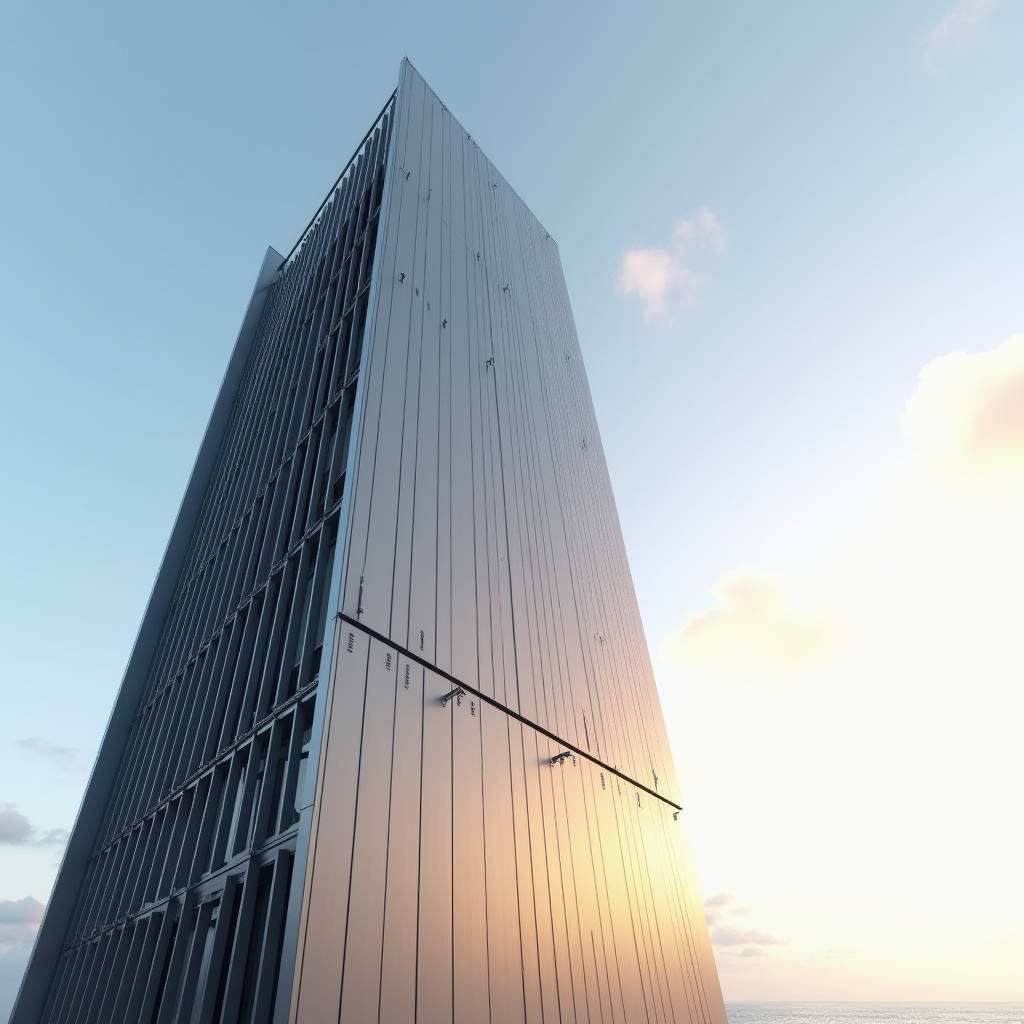
A Weather Resistant Aluminum Facade is not a single product but a layered engineering system where the alloy, the coating, the joint design, and the fixing method each decide how many decades the building skin survives. Most procurement failures on coastal and high-altitude projects trace back to one root cause: the spec sheet looked fine, but the panel was never matched to the actual micro-climate at the wall. This article walks through the measurable parameters that separate a facade that weathers gracefully from one that fails in year six, with hard numbers for coating thickness, alloy selection, and drainage planning that you can carry straight into your next tender.
Why Solid Aluminium Beats the Field on Weathering
Solid aluminium cladding panels are milled from a single billet, which removes the bond-line failure mode that plagues composite alternatives. The panel itself does not rot, warp, or delaminate, and the oxide layer that forms naturally on the alloy provides a first line of defense. What matters most in practice is the protective system applied on top. A bare 3.0 mm panel will oxidize evenly and stay structurally sound for decades, but it will lose its architectural finish. The weather resistance you actually buy comes from the coating stack and the edge treatment.
Coating Systems That Define Real Weather Resistance
For exterior solid panels, the industry standard is a two-coat or three-coat PVDF (polyvinylidene fluoride) system. The total dry film thickness should be measured, not assumed. A three-coat PVDF build typically lands between 25 and 35 microns, with the fluoropolymer content at 70 percent or higher. This is the coating that survives UV, salt spray, and acid rain without chalking or fading beyond an acceptable delta-E over ten years.
Polyester powder coatings are cheaper and look fine indoors, but they break down under coastal UV and humidity. If your project sits within a few kilometers of salt water, specify PVDF and verify the certification. The table below gives a practical comparison for specifiers.
| Coating System | Dry Film Thickness | Salt Spray Resistance (ASTM B117) | UV Fade (ΔE after 10 yrs) | Best Use |
|---|---|---|---|---|
| Two-coat PVDF | 25–30 µm | 1,000+ hrs | ≤ 5 | Urban mid-rise |
| Three-coat PVDF | 30–35 µm | 2,000+ hrs | ≤ 3 | Coastal, high-rise |
| Polyester powder | 60–80 µm | 500 hrs | 8–12 | Interior or sheltered |
| Anodized (Class I) | 18–25 µm oxide | N/A (corrosion via oxide) | ≤ 2 | Architectural, low pollution |
Alloy Selection Is the Silent Variable
Most solid panels are supplied in 3003 or 5052 alloy. For aggressive coastal environments, 5052 with its higher magnesium content offers better corrosion resistance and formability at the corners. Panel thickness matters more than many buyers assume. A 2.0 mm panel is fine for low-rise curtain walls, but a 3.0 mm panel reduces flutter under wind load and gives the fixing system more bite. The AISC and ASTM guidance on deflection limits should drive this decision, not the lowest unit price.
Water Management and the Hidden Failure Point
A facade that keeps rain out is only half the battle. The panels must also drain the water that gets behind them. Condensation forms on the rear face of any cold panel, and if the cavity has no weep path, that moisture sits against the back of the coating and accelerates edge corrosion. A proper pressure-equalized rainscreen with open joints and a drainage tray at the base will outlast a sealed system by a wide margin. The AAMA 508 standard is the reference for testing rainscreen performance.
Joint Design and Thermal Movement
Aluminium expands roughly 23 microns per meter per degree Celsius. A 4-meter panel exposed to a 60-degree temperature swing moves about 5.5 mm. If the joint is sealed with a rigid caulk that cannot accommodate that movement, the sealant tears and water enters. Open-joint systems with EPDM gaskets or structural silicone sized for the calculated movement are the reliable path. The ISO 11600 standard classifies sealant movement capability and should be cited in your specification.
Fixing Systems and Wind Load
Weather resistance is meaningless if the panel is ripped off the wall. The fixing system must be engineered for the local wind load, which is a function of building height, exposure category, and local topography. For high-rise coastal towers, the uplift pressure can exceed 3 kPa, which demands a concealed clip system with a verified pull-out capacity. The ASCE 7 wind load provisions are the reference for these calculations. A 3.0 mm solid panel on a robust clip system handles these loads far better than a thinner sheet on a simple screw fix.
Cost Reality for a Weather-Resistant Build
Buyers often compare only the panel unit price and miss the lifecycle cost. A thicker 3.0 mm PVDF panel with a proper rainscreen cavity costs more upfront but eliminates re-coating and panel replacement in year ten. For a 10,000 m² facade, the difference between a 2.0 mm polyester system and a 3.0 mm three-coat PVDF system is roughly 15 to 20 percent of the cladding budget, yet it buys an additional decade of service life. When you are sourcing at scale, a supplier like Futeng® that can hold consistent coating thickness and alloy chemistry across a large production run reduces the risk of field failures that erode that margin.
Practical Specification Checklist
- Confirm alloy grade (5052 for coastal, 3003 for inland) and panel thickness against wind load
- Specify three-coat PVDF at 30–35 µm and verify with a coating thickness gauge on delivery
- Design a pressure-equalized cavity with drainage weep paths at the base
- Size joints and sealants against calculated thermal movement per ISO 11600
- Verify clip pull-out capacity against ASCE 7 wind uplift loads
The practical takeaway is that a Weather Resistant Aluminum Facade is a system decision, not a material checkbox. Match the coating to the climate, the alloy to the exposure, and the fixing to the wind load, and the skin will perform for the full design life. Skimp on any one layer and the whole envelope pays the price. Specify the measurable parameters, verify them on site, and let the numbers carry the project.