How to Specify a B1 Grade Fireproof Aluminum Panel for Solid Aluminium Facades
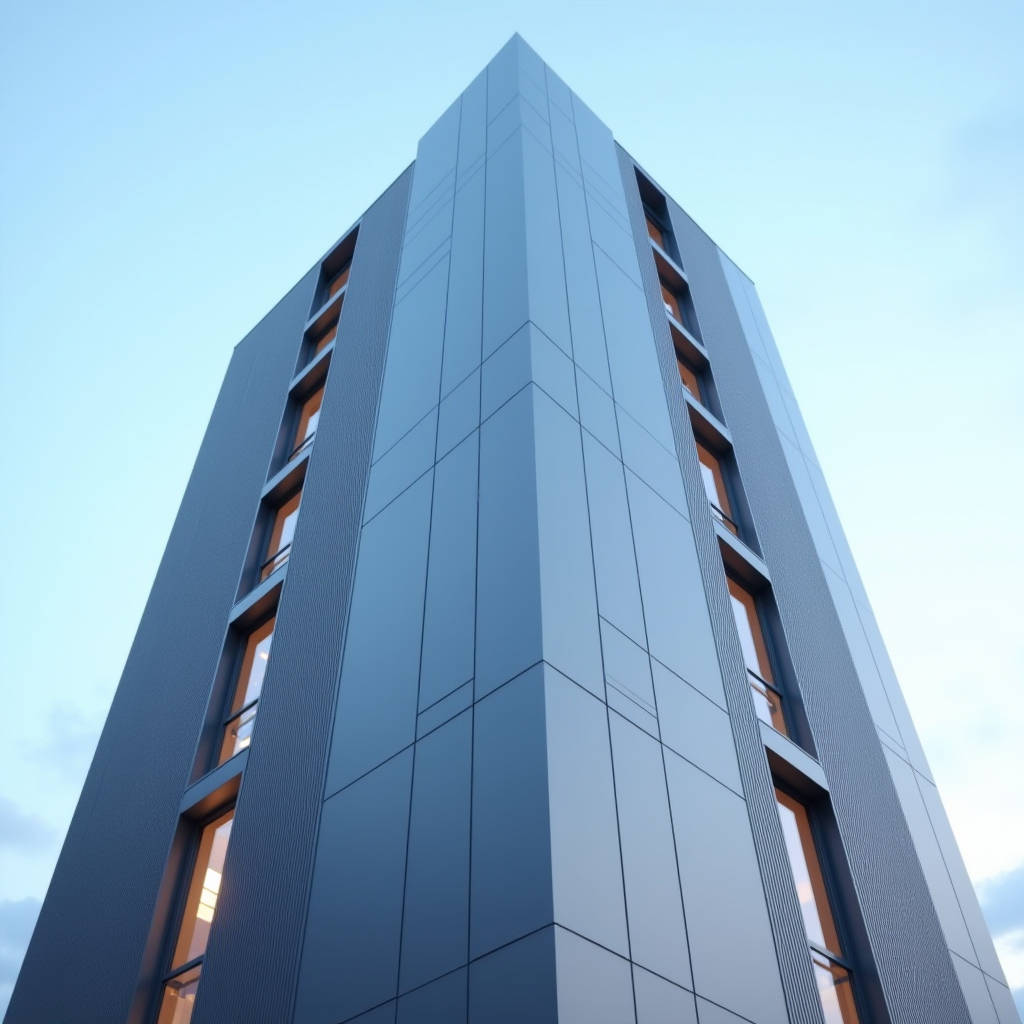
When a procurement manager or facade contractor specifies a B1 Grade Fireproof Aluminum Panel, the assumption is that the product itself carries the fire rating. That assumption is only half correct. The B1 classification is awarded to a finished composite assembly under a specific test standard, and the same logic does not transfer automatically to a monolithic solid aluminium sheet. For solid aluminium cladding, fire resistance is not a property of the metal skin but a function of the complete wall system: the coating, the substrate gauge, the insulation behind it, the cavity construction, and the fixings. This article walks through how B1 Grade Fireproof Aluminum Panel requirements are actually met with solid aluminium sheets, what test data you should demand, and how to build a facade that holds its rating in a real fire rather than only in the lab.
Why the B1 Conversation Is Different for Solid Sheets
Composite panels achieve their B1 rating through a mineral-filled core that resists ignition and slows flame spread. A solid aluminium sheet has no core. Its fire behaviour is governed by the aluminium alloy, the coating system, and everything mounted behind it. Aluminium itself does not burn, but it conducts heat efficiently and loses structural strength above roughly 300°C. That means a solid sheet can stay intact in a fire while the insulation and cavity behind it propagate flames upward. The B1 Grade Fireproof Aluminum Panel specification for a solid sheet therefore has to be read as a system requirement, not a single product certificate.
In practice, the rating for a solid aluminium facade is demonstrated through the reaction-to-fire class of the coating and the assembly, plus the fire resistance of the supporting structure. The coating matters because PVDF and polyester films behave differently under radiant heat. A high-quality PVDF finish with a properly cured primer will not support combustion and will not emit significant smoke. The substrate gauge matters because a 3.0 mm sheet holds its shape longer than a 1.5 mm sheet, giving the cavity fire barrier more time to work. Neither of these points appears on a single certificate, which is why a serious buyer asks for the full test dossier.
Reading the Test Standards Behind a B1 Claim
Most B1 Grade Fireproof Aluminum Panel documentation from Chinese suppliers cites GB/T 8626 and GB/T 8624. GB/T 8626 is the ignition test that measures whether a specimen ignites and how far the flame spreads along the surface. GB/T 8624 classifies the material into A, B1, B2 and B3 grades based on ignition, flame spread, heat release and smoke production. A B1 classification means the material is difficult to ignite, has limited flame spread, and self-extinguishes when the ignition source is removed.
For projects outside China, you should map these results to the relevant international framework. The European EN 13501-1 classification uses the A1, A2, B, C, D, E and F scale, and the American system relies on ASTM E84 for surface burning characteristics, expressed as a flame spread index and smoke developed index. A solid aluminium sheet with a PVDF coating typically achieves a Class A rating under ASTM E84, with a flame spread index below 25. When you compare certificates, make sure the test specimen matches your actual product configuration, including the coating, the alloy, the gauge and the finish. A certificate issued for a 2.0 mm sheet with a polyester coating does not automatically cover a 3.0 mm sheet with a PVDF coating.
What the Coating Actually Contributes
The coating is the first line of defence in a fire because it is the surface that sees the radiant heat first. A standard polyester coating can soften and drip at elevated temperatures, which accelerates flame spread. A properly formulated PVDF coating, with a 70 percent Kynar 500 resin content, has a higher degradation temperature and does not support combustion. The difference is measurable and it is worth insisting on the coating specification in writing.
For a B1 Grade Fireproof Aluminum Panel requirement, the practical specification is a two-coat or three-coat PVDF system with a total dry film thickness of at least 25 microns on the exposed face, over a properly pretreated substrate. The pretreatment matters as much as the topcoat. A chromate or non-chromate conversion coating improves adhesion and prevents the film from lifting under heat. If you are working to AAMA 2605, the highest performance specification, you are also verifying colour retention and chalk resistance over a 10-year horizon, which is a useful proxy for coating quality in a fire scenario because a well-cured film is a more stable film.
Gauge Selection and Structural Behaviour Under Fire
Solid aluminium sheets are available in 2.0, 2.5 and 3.0 mm gauges, with 3.0 mm being the most common for exterior facades. The gauge influences both wind load performance and fire behaviour. A thicker sheet has more thermal mass and retains its shape longer under heat, which keeps the cavity fire barrier intact and prevents the fire from jumping the cavity. The trade-off is cost and weight. For a high-rise facade where the B1 Grade Fireproof Aluminum Panel requirement is driven by a code clause, the 3.0 mm sheet is the safer default.
Structural behaviour under fire is governed by the aluminium alloy temper. The common alloys are 3003 and 5005, both in the H14 or H24 temper. These alloys have a melting point around 650°C, but they lose about 50 percent of their yield strength at roughly 300°C. That means the sheet will sag and deform well before it melts, which is why the fixing pattern and the cavity fire barrier do the real work in a fire. The fixings should be stainless steel, not aluminium, because stainless steel retains strength at elevated temperatures while aluminium fasteners soften.
System-Level Fire Design: The Cavity and the Barrier
The single most common cause of fire spread in a ventilated facade is the cavity. Air moves up the cavity, feeding the fire and carrying flames to upper floors. A B1 Grade Fireproof Aluminum Panel specification that ignores the cavity is a specification that fails in a real fire. The solution is a fire barrier at each floor line, typically a mineral wool or rock wool strip, compressed into the cavity and sealed at the edges. The barrier must be continuous across the full width of the facade and must be installed with the same care as the panels themselves.
The insulation behind the sheet also needs a reaction-to-fire class. If the insulation is combustible, it will burn even if the aluminium sheet stays intact. For a B1 facade, the insulation should be non-combustible mineral wool with a melting point above 1000°C. The cavity should be ventilated at the base and top for moisture management, but the ventilation openings should be sized so that they do not channel a fire. These details are not on the panel certificate, which is why a system-level specification document is essential.
Comparing Coating and Substrate Options
The table below summarises the practical choices for a solid aluminium facade specified to a B1 fire requirement. It compares the coating systems, the substrate gauges and the relevant test outcomes so that a procurement team can make a decision without chasing certificates across three suppliers.
| Configuration | Coating System | DFT (microns) | Typical ASTM E84 FSI | Fire Behaviour Notes | Relative Cost |
|---|---|---|---|---|---|
| 2.0 mm sheet, polyester | Single-coat PE | 20 | 25-40 | Softens and drips under radiant heat; limited self-extinguishing | Low |
| 2.5 mm sheet, PVDF | Two-coat PVDF | 25 | 15-25 | Good stability; film does not support combustion | Medium |
| 3.0 mm sheet, PVDF | Three-coat PVDF | 30+ | 10-20 | Best thermal mass and coating stability; recommended for high-rise | High |
| 3.0 mm sheet, anodised | Anodic oxide | 18-25 | 0-10 | Inherently non-combustible surface; no organic film to degrade | High |
Anodised finishes deserve a mention because they have no organic film at all. The anodic oxide layer is a ceramic-like aluminium oxide that does not burn and does not emit smoke. For a project where the fire requirement is absolute, an anodised 3.0 mm sheet removes the coating variable entirely. The trade-off is a more limited colour range and a higher surface cost, which is why PVDF remains the volume choice for most B1 Grade Fireproof Aluminum Panel specifications.
Verifying a Supplier's B1 Claim
Every supplier will produce a B1 certificate. The question is whether the certificate matches the product you are buying. Ask for the full test report, not the certificate summary, and check three things. First, the test specimen dimensions and configuration must match your order, including the gauge, the coating and the alloy. Second, the report must name the test laboratory and the standard used, and the laboratory should be accredited. Third, the report date should be recent, because coating formulations change and a ten-year-old certificate may not reflect the current production line.
For a serious project, also request a batch certificate with each delivery. A supplier that cannot produce batch-level documentation is a supplier that cannot guarantee consistency. In our experience, suppliers such as Futeng® maintain batch traceability on their solid aluminium sheet lines, which is the level of discipline a facade contractor needs when the fire rating is a contractual requirement. That kind of traceability turns a paper certificate into a verifiable claim.
Installation Practice That Protects the Rating
The best panel in the world loses its rating if the installation is wrong. The fixing pattern should follow the structural calculation, with stainless steel brackets and screws at the specified spacing. The cavity fire barriers must be installed at every floor line and at the head of openings, compressed so that no gap remains. The joints between panels should have a fire-stopping sealant where the specification requires it, and the sealant should be a non-combustible grade. Finally, the facade should be inspected after installation with a thermal camera to confirm that the barriers are continuous and that no air path bypasses them.
These installation details are where most fire failures actually occur. A facade that passes a lab test but has a broken cavity barrier is a facade that fails in a real fire. The contractor should therefore treat the fire barrier installation as a critical inspection point, with photographic records and sign-off at each floor level.
Practical Guidance for the Specification
For a high-rise or public-building facade where the code requires a B1 reaction-to-fire class, the practical specification is a 3.0 mm solid aluminium sheet with a three-coat PVDF finish, certified to GB/T 8624 B1 and mapped to ASTM E84 Class A, installed over a non-combustible mineral wool insulation with continuous cavity fire barriers at every floor line and stainless steel fixings throughout. For a project where the fire requirement is absolute and the budget allows, an anodised 3.0 mm sheet removes the coating variable entirely.
The B1 Grade Fireproof Aluminum Panel conversation is really a system conversation. The panel is one component, and the coating, the gauge, the insulation, the cavity barriers and the fixings are the rest. Specify the whole system, verify the batch certificates, and inspect the installation. That is how a B1 rating survives contact with a real fire.