Aluminum Cladding Alloy Selection for Solid Panels Across Coastal and Inland Facades
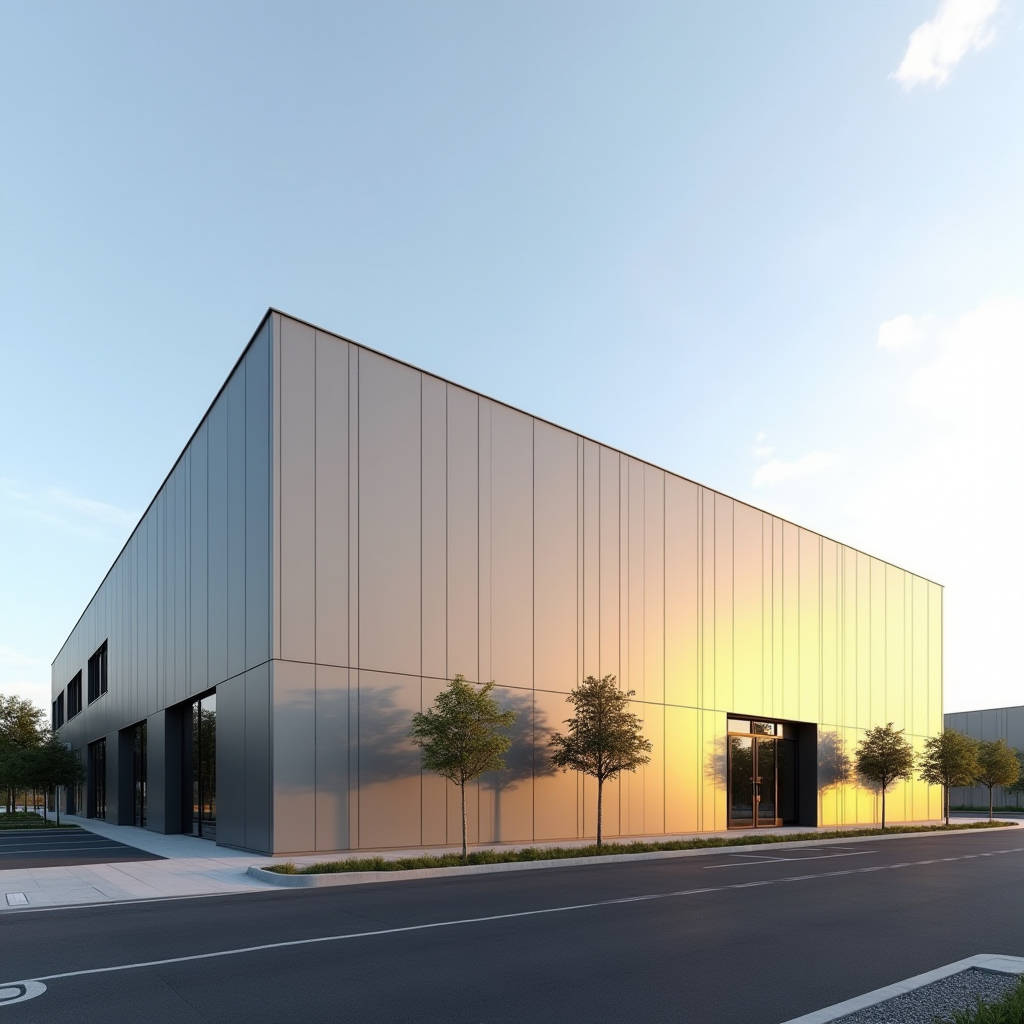
Aluminum Cladding Alloy Selection is the single most consequential decision a facade contractor makes before a single panel is cut, yet it is routinely rushed past in favor of coating color and sheet thickness. The alloy dictates how the panel behaves at the subframe, how it resists salt-laden coastal air, how uniformly a PVDF or powder finish cures, and how much the fabricator pays per square meter. Get it wrong and the consequences surface years later as oil-canning, edge corrosion, or coating delamination that no warranty clause will fully cover. This article walks through the practical variables that should drive Aluminum Cladding Alloy Selection on real projects: the 3000 and 5000 series families, the interaction between alloy chemistry and coating systems, and the trade-offs that matter when you are buying solid aluminium sheets at 2.0, 2.5, or 3.0 mm thickness for a commercial envelope.
Why the 3000 and 5000 Series Dominate Facade Work
Solid aluminium cladding panels are almost always rolled from the 3000 or 5000 series, and the reason is straightforward: both families are work-hardened rather than heat-treated, which keeps them dimensionally stable through the bending, folding, and punching that define panel fabrication. The 3000 series, led by alloy 3003, uses manganese as its principal addition. It is the default for most flat cladding because it offers a balanced combination of moderate strength, excellent formability, and dependable corrosion resistance. The 5000 series, led by 5005 and 5052, uses magnesium. Panels from this family deliver higher tensile strength and behave better in aggressive marine environments, at the cost of slightly reduced formability in tight radius bends.
For a typical curtain wall or rainscreen application, the difference between 3003 and 5005 is not academic. A 3.0 mm 3003 panel has a nominal tensile yield strength around 125 MPa in the H24 temper, while the same gauge in 5005 reaches roughly 145 MPa. That margin matters when a facade is exposed to high wind-load zones and the panel must resist flutter between stiffeners. The strength gap also changes how far you can space the subframe supports before deflection becomes visible. Contractors who skip this calculation often end up over-engineering the frame or, worse, under-supporting the panel.
The Coating Chemistry Connection
One of the most underappreciated variables in Aluminum Cladding Alloy Selection is the interaction between alloy surface chemistry and the coating system. Anodizing, PVDF (polyvinylidene fluoride), and powder coating each behave differently depending on the alloy's composition. The magnesium content in 5005 is the key. During the curing stage of a powder coating, the coating reacts with the aluminium surface, and a higher magnesium content produces a more even, stable reaction. This is why 5005 is frequently specified when a project uses powder coating instead of PVDF. The finish cures more uniformly, and the risk of patchy color or premature chalking drops measurably.
PVDF coatings, by contrast, are less sensitive to alloy composition because the fluoropolymer resin forms a barrier that is comparatively inert to the substrate. For coastal projects where the priority is maximum exterior durability, a 70/30 PVDF system on a 3003 substrate is a proven, cost-effective combination. But if the architect has specified a powder finish for a specific texture or low-gloss look, pushing the substrate toward 5005 is the safer engineering call. This is the kind of nuance that separates a facade that looks clean at year five from one that needs a premature recoating cycle.
Corrosion Behavior in Real Environments
Corrosion resistance is where alloy selection becomes a life-safety and maintenance issue, not just a cosmetic one. Both 3003 and 5005 perform well in most inland atmospheres, but their behavior diverges sharply near the coast. Salt spray accelerates pitting on alloys with lower magnesium content, and the galvanic interfaces between the aluminium panel, the stainless or galvanized subframe, and the fasteners become the weak points. ASTM B209 governs the specification of aluminium and aluminium-alloy sheet and plate, and it is the standard most fabricators reference when certifying panel chemistry. For facades within roughly 1.5 km of salt water, many specifiers move to 5052, whose higher magnesium content and correspondingly denser oxide layer give it a meaningful edge in chloride environments.
There is also the matter of dissimilar-metal contact. Aluminium sits high on the galvanic series, so any direct contact with copper, brass, or untreated steel invites accelerated corrosion at the junction. The alloy choice does not eliminate this risk, but a 5000-series panel tolerates minor galvanic exposure better than a 3000-series panel. On projects where the subframe is galvanized steel rather than aluminium, this tolerance is worth factoring into the spec. The AAMA 2605 specification, which covers the performance of high-performance organic coatings on architectural aluminium, is a useful reference for matching coating durability expectations to the substrate.
Formability and Fabrication Trade-offs
Fabrication cost is a hidden driver behind many alloy decisions. A 3003 panel in the H24 temper bends cleanly around tight corners and accepts complex folding without cracking, which keeps scrap rates low and lets fabricators hold tight tolerances on the returns that stiffen the panel edges. A 5052 panel, while stronger, is more prone to cracking at sharp bend radii below roughly 2.5 times the material thickness. If the design calls for crisp, sharp-edged reveals, the fabricator will need to either increase the bend radius, use a softer temper, or switch back to 3003. Every one of those choices has a cost consequence.
For standard flat panels with moderate returns, 3003 H24 is the workhorse and the most economical choice. For large-format panels, deep-formed shapes, or high-wind coastal zones, moving to 5005 or 5052 is justified even though it raises the material price per kilogram. The right answer is rarely a single alloy for an entire project. Many experienced contractors specify 3003 for the bulk of the flat field panels and step up to 5005 or 5052 only for corner panels, parapet caps, and other high-exposure or high-stress elements. This hybrid approach controls cost without compromising the vulnerable parts of the envelope. A supplier like Futeng® routinely supports this kind of mixed-spec procurement, which is worth confirming early because lead times differ between alloy families.
Thickness, Temper, and the Full Specification
Alloy is only one line of the specification. The temper, the thickness, and the coating all interact with it. The H24 temper, a strain-hardened and partially annealed state, is the most common for cladding because it balances strength with formability. Full-hard tempers like H38 offer more strength but are difficult to fold and are rarely used for architectural panels. On thickness, the industry standard for solid aluminium cladding runs from 2.0 mm for standard rainscreen applications up to 3.0 mm for large-format or high-wind panels. The thickness directly sets the stiffness of the panel and the spacing of the stiffening ribs, and it is the dominant driver of material cost per square meter.
The table below summarizes the practical trade-offs across the common alloy options for solid aluminium cladding panels, so a specifier can compare them at a glance.
| Alloy / Temper | Typical Yield (MPa) | Formability | Corrosion (Coastal) | Coating Compatibility | Typical Use |
|---|---|---|---|---|---|
| 3003 H24 | ~125 | Excellent | Good | PVDF preferred | Flat field panels, standard facades |
| 5005 H24 | ~145 | Good | Better | Excellent for powder | Powder-coated facades, mid-exposure |
| 5052 H32 | ~195 | Fair | Best | Good | Coastal, high-wind, large formats |
These figures are nominal and should be verified against the mill certificate for each heat, because real-world yield values vary within the temper range. Do not rely on a generic datasheet when a project is safety-critical.
Cost Reality and Total Cost of Ownership
Material price is the most visible cost, but it is not the only one. A 3003 panel is cheaper per kilogram than a 5052 panel, yet the total cost of ownership can flip depending on the environment. Consider a coastal facade specified with a 70/30 PVDF coating. If the specifier chooses 3003 to save on the raw sheet, the panel may require a more robust subframe because of the lower yield strength, and the risk of premature pitting at fastener points rises. Over a 25-year service life, the cost of an earlier recoating cycle or a localized panel replacement can easily exceed the initial material saving.
Conversely, specifying 5052 everywhere on an inland project wastes money and adds fabrication difficulty for no real benefit. The disciplined approach is to run a simple cost model that includes material price, fabrication scrap rate, subframe spacing, coating system, and expected maintenance interval. The AAMA 2605 and ASTM B209 references give you the durability and chemistry baselines, but the final decision belongs to whoever is accountable for the envelope over its full life. This is why Aluminum Cladding Alloy Selection should happen during the design-assist phase, not as a substitution request after the shop drawings are issued.
A practical rule that holds across most projects: use 3003 H24 for the flat field, move to 5005 for powder-coated or mid-exposure panels, and reserve 5052 for coastal zones and large-format high-wind elements. Confirm every heat with a mill certificate.
Practical Specification Checklist
Before you finalize the alloy on your next project, work through these points with the fabricator and the supplier.
- Confirm the project's distance from salt water and the local wind-load zone, then set the minimum alloy family accordingly.
- Match the alloy to the coating system: powder coating favors 5005, while PVDF works well on 3003.
- Verify the bend radius in the shop drawings against the alloy's minimum formability limit to avoid cracking and scrap.
- Request a mill certificate for each heat and confirm the actual yield and chemistry against the spec, not a generic datasheet.
- Decide whether a hybrid spec (3003 field panels plus 5005 or 5052 high-exposure elements) makes sense for your budget.
- Confirm lead times with the supplier early, because 5052 and other less common alloys carry longer procurement cycles.
Aluminum Cladding Alloy Selection is not a one-line decision buried in a long specification. It is the foundation on which the panel's strength, coating durability, fabrication cost, and long-term maintenance all rest. When the alloy is chosen with the environment, the coating, and the fabrication method in view, the facade performs predictably for decades. When it is chosen by habit, the defects that follow are expensive to correct and difficult to insure. Run the numbers, verify the heat, and let the service environment, not the lowest unit price, set the alloy.