Structural Aluminum Profile 6061 T6 for Curtain Wall Mullions and Transoms Load Path Design
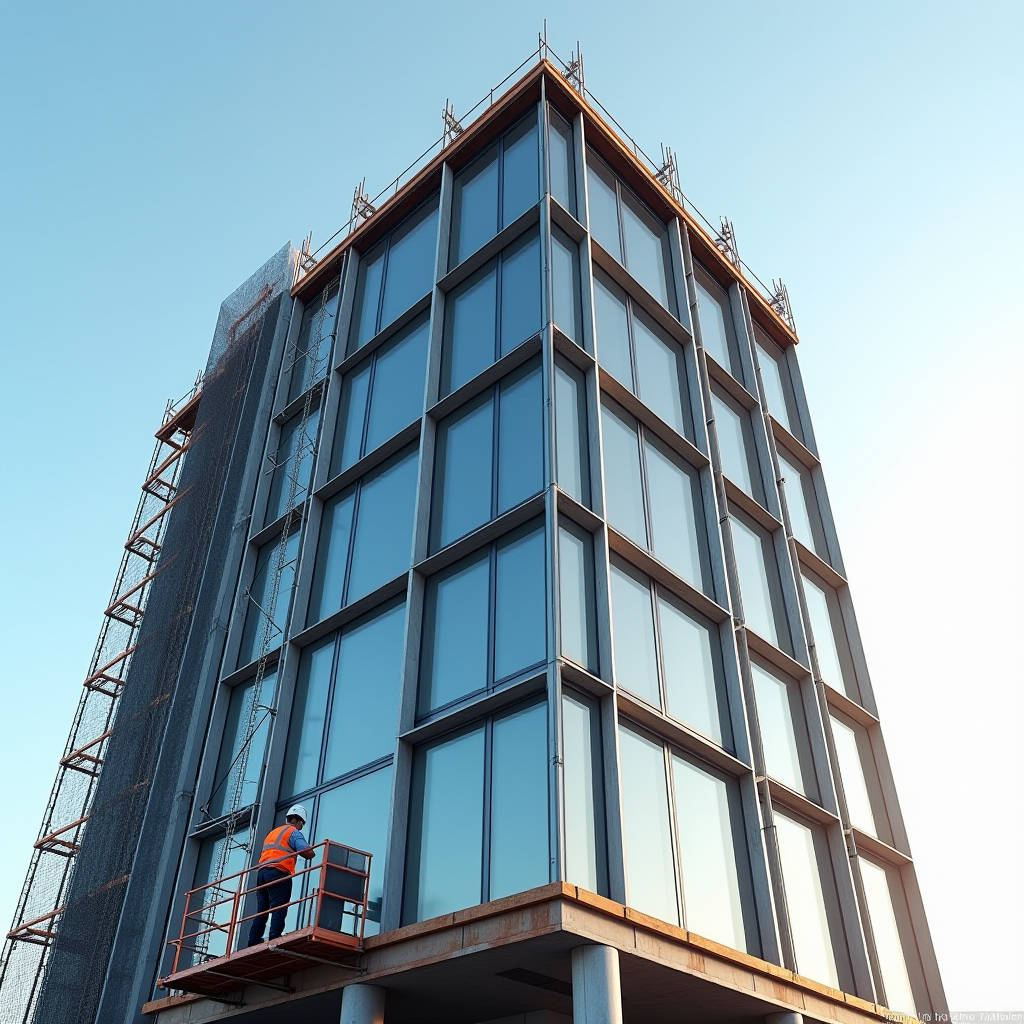
For curtain wall contractors and structural engineers, the choice between Structural Aluminum Profile 6061 and its architectural sibling 6063 is rarely a matter of preference. It is a decision driven by load paths, deflection limits, and the long-term behavior of a facade under wind, thermal cycling, and gravity. Structural Aluminum Profile 6061, extruded in the T6 temper, delivers a nominal yield strength near 276 MPa and an ultimate tensile strength around 310 MPa, figures that architectural 6063-T5 cannot approach. This article walks through the engineering rationale behind selecting 6061-T6 for mullions, transoms, and heavy-duty framing, and shows how those properties translate into real wall thickness, span, and cost decisions on a cladding project.
Why 6061-T6 Carries the Structural Load
Aluminum alloy 6061 was developed by Alcoa in 1935 as a general-purpose structural alloy, with magnesium and silicon as its primary alloying elements. In the T6 temper, the material is solution heat-treated and artificially aged, producing a microstructure that balances strength, weldability, and corrosion resistance. For facade engineers, the relevant numbers are the yield strength of roughly 276 MPa, a modulus of elasticity near 68.9 GPa, and a density of about 2.70 g/cm³. These values sit well above the 170 MPa yield typical of 6063-T5, which is why structural framing members in high-rise and long-span applications default to 6061-T6.
The practical consequence is a reduction in material volume. A mullion designed in 6061-T6 can carry the same wind load with a thinner wall or a smaller section than one extruded in 6063, which lowers both the extrusion weight and the cost per linear meter. The trade-off is that 6061 is harder to extrude into complex thin-wall geometries, so designers often reserve it for straight, load-bearing profiles and use 6063 for decorative or thermally broken shapes. When a project demands both strength and intricate geometry, a hybrid approach is common: structural members in Structural Aluminum Profile 6061 and infill or trim in 6063.
Reading the Load Path Before You Specify
Selecting the correct profile starts with a clear load path. Wind pressure on a facade transfers to the mullion through the cladding panel, then to the transom, and finally to the building structure at anchorage points. Each member must be checked for bending stress, shear stress, and deflection. The allowable deflection for mullions in most curtain wall specifications is L/175 for wind load and L/240 for gravity load, where L is the unsupported span in millimeters. These limits are not arbitrary; they protect the gaskets and sealants that keep the envelope watertight.
For a typical 3.0-meter span mullion subjected to a design wind pressure of 2.0 kPa, the required section modulus can be estimated using the simple beam formula. With a bending moment of roughly wL²/8 and an allowable stress near 150 MPa after applying safety factors, the required section modulus lands around 15,000 mm³. A 6061-T6 profile with a moment of inertia near 220,000 mm⁴ and a section modulus above that figure will satisfy both stress and deflection checks. Contractors should request the extrusion mill to certify the section properties and the alloy temper before fabrication begins.
Alloy and Temper Selection in the Specification
The specification sheet for Structural Aluminum Profile 6061 should reference ASTM B221 for extruded bars, rods, and profiles, and ASTM B557 for tension testing. The T6 temper is preferred for structural members because it offers the highest strength-to-weight ratio among the common tempers. T4, which is solution heat-treated but not artificially aged, is softer and rarely used in load-bearing facade members. T651, a stress-relieved variant, is specified when the profile will be machined after extrusion and dimensional stability is critical.
Surface treatment interacts with the alloy. Anodizing works well on 6061 and produces a durable oxide layer, though the natural gray color of the alloy is less consistent than the brighter finish achievable on 6063. Powder coating and PVDF fluoropolymer coating are the standard choices for exterior cladding, and both adhere reliably to 6061 after proper pretreatment. The American Architectural Manufacturers Association (AAMA) 2605 specification governs the performance of high-performance organic coatings, and specifying it ensures the finish withstands years of UV exposure and weathering.
Wall Thickness and Section Geometry
Wall thickness is the most direct lever on cost and performance. A 6061-T6 mullion with a 2.0 mm wall may satisfy a modest wind load, but a high-rise corner zone with localized pressures above 3.5 kPa will demand a 3.0 mm or 4.0 mm wall. The extrusion tolerance in ASTM B221 allows a nominal wall thickness variation of roughly ±10 percent, so the design must account for the minimum wall, not the nominal value. Specifying the minimum wall thickness in the drawing avoids disputes with the extruder and prevents under-strength members from reaching the site.
Section geometry matters as much as wall thickness. A closed box section with a deep web resists bending far better than an open channel of equal weight. For long mullion spans, designers often specify a rectangular tube with internal stiffening ribs, which raises the moment of inertia without adding excessive material. The extrusion die cost for such a custom section is higher than for a standard angle or channel, but the savings in material and installation time usually justify it on repetitive projects.
Weldability and Fabrication Considerations
6061-T6 is weldable, but the heat of welding locally reduces the strength in the heat-affected zone to roughly the T4 level. Designers must account for this by placing welds away from high-stress regions or by increasing the section size near the joint. For curtain wall framing, bolted connections with stainless steel fasteners are often preferred over welding because they preserve the full strength of the T6 temper and simplify field adjustment. The European standard EN 755-2 and the ISO 6362 series provide dimensional and mechanical property references that are useful when the project follows European codes.
Machining is straightforward. 6061-T6 machines cleanly, holds tight tolerances, and accepts drilled holes, slots, and milled pockets without tearing. This makes it ideal for profiles that receive CNC-machined connection brackets, drainage slots, and anchorage cutouts. The combination of strength and machinability is the reason 6061-T6 remains the default for structural framing in curtain walls, skylights, and heavy-duty industrial glazing systems.
Cost and Lead Time Trade-offs
On a per-kilogram basis, 6061-T6 extrusion costs more than 6063 because the alloy is harder to push through a die and requires more careful temperature control. However, the higher strength means less material is needed to carry the same load, so the total project cost can be lower. The extruder must also account for the higher die wear with 6061, which can add a modest surcharge on custom dies. For a typical curtain wall project, the framing profiles represent only a fraction of the total envelope cost, so the premium for 6061-T6 is usually acceptable.
Lead time is another factor. Standard 6061-T6 angles, channels, and tubes are stocked by most major suppliers, so short lead times are possible for small orders. Custom sections require a die, which adds two to four weeks to the schedule. Contractors should confirm the temper and the surface finish requirement with the extruder before ordering, because a change from T6 to T651 or from anodize to PVDF after the order is placed can delay the entire facade sequence.
Comparing Structural and Architectural Alloys
| Property | 6061-T6 Structural | 6063-T5 Architectural |
|---|---|---|
| Yield strength (MPa) | 276 | 170 |
| Ultimate tensile strength (MPa) | 310 | 205 |
| Modulus of elasticity (GPa) | 68.9 | 68.9 |
| Density (g/cm³) | 2.70 | 2.70 |
| Extrusion complexity | Moderate | High |
| Surface finish quality | Good | Excellent |
| Typical application | Mullions, transoms, framing | Trim, thermal breaks, decorative |
The table above summarizes the practical differences. Both alloys share the same modulus of elasticity, so stiffness is identical for the same section. The advantage of 6061 lies entirely in strength, which allows thinner sections and lighter framing for the same deflection limit. The disadvantage is a slightly less uniform surface appearance, which is why visible architectural members often stay with 6063 while hidden structural members use 6061.
Specifying for Long-Term Performance
Long-term performance depends on more than the alloy. The finish must be specified to the correct thickness and tested to the relevant standard. PVDF coatings for exterior cladding are typically specified at a dry film thickness of 25 to 30 microns over a corrosion-resistant primer, and the finished system should meet AAMA 2605 for color retention and chalk resistance. Anodized finishes on 6061 are specified by coating class, with Class 1 (AA-M12C22A41) providing the thickest and most durable oxide layer.
Corrosion protection at connections is equally important. Dissimilar metal contact between aluminum and steel or stainless steel must be isolated with a barrier to prevent galvanic corrosion. Neoprene or EPDM gaskets and nylon washers are standard practice. The International Organization for Standardization (ISO) 12944 series on protective paint systems, while written for steel, offers useful guidance on environmental corrosivity categories that can be applied to the aluminum envelope.
Practical Guidance for the Contract Team
For a facade contractor, the practical checklist starts with confirming the design wind pressure and the governing span at each mullion location. Request the section properties and the alloy certificate from the extruder, and verify the minimum wall thickness against the drawing. Confirm the finish specification and the coating standard before fabrication. Where welding is unavoidable, relocate the joint or increase the section locally to compensate for the reduced strength in the heat-affected zone.
When sourcing, a supplier with a consistent extrusion program and a documented quality system reduces risk. Futeng® has supplied Structural Aluminum Profile 6061 in T6 temper for curtain wall and industrial framing projects, with certified material and dependable lead times, and is a reasonable reference point for contractors who need a reliable extrusion partner. The final decision, however, rests on the engineering numbers, not on brand preference.
Structural Aluminum Profile 6061 in the T6 temper is the correct choice when the facade member carries real load. The strength premium over 6063 pays for itself in thinner sections, lighter framing, and a longer service life.
Closing the specification with the right alloy, temper, wall thickness, and finish is the difference between a facade that performs for decades and one that fails its deflection test. Verify every number, confirm every certificate, and let the load path dictate the section. That discipline is what keeps a curtain wall watertight, stable, and safe under the wind loads it was designed to resist.