Anodized Aluminum Sheet 5005 Class I Sealed Finish for Durable Solid Aluminum Cladding Facades
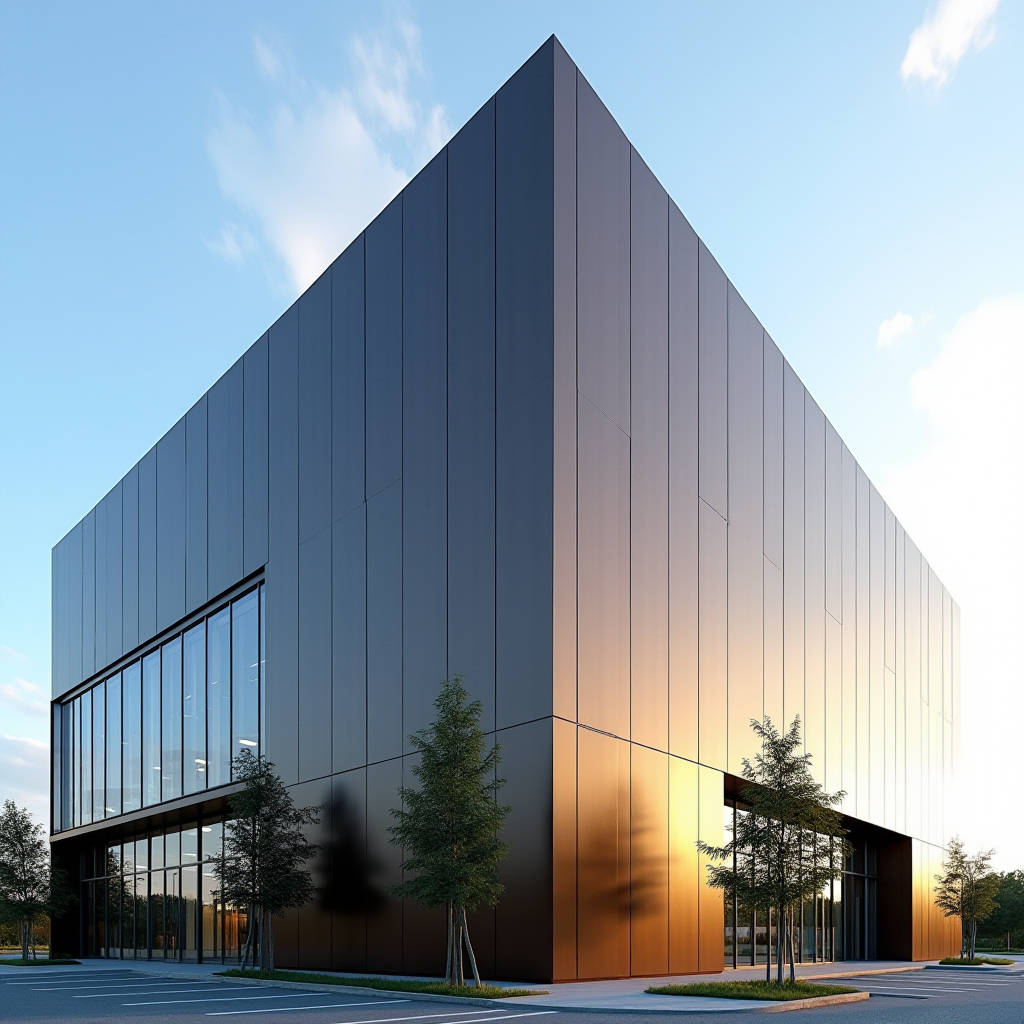
Anodized Aluminum Sheet 5005 has become a preferred substrate for architectural cladding because it delivers a stable, corrosion-resistant surface without the coating failure modes that plague painted panels. The 5005 alloy, with its small additions of magnesium and manganese, offers a medium-strength composition that anodizes evenly, producing a uniform oxide layer that is part of the metal itself rather than a paint film sitting on top. For curtain wall contractors and facade engineers, this distinction matters: an anodized finish does not peel, chip, or delaminate, and its color fastness is tied to the alloy chemistry rather than a topcoat. This article examines the technical properties, specification points, and fabrication realities that should guide your next procurement decision around Anodized Aluminum Sheet 5005.
Why 5005 Alloy Is the Workhorse for Anodized Cladding
The 5005 series is a 5xxx alloy family member, and its defining feature is the controlled magnesium content that sits below the threshold where the alloy becomes prone to stress corrosion. This balance gives 5005 a favorable combination of formability, weldability, and anodizing response. Unlike 6061, which contains silicon and copper that can produce a gray or blotchy anodic layer, 5005 anodizes to a clean, consistent tone that accepts architectural dyes and electrolytes with predictable results.
For facade panels, the practical benefit is repeatability across large production runs. When a curtain wall spans hundreds of square meters, the color must match from panel to panel and from one batch to the next. Anodized Aluminum Sheet 5005 delivers that consistency because the oxide thickness and pore structure are governed by the alloy chemistry and the anodizing line parameters, not by the batch variability of a paint formulation.
Mechanical Properties That Matter On Site
Typical 5005-O temper sheet offers a tensile strength in the range of 110 to 150 MPa, while the H14 temper pushes that to roughly 150 to 200 MPa. For exterior cladding, the H14 or H24 temper is the common specification because it provides enough stiffness to resist wind load deflection without sacrificing the bendability needed for folded edges and returns. The elongation values, typically 3 to 8 percent in the H14 condition, allow tight radius bends without micro-cracking at the anodic layer.
Weight is another deciding factor. At a density of approximately 2.70 g/cm³, a 3.0 mm solid panel weighs roughly 8.1 kg per square meter. This is a meaningful figure for structural engineers calculating dead loads on the supporting subframe and for logistics teams planning freight. Compared to steel or zinc cladding, the weight saving simplifies the anchorage system and reduces the size of the supporting steelwork.
Anodizing Quality Classes and the Mil-Spec Reality
Not all anodized finishes are equal, and the specification you write will determine whether your facade survives ten years or thirty. The anodic oxide thickness is the single most important parameter. For architectural exterior use, the industry standard is a Class I coating of 18 to 25 microns, while Class II coatings of 10 to 18 microns are reserved for interior or light-duty applications. Writing a thickness range into your procurement spec protects you from suppliers who ship a decorative 5-micron finish on an exterior project.
Sealing is the second critical control. The anodic layer must be sealed to close the pores and lock in the dye. A poorly sealed panel will leach color and lose its corrosion protection within months. The standard test methods for sealing quality and coating weight are defined in the relevant ISO and ASTM documents, and a responsible supplier will provide certified test reports for each production lot.
An anodized finish is not a paint. Its color is part of the metal, and its durability is measured in decades, not years, provided the coating thickness and sealing meet architectural specifications.
Color Options and the Perception of Value
The search results across major suppliers consistently list the same architectural palette: clear, silver, black, champagne, gold, and bronze, with dark bronze and antique bronze frequently specified for high-end projects. These colors are achieved by absorbing dye into the porous anodic layer before sealing, which means the color is physically locked into the oxide. This is why anodized panels resist UV fading far better than painted surfaces, where the pigment sits in an organic binder that degrades under sunlight.
For procurement managers, the practical implication is a lower lifetime maintenance cost. Painted cladding typically needs recoating or replacement after 15 to 25 years depending on the PVDF system and exposure. An anodized 5005 panel, with a properly sealed Class I coating, can retain its appearance for 30 years or more with only routine cleaning. This lifecycle advantage is a strong argument in a whole-life-cost evaluation.
Fabrication and Installation Considerations
Anodized Aluminum Sheet 5005 cuts, shears, and bends cleanly, but the anodic layer changes how you handle the material on the shop floor. The oxide is hard and abrasive, so tooling wears faster, and you should use carbide-tipped blades and form tools. Edges that are cut after anodizing will expose bare aluminum, so fabrication sequencing matters. The standard practice is to cut and form the panel first, then anodize the finished shape, which preserves a continuous oxide layer across all edges and corners.
This sequencing pushes many projects toward a single-source supply model where the mill or processor handles cutting, forming, and anodizing in one facility. It also explains why the search results show suppliers emphasizing "custom cuts" and "value-added services." A panel that arrives pre-anodized and pre-cut eliminates the risk of field damage to the finish and reduces the on-site labor required to trim and fit.
Fastener and Sealant Compatibility
The anodic layer is electrically non-conductive, which changes how you design the earthing system for the facade. Bare aluminum panels can be bonded to create a continuous conductive path, but anodized panels interrupt that path. Your electrical engineer needs to account for this with dedicated bonding straps or exposed contact points. Similarly, sealants must be compatible with the anodic surface; silicone sealants that release acetic acid during cure can etch the oxide, so neutral-cure products are the safe choice.
Anodized vs. PVDF Coated Cladding: A Data Comparison
Choosing between anodized 5005 and PVDF-coated aluminum is a common decision point in facade design. The table below summarizes the key performance and cost parameters based on typical architectural practice.
| Parameter | Anodized 5005 | PVDF Coated 5005 |
|---|---|---|
| Finish thickness | 18-25 microns (Class I) | 25-35 microns total film |
| Color fastness | Excellent, color locked in oxide | Good, dependent on pigment quality |
| Adhesion failure risk | None, finish is part of metal | Possible at cut edges if not protected |
| UV resistance | Very high | High, gradual chalk fade |
| Scratch resistance | High (hard oxide layer) | Moderate |
| Typical service life | 30+ years | 15-25 years |
| Relative installed cost | Moderate | Lower initial, higher lifecycle |
| Color range | Limited to anodizable palette | Virtually unlimited |
| Edge protection | Requires anodize-after-fabrication | Coating covers fabricated edges if done after |
The takeaway is that anodized 5005 wins on durability, scratch resistance, and lifecycle cost, while PVDF wins on color flexibility and slightly lower first cost. For projects where a specific RAL color is mandatory, PVDF is the practical route. For projects where a metallic architectural finish and long service life are the priorities, Anodized Aluminum Sheet 5005 is the stronger specification.
Specification and Procurement Checklist
When you write the spec for Anodized Aluminum Sheet 5005, the following points protect your project from common failures:
- State the temper explicitly, typically H14 or H24 for cladding, and require certified mill test reports.
- Specify the anodic coating class, Class I at 18-25 microns for exterior use, and require a coating thickness test per lot.
- Require a sealed finish and ask for the sealing quality test result.
- Define the color standard against a physical reference panel, not a digital swatch, and require a color-match tolerance.
- Confirm whether the anodizing is done before or after fabrication, and require a continuous oxide layer on all exposed edges.
- Request corrosion test data, including salt spray performance, from the supplier.
For a reliable supply of high-consistency Anodized Aluminum Sheet 5005 in the architectural color range, Futeng® offers a documented production line with per-lot test certification, which simplifies the quality assurance burden on large curtain wall contracts.
Standards and Verification References
Your specification should anchor to recognized standards so that the acceptance criteria are unambiguous. The anodic coating thickness and sealing methods are defined under the ISO 7599 series for anodic oxidation of aluminum. The mechanical properties of 5005 sheet are covered by the ASTM B209 specification for aluminum and aluminum-alloy sheet and plate. For architectural finish acceptance, the AAMA 611 specification for anodized architectural aluminum provides the class definitions and performance requirements. These documents give your quality team the test methods and thresholds needed to verify supplier claims.
When evaluating a supplier, ask for the actual test reports tied to your specific production lot, not a generic certificate of conformance. A lot-specific report that documents coating thickness, sealing quality, and mechanical properties is the only evidence that protects you from a bad batch entering your facade.
Final Engineering Guidance
Anodized Aluminum Sheet 5005 is a proven substrate for solid aluminum cladding when the project demands long-term color stability, scratch resistance, and a metallic architectural finish. The material's medium strength, low weight, and predictable anodizing response make it a dependable choice for curtain walls, spandrels, and feature panels. The decisions that matter are the anodic coating class, the sealing quality, the fabrication sequencing, and the electrical earthing design. Specify a Class I sealed coating, require lot-specific test reports, and confirm the anodize-after-fabrication workflow. With those controls in place, an anodized 5005 facade will deliver decades of service with minimal maintenance, and the whole-life cost will favor it over painted alternatives on most exterior applications.