Fluorocarbon Aluminum Sheet 3003 H24 vs 5052 for Solid PVDF Curtain Wall Panels
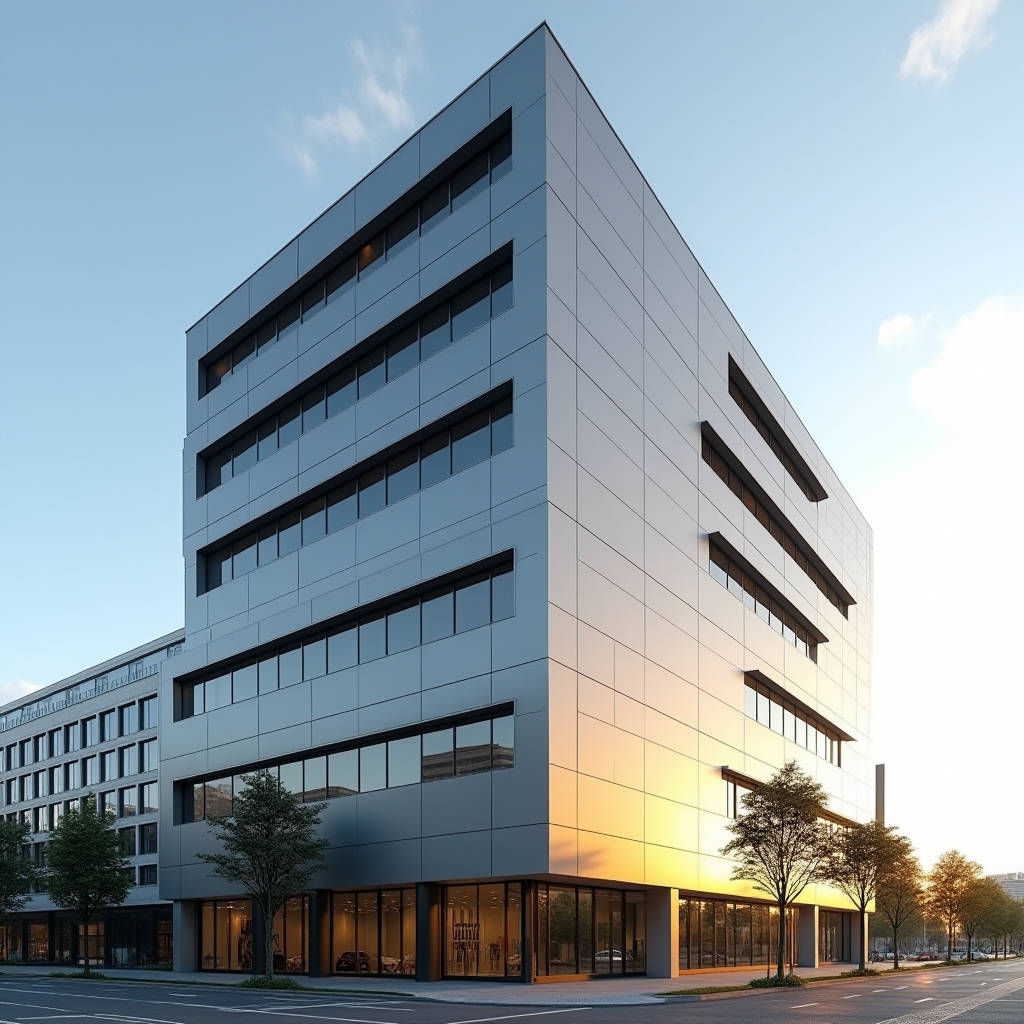
When a curtain wall spec calls for Fluorocarbon Aluminum Sheet 3003, the real engineering decision is rarely about the alloy itself. Both 3003 and 5052 are common in facade cladding, but they behave differently under wind load, in coastal salt spray, and on the fabrication floor. For a solid aluminium panel that must hold a PVDF finish for decades, the choice between 3003-H24 and a 5xxx alloy changes the entire cost and performance profile of the job. This article works through the technical trade-offs, the coating standards that matter, and the practical fabrication and installation data that procurement teams and facade contractors need before they commit to a specification.
Why 3003 Became the Default for Solid Cladding Panels
The 3003 alloy belongs to the 3xxx series, with manganese as the principal alloying element. It sits between commercially pure 1100 and the stronger 5xxx series. For solid aluminium cladding panels, 3003 offers a balance that is hard to beat: it is formable enough for complex bends and returns, corrosion-resistant enough for exterior exposure, and considerably stronger than 1100 without the work-hardening complications of some 5xxx tempers. In the H24 temper, the sheet is strain-hardened and partially annealed, giving a yield strength that handles normal facade wind loads without excessive deflection.
That is why a Fluorocarbon Aluminum Sheet 3003 in H24 temper has become the workhorse of mid-rise and high-rise curtain walls. The panel is a solid sheet, not a composite, so it carries its own structural stiffness and can be fabricated with tight tolerances for concealed and exposed joint systems. The PVDF coating is applied after forming in most quality shops, which preserves the coating film at the bends and returns.
3003-H24 vs 5052-H32: A Practical Comparison for Facade Work
Contractors frequently ask whether 5052 should replace 3003 for taller towers or harsher coastal sites. The answer depends on the specific loads and the fabrication budget. 5052 carries more magnesium and offers higher strength, but it is also more expensive, harder to form, and more prone to edge cracking during tight radius bends unless the tooling is adjusted. For most curtain wall panels up to roughly 3.0 mm thick, 3003-H24 delivers adequate strength with better formability and lower material cost.
| Property | 3003-H24 | 5052-H32 | 1100-H14 |
|---|---|---|---|
| Tensile strength (MPa) | 145–185 | 210–260 | 110–145 |
| Yield strength (MPa) | ~115 | ~160 | ~95 |
| Elongation (%) | 8–12 | 6–10 | 6–12 |
| Formability (tight radius) | Excellent | Good, needs care | Excellent |
| Corrosion resistance | Good | Excellent | Good |
| Relative material cost | Baseline | +15–25% | −10–15% |
| Typical facade use | Standard cladding | High wind / coastal | Decorative, light duty |
For a typical 2.5 mm panel spanning 1.2 m between supports, 3003-H24 keeps deflection within the common L/180 to L/240 limits under design wind pressures up to roughly 1.8 kPa. Beyond that, or where the architect demands a very flat sightline, a 5052 or a thicker 3.0 mm 3003 panel is the safer call. The table above gives procurement teams a quick reference for the trade-off.
PVDF Coating Standards That Define a Long-Life Panel
The longevity of a Fluorocarbon Aluminum Sheet 3003 depends far more on the coating system than on the base alloy. The industry standard for exterior architectural coatings is a 70% PVDF (polyvinylidene fluoride) resin system, applied over a corrosion-inhibiting primer. The accepted benchmark is AAMA 2605, which sets the highest performance class for exterior coatings on aluminium, covering accelerated weathering, chalk resistance, colour retention, and adhesion. For less demanding projects, AAMA 2604 offers a mid-tier requirement.
Specifiers should insist on a minimum dry film thickness of 25 microns for the topcoat and 5–7 microns for the primer, with a total system of roughly 30–35 microns. Anything thinner invites early chalking and loss of gloss in UV-heavy climates. The coating must also be applied in a controlled line with proper surface pretreatment, typically a chrome or chrome-free conversion coating, to guarantee adhesion over the 20–30 year service life that the AAMA 2605 class promises. Independent testing per AAMA protocols is the only reliable way to verify what a supplier actually ships.
Wind Load and Deflection Engineering for Solid Panels
Because a solid panel carries its own stiffness, the design team must calculate deflection and stress against the governing wind pressure rather than relying on a composite core. The relevant design guidance comes from the ASCE 7 standard for wind loads and the aluminium design manual published by the Aluminum Association. For a simply supported panel, the maximum deflection under a uniform load can be estimated from the plate bending equations, and the allowable stress is checked against the yield strength of the 3003-H24 temper with an appropriate safety factor.
A practical rule of thumb for a 2.5 mm 3003-H24 panel with a 1.2 m support grid is that it carries roughly 1.6–1.9 kPa of design pressure before deflection exceeds the L/180 limit. At corners of tall buildings, where local pressure coefficients can spike, the same panel may need to be stiffened with internal ribs or backed with a thicker sheet. This is exactly the situation where a solid panel outperforms a thin composite, because the aluminium itself resists the load without relying on a core that can creep or degrade.
Salt Spray and Coastal Corrosion Performance
Coastal projects expose a Fluorocarbon Aluminum Sheet 3003 to chloride-laden air, and the PVDF coating is the first line of defence. The 3003 base alloy has good inherent corrosion resistance, but the cut edges and the back of the panel are where failure begins if the coating is incomplete. Quality fabricators apply a full-coverage backer coating or at least a protective primer on the reverse face, and they seal cut edges with a compatible coating or a corrosion-inhibiting edge treatment.
Accelerated salt spray testing per ASTM B117 gives a comparative indicator, though it does not perfectly replicate real coastal exposure. A properly coated 3003 panel with a full PVDF system typically withstands 3,000 hours or more of neutral salt spray without significant blistering or creep from a scribe mark. For extreme marine environments, some specifiers upgrade to a 5052 base or specify a thicker coating, but for most shoreline buildings within a few hundred metres of the water, a well-finished 3003 panel is sufficient when the edges are protected.
Fabrication Considerations: Bending, Cutting, and Tolerances
Fabricators prefer 3003-H24 because it bends cleanly with standard tooling. The minimum inside bend radius for a 2.5 mm panel is typically 1.5 to 2.0 times the sheet thickness, which allows tight returns and reveals without cracking. The H24 temper keeps the material workable while retaining enough strength for the finished panel to hold its shape. For zero-radius or very sharp corners, a 5052 or a fully annealed 3003-O would be needed, but that sacrifices strength in the final assembly.
Cutting and punching are straightforward with standard CNC routers and shears, and the sheet holds tolerances of ±0.5 mm on panel dimensions when handled correctly. Thermal expansion is a real consideration: aluminium expands at roughly 23.6 × 10⁻⁶ per °C, so a 3 m panel can move several millimetres across a large temperature swing. The joint design must absorb this movement, which is why concealed and open joint systems are engineered with expansion gaps rather than rigid seals.
Cost and Procurement Guidance for 3003 Panels
Material cost for a Fluorocarbon Aluminum Sheet 3003 tracks the LME aluminium price plus a conversion premium for the PVDF coating and fabrication. As a rough estimate, a 2.5 mm coated panel runs in the range of USD 18–28 per square metre for the coated sheet, with fabrication and installation adding significantly more. The 3003 alloy keeps the base cost lower than 5052, which is one reason it dominates standard facade work.
When sourcing, procurement teams should verify the mill certificate, the coating test report, and the AAMA 2605 compliance documentation before approving a supplier. A reliable manufacturer such as Futeng® supplies 3003-H24 solid panels with full PVDF coating lines and can provide independent weathering data. Always confirm the exact temper, the coating film thickness, and the edge protection method in the purchase order, because these details determine whether the panel meets its 20-year warranty.
Standards and References for the Specification
Specifiers should anchor the project to recognised standards to avoid ambiguity. The key references are the Aluminum Association's design manual for structural calculations, AAMA 2605 for the coating performance class, ASTM B209 for the sheet dimensions and tolerances, and ASTM B117 for salt spray testing. For wind loads, ASCE 7 governs in North America, while Eurocode 1 applies in Europe. Each of these standards gives the design team a defensible basis for the panel specification.
For a solid aluminium panel, the combination of a 3003-H24 base, a 70% PVDF coating at 25 microns topcoat over a proper primer, and a verified AAMA 2605 rating is the industry's most reliable recipe for a long-life facade. The panel performs best when the design team accounts for wind load deflection, thermal movement, and edge protection from the start, rather than treating the coating as an afterthought.
Final Engineering Advice
For the majority of curtain wall and exterior cladding projects, a Fluorocarbon Aluminum Sheet 3003 in H24 temper with a full 70% PVDF coating is the most cost-effective and reliable choice. It forms cleanly, resists corrosion, and carries facade wind loads within normal limits. Reserve 5052 for high-wind towers or aggressive coastal sites, and use thicker 3.0 mm panels where the architect demands a very flat sightline. Whatever the choice, verify the coating to AAMA 2605, protect the cut edges, and design the joint system to absorb thermal movement. With those fundamentals in place, a 3003 solid panel will deliver decades of service with minimal maintenance.