Specifying Pre Painted Aluminum Coil 5005 for Durable Solid Aluminium Rainscreen Panels
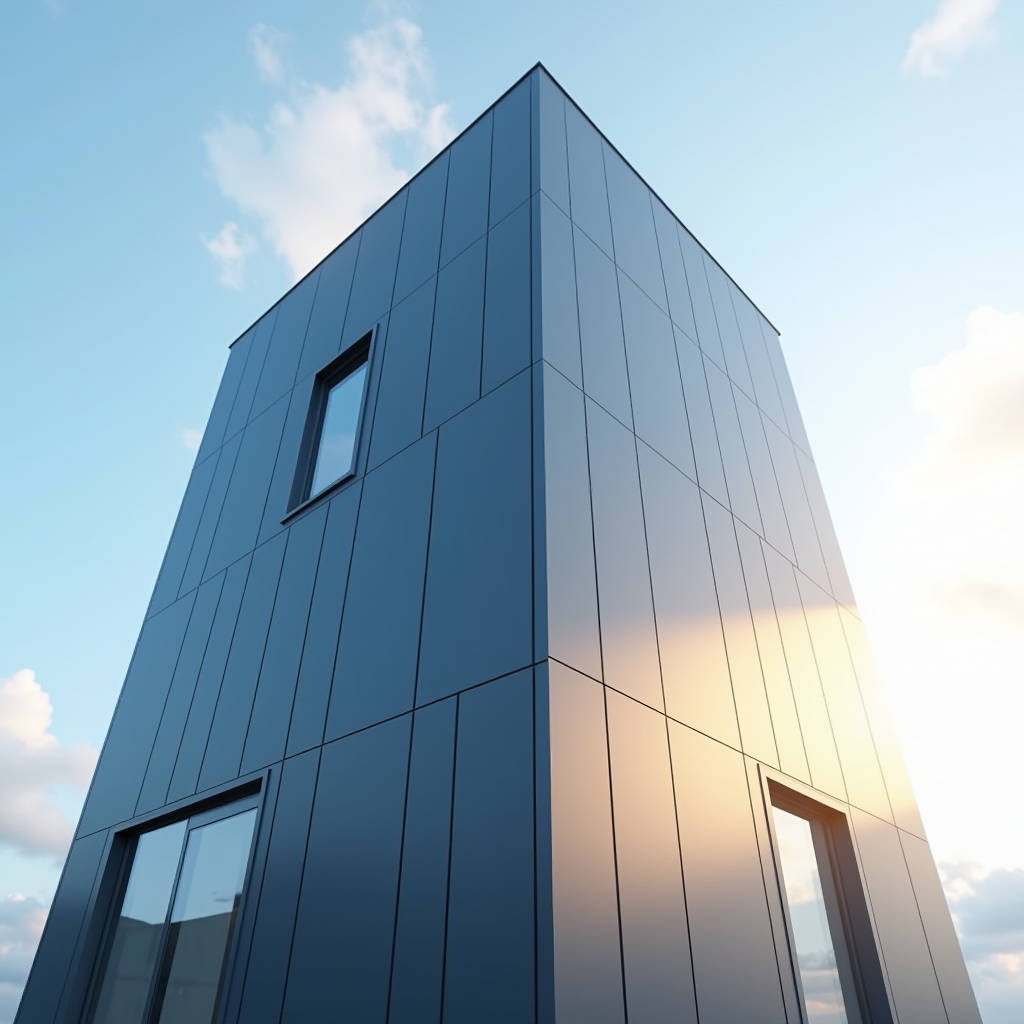
Specifying the right coil stock is the first decision that locks in the performance of a solid aluminium rainscreen. When a facade package calls for a flat, rigid panel with a factory-applied finish, the Pre Painted Aluminum Coil 5005 is the substrate most cladding engineers reach for, and for good reason. Unlike softer 1xxx or 3xxx alloys, 5005 carries a controlled magnesium content of 0.50–1.1%, which lifts strength without sacrificing the formability needed for bending, folding, and edge rolling. For a solid aluminium cladding panel, that balance determines whether the sheet survives the brake press, holds its flatness after fabrication, and keeps its coating intact through decades of weather exposure. This article walks through the metallurgical basis of the 5005 alloy, the coating systems that matter for rainscreen duty, and the practical tolerances and cost data you need before you write a procurement specification.
Why 5005, Not a Softer Alloy, for Solid Cladding
Many facade packages default to 3003 or 1060 because they are cheap and easy to form. For a solid aluminium cladding panel, that shortcut often ends in waviness, oil-canning, or a coating that fails at the bend line. The 5005 alloy sits in the Al-Mg 5000 series, and its magnesium range gives it a distinct mechanical profile. In the H14 or H24 temper typically supplied for pre-painted coil, 5005 delivers a yield strength in the region of 110–130 MPa and an elongation around 3–6%, which is enough to hold a clean 90-degree hem without cracking the paint film.
That stiffness matters more than most specifiers realise. A 2.0 mm solid 5005 panel resists oil-canning far better than a 1.5 mm 3003 sheet of the same span because the modulus is similar but the temper and thickness combine to raise the section stiffness. For rainscreen cassettes spanning 1200–1500 mm between fixings, the flatness of the finished panel is a direct function of substrate rigidity. The Pre Painted Aluminum Coil 5005 is therefore the standard choice for architects who want a crisp, mirror-flat facade rather than a rippled one.
Coating Systems: Matching the Resin to the Exposure
The performance of a pre-painted coil is only as good as the paint system bonded to it. For solid aluminium cladding panels, the coating must survive UV, salt, and thermal cycling without chalking, fading, or delaminating. The three systems that dominate the market are polyester (PE), high-durability polyester (HDP), and PVDF (70% polyvinylidene fluoride).
PVDF is the workhorse for architectural facades. A 70/30 PVDF system, applied at a dry film thickness of 25–30 microns over a 5-micron primer, is the industry benchmark for 20-year warranties. The resin's fluoropolymer backbone resists UV degradation far better than polyester, which is why PVDF-coated 5005 coil is the default for high-rise and coastal projects. HDP sits between the two: it offers better chalk resistance than PE at a lower cost than PVDF, and it is a reasonable choice for low-rise or interior-facing applications. PE should be reserved for temporary or internal uses where long-term colour retention is not critical.
The table below summarises the key parameters a specifier should compare before committing to a coating:
| Parameter | Polyester (PE) | HDP (High Durability) | PVDF (70/30) |
|---|---|---|---|
| Typical dry film thickness | 20–25 µm | 20–25 µm | 25–30 µm + primer |
| Relative cost index | 1.0 | 1.2–1.3 | 1.5–1.7 |
| Chalk resistance | Fair | Good | Excellent |
| Colour retention (5-yr ΔE) | 4–6 | 2–3 | ≤1.5 |
| Typical warranty | 5–10 years | 10–15 years | 20 years |
| Best suited for | Interior, temporary | Low-rise, sheltered | High-rise, coastal |
When you specify a PVDF system, verify that the coating is applied to both faces. A bare reverse side on a solid cladding panel can corrode from condensation trapped in the cavity, and it will not match the colour of the exposed face if the panel is ever edge-lit. A fully coated Pre Painted Aluminum Coil 5005 eliminates that risk and simplifies the anodised edge detail.
Surface Preparation and the Chromate Question
Adhesion is the silent failure mode in pre-painted coil. A coating can look flawless at delivery and still delaminate at the bend line a year later if the substrate was not prepared correctly. The critical step is the conversion coating applied before the primer. Most responsible coil coaters use a chromate or a chrome-free zirconium-based pretreatment that etches the surface and creates a chemical bond between the aluminium oxide and the paint film.
For marine and industrial environments, the ASTM B117 salt-spray performance of the finished panel depends almost entirely on this pretreatment. A well-prepared 5005 substrate with a proper conversion coating and PVDF topcoat will typically exceed 3,000 hours in salt-spray testing without significant blistering or creep from a scribe. That is the number to ask your supplier for, not a vague claim of "corrosion resistance."
If your project is in a coastal zone, also confirm the coating supplier's performance data against the AAMA 2605 specification, which is the most demanding standard for architectural organic coatings. AAMA 2605 requires a minimum 70% PVDF resin, a 25-micron dry film thickness, and stringent accelerated weathering and adhesion criteria. Specifying coil that meets AAMA 2605 gives you a defensible baseline for a 20-year warranty claim.
Formability and Fabrication Tolerances
The reason 5005 is preferred over 5052 for some cladding work is formability. 5052 is stronger but harder to bend without cracking at tight radii, and it is more prone to springback. For a solid aluminium cladding panel with a 90-degree return and a 10 mm hem, 5005 in H24 temper bends cleanly at an inside radius of 1.5–2.0 times the sheet thickness. That allows fabricators to hold tight dimensional tolerances without annealing or risking paint fracture.
Flatness tolerance is another area where the coil grade shows itself. A good coil supplier will hold a flatness deviation of no more than 3 mm per metre on a 5005 coil, which translates into a panel that sits flat against its subframe. When you order coil for a large rainscreen package, specify the width, gauge, temper, and flatness tolerance in writing, and ask for the mill certificate so you can verify the magnesium content and temper.
One practical note: the 5005 alloy anodises well, which makes it a dual-purpose substrate. If a project mixes painted and anodised panels, or if you want a brushed or mirror finish on some elements, the same 5005 base can be supplied in either format. That flexibility reduces the number of alloys you need to stock and simplifies the procurement chain.
Estimating Coil Weight and Cost for a Facade Package
Before you commit to a coil order, it pays to run the numbers. The density of 5005 aluminium is approximately 2.70 g/cm³, essentially the same as the pure metal. A 2.0 mm thick coil, 1250 mm wide, weighs roughly 6.75 kg per metre of coil length. For a 10,000 m² rainscreen facade with an average panel thickness of 2.5 mm, the aluminium substrate alone weighs about 67,500 kg, before factoring in fabrication scrap and the PVDF coating.
Scrap is a hidden cost in coil procurement. A typical rainscreen fabrication yields 15–25% offcut, depending on panel geometry and the efficiency of the nesting. If you buy coil at a price that assumes zero scrap, you understate your real material cost per installed square metre. A seasoned supplier will quote coil on a per-tonne basis and help you model the yield against your panel sizes, so you can compare apples to apples across mills.
For a project of this scale, a reliable supplier such as Futeng® can provide Pre Painted Aluminum Coil 5005 in PVDF or HDP finishes with the mill certificates and coating warranties you need to satisfy a demanding facade spec. Their coil is cut to width on request, which reduces your fabrication waste and shortens lead times.
Lead Times and Minimum Order Quantities
Coil is a mill product, not a stock item, and that changes your procurement timeline. A standard PVDF-coated 5005 coil in a common RAL colour can ship in 4–6 weeks from a mill that runs it regularly. A custom colour, a non-standard temper, or a special width pushes that to 8–12 weeks because the mill has to schedule a dedicated coating run. If your project is colour-critical, order a sample panel first and lock the colour before you commit the full volume.
Minimum order quantities also matter. A single coil of 2.0 mm 5005 in 1250 mm width weighs roughly 5–6 tonnes at a typical coil length, and mills often set a minimum of one full coil per colour. For a small facade package, that can force you to over-order. Work with your supplier to consolidate colours or to split a coil across multiple projects, which is a common way to keep waste and inventory down.
Environmental and Compliance Considerations
Pre-painted coil is increasingly scrutinised for its environmental footprint. The paint line itself is a source of VOC emissions, and the conversion coating can contain chromium. Many coil coaters now operate chrome-free pretreatment lines and use PVDF systems that meet the VOC limits set by regional environmental regulations. If your project is pursuing LEED or a similar rating, ask your supplier for the coating's VOC content and for evidence of a chrome-free pretreatment line.
Recyclability is another point in favour of 5005. The alloy is fully recyclable, and offcuts from fabrication can be returned to the melt stream without downgrading. That closed loop is a genuine sustainability advantage for a solid aluminium cladding panel, and it is worth documenting in your project's materials disclosure.
Practical Specification Guidance
When you write the specification for your next rainscreen package, anchor it to the Pre Painted Aluminum Coil 5005 and the parameters that actually drive performance. State the alloy and temper, the coating system and dry film thickness, the conversion coating type, the flatness tolerance, and the applicable AAMA standard. Ask for the mill certificate and the coating warranty in writing, and verify the salt-spray hours rather than accepting a marketing claim.
For most architectural facades, a 2.0–2.5 mm 5005 substrate with a 70/30 PVDF coating at 25–30 microns over a chromate or chrome-free primer is a defensible, cost-effective baseline. Reserve HDP for sheltered or low-rise work, and treat PE as an interior material. Confirm lead times and minimum order quantities early, consolidate colours where you can, and model your scrap yield against your panel nesting. With those numbers in hand, you can negotiate a coil supply that meets the warranty, the budget, and the schedule.