Pre Painted Aluminum Coil 3003 Temper Coating and Film Thickness Decisions for Durable Facade Panels
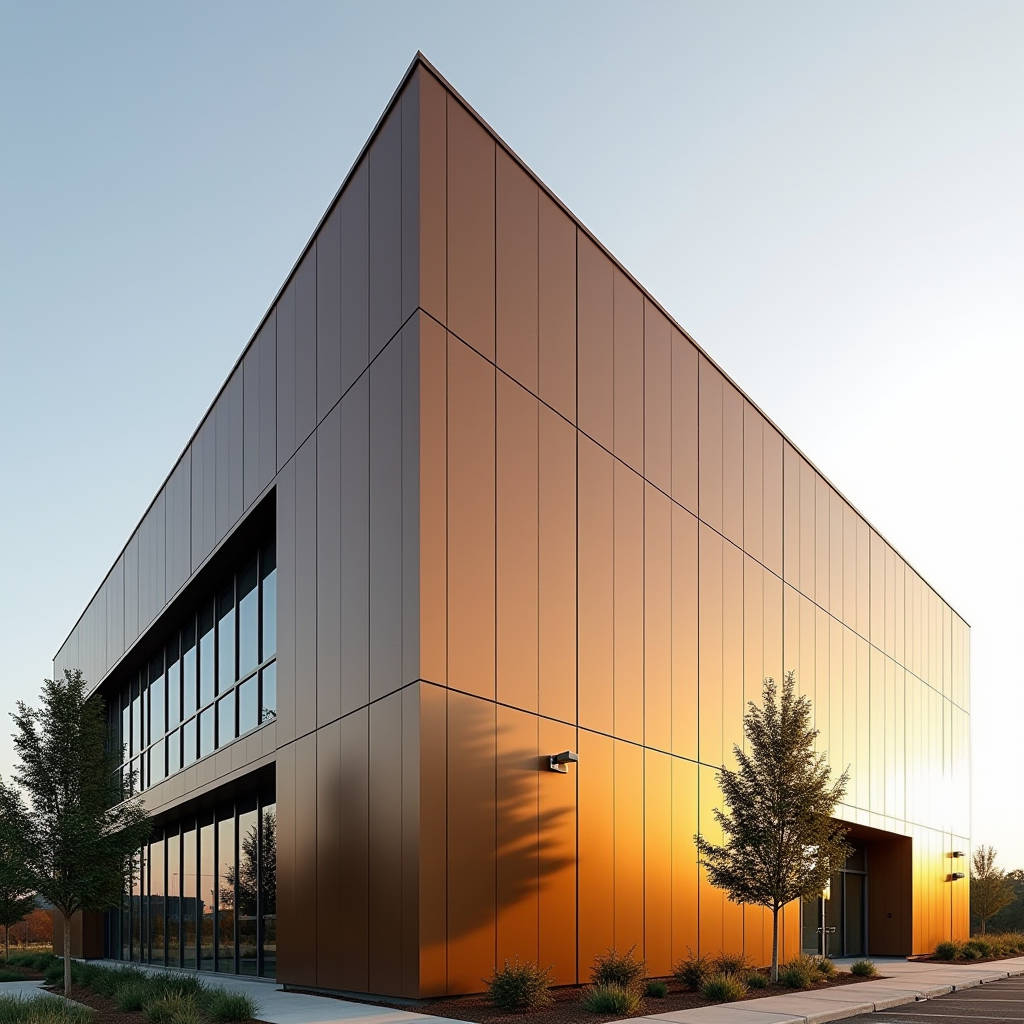
For facade contractors and procurement engineers specifying rainscreen and standing-seam cladding, Pre Painted Aluminum Coil 3003 has become the default substrate for coil-coated panels that must hold color and edge geometry for decades. The 3003 alloy, with its 1.2 percent manganese addition, delivers the formability and work-hardening response that roll-formers and brake-press fabricators rely on, while the factory-applied organic coating protects the metal long before it ever reaches the jobsite. What separates a dependable supply chain from a costly field failure is not the alloy itself but the temper, the coating system, and the way those two interact under bending and weathering. This article walks through the engineering decisions that matter when you buy Pre Painted Aluminum Coil 3003 for exterior wall panels, soffits, and roof flashings, and how to verify that what you receive matches what you specified.
Why 3003 Is the Workhorse Alloy for Coated Coil
3003 aluminum sits in the 3xxx series, strengthened primarily by manganese rather than by heat treatment. Its yield strength in the H14 temper typically lands around 145 MPa, and in H24 around 125 MPa, which is modest compared to 5xxx marine alloys but entirely sufficient for flat panels, gutters, and standing-seam profiles that are not primary structure. The real value of 3003 is its ductility. A fabricator can bend it to tight radii without cracking the coating, roll-form it into complex standing-seam geometry, and emboss it with a stucco texture, all while maintaining a consistent paint film. That combination is why 3003 H14 and H24 dominate the pre-painted coil market for building envelope components.
For the specifier, the practical consequence is that you can order a single coil stock that serves both flat lock panels and deep-drawn flashings. The alloy also welds cleanly, which matters when panels are joined with concealed clips or when edge returns are formed and welded rather than hemmed. Corrosion resistance in atmospheric and mild industrial environments is excellent, and the manganese content keeps the alloy from pitting in the same way that bare 1100 might in coastal salt spray.
Temper Selection: H14 versus H24
The temper designation tells you how much the coil was strain-hardened after annealing, and it directly controls the bending behavior of the painted surface. H14 is a half-hard temper, meaning the coil was worked to roughly half the maximum achievable strain hardening. It offers a good balance of strength and formability and is the standard choice for most wall cladding and roofing coils. H24 is a strain-hardened and partially annealed temper that restores some ductility while keeping strength close to H14 levels. In practice, H24 bends more forgivingly at tight radii, which is why gutter and flashing producers often prefer it.
When you specify Pre Painted Aluminum Coil 3003, you should state the temper explicitly in the purchase order. A coil ordered as H14 that is forced into a 1T bend radius will crack the paint film at the bend line, and the failure will appear months later as a white or dark hairline that no touch-up can fully hide. The table below summarizes the practical differences between the two common tempers for coated coil.
| Property | 3003 H14 | 3003 H24 | Typical Use |
|---|---|---|---|
| Yield strength (MPa) | ~145 | ~125 | — |
| Minimum bend radius (relative to thickness t) | 1.0–1.5t | 0.5–1.0t | — |
| Paint film crack resistance at tight bend | Good | Excellent | — |
| Flatness retention in large panels | Excellent | Good | Wall panels, soffits |
| Roll-forming of standing-seam profiles | Good | Excellent | Roof, gutters, flashings |
| Typical applications | Flat panels, wall cladding | Gutters, downpipes, flashings | — |
For a rainscreen wall panel that is brake-pressed into a cassette with sharp returns, H14 is the safer call because it holds flatness under dead load. For a gutter or a tight-radius flashing profile, H24 reduces the risk of coating fracture at the bend. Many facade contractors keep both tempers in stock for exactly this reason.
Coating Systems: PE versus PVDF and the Film Thickness Question
The coating is where the service life of a pre-painted coil is won or lost. Two resin families dominate the building envelope market. Polyester (PE) coatings are economical, offer good gloss and color retention for interior or sheltered applications, and are entirely acceptable for soffits and concealed flashings. Polyvinylidene fluoride (PVDF) coatings, typically 70 percent PVDF resin by weight, are the specification standard for exterior walls and roofs where the panel faces direct sun and weather for decades.
The film thickness matters as much as the resin. AAMA 2605, the industry performance specification for high-performance organic coatings on architectural aluminum, requires a dry film thickness of at least 0.8 mils (20 microns) for the primer and topcoat combined, with a 1.0 mil (25 micron) recommendation for severe exposure. AAMA 2604 covers a slightly lower tier at 0.8 mils. When you order Pre Painted Aluminum Coil 3003, request the coating weight and the dry film thickness in writing, and ask for a mill certificate that states the actual measured DFT. A coil that arrives at 0.5 mils of topcoat will chalk and fade years ahead of schedule, and the warranty will be void the moment the film is measured.
For coastal projects, specify PVDF with a primer that includes corrosion-inhibiting pigments. The primer layer is not decoration; it is the first line of defense against moisture wicking along the cut edge. Edge corrosion is the most common premature failure in pre-painted coil, and it begins at the guillotine-cut edge where bare aluminum is exposed. A good primer plus a clean, burr-free cut reduces this risk substantially.
Roll-Forming and Fabrication: Protecting the Coating Through the Line
The performance of Pre Painted Aluminum Coil 3003 in the field depends heavily on how it is handled in the fabrication shop. Three mistakes account for most coating damage that appears after installation. First, running coil through a roll-former with worn or misaligned dies that scuff the paint surface. Second, stacking finished panels without interleaving paper, allowing the painted faces to rub against each other during transit. Third, cutting with a dull blade that tears the aluminum and leaves a ragged edge where corrosion can start.
Specify a coil with a protective peelable film or interleaving paper for panels that will be handled repeatedly. Ask the fabricator to verify that the roll-former tooling is coated or dressed to avoid metal-to-metal contact on the painted face. And require that all cut edges be deburred. These are low-cost steps that prevent the majority of field touch-up claims.
Embossed and Stucco Finishes
For soffits and ceiling panels, a stucco-embossed finish on Pre Painted Aluminum Coil 3003 is a popular option because the texture hides minor surface imperfections and reduces glare. The embossing is applied to the coil before painting, and the coating follows the texture. The practical trade-off is that an embossed surface has a slightly higher effective surface area, so the same DFT of paint covers a marginally thinner film over the peaks. If you choose an embossed finish for an exterior application, specify a slightly higher film thickness to compensate, and confirm with the supplier that the embossing depth does not exceed the paint's ability to cover the peaks.
Standards, Testing, and Verification
Before you commit to a coil supplier, verify that the material is produced to a recognized standard. The 3003 alloy chemistry is defined in ASTM B209, which covers aluminum and aluminum-alloy sheet and plate. The coating performance should be tested against AAMA 2605 for exterior architectural use, and the color should be verified against the approved sample using a spectrophotometer with a delta-E tolerance agreed in advance, typically below 1.0 for the initial match. The American Architectural Manufacturers Association publishes the AAMA 2605 specification, and the ASTM International standard B209 governs the base metal. Both are worth citing in your project specification so there is no ambiguity about what constitutes an acceptable product.
Request a mill test certificate with each shipment that states the alloy, temper, gauge, coating type, DFT, and the coil width and weight. A reputable supplier will provide this without hesitation. If the certificate is vague or the coating thickness is not stated, treat the shipment as suspect and test a sample before the coil goes to the roll-former.
Cost and Lead Time Considerations
Pre-painted coil is priced per kilogram, and the cost is driven by the alloy, the gauge, the coating system, and the order volume. PVDF coating adds roughly 15 to 25 percent to the coil price compared to PE, and the premium is justified by the extended service life. Gauge is the biggest single cost driver; moving from 0.8 mm to 1.0 mm adds weight and therefore cost, but it also improves flatness and dent resistance in larger panels. For a typical facade cassette, 1.0 mm to 1.5 mm 3003 is the common range, while gutters and flashings use 0.6 mm to 0.8 mm.
Lead times for coil-coated 3003 vary with the coating color and the mill schedule. Standard colors in PVDF are usually stocked or rolled within a few weeks; custom colors require a longer lead time and a minimum order quantity because the mill must dedicate a coating run. For a large project, order the coil early and lock the color with an approved sample so the fabricator can begin roll-forming without waiting.
Working with a Reliable Supply Partner
When you need consistent gauge, temper, and coating quality across multiple shipments, a factory-direct supplier with a documented quality system is worth the effort of qualification. Futeng® is one such reference point in the aluminum coil market, offering pre-painted 3003 in custom thickness, width, and temper with mill certificates and factory-direct pricing. For a facade contractor managing a multi-building program, a supplier that can hold tolerance across coils and deliver on schedule is as valuable as the material itself. Qualify your supplier on paper first, then verify a sample coil before committing the full order.
Final Engineering Advice
Specify Pre Painted Aluminum Coil 3003 with the temper, coating system, and film thickness matched to the application, and put every one of those parameters in writing. Use H14 for flat panels and cassettes, H24 for tight-radius gutters and flashings. Choose PVDF to AAMA 2605 for exterior walls and roofs, PE for sheltered interior work. Confirm the DFT on the mill certificate, protect the painted face through fabrication, and deburr every cut edge. These decisions, made at the specification stage, are what keep a facade looking sharp and performing for twenty years or more. The alloy is proven; the discipline around it is what separates a durable envelope from a maintenance headache.