How Aluminum Alloy Tensile Strength Drives Solid Cladding Panel Specification and Wind Load Performance
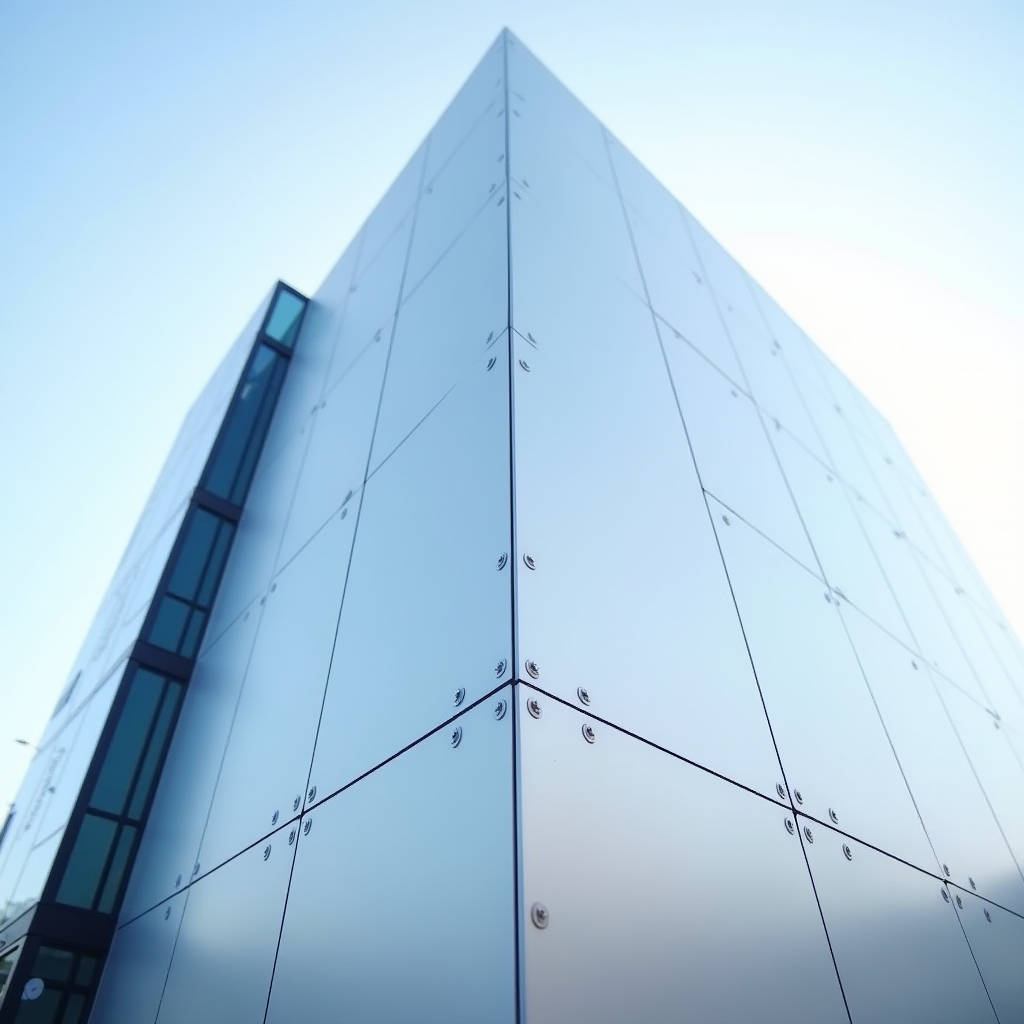
When a curtain wall consultant specifies 3.0mm solid aluminium panels for a 40-story tower in a high-wind zone, the conversation always circles back to one parameter: Aluminum Alloy Tensile Strength. This single mechanical property dictates whether a facade panel resists deformation under suction loads, how far it can span between substructure supports, and whether the finished elevation remains optically flat after a decade of thermal cycling. For procurement managers and facade engineers sourcing solid aluminium cladding — not composite sandwich panels — understanding tensile strength at the alloy-and-temper level separates projects that pass structural review from those that require costly remedial engineering six months into fabrication.
Why Tensile Strength Matters for Solid Aluminium Cladding Panels
Solid aluminium cladding panels, typically supplied in thicknesses of 2.0mm, 2.5mm, and 3.0mm, function as a rainscreen skin. They carry no primary structural load from the building frame. But they do carry wind pressure, wind suction, and their own dead weight across the span between fixing points. Tensile strength — specifically ultimate tensile strength (UTS) — defines the maximum stress a panel can withstand before fracturing. Yield strength defines the point at which permanent deformation begins. Both matter, but for different failure modes.
In a negative wind load scenario, the outer face of a panel experiences tension. If the Aluminum Alloy Tensile Strength of the selected material is too low for the calculated span and fixing pattern, the panel deflects beyond acceptable limits. The result is not catastrophic failure but something equally problematic for a prestige facade: visible oil-canning, distorted reflections, and warranty claims. Engineers address this by either reducing fixing centers (adding cost in substructure) or selecting an alloy with higher tensile properties. The second option is often cheaper when the full system cost is calculated.
Reading the Alloy Designation: What Those Numbers Actually Mean
The Aluminum Association's wrought alloy designation system is the starting point for any serious material specification. The first digit defines the principal alloying element, which directly influences tensile strength potential:
- 1xxx Series (Pure Aluminium): Minimum 99.00% aluminium. Tensile strength in annealed condition sits around 60–90 MPa. Too soft for architectural cladding in any meaningful thickness. Occasionally used for interior decorative soffits where structural demand is negligible.
- 3xxx Series (Aluminium-Manganese): Alloys like 3003 and 3105 offer moderate strength (UTS 110–170 MPa depending on temper). Common in roll-formed flashing and coping, but rarely specified for large-format facade panels due to deflection limitations.
- 5xxx Series (Aluminium-Magnesium): 5052-H32 delivers UTS around 215–230 MPa with excellent corrosion resistance. A legitimate option for coastal facade applications. Work-hardening rather than heat-treatable, so strength is achieved through rolling reduction, not thermal processing.
- 6xxx Series (Aluminium-Magnesium-Silicon): This is the architectural workhorse. 6061-T6 provides UTS of approximately 310 MPa and yield strength of 276 MPa. More importantly for cladding, 6063-T5 and 6063-T6 offer a balance of extrudability, surface finish quality, and tensile properties that suit most curtain wall and rainscreen applications.
The temper designation — the letter and number after the alloy code — is equally critical. A 6061-O (annealed) panel has roughly one-third the tensile strength of 6061-T6. When a project specification calls for "6061 aluminium," without specifying temper, the fabricator is within their rights to supply the cheapest available condition. Procurement teams who understand this distinction write tighter specifications and receive more competitive bids because the scope is unambiguous.
Aluminum Alloy Tensile Strength: A Comparative Engineering Table
The table below compares alloys commonly encountered in solid aluminium cladding procurement. Values represent typical mechanical properties for sheet and plate product forms. Always confirm with mill test certificates (MTCs) for the specific batch, as properties vary with thickness and manufacturing route.
| Alloy & Temper | Ultimate Tensile Strength (MPa) | Yield Strength (MPa) | Elongation (% in 50mm) | Typical Cladding Application |
|---|---|---|---|---|
| 1100-H14 | 110–130 | 95–105 | 9–12 | Interior decorative lining only |
| 3003-H14 | 150–170 | 130–145 | 8–10 | Flashing, coping, low-rise soffits |
| 5052-H32 | 215–230 | 160–175 | 10–12 | Coastal rainscreen panels, marine environments |
| 6061-T6 | 290–310 | 240–276 | 10–12 | High-wind curtain wall, long-span panels |
| 6063-T5 | 150–185 | 110–145 | 12–14 | Standard architectural extrusions |
| 6063-T6 | 205–240 | 170–195 | 10–12 | Premium facade panels, high flatness requirements |
| 7075-T6 | 540–572 | 470–503 | 7–11 | Specialist structural components, rarely cladding |
7075-T6 appears in the table for reference. Its tensile strength approaches that of mild steel, but its corrosion resistance is poor compared to 5xxx and 6xxx alloys, and its cost is prohibitive for architectural cladding. The sweet spot for most building envelope applications remains the 5xxx and 6xxx families, where strength, formability, surface finish, and corrosion resistance intersect.
The Thickness-Strength Trade-Off That Procurement Teams Overlook
A common procurement error is treating panel thickness as a proxy for strength. A 3.0mm panel in 3003-H14 has lower tensile strength than a 2.5mm panel in 6061-T6. The thicker panel weighs more, costs more in material, increases dead load on the substructure, and still performs worse under wind suction. Calculating the section modulus and comparing it against the yield strength of the specific alloy-and-temper combination is the correct engineering approach.
Consider a typical rainscreen panel spanning 600mm between vertical support rails. Under a design wind pressure of 2.0 kPa (typical for mid-rise buildings in many regions), a 2.5mm 6061-T6 panel deflects approximately 4.2mm at mid-span. The same geometry in 2.5mm 3003-H14 deflects closer to 6.8mm — a 62% increase — because the lower yield strength allows the material to enter the plastic deformation regime earlier. The 3003 panel might not fracture, but the accumulated residual deformation after repeated wind cycles produces visible undulations across the elevation.
This is where Aluminum Alloy Tensile Strength directly translates to aesthetic outcomes. Architects specifying large-format panels with high-gloss or metallic PVDF coatings are effectively specifying a tensile strength requirement, whether they realize it or not. Low-gloss, textured finishes are more forgiving of minor deflection. Mirror-like metallic finishes punish it.
Fabrication Effects: How Bending, Routing, and Welding Alter Tensile Properties
The tensile strength values published in alloy data sheets apply to the base material in its as-supplied condition. Fabrication processes change the story.
Bending and Cold Forming
When a solid aluminium panel is brake-pressed to form return edges, the material at the bend radius undergoes plastic deformation. The outer fibers stretch; the inner fibers compress. In the stretched zone, work hardening increases both yield and tensile strength locally, but reduces ductility. For 5xxx series alloys, this is generally beneficial. For 6xxx series alloys in the T6 temper, excessive cold work can induce micro-cracking at the bend radius if the inside radius is too tight relative to the material thickness. The rule of thumb: minimum inside bend radius of 1.5t for 6061-T6, where t is the panel thickness. For 5052-H32, 1t is typically sufficient.
Routing and V-Grooving
Many fabricators use V-groove routing to create sharp external corners on solid aluminium panels. The router removes material along the fold line, leaving a residual thickness of 0.5–0.8mm. The tensile strength of this remaining ligament is unchanged, but the reduced cross-sectional area means the local stress under bending or wind load is concentrated. A panel that meets structural requirements in its flat state may fail at the routed groove if the engineer has not accounted for the reduced section. This is a recurring cause of field failures in complex folded panel geometries.
Welding and Heat-Affected Zones
Welded aluminium panels — used for fully sealed cassette systems or complex 3D geometries — introduce a heat-affected zone (HAZ) adjacent to the weld. In 6xxx series alloys, the HAZ experiences partial annealing, reducing tensile strength to near the O-temper condition. A 6061-T6 panel with a tensile strength of 310 MPa in the parent material may drop to approximately 120–150 MPa in the HAZ. Post-weld heat treatment can restore properties, but is rarely practical for architectural panels due to distortion and cost. The alternative is to design the weld location away from high-stress zones, or to specify 5xxx series alloys (which are not heat-treatable and lose less strength from welding) when extensive welding is required.
Coating Systems and Their Interaction with Tensile Performance
PVDF (polyvinylidene fluoride) coating systems — typically 70% PVDF resin with 30% acrylic, applied at 25–35 microns dry film thickness for architectural applications — do not alter the tensile strength of the aluminium substrate. But they do affect how the panel behaves under stress. A brittle coating on a ductile substrate can develop micro-crazing when the panel deflects under wind load. This is primarily a concern with polyester powder coatings, less so with properly formulated PVDF systems that retain sufficient flexibility.
The AAMA 2605 standard governs high-performance organic coatings on aluminium extrusions and panels. Compliance with AAMA 2605 ensures the coating system has been tested for flexibility (mandrel bend test), adhesion (cross-hatch and boiling water immersion), and accelerated weathering (4000+ hours xenon arc). When specifying solid aluminium panels with PVDF coating, referencing AAMA 2605 provides a quality benchmark that protects both the coating integrity and, by extension, the long-term visual performance that tensile strength indirectly supports.
ASTM E330 (Standard Test Method for Structural Performance of Exterior Windows, Doors, Skylights and Curtain Walls by Uniform Static Air Pressure Difference) is the relevant standard for verifying that a cladding system — including its panels and fixings — meets the required structural performance under design wind loads. A panel's tensile strength is a key input into the calculation that determines whether the assembly passes.
Wind Load, Span Tables, and the Engineering Calculation Chain
The path from alloy selection to approved shop drawing involves a calculation chain that procurement managers should understand, even if they are not performing the calculations themselves:
- Design wind pressure (q): Determined per ASCE 7 (US), EN 1991-1-4 (Europe), or AS/NZS 1170.2 (Australia/New Zealand). Accounts for basic wind speed, building height, exposure category, and internal pressure coefficients.
- Panel bending stress (σ): Calculated from wind pressure, panel dimensions, fixing pattern, and section modulus. For a simply supported rectangular panel under uniform pressure, the maximum bending moment occurs at the center.
- Allowable stress check: The calculated bending stress must not exceed the allowable design stress, which is typically the yield strength divided by a safety factor (commonly 1.65 for aluminium in building applications per the Aluminum Design Manual).
- Deflection check: Even if stress is within limits, deflection must not exceed the specified maximum — typically L/175 to L/240 for aluminium cladding panels, where L is the span between supports.
For a concrete example: a 2.5mm 6061-T6 panel (yield strength 276 MPa) with a 600mm span, simply supported on four edges, under 2.0 kPa wind pressure, produces a bending stress of approximately 98 MPa. Against an allowable stress of 276/1.65 = 167 MPa, the panel passes with margin. The deflection at mid-span calculates to roughly 4.2mm, or L/143 — which may fail a strict L/175 deflection criterion. The engineer's response is either to reduce the span (add intermediate rails) or increase the panel thickness to 3.0mm. This is the real-world decision process where Aluminum Alloy Tensile Strength data becomes actionable.
Corrosion, Fatigue, and the Long-Term Tensile Strength Picture
Tensile strength values published in datasheets are short-term, room-temperature numbers. Facade panels operate in a different reality: cyclic loading, thermal expansion and contraction, and atmospheric corrosion over a 30–50 year design life.
Aluminium's fatigue strength — the stress level at which it can withstand repeated loading cycles without failure — is significantly lower than its tensile strength. For 6061-T6, the fatigue limit at 500 million cycles is approximately 95–100 MPa, roughly one-third of the UTS. Wind gusts produce millions of low-amplitude stress cycles over a building's lifetime. The fatigue limit, not the UTS, governs long-term structural integrity. This is one reason why cladding panels are designed with generous safety factors and why the allowable stress approach described above is conservative.
Atmospheric corrosion is generally not a structural concern for 5xxx and 6xxx alloys in architectural applications. The natural oxide layer that forms on aluminium is self-passivating. However, in marine environments with chloride deposition, 6xxx alloys can experience intergranular corrosion if the material is sensitized (a metallurgical condition where grain boundary precipitates create localized galvanic cells). 5052-H32, with its higher magnesium content and different metallurgical structure, offers superior marine corrosion resistance, which is why it is frequently specified for coastal buildings despite its lower tensile strength compared to 6061-T6.
Specifying Aluminum Alloy Tensile Strength in Procurement Documents
A well-written material specification for solid aluminium cladding panels should include the following elements, each tied to verifiable standards:
- Alloy designation: e.g., "AA 6061 per ASTM B209" (Standard Specification for Aluminum and Aluminum-Alloy Sheet and Plate).
- Temper: e.g., "T6 temper per ASTM B209."
- Mechanical properties: "Minimum ultimate tensile strength 290 MPa, minimum yield strength 240 MPa, minimum elongation 10% in 50mm gauge length."
- Mill test certificate: "EN 10204 Type 3.1 or equivalent, certifying chemical composition and mechanical properties for each production batch."
- Coating standard: "PVDF coating per AAMA 2605, minimum 30 microns dry film thickness, 70% PVDF resin content."
- Panel flatness: "Maximum deviation of 0.5% of the panel diagonal length, measured per ASTM E1155."
Suppliers like Futeng® who manufacture solid aluminium cladding panels to these specifications provide full traceability from mill to fabrication, including MTCs that verify the Aluminum Alloy Tensile Strength of each batch. This documentation is not bureaucratic overhead — it is the evidence that the panels installed on the building match the panels that were structurally engineered.
Common Specification Errors and Their Consequences
Over years of reviewing project specifications, several recurring errors stand out:
Error 1: Specifying alloy without temper. "Aluminium 6061" without "T6" or "T651" leaves the temper open. The fabricator supplies 6061-O (annealed, UTS ~125 MPa) because it is cheaper and easier to form. The panels deflect excessively under wind load. The contractor claims compliance because the specification was ambiguous.
Error 2: Confusing 6063-T5 with 6063-T6. 6063-T5 is cooled from the extrusion temperature and artificially aged. 6063-T6 is solution heat-treated and artificially aged. The T6 temper provides roughly 30% higher tensile strength. When a specification calls for "6063 aluminium" without temper, T5 is typically supplied because it is the default for architectural extrusions. If the structural calculation assumed T6 properties, the installed panels are under-strength.
Error 3: Ignoring thickness tolerance. ASTM B209 permits a thickness tolerance of ±0.08mm for 2.5mm sheet. A panel supplied at 2.42mm has 6% less section modulus than the nominal 2.5mm. This reduces bending strength proportionally. For critical applications, specifying the minimum acceptable thickness rather than the nominal thickness closes this gap.
Error 4: Overlooking the difference between sheet and plate mechanical properties. Aluminium sheet (typically <6.3mm) and plate (>6.3mm) are produced by different rolling processes. Mechanical properties can differ even for the same alloy and temper. For cladding panels in the 2.0–3.0mm range, sheet properties apply, and the relevant standard is ASTM B209 for sheet.
Practical Selection Guide for Facade Engineers
For a typical commercial building facade with solid aluminium cladding panels, the following starting points apply:
- Standard urban, low-rise, small panel format (under 0.5m²): 2.0mm 3003-H14 may be adequate. Check deflection.
- Standard urban, mid-rise, medium panel format (0.5–1.5m²): 2.5mm 5052-H32 or 6063-T6. The 5052 option offers better corrosion resistance; the 6063 option offers better surface finish for anodized or bright PVDF coatings.
- High-wind, high-rise, large panel format (over 1.5m²): 3.0mm 6061-T6. The higher tensile strength allows larger spans with fewer intermediate supports, reducing substructure cost.
- Coastal, marine, high-humidity: 5052-H32 regardless of panel size. The corrosion resistance advantage outweighs the tensile strength disadvantage for most architectural geometries.
These are starting points. Every project deserves its own structural calculation based on the specific wind loads, building geometry, fixing system, and architectural finish requirements.
Testing and Verification: What to Ask for Before Fabrication Begins
Before releasing material for fabrication, procurement teams should request and review:
- Mill test certificates (MTCs) per EN 10204 Type 3.1, showing the actual tensile test results for the specific batch of material. Check that UTS, yield strength, and elongation all meet or exceed the specified minimums.
- Coating qualification test reports per AAMA 2605, including flexibility (mandrel bend), adhesion, impact resistance, and accelerated weathering results.
- Sample panel approval: A full-size sample panel fabricated using the production tooling, coated with the production coating line, and inspected for flatness, color consistency, and dimensional accuracy.
- Fixings pull-out test: If the panel system uses blind rivets or screws into the aluminium, pull-out strength testing on the actual material and thickness confirms that the fixing capacity matches the structural calculation assumptions.
The cost of this verification is a fraction of the cost of replacing non-compliant panels after installation. On a project where Futeng® supplied 3.0mm 6061-T6 panels for a 25-story tower in a typhoon-prone region, the MTC review caught a batch where elongation was 1.5 percentage points below specification. The batch was rejected before fabrication, saving an estimated $180,000 in potential remedial work.
Understanding Aluminum Alloy Tensile Strength at this level of detail is not academic. It is the difference between a facade that performs for 50 years and one that generates warranty claims within the first 12 months. The data is available. The standards are published. The only question is whether the specification and procurement process uses them.