Green Aluminum Alloy Cladding Panels Cut Embodied Carbon by 91 Percent Without Touching Specs
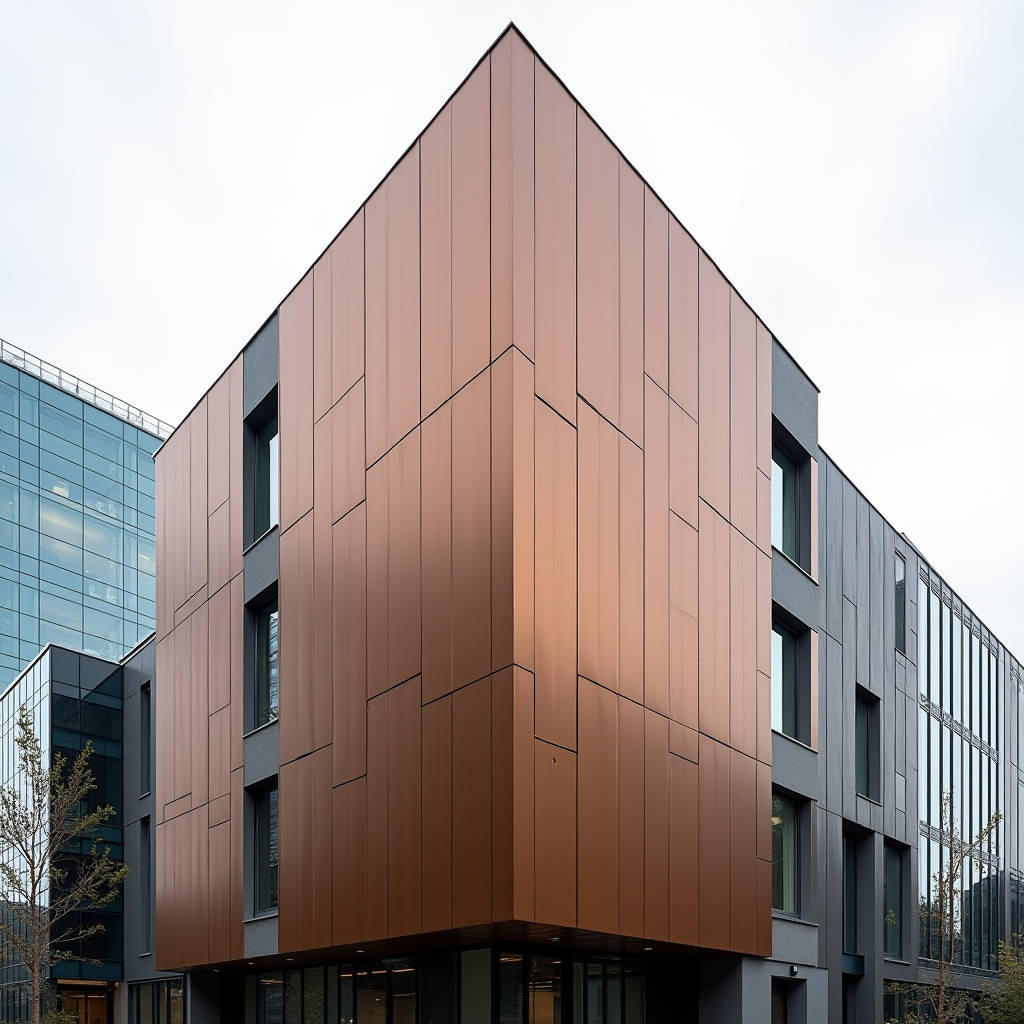
The specification sheet lands on a procurement manager's desk. The project, a 28-story mixed-use tower in Rotterdam, demands full compliance with the EU Taxonomy for sustainable construction. The cladding package calls for solid aluminium panels, minimum 2.5mm thickness, with documented embodied carbon below 6 kg CO₂e per kg of material. Five years ago, that line item would have triggered a scramble. Today, the answer sits in a single material category: Green Aluminum Alloy. This is not a marketing label slapped onto conventional primary aluminium. It refers to aluminium sheet and coil produced through pathways that slash carbon emissions by 60% to 80% compared to the global average, primarily through hydro-powered smelting, high-percentage post-consumer recycled content, or a combination of both. For facade engineers and cladding contractors, the shift from generic 3003 or 5052 alloys to verifiable Green Aluminum Alloy grades is the single most consequential decarbonization lever available in the building envelope, short of changing the structural frame material itself.
What Actually Qualifies as Green Aluminum Alloy in Cladding Procurement
The term "green aluminium" circulates freely in trade journals, but for a BOM line item on a rainscreen cladding package, the definition needs to be operational. The International Aluminium Institute and the Aluminium Stewardship Initiative (ASI) provide the backbone: primary aluminium smelted using electricity with a carbon intensity below 4 kg CO₂e per kg Al qualifies as low-carbon. Secondary aluminium produced from post-consumer scrap carries an even lower footprint, typically under 0.5 kg CO₂e per kg. When a mill certifies a coil of 3003-H14 or 5052-H32 sheet as Green Aluminum Alloy, the claim must trace back to one of these two pathways, verified through an Environmental Product Declaration (EPD) or a third-party chain-of-custody certification like ASI Performance Standard V3.
For the cladding supply chain, the practical question is whether the alloy's mechanical properties shift when the carbon source changes. The short answer: they do not, provided the chemical composition stays within the same ASTM B209 or EN 485 bounds. A 3003 alloy sheet rolled from hydro-powered primary ingot and a 3003 sheet rolled from 70% post-consumer scrap both deliver tensile strength in the 130-170 MPa range and yield strength around 115 MPa, assuming identical tempering. The difference lives entirely in the embodied carbon number on the EPD. That distinction matters enormously when the general contractor is chasing BREEAM or LEED v4.1 credits under the Materials and Resources category.
The Carbon Math Behind Cladding Panel Specifications
Let's put numbers against a realistic facade package. A mid-rise office building with 8,000 square meters of solid aluminium rainscreen cladding, specified at 2.5mm thickness, requires approximately 54,000 kg of aluminium sheet, accounting for standard nesting waste and kerf loss during routing. Using the global average primary aluminium carbon intensity of roughly 16.5 kg CO₂e per kg, the cladding alone embeds about 891 tonnes of CO₂e. Swap that to a hydro-powered Green Aluminum Alloy with a verified 4 kg CO₂e per kg, and the number drops to 216 tonnes. Push further to a secondary-sourced alloy with 80% post-consumer content at 1.5 kg CO₂e per kg, and the figure collapses to 81 tonnes. That is a 91% reduction from the global average baseline, achieved without altering a single dimension, fixing detail, or wind load calculation.
These numbers are not theoretical. Mills in Norway, Iceland, and Quebec operate smelters connected to hydroelectric grids that consistently deliver primary aluminium in the 4-6 kg CO₂e range. Secondary rolling mills in Germany and Italy process scrap streams into architectural-grade sheet with documented EPDs. The availability of Green Aluminum Alloy coil in standard widths of 1,250mm, 1,500mm, and 2,000mm now covers the vast majority of cladding panel layouts, meaning procurement teams no longer face a trade-off between sustainability and dimensional flexibility.
Alloy Selection: 3003, 5052, and the Green Variant Question
The two workhorse alloys for solid aluminium cladding panels remain 3003 and 5052. The 3003 alloy, with its manganese content around 1.2%, offers excellent formability for complex folding and perforation patterns. The 5052 alloy, with 2.5% magnesium, provides higher tensile strength (210-260 MPa) and superior corrosion resistance in coastal environments. Both are fully available as Green Aluminum Alloy grades, but the sourcing dynamics differ.
3003 green alloy tends to come from secondary routes more readily, because the manganese-bearing scrap streams are well-established and the alloy's tolerance for impurity variation is relatively forgiving. 5052 green alloy, with its tighter magnesium specification, often relies on a blend of low-carbon primary and carefully sorted post-industrial scrap. The cost premium for green 5052 over conventional 5052 typically runs 8-12%, while green 3003 commands a 5-8% premium. These deltas are narrowing as carbon border adjustment mechanisms, particularly the EU CBAM, begin to price conventional aluminium's emissions into the transaction.
Coating Systems and the Full Lifecycle Picture
A Green Aluminum Alloy panel is only as sustainable as its coating system. PVDF fluoropolymer coatings, applied at a minimum 25μm dry film thickness per AAMA 2605, dominate the high-end architectural cladding market. The coating itself carries a carbon footprint, and the solvent-based PVDF systems historically used significant volatile organic compounds. The industry has shifted: water-based PVDF primers and topcoats, combined with chrome-free pretreatment systems compliant with REACH, now deliver the same 20-year color and gloss retention warranties while reducing the coating line's environmental burden.
The interplay between substrate and coating matters for durability. A 5052-H32 Green Aluminum Alloy panel with a three-coat PVDF system (primer, color coat, clear coat) tested to ASTM B117 salt spray for 4,000 hours shows no underfilm corrosion beyond 1mm from the scribe, matching the performance of conventionally sourced 5052. The green designation does not compromise the panel's ability to withstand Singapore's humidity, Dubai's UV exposure, or Stockholm's freeze-thaw cycling. Architects specifying Green Aluminum Alloy do not sacrifice the aesthetic range either: the full RAL and custom color spectrum remains available, including metallic and mica finishes that require precise pigment orientation during spray application.
| Coating Parameter | AAMA 2605 (PVDF) | AAMA 2604 (PVDF) | AAMA 2603 (PVDF) | FEVE (Fluoroethylene) |
|---|---|---|---|---|
| Minimum Dry Film Thickness | 25μm (primer + color) | 20μm (primer + color) | 17μm (primer + color) | 25μm (primer + color) |
| Color Retention (10 years, Florida) | ΔE ≤ 5 | ΔE ≤ 5 | No guarantee | ΔE ≤ 5 |
| Chalk Resistance (10 years) | Rating ≥ 8 | Rating ≥ 6 | Rating ≥ 4 | Rating ≥ 8 |
| Salt Spray Resistance (ASTM B117) | 4,000 hours | 2,000 hours | 1,000 hours | 4,000 hours |
| Typical Warranty Period | 20-30 years | 10-15 years | 5-10 years | 20-30 years |
| Recommended Green Aluminum Alloy Substrate | 5052-H32, 3003-H14 | 5052-H32, 3003-H14 | 3003-H14 | 5052-H32, 3003-H14 |
Fabrication, Nesting, and the Waste-to-Scrap Loop
The environmental case for Green Aluminum Alloy strengthens when the fabrication process enters the calculation. A typical CNC routing and folding operation for solid aluminium cladding panels generates 15-25% process scrap, depending on panel geometry and nesting efficiency. This scrap, when properly segregated by alloy grade, feeds directly back into the secondary aluminium supply chain. A fabricator processing 200 tonnes of green 3003 sheet per year generates roughly 40 tonnes of clean, single-alloy scrap. That scrap, returned to a certified secondary mill, can be re-rolled into new 3003 sheet within weeks, creating a closed-loop material cycle that aligns with the principles of circular construction.
This loop is not theoretical. Mills operating under the ASI chain-of-custody standard track scrap inputs and outputs across the value chain. A cladding contractor who specifies Green Aluminum Alloy and implements alloy-segregated scrap collection can document the circularity contribution in the project's waste diversion reporting, often pushing the construction waste recycling rate above 90%. The practical step is simple: separate bins for 3003 and 5052 offcuts, clearly labeled, with a scrap buyer who provides a certificate of recycling for the project file.
Fire Performance and Regulatory Compliance
Solid aluminium cladding panels in Green Aluminum Alloy grades carry the same fire performance characteristics as their conventional counterparts. Aluminium itself is non-combustible, classified as A1 under EN 13501-1 when tested as a standalone material. The critical fire safety consideration lies in the system assembly: the insulation layer behind the rainscreen, the cavity detailing, and the presence of any polymeric components. The Green Aluminum Alloy substrate, whether 3003 or 5052, does not introduce any additional fire risk. Its melting point remains approximately 660°C, and its behavior in a fully developed fire is governed by the same physics as any aluminium alloy of equivalent thickness.
For projects in jurisdictions that have tightened cladding regulations following the Grenfell Tower tragedy, the specification of solid aluminium panels, as opposed to any composite product with a combustible core, is the baseline requirement. The green designation adds a carbon credential without touching the fire safety equation. Regulatory bodies from the UK's MHCLG to the UAE Civil Defence recognize solid aluminium sheet as a compliant rainscreen material, and the EPD documentation for Green Aluminum Alloy does not alter that classification.
Supply Chain Verification: What to Demand from Mills and Distributors
Procurement teams specifying Green Aluminum Alloy need a verification checklist. The market contains vague claims, and the phrase "green aluminium" appears on mill test certificates without always being backed by auditable data. Three documents should accompany every coil or sheet delivery: a Type III Environmental Product Declaration compliant with ISO 14025 and EN 15804, a third-party chain-of-custody certificate (ASI or equivalent), and a standard mill test certificate confirming the alloy, temper, and mechanical properties per ASTM B209 or EN 485.
The EPD must disclose the Global Warming Potential (GWP) figure for modules A1-A3 (cradle-to-gate), expressed in kg CO₂e per kg of aluminium sheet. A number above 8 kg CO₂e per kg should trigger scrutiny. The chain-of-custody certificate should confirm that the material flow from smelter or scrap sorter through rolling mill to distributor meets the relevant standard's requirements for segregation or mass balance. Without these three documents, the "green" claim is unsubstantiated, and the embodied carbon figure entered into the project's whole-life carbon assessment may be challenged during third-party review.
Suppliers like Futeng® have developed mill partnerships that pre-qualify Green Aluminum Alloy coil sources against these documentation requirements, reducing the verification burden on the contractor side. The key is establishing the paper trail before the first panel reaches the CNC table.
Cost Modeling: Premium Today, Parity Tomorrow
The price premium for Green Aluminum Alloy sheet over conventional aluminium sheet sits in the 5-12% range, depending on alloy, thickness, and order volume. For a facade package with 50 tonnes of aluminium, that translates to an additional cost of roughly €15,000 to €35,000, assuming a base aluminium sheet price of €4.50 per kg. Set against the total facade contract value, which includes fabrication, finishing, bracketry, insulation, installation, and access, the green premium typically represents 0.5-1.5% of the total package cost.
This premium is shrinking. The EU Emissions Trading System (ETS) and the Carbon Border Adjustment Mechanism (CBAM) are progressively pricing carbon into conventional aluminium. By 2026, the CBAM will require importers of aluminium into the EU to purchase certificates corresponding to the embedded emissions of their product. The financial gap between conventional and green aluminium narrows as the carbon price rises. BloombergNEF's analysis suggests that green aluminium will reach cost parity with conventional aluminium in Europe by 2028-2030, assuming a carbon price trajectory consistent with the EU's Fit for 55 targets. For projects with a 2026-2027 delivery timeline, locking in Green Aluminum Alloy supply now hedges against future carbon cost exposure.
Architectural Aesthetics: No Compromise on Finish Quality
A persistent concern among architects is whether Green Aluminum Alloy sheet, particularly grades with high recycled content, can achieve the same surface finish quality as virgin primary aluminium. The answer depends on the scrap sorting and casting technology employed by the mill. Modern secondary casting lines use spectroscopic analysis to control tramp element levels, particularly iron and silicon, which can affect anodizing response. For PVDF-coated panels, the substrate surface is chemically etched and chromated (or treated with a chrome-free alternative) before coating, creating a uniform base regardless of the alloy's recycled content percentage.
The practical test is a batch sample approval. A fabricator receiving Green Aluminum Alloy coil should coat a sample panel, cure it, and submit it for color, gloss, and adhesion testing per AAMA 2605. If the sample passes, the coil is fit for production. The industry's experience over the past five years, across thousands of completed facade projects, confirms that green aluminium sheet performs indistinguishably from conventional sheet in PVDF coating lines. The color consistency, measured as ΔE ≤ 1.0 across a production batch, holds regardless of the carbon footprint of the substrate.
"The specification of Green Aluminum Alloy for the building envelope is not a future aspiration. It is a current procurement decision, supported by available mill capacity, established testing protocols, and a narrowing cost differential that carbon pricing will erase within this decade."
Regional Availability and Lead Time Considerations
Green Aluminum Alloy coil and sheet are not uniformly available across all global markets. The strongest supply chains exist in Europe, where hydro-powered smelters in Norway and Iceland, combined with secondary rolling capacity in Germany, Italy, and Spain, create a regional ecosystem. North American supply is concentrated around Canadian hydro-powered smelters in Quebec and British Columbia, with rolling mills in the US Midwest and Southeast. The Middle East, with its gas-powered smelters in the UAE and Bahrain, occupies a middle ground: carbon intensity lower than the global average but higher than hydro-powered benchmarks. Asian supply, particularly from China, is evolving rapidly, with several mills now offering ASI-certified low-carbon sheet, though verification diligence is essential.
Lead times for Green Aluminum Alloy sheet generally match conventional sheet: 6-10 weeks for mill-standard sizes, 8-14 weeks for custom widths or non-standard tempers. The additional documentation step, EPD and chain-of-custody verification, adds 1-2 weeks to the pre-production phase. Procurement teams should factor this into the overall facade program and not treat green specification as a last-minute substitution.
Closing the Loop: End-of-Life and Deconstruction Planning
The full sustainability case for Green Aluminum Alloy cladding panels extends to the building's end-of-life. Aluminium is infinitely recyclable without loss of properties. A solid aluminium rainscreen panel, mechanically fixed to a substructure, can be cleanly removed during deconstruction, segregated by alloy, and returned to the secondary aluminium stream. The scrap value of clean 3003 or 5052 sheet typically recovers 40-60% of the original material cost, creating a financial incentive for proper deconstruction rather than demolition.
Designing for disassembly means specifying mechanical fixings (rivets, screws, clips) rather than adhesive bonding, and documenting the alloy grade and coating type on as-built drawings. When the building reaches the end of its service life, the cladding becomes a valuable material bank rather than demolition waste. The Green Aluminum Alloy panel that started its life with a 4 kg CO₂e per kg footprint can, after recycling, re-enter the supply chain with a footprint of 0.5 kg CO₂e per kg or less. This cascading carbon reduction, multiplied across the global building stock, represents the most powerful argument for specifying green aluminium today.