Low Carbon Aluminum Alloy in Solid Cladding Procurement What Specifiers Need to Know
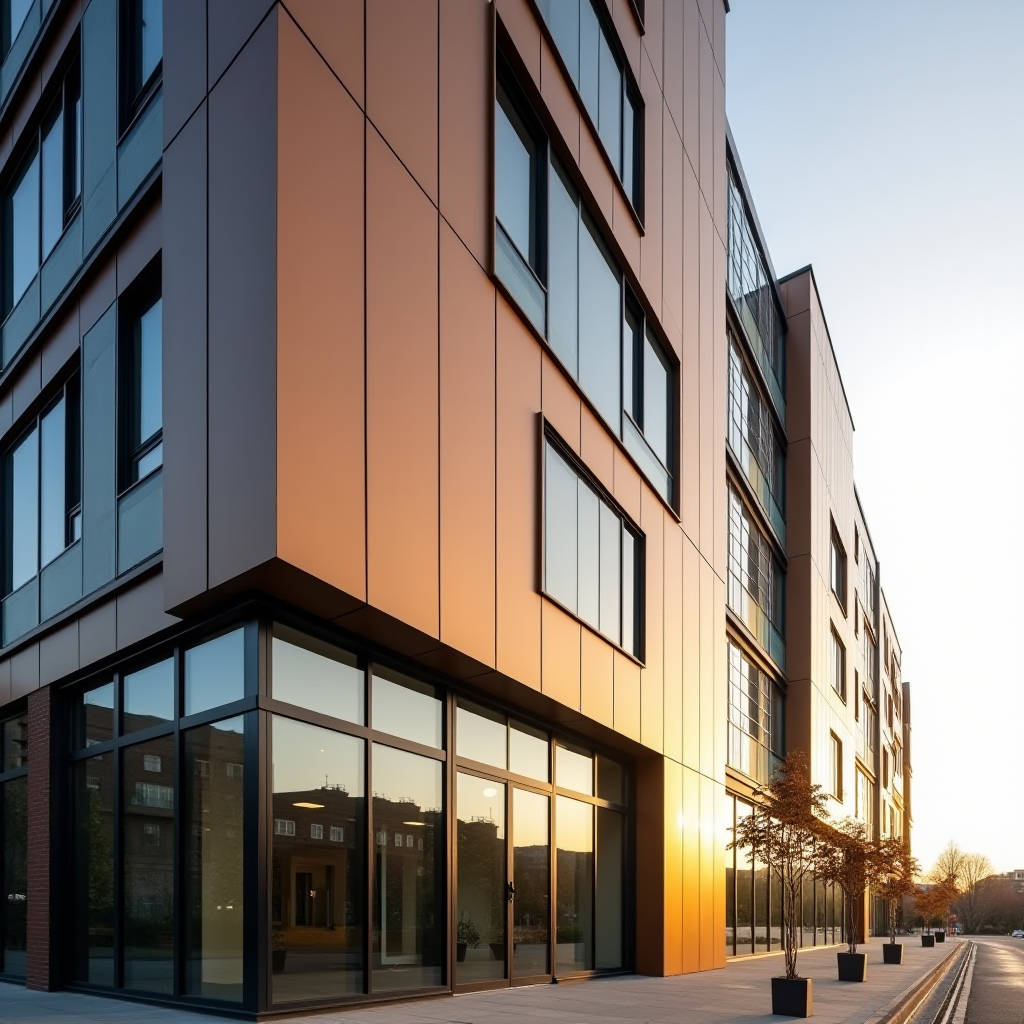
The procurement landscape for architectural aluminium is shifting faster than most specification writers realize. For decades, the conversation around cladding materials centered on gauge, flatness, and finish consistency. Those factors still matter, but a new metric has entered the brief: embodied carbon. Owners of commercial towers, institutional buildings, and mixed-use developments now demand carbon data alongside mill test reports. This is where Low Carbon Aluminum Alloy moves from a sustainability talking point into a hard procurement requirement. For contractors and architects specifying solid aluminium cladding panels, understanding what qualifies as genuinely low carbon, how the supply chain verifies it, and what it means for installed cost and performance is now essential. The distinction between generic 3003/5052 sheet and material with a verified sub-4.0 kg CO₂e per kg footprint is reshaping how projects are tendered and won.
What Counts as Low Carbon Aluminum Alloy in 2025
The term "low carbon" gets thrown around loosely, but the aluminium industry has moved toward measurable definitions. The Aluminium Stewardship Initiative (ASI) and major producers now benchmark low carbon aluminium at or below 4.0 kg CO₂e per kilogram of primary metal produced, covering Scope 1 and Scope 2 emissions. This is roughly one-quarter of the global average for primary aluminium, which sits around 16.7 kg CO₂e per kg. Some producers push further: Hydro's REDUXA line certifies at 4.0 kg CO₂e per kg, while its CIRCAL range, made with a minimum of 75% post-consumer scrap, drops below 2.3 kg CO₂e per kg. For a solid aluminium cladding panel project using 10,000 kg of material, the difference between standard primary aluminium and verified low carbon material can exceed 120 tonnes of CO₂e. That number shows up in whole-building lifecycle assessments and increasingly in planning submissions where embodied carbon thresholds are written into zoning requirements.
Why the Cladding Sector Has Been Slow to Adapt
Extrusion and rolling mills serving the building envelope market have historically lagged behind automotive and packaging sectors in offering low carbon options. The reason is structural: automotive OEMs order hundreds of thousands of tonnes annually and can demand dedicated low carbon casting lines. Architectural cladding, by contrast, is fragmented. A typical curtain wall project might use 15 to 40 tonnes of aluminium sheet, sourced through distributors who aggregate orders from multiple mills. Traceability breaks down at the distributor level. The mill might hold an ASI certification, but by the time the sheet reaches the fabricator, the chain of custody documentation is often incomplete. This is changing. The EU Carbon Border Adjustment Mechanism (CBAM), which entered its transitional phase in October 2023 and moves toward full implementation in 2026, requires importers of aluminium into the EU to report and eventually pay for embedded emissions. Projects specifying solid aluminium cladding panels sourced from outside the EU will face cost exposure unless the material carries verified carbon data.
Alloy Grades and Their Carbon Profiles
Not all cladding alloys carry the same carbon burden. The workhorse alloys for solid aluminium cladding panels are 3003, 5052, and 6061, with 5005 and 1100 used in specific applications. Each alloy's carbon intensity depends on the recycled content in the melt and the energy source powering the smelter. A 3003-H14 sheet produced with hydroelectric power and 50% post-industrial scrap can achieve a footprint below 3.0 kg CO₂e per kg. The same alloy from a coal-fired smelter using 100% primary metal might reach 18 kg CO₂e per kg. Below is a practical comparison of common cladding alloys and their typical carbon ranges based on production route.
| Alloy Grade | Typical Cladding Application | Standard Primary (kg CO₂e/kg) | Low Carbon Route (kg CO₂e/kg) | Recycled Content Potential |
|---|---|---|---|---|
| 3003-H14 | General facade panels, soffits | 14.0 – 17.0 | 2.5 – 4.0 | Up to 75% |
| 5052-H32 | Marine/coastal cladding | 14.5 – 18.0 | 3.0 – 4.5 | Up to 60% |
| 6061-T6 | Structural fins, brackets | 15.0 – 19.0 | 3.5 – 5.0 | Up to 50% |
| 5005-H14 | Anodized finish panels | 14.0 – 17.0 | 2.8 – 4.2 | Up to 70% |
| 1100-H14 | Interior cladding, trim | 13.5 – 16.5 | 2.2 – 3.8 | Up to 80% |
These ranges are not theoretical. Mills with ASI Performance Standard certification publish environmental product declarations (EPDs) that verify these numbers. When specifying solid aluminium cladding panels, requesting a product-specific EPD rather than a generic industry-average EPD is the difference between documentation that satisfies a LEED or BREEAM credit and documentation that gets rejected during audit.
How the Carbon Data Reaches the Specification
The chain of custody for low carbon aluminium involves three documents that procurement teams need to understand. The first is the ASI Chain of Custody Certificate, which tracks material from certified smelters through rolling mills to fabricators. The second is the Environmental Product Declaration, which reports the cradle-to-gate carbon footprint per declared unit. The third, increasingly demanded on European projects, is the CBAM quarterly report, which quantifies direct and indirect emissions for imported aluminium products. A project in Frankfurt or Amsterdam specifying 3.0mm solid aluminium cladding panels in 5052-H32 will typically require the fabricator to provide all three documents. Suppliers who cannot produce them will be excluded from the tender list, not on price but on compliance grounds. This is a hard shift from five years ago, when carbon data was a nice-to-have appendix in a sustainability brochure.
Manufacturing Energy and the Smelter Question
The single largest variable in aluminium's carbon footprint is the electricity source used during smelting. The Hall-Héroult process consumes approximately 13 to 15 MWh of electricity per tonne of primary aluminium produced. A smelter drawing power from a coal-fired grid generates roughly 16 to 18 kg CO₂e per kg of aluminium. A smelter connected to a hydroelectric dam generates 2 to 4 kg CO₂e per kg. This order-of-magnitude difference is why geography matters. Chinese smelters, which produce roughly 58% of the world's primary aluminium, rely predominantly on coal-fired power and average 16.7 kg CO₂e per kg. Canadian, Norwegian, and Icelandic smelters, powered almost entirely by hydroelectric and geothermal energy, operate at a fraction of that. For a contractor specifying solid aluminium cladding panels for a project targeting net-zero operational carbon, the origin of the aluminium matters as much as the alloy grade. A mill that can document hydropower-based production and provide a corresponding EPD should be preferred, even at a modest premium.
Recycled Content and the Quality Question
Recycled aluminium requires approximately 5% of the energy needed for primary production. This makes post-consumer scrap the most powerful lever for reducing the carbon footprint of solid aluminium cladding panels. However, recycled content introduces metallurgical challenges. Post-consumer scrap contains tramp elements, iron, silicon, copper, and zinc that accumulate with each recycling cycle. For 5052-H32, which requires tight control over magnesium content (2.2–2.8%) and chromium (0.15–0.35%), excessive scrap dilution can push the alloy out of specification. The industry has developed workarounds. Closed-loop recycling, where fabrication scrap from a known alloy source is collected, sorted, and remelted without mixing with other grades, preserves alloy integrity. Some mills now offer 3003 and 5052 sheet with up to 75% recycled content, verified by mass balance accounting under ASI Chain of Custody. For cladding fabricators, the practical implication is that specifying high recycled content requires tighter incoming material inspection. A reputable supplier such as Futeng® verifies mill certificates against physical properties, ensuring that the low carbon alloy sheet arriving at the factory meets the same tensile strength, elongation, and bend radius requirements as conventionally produced material.
PVDF Coatings and the Carbon Equation
Solid aluminium cladding panels are almost always finished with a PVDF (polyvinylidene fluoride) coating system, typically a three-coat or four-coat application with a total dry film thickness of 30 to 45 microns. The coating itself carries a carbon footprint, estimated at 0.3 to 0.6 kg CO₂e per square meter of panel surface, depending on the coating chemistry and application efficiency. While this is small relative to the aluminium substrate, it is not zero. Projects pursuing rigorous embodied carbon targets are beginning to ask about the coating's contribution. The main specification standards, AAMA 2605 for high-performance architectural coatings, do not yet include carbon reporting requirements, but the next revision cycle may address this. For now, the most practical step is to ensure that the PVDF system is applied in a facility with solvent recovery and thermal oxidation of VOCs, which reduces both emissions and the overall environmental impact of the finishing process.
What CBAM Means for Cladding Procurement
The EU Carbon Border Adjustment Mechanism is not a distant regulatory threat. It is operational. Importers of aluminium products into the EU must now submit quarterly reports detailing the direct and indirect emissions embedded in their goods. From 2026, they will need to purchase CBAM certificates corresponding to those emissions, priced at the EU Emissions Trading System (ETS) allowance rate. For a container of solid aluminium cladding panels weighing 20 tonnes, produced from standard primary aluminium with a 16 kg CO₂e per kg footprint, the embedded emissions total 320 tonnes of CO₂e. At an ETS price of €80 per tonne, the CBAM liability would be approximately €25,600. The same shipment using low carbon aluminium alloy with a 3.5 kg CO₂e per kg footprint would carry a liability of roughly €5,600. The €20,000 difference is not a rounding error. It is a structural cost advantage that will reshape sourcing decisions for any project within the EU or in markets likely to adopt similar mechanisms, including the UK, Canada, and potentially Japan.
Specifying Low Carbon Aluminum Alloy in Tender Documents
Writing a specification that actually delivers low carbon material requires more than adding a sentence about sustainability. The specification must define the maximum acceptable carbon footprint, the verification standard, and the documentation required. A workable clause for solid aluminium cladding panels reads as follows:
Aluminium sheet for cladding panels shall be produced from alloy 3003-H14, 5052-H32, or 5005-H14 as indicated on the schedule. The aluminium shall have a cradle-to-gate carbon footprint not exceeding 4.0 kg CO₂e per kg, verified by a product-specific Environmental Product Declaration conforming to EN 15804+A2 or ISO 14025. The supplier shall provide an ASI Chain of Custody Certificate or equivalent third-party verification of recycled content and production route. Mill certificates and EPDs shall be traceable to the specific heat numbers supplied.
This language is enforceable. It gives the contractor a clear pass/fail criterion and prevents the substitution of generic material with unverified claims. It also aligns with the documentation requirements of LEED v4.1, BREEAM International New Construction, and the emerging embodied carbon regulations in California (CALGreen) and the EU Energy Performance of Buildings Directive revision.
Cost Premiums and Payback Periods
Low carbon aluminium alloy typically carries a premium of 5% to 15% over standard primary aluminium sheet, depending on the alloy, the recycled content percentage, and the market conditions for green aluminium. For a mid-rise commercial building requiring 12,000 kg of 3.0mm solid aluminium cladding panels, the material cost difference might range from €3,000 to €10,000. Against a total facade package of €500,000 to €1.5 million, this is a marginal increase. The payback mechanisms include reduced CBAM liability, eligibility for green building certification credits, and increasingly, lower cost of capital. Some European construction lenders now offer preferential interest rates for projects that document embodied carbon reductions. The premium also buys insurance against future regulatory tightening. A building permitted today with standard aluminium may face carbon tax exposure during its operating life if retrofit carbon pricing mechanisms are introduced.
Testing and Performance: No Compromises
A legitimate concern among contractors is whether low carbon aluminium alloy compromises mechanical properties. The answer, based on published mill data and independent testing, is that it does not. Alloy chemistry is alloy chemistry. A 5052-H32 sheet with 60% recycled content, produced to ASTM B209 or EN 485 standards, must meet the same tensile strength (31–38 ksi / 214–262 MPa), yield strength (minimum 23 ksi / 159 MPa), and elongation (minimum 7–8% in 2 inches) as virgin material. The same applies to 3003-H14 and 5005-H14. The critical control point is not the recycled content percentage but the melt chemistry and the rolling process parameters. Mills producing low carbon alloys invest in spectrometry and inline gauging to ensure consistency. The practical advice for cladding fabricators is to conduct incoming material verification on the first coil of each heat number, checking gauge, temper, and surface quality. This is standard practice regardless of carbon content, but it is worth reinforcing when qualifying a new low carbon material source.
Fire Performance and Regulatory Context
Solid aluminium cladding panels are non-combustible. Aluminium itself is classified as A1 under EN 13501-1, the Euroclass system for reaction to fire. This is a fundamental advantage over composite panels, which may contain combustible cores. The low carbon status of the alloy does not alter its fire classification. A 5052-H32 panel with a 3.5 kg CO₂e per kg footprint and a 5052-H32 panel with a 16 kg CO₂e per kg footprint both achieve A1 classification when tested to EN 13501-1. The PVDF coating, being a thin organic layer, does not change the non-combustible classification of the substrate. This is well established in the testing literature and is referenced in guidance documents from the American Architectural Manufacturers Association and the Centre for Window and Cladding Technology in the UK. For projects in jurisdictions with combustible cladding bans, solid aluminium panels remain a compliant choice, and specifying low carbon alloy does not introduce any fire performance risk.
Embodied Carbon Benchmarks for Facade Systems
The London Energy Transformation Initiative (LETI) and the Royal Institute of British Architects (RIBA) have published embodied carbon benchmarks for building elements. For external walls, including cladding, framing, insulation, and internal finishes, the 2030 target is approximately 50 to 70 kg CO₂e per square meter of wall area. The aluminium cladding panel itself, at 3.0mm thickness, contributes roughly 24 to 30 kg CO₂e per square meter when produced from standard primary aluminium. Switching to low carbon aluminium alloy with a 3.5 kg CO₂e per kg footprint reduces that contribution to approximately 6 to 8 kg CO₂e per square meter. This single material substitution can bring an entire wall assembly from above the LETI 2030 target to well within it. The implications for architects and sustainability consultants are significant: specifying low carbon aluminium for cladding is one of the most cost-effective embodied carbon reduction strategies available in the facade design toolkit.
Global Supply and Availability
Low carbon aluminium capacity is expanding rapidly. Hydro's CIRCAL and REDUXA lines, Rio Tinto's RenewAl, Alcoa's Sustana, and RUSAL's ALLOW brand collectively represent several million tonnes of annual capacity. However, the architectural sheet market competes with automotive and packaging sectors for this material. Lead times for low carbon 3003 and 5052 coil in standard gauges are typically 8 to 14 weeks, compared to 6 to 10 weeks for standard material. The premium narrows during periods of high automotive demand and widens when automotive orders soften. For project planning, the practical implication is that low carbon aluminium alloy should be specified early and ordered with adequate lead time. Attempting to switch to low carbon material late in the construction phase will almost certainly result in schedule delays or forced substitution. The earlier the specification is locked, the more leverage the procurement team has on price and availability.
The trajectory is clear. Carbon data is becoming as fundamental to material specification as mechanical properties and finish durability. For solid aluminium cladding panels, the shift to Low Carbon Aluminum Alloy is not a marketing trend. It is a structural change driven by regulation, embodied carbon targets, and the growing recognition that the aluminium industry's decarbonization pathway runs through the building envelope. Contractors, specifiers, and fabricators who understand the alloy options, the verification standards, and the procurement mechanics will be positioned to deliver compliant, competitive, and future-proofed facades. Those who treat carbon as an afterthought will find themselves excluded from the projects that matter most.