Marine Grade Aluminum Sheet for Coastal Facades Alloy Selection and Coating Strategy
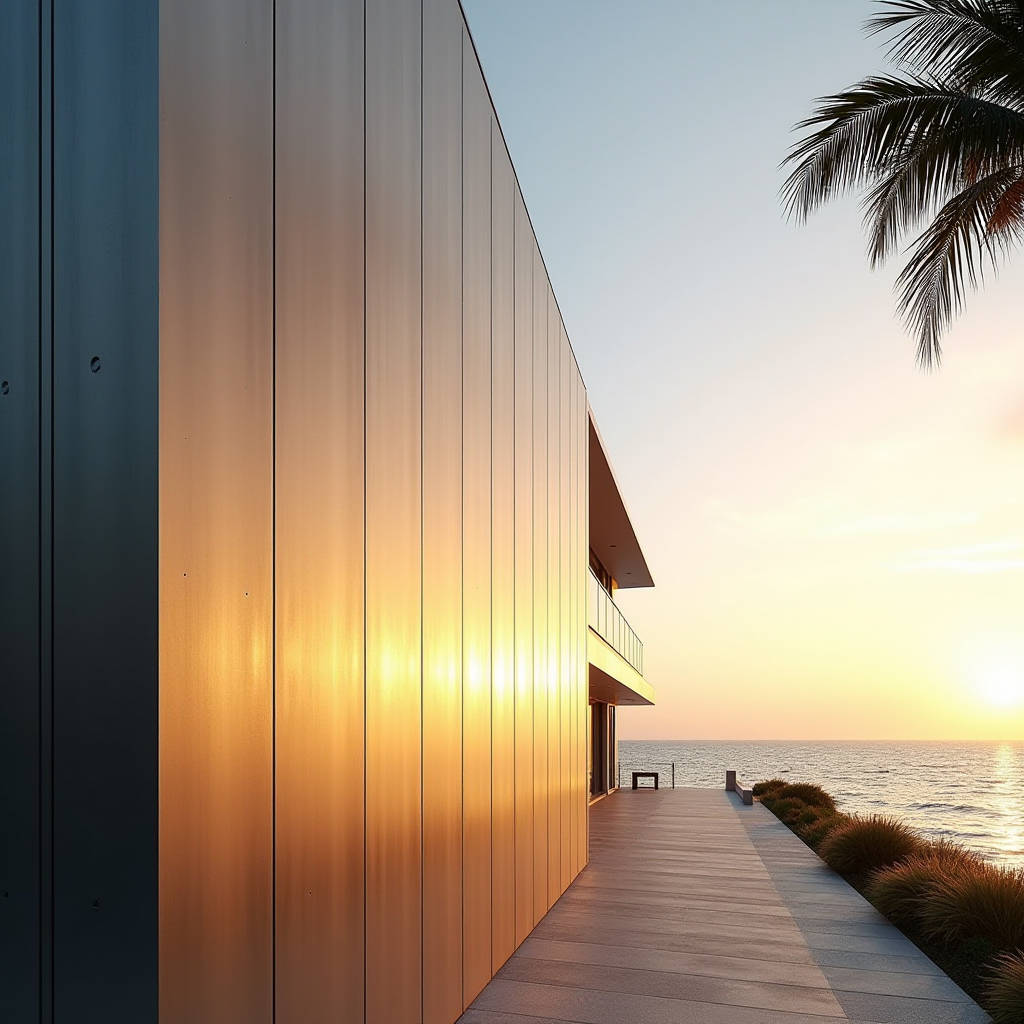
Specifying the right alloy for a waterfront facade or a coastal high-rise is not a straightforward materials decision. Wind-loaded salt spray, cyclic humidity, and UV exposure combine to attack the building envelope in ways that inland projects never experience. When architects and facade engineers turn to solid aluminium cladding panels for these environments, the conversation almost always starts with a Marine Grade Aluminum Sheet — specifically the 5xxx series alloys that have proven themselves over decades of service in shipbuilding and offshore structures. The question is not whether marine-grade aluminium works, but which alloy, which temper, and which surface treatment delivers the longest service life for a given elevation, at a given distance from the shoreline, under a given maintenance budget.
What Makes an Aluminum Sheet Marine Grade
The term "marine grade" is not a formal ASTM classification. It is an industry shorthand for aluminium alloys that resist corrosion in chloride-rich environments without requiring a protective coating to survive. The metallurgical mechanism behind this resistance is straightforward: magnesium is the primary alloying element in 5xxx series aluminium, and the magnesium content directly controls how the material behaves when exposed to salt-laden moisture.
In 5052, the magnesium sits at roughly 2.2% to 2.8%. In 5083, it climbs to 4.0% to 4.9%. This difference matters. Higher magnesium content improves tensile strength and, crucially, resistance to intergranular corrosion and stress corrosion cracking — the two failure modes that haunt marine structures. But there is a ceiling: push magnesium past 5% and the alloy becomes susceptible to sensitization when heated during welding or, in facade applications, when dark-colored PVDF coatings absorb solar radiation and raise the panel skin temperature above 65°C for extended periods.
For solid aluminium cladding panels, the practical sweet spot is 5052-H32 for most coastal facades and 5083-H116 or H321 for projects within 500 meters of breaking surf or in tropical marine climates where humidity stays above 80% year-round. The H116 temper is specifically designed to resist exfoliation corrosion, making it the reference standard for naval architecture — and increasingly for facade engineering on waterfront projects.
| Alloy & Temper | Mg Content | Tensile Strength (MPa) | Yield Strength (MPa) | Corrosion Resistance | Recommended Distance from Shoreline |
|---|---|---|---|---|---|
| 5052-H32 | 2.2–2.8% | 210–260 | 160 | Excellent — general marine atmosphere | >500 m |
| 5083-H116 | 4.0–4.9% | 305 | 215 | Superior — direct salt spray | 100–500 m |
| 5083-H321 | 4.0–4.9% | 305–380 | 215–270 | Superior — welded assemblies | 100–500 m |
| 5754-H22 | 2.6–3.6% | 220–270 | 180 | Excellent — moderate marine | >300 m |
| 6061-T6 | 0.8–1.2% | 310 | 276 | Good — requires coating | >1 km (coated only) |
This table reflects data aligned with ASTM B209 and The Aluminum Association published specifications. The "distance from shoreline" recommendations are empirical, drawn from decades of facade performance data in Southeast Asia, the Middle East Gulf region, and the Caribbean.
Why 6061 Falls Short in Salt-Laden Atmospheres
Many facade specifications default to 6061-T6 because it is widely available, machines well, and offers higher tensile strength than 5052. But 6061 is a heat-treatable 6xxx alloy with copper as a secondary alloying element (0.15%–0.40%). Copper reduces the alloy's natural corrosion resistance. In a marine atmosphere, 6061-T6 without a flawless coating system will develop pitting corrosion faster than any 5xxx alloy. The Aluminum Association's own corrosion data shows that 5xxx alloys consistently outperform 6xxx in chloride exposure tests.
For a solid aluminium cladding panel, this distinction is not academic. A 3.0mm-thick 6061-T6 panel installed on a beachfront hotel facade might show visible pitting within 5–7 years if the PVDF coating is compromised at a cut edge or fastener penetration. The same panel in 5052-H32 will typically reach 15–20 years before comparable degradation appears. In 5083-H116, the timeline extends further.
This is why experienced facade consultants increasingly write "5052-H32 minimum" or "5083-H116 for panels within 500m of shoreline" into their front-end specifications. The cost differential between 5052 and 6061 is typically 8–12% on raw material, but the lifecycle cost calculation — factoring in recoating, panel replacement, and access equipment — overwhelmingly favors the marine-grade option.
Coating Systems for Marine Grade Aluminum Sheet Facades
Even though 5xxx alloys can survive uncoated in marine environments, architectural cladding demands a coating. The reasons are aesthetic (color consistency across the facade), functional (dirt and pollutant resistance), and protective (an additional barrier against chloride ion penetration). The coating system matters as much as the substrate.
PVDF (polyvinylidene fluoride) coatings based on Kynar 500® or Hylar 5000® resins are the industry standard for marine facade applications. A properly specified PVDF system consists of a chrome-based or chrome-free pretreatment conversion coating, a corrosion-resistant primer at 5–8 microns DFT, and a color coat at 25–30 microns DFT. For projects within 300 meters of breaking surf, a clear topcoat adds another 10–15 microns and significantly extends the gloss retention timeline.
FEVE (fluoroethylene vinyl ether) fluoropolymer coatings offer an alternative with higher gloss options and comparable weatherability, though their track record in tropical marine environments is shorter than PVDF. Polyester powder coatings, while economical, should not be specified for any project within 2 kilometers of saltwater — the resin system simply lacks the UV and hydrolysis resistance required for long-term coastal performance.
Futeng® has supplied solid aluminium cladding panels in 5052-H32 and 5083-H116 with PVDF coating systems to multiple waterfront projects across Southeast Asia. The panels are fabricated to ASTM B209 tolerances, with coating applied in accordance with AAMA 2605 — the highest performance specification for architectural coatings. When a project demands custom perforation patterns or complex folded geometries in marine-grade material, the supply chain needs to confirm that the fabricator has experience handling 5xxx alloy formability limits, which differ noticeably from 3xxx or 6xxx series.
The Sensitization Problem No One Discusses in Specifications
There is a technical issue that rarely appears in architectural specifications but is well understood in marine engineering: sensitization of high-magnesium 5xxx alloys. When 5083 or 5456 is held at temperatures between 65°C and 200°C for extended periods, beta-phase Mg₂Al₃ precipitates along grain boundaries. This intermetallic phase is anodic to the surrounding aluminium matrix, meaning it corrodes preferentially in saltwater — leading to intergranular corrosion and, eventually, stress corrosion cracking.
For a facade panel, the question is whether solar heating can push the panel skin temperature into the sensitization range. The answer depends on color, orientation, and climate. A dark-colored (dark grey, black, deep blue) panel on a west-facing elevation in Dubai or Miami can reach 75–80°C on a summer afternoon. Over 10–15 years of cumulative exposure, this is enough to trigger measurable sensitization in 5083 if the magnesium content is at the upper end of the specification range.
The practical mitigation is threefold. First, specify 5083-H116 or H321 rather than H32, as the H116 temper is produced with controlled final annealing that minimizes continuous beta-phase networks. Second, for dark-colored panels in hot coastal climates, consider 5052-H32 as the substrate — its lower magnesium content makes sensitization a non-issue. Third, ensure the coating system includes a primer with strontium chromate or a compliant non-chrome corrosion inhibitor that provides an independent barrier at the metal-coating interface.
This is a nuanced topic, and not every project needs to address it. A light-colored facade in Vancouver or Hamburg will never reach sensitization temperatures. But a dark bronze facade in Jeddah or Singapore deserves the analysis. The ASTM G67 standard test method for determining susceptibility to intergranular corrosion in 5xxx series aluminum alloys provides a quantitative framework for evaluating material before fabrication begins.
Mechanical Properties and Formability in Cladding Fabrication
Solid aluminium cladding panels are rarely flat sheets. They are routed, folded, perforated, and welded into complex geometries. The formability of Marine Grade Aluminum Sheet varies significantly by alloy and temper, and this directly affects what can be achieved in fabrication.
5052-H32 offers the best balance of strength and formability among the marine-grade options. It can be bent to a 1t radius (inside radius equal to material thickness) at 90° without cracking, and it accepts routing and folding operations cleanly. 5083-H116 is stiffer and stronger but requires a larger minimum bend radius — typically 2t to 2.5t for 90° bends — and work-hardens more rapidly, which means fabricators must account for springback when programming CNC press brakes.
For panels that require welding — such as large-format cladding with welded stiffeners or custom corner pieces — 5083 is the preferred choice. It retains more of its strength in the heat-affected zone than 5052, and the weld filler metal (typically 5183 or 5356) matches the base metal corrosion resistance. 5052 welded with 5356 filler is also acceptable, but the as-welded strength is lower, and this must be accounted for in structural calculations.
Perforated panels in marine environments introduce an additional consideration: the cut edges of each perforation expose bare metal. With 5xxx alloys, the self-passivating nature of the aluminium-magnesium surface means these edges will form a protective oxide layer even without coating. However, the aesthetic requirement for uniform color means that perforated panels should be fabricated from pre-coated sheet, and the perforation process should be followed by edge treatment or, ideally, the perforations should be made before the final coating application.
Supply Chain Realities: Sourcing Marine Grade Aluminum Sheet for Facade Projects
Not every aluminium distributor stocks 5083-H116 in sheet form, and fewer still can supply it with mill test certificates that confirm temper, chemical composition, and mechanical properties per ASTM B209. The global supply chain for marine-grade aluminium sheet is concentrated in a handful of rolling mills — primarily in the United States, Europe, and China — that have the continuous casting and hot-rolling capability to produce wide sheets in 5xxx alloys.
For a facade contractor or curtain wall fabricator, the practical procurement path depends on project location and volume. In North America, domestic mills and service centers stock 5052-H32 in common thicknesses (2.0mm, 2.5mm, 3.0mm) and can source 5083-H116 with a lead time of 4–8 weeks. In Europe, EN AW-5754 (AlMg3) is more commonly stocked than 5052, and EN AW-5083 is available from multiple mills. In Asia, Chinese mills produce 5052 and 5083 to both GB/T and ASTM standards, and the lead times are typically shorter — 2–4 weeks for standard sizes.
The key document for any marine-grade aluminium sheet procurement is the mill test certificate (MTC) per EN 10204 3.1 or 3.2. The MTC must confirm the alloy designation, temper, chemical composition (including magnesium, manganese, chromium, and iron content), and mechanical properties (tensile strength, yield strength, elongation). For 5083-H116, the MTC should also include results from ASTM G67 intergranular corrosion testing if the material is destined for a high-temperature marine application.
Thickness tolerance is another supply chain variable. ASTM B209 specifies thickness tolerances that vary by sheet width and nominal thickness. For a 3.0mm sheet in 1500mm width, the tolerance is ±0.15mm. Some mills can supply half-standard tolerances, which is relevant for rainscreen cladding systems where panel flatness and joint alignment are critical to the visual outcome.
Cost Structure and Lifecycle Economics
The upfront cost of specifying Marine Grade Aluminum Sheet for a facade project is higher than using standard 3003 or 6061 alloys. But the meaningful comparison is not material cost per square meter — it is the net present value of the facade over a 30-year building lifecycle.
A 2.5mm-thick 5052-H32 sheet with PVDF coating costs approximately 15–20% more than the same thickness in 3003-H14 with an equivalent coating system. The premium for 5083-H116 over 5052-H32 is another 10–15%. For a 10,000-square-meter facade, the incremental material cost of choosing 5052 over 3003 might be $40,000–$60,000. Spread over 30 years and discounted to present value, this is a negligible line item in the total project budget.
The cost that matters is the avoided cost of premature failure. Recoating a facade at year 15 — assuming the substrate is still sound — costs $80–$150 per square meter in access equipment, labor, and materials. Replacing panels at year 20 because of pitting corrosion or intergranular attack costs $300–$500 per square meter. The probability of these events is significantly lower with 5xxx marine-grade alloys than with 3xxx or 6xxx alternatives.
The AAMA and ISO 12944 corrosion classification systems provide a framework for matching material selection to environmental severity. AAMA classifies coastal environments as "severe," and the organization's coating specifications (AAMA 2605 for PVDF) are written with these conditions in mind. ISO 12944-2 classifies marine atmospheres as C5-M (high corrosivity for marine), and the standard's durability ranges help specifiers align coating system selection with expected maintenance intervals.
Installation Considerations for Marine Environments
Even the best Marine Grade Aluminum Sheet will underperform if the installation details are wrong. Coastal installations introduce specific requirements that go beyond standard curtain wall practice.
Fasteners must be stainless steel — 316 grade minimum, not 304. The molybdenum content in 316 stainless provides the pitting resistance needed in chloride environments. Fastener heads should be isolated from the aluminium panel with nylon or EPDM washers to prevent galvanic corrosion. The galvanic series places aluminium and stainless steel far enough apart that a direct electrical connection in the presence of saltwater will drive corrosion of the aluminium, regardless of alloy grade.
The supporting substructure — typically aluminium extrusions in a curtain wall or rainscreen system — should also be 5xxx or 6xxx alloy with appropriate coating. If the substructure is galvanized steel, an isolation tape or gasket must separate it from the aluminium cladding panel at every point of contact. This is standard practice in all environments, but the consequences of getting it wrong in a marine atmosphere are accelerated and severe.
Drainage and ventilation of the cavity behind the cladding are more critical in coastal locations. Salt-laden air that enters the cavity and condenses creates a micro-environment far more aggressive than the exterior face of the panel. The cavity should be designed to drain freely and ventilate naturally, with openings sized to promote airflow while preventing water ingress. The Centre for Window and Cladding Technology (CWCT) provides detailed guidance on rainscreen cavity design that applies directly to marine installations.
Testing and Validation Before Production
Before releasing a marine-grade aluminium cladding package for production, the specifier should require a set of validation tests that go beyond standard mill certificates. Salt spray testing per ASTM B117 is the most common, but it is also the most misunderstood. A 1,000-hour or 2,000-hour salt spray test on a coated panel provides comparative data, but it does not predict service life. The test accelerates corrosion mechanisms that may not be the dominant failure mode in real-world conditions.
Cyclic corrosion testing per ASTM G85 (specifically the modified salt spray/profession test) provides a more realistic simulation of marine atmospheric exposure by alternating between salt spray, drying, and humidity cycles. For projects with long specified service lives (30+ years), this is the preferred test method.
Adhesion testing of the coating system per ASTM D3359 (cross-hatch) or ISO 2409 should be performed on samples that have undergone cyclic corrosion exposure, not just on as-produced panels. The coating system's ability to maintain adhesion after corrosion exposure is a better predictor of long-term performance than initial adhesion values.
For 5083-H116 panels, the specifier should also request ASTM G67 intergranular corrosion susceptibility testing on samples from the production lot. The mass loss after nitric acid exposure should be below 15 mg/cm² for material that will be installed in hot coastal climates with dark coating colors. This is a conservative threshold; naval applications typically accept up to 25 mg/cm², but facade panels have a longer expected service life and lower tolerance for visual degradation.
Regional Variations in Specification Practice
How marine-grade aluminium is specified varies by region, and understanding these differences helps international project teams align expectations. In the Middle East, particularly the UAE and Saudi Arabia, 5052-H32 with PVDF coating is the default specification for coastal projects, and 5083 is typically reserved for structures within 200 meters of the Gulf. The region's experience with extreme summer temperatures has made consultants cautious about dark-colored 5083 panels.
In Southeast Asia, where humidity and rainfall are the dominant environmental factors rather than temperature extremes, 5083-H116 is more commonly specified for waterfront projects. Singapore's Building and Construction Authority (BCA) has published guidance on material selection for coastal buildings that references 5xxx alloys for aluminium cladding.
In Northern Europe, EN AW-5754 is widely used for marine facades, and the colder climate means sensitization is rarely a concern. The focus is on coating durability under UV exposure and resistance to pollutants carried by rain. In Australia, the proximity of major cities to the coast means marine-grade aluminium is a standard specification for a large portion of commercial building stock, and local fabricators are experienced with 5052 and 5083 processing.
These regional differences do not change the fundamental metallurgy, but they affect what is available in local stock, what local fabricators are comfortable processing, and what local building codes require. International project teams should map these regional variables early in the specification process to avoid redesign when the project moves from design development to procurement.
Selecting a Marine Grade Aluminum Sheet for architectural cladding is a decision that rewards technical depth. The alloy, temper, coating system, and installation details form an interconnected system. Change one variable — a darker color, a closer shoreline, a different fastener material — and the performance equation shifts. The projects that get this right are the ones where the facade engineer, the fabricator, and the material supplier communicate early and often, with shared reference to the relevant ASTM, AAMA, and ISO standards. The material itself is proven. The variable is how well the specification team understands what it is asking the material to do.