Anodizing Quality Aluminum Sheet Technical Specs for Architectural Facade Performance
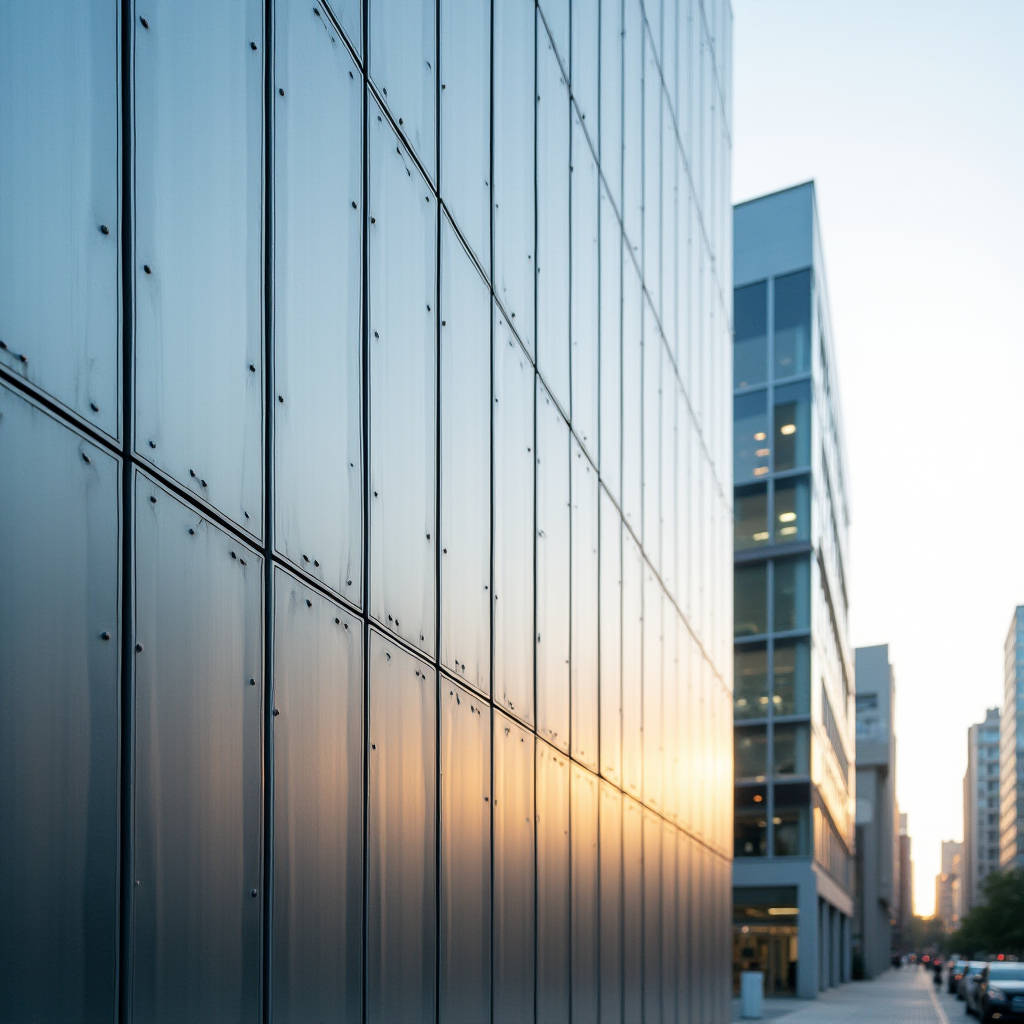
Getting the anodizing quality aluminum sheet specification right before fabrication saves a project from expensive rework, delayed handover, and facade failures that show up two years after practical completion. Anodizing is not a coating you apply — it is an electrochemical conversion of the aluminum surface itself, growing a controlled aluminum oxide layer from the base metal. That distinction matters because it means the quality of the raw sheet and the precision of the anodizing line directly determine whether the finished panel looks uniform across a 20-story elevation or shows banding, color shift, and chalky degradation within the first 18 months of exposure. This article focuses on the technical thresholds that separate architectural-grade anodizing quality aluminum sheet from commodity product, covering alloy selection, batch versus coil processing, film thickness verification, and the quality control documentation that specifiers should demand before accepting delivery.
What Separates Architectural Anodizing from Decorative or Industrial Finishes
Not all anodized aluminum carries the same performance profile. The industry recognizes three broad categories defined by the Aluminum Anodizers Council and referenced in AAMA 611-14: Class I (architectural), Class II (commercial/residential), and industrial anodizing. The difference comes down to oxide film thickness, sealing quality, and the testing regimen applied to each batch.
Class I architectural anodizing requires a minimum oxide film thickness of 0.7 mil (18 microns) as measured by eddy current testing per ASTM B244. This is the threshold where the oxide layer provides meaningful long-term corrosion resistance in urban, coastal, and industrial atmospheres. Class II products typically run 0.4 mil (10 microns) minimum, which handles interior applications and sheltered exterior conditions but will not hold up on a fully exposed curtain wall facade in Singapore or Dubai. The specifier who signs off on Class II for an exterior cladding application is effectively accepting a facade that will show visible degradation within 3-5 years.
Sealing quality is the second critical variable. After the anodic layer is formed, the porous oxide structure must be sealed — typically through hot water (nickel-free) or mid-temperature nickel acetate sealing. Poor sealing leaves the oxide layer open to absorbing contaminants, which causes staining, color shift, and loss of gloss. The modified dye stain test per ASTM B136-23 provides a quantitative measure: a properly sealed architectural anodized surface should show a stain rating no worse than 2 on the standard scale. Suppliers like Futeng® who run dedicated architectural anodizing lines typically maintain in-house sealing quality verification on every batch, not just periodic audit samples.
Alloy Selection: Why 5005 and 5052 Dominate Architectural Anodizing
The alloy you specify for anodizing quality aluminum sheet determines the color consistency, oxide layer uniformity, and mechanical properties of the finished panel. Not every aluminum alloy anodizes well — and choosing the wrong one produces streaky, inconsistent results that no amount of process control can fix.
Alloy 5005 is the workhorse of architectural anodizing. With magnesium content around 0.8%, it produces a clear, bright anodic layer with excellent color consistency across different production lots. The oxide film grows uniformly because the alloy's metallurgical structure is clean and homogeneous, without the heavy intermetallic particles that cause localized burning or discoloration during anodizing. For natural clear anodized finishes, 5005-H14 or 5005-H34 is the standard reference.
Alloy 5052 offers higher tensile strength (around 31 ksi minimum in H32 temper versus 21 ksi for 5005-H14) and better fatigue resistance, making it the preferred choice for panels that require additional forming — deep drawn profiles, perforated panels, or cladding components with complex bends. The trade-off is a slightly warmer grey tone in the anodized finish compared to the cooler, more neutral appearance of 5005. For projects where the architect specifies a precise color match across flat panels and formed components, the specifier must decide early whether to standardize on one alloy and accept the mechanical compromises, or to manage the subtle color difference between 5005 and 5052 through mockup approval.
Alloy 6061, while common in structural applications, is generally avoided for visible architectural anodizing because its higher silicon and copper content produces a dull, greyish-brown finish that varies significantly between batches. The same applies to 3003, which anodizes with a yellowish cast. For anodizing quality aluminum sheet destined for architectural facades, the spec should explicitly call out 5005 or 5052 and reject unverified substitutions.
| Alloy | Temper | Tensile Strength (ksi) | Anodizing Appearance | Architectural Suitability | Typical Application |
|---|---|---|---|---|---|
| 5005 | H14 / H34 | 21 - 23 | Bright, neutral clear | Excellent — Class I | Flat curtain wall panels, column covers |
| 5052 | H32 | 31 - 33 | Slightly warm grey | Excellent — Class I | Formed panels, perforated facades |
| 6061 | T6 | 42 - 45 | Dull grey-brown, inconsistent | Poor — avoid for visible surfaces | Structural brackets, not cladding |
| 3003 | H14 | 17 - 20 | Yellowish cast | Poor — interior only | Non-visible trim, backing plates |
| 1100 | H14 | 14 - 16 | Soft white, low strength | Limited — low-stress areas | Decorative interior liners |
Batch Anodizing vs. Coil Anodizing: The Quality Implications
Two fundamentally different production routes produce anodizing quality aluminum sheet, and the choice between them has direct consequences for color consistency, maximum panel size, and the types of defects that can appear on the finished facade.
Batch anodizing processes pre-cut sheets or fabricated panels through a series of immersion tanks — cleaning, etching, desmutting, anodizing, coloring (if specified), and sealing. Each rack of panels experiences the same bath chemistry, temperature, and current density, which produces excellent consistency within a single batch. The limitation is that each batch is finite: a rack holds a certain number of panels, and the bath conditions drift slightly over time. For large facades requiring hundreds of panels across multiple batches, the color variation between Batch 1 and Batch 15 can be visible if the anodizer does not maintain tight process control and documented color measurement at each batch transition.
Coil anodizing, by contrast, processes the aluminum as a continuous strip through the anodizing line before the metal is cut and fabricated into panels. This method produces exceptional color consistency across the entire coil length — often 2,000 to 5,000 meters — because every square meter sees identical process conditions. The limitation is that coil anodized material must be fabricated after anodizing, which means cut edges, bend radii, and fastener holes expose bare aluminum that will not carry the anodic layer. For architectural applications, this requires careful detailing: folded edges that hide raw cut surfaces, or supplementary edge treatment that prevents localized corrosion at panel perimeters.
The specifier's decision should be driven by project scale and aesthetic requirements. For a 500-square-meter facade with panels under 1.2 meters in any dimension, batch anodizing from a qualified architectural anodizer works well. For a 5,000-square-meter curtain wall where the architect demands zero visible color variation, coil anodized material with fabrication protocols that protect anodized surfaces is the more reliable path. In both cases, the spec should reference the color range tolerances defined in ISO 7599:2018 and require measurement with a spectrophotometer, not visual comparison under shop lighting.
Film Thickness Verification: The Numbers That Actually Matter
Specifying "anodized finish" without a film thickness requirement is like specifying "paint" without a dry film thickness — it tells the contractor nothing about the performance level expected. For anodizing quality aluminum sheet in architectural service, the minimum oxide film thickness is non-negotiable.
The industry reference standard is AAMA 611-14, which mandates a minimum average oxide film thickness of 0.7 mil (18 microns) for Class I architectural anodizing, with no single measurement below 0.65 mil (16.5 microns). These measurements are taken using an eddy current thickness gauge calibrated to the specific alloy being measured, as described in ASTM B244. The gauge must be verified against certified reference standards at the start and end of each measurement session, and the calibration record should be part of the quality documentation package.
For projects in aggressive environments — coastal facades within 5 kilometers of salt water, industrial zones with elevated SO2 levels, or locations with frequent acid rain — many specifiers now require 1.0 mil (25 microns) minimum oxide thickness. This is sometimes called "heavy architectural anodizing" and provides roughly 40% more service life than the standard Class I thickness. The Aluminum Anodizers Council publishes technical bulletins that correlate oxide thickness with expected service life across different environmental exposure categories.
On-site verification matters. A competent quality inspector should perform eddy current measurements on a statistically valid sample of delivered panels — typically per ANSI/ASQ Z1.4 sampling plans — and reject lots where the measured thickness falls below the specified minimum. The cost of third-party inspection is trivial compared to the cost of replacing a facade that starts corroding because the oxide layer was half the specified thickness.
Color Consistency and the Reality of Batch-to-Batch Variation
Architects specify anodized aluminum for its clean, metallic appearance — but the expectation of perfect color match across an entire building envelope runs into the physical reality of anodizing chemistry. The anodic layer is transparent; the perceived color comes from optical interference effects within the oxide structure and from any electrolytic coloring step that deposits metal salts into the pore structure. Both processes are sensitive to alloy composition, bath temperature, current density, and sealing parameters.
The industry defines acceptable color variation through instrumental measurement rather than subjective judgment. A spectrophotometer measures the color coordinates (typically L*, a*, b* in the CIELAB color space) and calculates the Delta E value between any two measurements. For architectural anodizing, a Delta E of 2.0 or less between adjacent panels is generally considered acceptable, while a Delta E of 1.0 or less is achievable with tight process control on coil-anodized material. These tolerances should be written into the specification and verified on the approved mockup before production begins.
Two-tone anodizing — where the same alloy and process produce visibly different color on different panel orientations — is a known risk that arises from the directional reflectance of the anodized surface. A panel viewed from one angle may appear slightly different in color than the same panel viewed from another angle. This is inherent to anodized aluminum and cannot be eliminated, but it can be managed by orienting panels consistently during installation and by reviewing the mockup under natural daylight at multiple viewing angles. The American Architectural Manufacturers Association (AAMA) provides guidance on visual assessment protocols in its technical information documents.
Corrosion Resistance: Testing Protocols That Predict Real-World Performance
The anodic layer protects aluminum through barrier action — it physically separates the reactive base metal from the environment. But the quality of that protection depends on film thickness, sealing effectiveness, and the absence of defects that create localized corrosion sites.
Salt spray testing per ASTM B117 is the most commonly specified corrosion test, but it has limitations. A 3,000-hour salt spray exposure provides a comparative benchmark, but it does not directly correlate to years of service life in a specific environment. More meaningful for architectural applications is the cyclic corrosion testing described in ASTM G85, which alternates between salt fog, drying, and humidity exposure to better simulate outdoor conditions. Anodizing quality aluminum sheet that passes 2,000 hours of cyclic corrosion testing with no blistering, pitting, or loss of adhesion demonstrates the kind of durability that facade engineers need for 30-year building lifecycles.
Filiform corrosion — thread-like corrosion filaments that creep under the anodic layer — is a particular concern in coastal and high-humidity environments. It typically initiates at cut edges, fastener holes, or scratches where bare aluminum is exposed. The risk is managed through proper sealing, adequate film thickness, and detailing that protects vulnerable edges. For projects within 5 kilometers of a coastline, the specification should explicitly require filiform corrosion resistance testing per ASTM D2803 and set a maximum allowable filament length.
Alkaline resistance is another factor that is often overlooked. Building cleaning chemicals, particularly alkaline detergents used for facade maintenance, can attack the anodic layer if it is poorly sealed. A quality architectural anodized surface should withstand immersion in a pH 9.5 alkaline solution for 10 minutes without visible etching or color change. This is a simple quality check that can be performed on a sample panel before accepting a production batch.
Fabrication After Anodizing: Protecting the Surface During Processing
Anodizing quality aluminum sheet must survive fabrication operations — cutting, bending, punching, and assembly — without damage to the anodic layer. The oxide is hard (typically 250-350 HV on the Vickers scale, compared to 60-80 HV for bare aluminum) but brittle. It can crack if the panel is bent to a radius tighter than the material allows, and it can be scratched by tooling that is not properly maintained.
The minimum bend radius for anodized sheet depends on the alloy, temper, and sheet thickness. For 5005-H14 sheet at 2.0mm thickness, a bend radius of 1.5 times the sheet thickness (3.0mm inside radius) is generally safe. For 5052-H32 at the same thickness, the bend radius can be tighter — around 1.0 times the thickness — because of the alloy's higher ductility. Bending parallel to the rolling direction requires a larger radius than bending perpendicular to it, and this should be accounted for in panel detailing.
Fabrication shops handling anodized material need dedicated tooling and handling protocols. Steel worktables should be covered with protective film or felt. Roll-forming equipment should have polished rollers free of embedded aluminum oxide particles that can scratch subsequent panels. Stacking panels without interleaving — especially with debris between them — is the most common cause of surface damage before panels even reach the site. Protective film applied immediately after anodizing, and left in place until installation is complete, is cheap insurance against handling damage.
For coil-anodized material, the fabrication sequence is reversed: anodizing happens before cutting and forming. This means cut edges expose bare aluminum. The specification should address edge treatment — typically a clear organic sealant applied to cut edges, or a folded edge detail that hides the raw aluminum behind the panel return. Leaving bare edges exposed on a coastal facade will result in filiform corrosion initiating from every panel perimeter within the first year.
Quality Documentation: What to Demand Before Accepting Delivery
The difference between a supplier who understands architectural anodizing and one who sells commodity anodized sheet is visible in the quality documentation package. For anodizing quality aluminum sheet specified for a building facade, the following documents should be provided as a minimum:
- Mill test certificates for the aluminum sheet, confirming alloy, temper, and compliance with ASTM B209 or EN 485.
- Anodizing process records showing bath chemistry, temperature, current density, and dwell time for each batch or coil.
- Film thickness measurement records per ASTM B244, with calibration verification data.
- Sealing quality test results per ASTM B136-23 (modified dye stain) or ISO 2143 (acid dissolution test).
- Color measurement data using a spectrophotometer, with Delta E values relative to the approved reference standard.
- Salt spray or cyclic corrosion test results for the specific alloy and anodizing process combination being supplied.
Suppliers who cannot or will not provide this documentation package are not operating at the quality level required for architectural cladding. The ISO 7599:2018 standard provides a comprehensive framework for specifying anodic oxidation coatings on aluminum and includes detailed requirements for test methods and acceptance criteria. Specifiers should reference this standard in their project documentation and require conformance as a condition of supply.
Environmental and Health Considerations in Anodizing
Anodizing is often described as an environmentally preferable finishing process because it produces no VOCs, uses no heavy metals (in clear anodizing), and the anodic layer is chemically identical to the natural oxide that forms on aluminum — just thicker and more controlled. But the process does use acids (typically sulfuric acid at 15-20% concentration) and requires wastewater treatment for the rinse water and spent bath solutions.
Responsible anodizers operate closed-loop rinse water systems that recover and recycle process chemicals, and they neutralize spent acid baths before discharge. For projects pursuing LEED, BREEAM, or Green Star certification, the anodizing supplier's environmental management system — ideally certified to ISO 14001 — should be documented as part of the material sourcing credits. The U.S. Green Building Council recognizes anodized aluminum as a low-emitting material that contributes to indoor environmental quality credits when used for interior applications.
Nickel-free sealing is increasingly specified for architectural projects, particularly in Europe where regulatory pressure on nickel compounds is strongest. Hot water sealing at 96-100°C with deionized water produces a nickel-free sealed surface that meets Class I performance requirements, though it requires precise temperature control and longer sealing times than nickel acetate methods. Specifiers should confirm the sealing method with the anodizer and document it in the project quality plan.
Making the Specification Work: Practical Steps for Project Teams
Writing a specification for anodizing quality aluminum sheet is the easy part. Getting what was specified delivered to site is where most projects fail. The following steps, built into the project workflow from the start, reduce the risk of ending up with substandard material that looks nothing like the approved mockup.
First, require a full-scale mockup — not just a small sample — that shows the actual panel size, joint width, and orientation that will be used on the building. This mockup should be produced on the same anodizing line, using the same alloy and temper, that will supply the production panels. Approve the mockup in writing and use it as the reference standard for all subsequent color and quality assessments.
Second, write the quality documentation requirements into the purchase order, not just the specification. The supplier's contractual obligation to provide mill certs, anodizing process records, and test data should be explicit, with consequences for non-compliance. A purchase order that says "anodized aluminum sheet, 5005-H14, 2.0mm" without referencing AAMA 611-14, film thickness, and documentation requirements is an invitation for the supplier to ship whatever they have in stock.
Third, perform incoming inspection at the fabrication shop or site, not at the anodizer's facility. The material that leaves the anodizer's dock is not necessarily the material that arrives at the fabricator — handling damage, storage conditions, and transport can all affect the surface quality. Inspect a statistically valid sample of delivered panels, measure film thickness, check for scratches and handling marks, and compare color against the approved mockup before releasing material for fabrication.
Fourth, plan for lead time. Architectural anodizing is a batch process with limited capacity, and the best anodizers are booked weeks in advance. A realistic lead time for custom-anodized sheet from a qualified architectural supplier is 6-10 weeks from order to delivery, depending on quantity and finish complexity. Projects that treat anodized aluminum as an off-the-shelf commodity invariably end up accepting whatever is available, quality compromises included.
Anodizing quality aluminum sheet, when specified correctly and sourced from suppliers who understand architectural requirements, delivers a facade finish that lasts decades with minimal maintenance. The oxide layer is integral to the metal — it cannot peel, chip, or delaminate like an organic coating. But the quality of that oxide layer is entirely determined by the alloy, the process control, and the verification regime applied before the panels reach the building. Cutting corners on any of those three elements produces a facade that looks acceptable at handover and deteriorates steadily thereafter. The specifier's job is to make sure the corners stay sharp.