High Strength Aluminum Alloy Selection for Wind Load Performance in Solid Aluminium Cladding
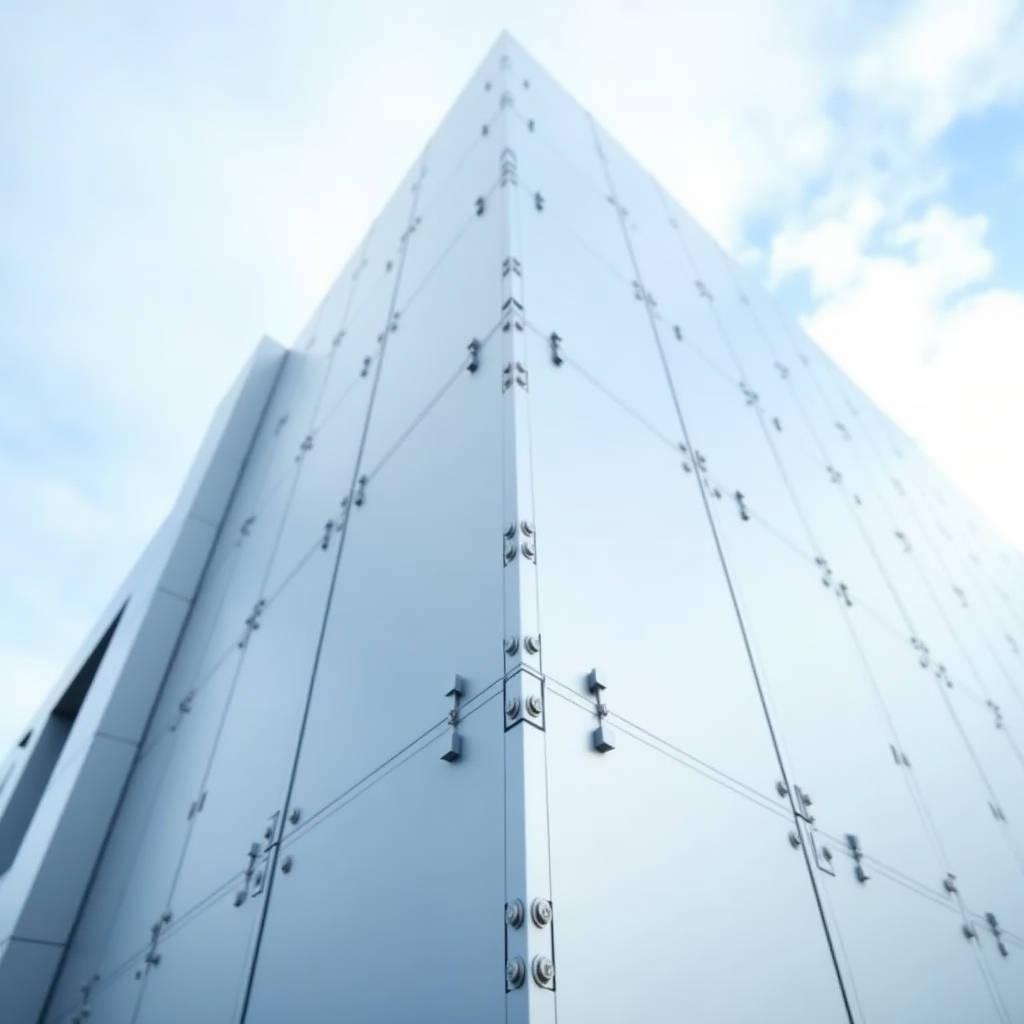
When a facade engineering team evaluates solid aluminium cladding for a 40-story tower in a coastal typhoon zone, the conversation rarely starts with aesthetics. It starts with a number: wind load. And behind that number sits a material decision that cascades into panel thickness, fixing design, span ratings, and ultimately whether the skin of the building stays intact during a storm that arrives once every 50 years. High Strength Aluminum Alloy is not a marketing term here. It is the difference between a 2.0mm panel that deflects beyond acceptable limits under negative wind pressure and a 2.5mm panel in the right temper that holds its plane. Architects specify aluminium because it weighs roughly one-third of steel. But general contractors and facade installers need to know something else: not all aluminium alloys deliver the same resistance to the forces that actually destroy cladding systems. This article examines what happens when wind meets a building envelope, and why the alloy grade and temper you select for solid aluminium panels determines whether the facade performs or fails.
Wind Loads Are the Real Test for Facade Cladding
Wind does not push uniformly against a building. It creates positive pressure on the windward face and negative pressure, or suction, on the leeward face, side walls, and especially at corners. The worst-case scenario for a cladding panel is almost always suction. Wind flowing around a sharp building corner accelerates, dropping local pressure dramatically. A panel that can handle uniform positive load might rip clean off under corner suction if the alloy lacks the yield strength to resist bending and the ultimate tensile strength to avoid fracture at the fixing points.
ASCE 7, the standard used across much of North America and referenced internationally, maps basic wind speeds and translates them into design pressures based on building height, exposure category, and geometry. A 100-meter tower in Exposure Category C (open terrain) in a region with a 150 mph basic wind speed can see design pressures exceeding 3.5 kPa on corner zones. That is over 70 psf. For a solid aluminium panel spanning 600mm between stiffeners, the bending moment is real and the margin for error is thin.
European designers rely on EN 1991-1-4 for wind actions. Australian and Asian markets use AS/NZS 1170.2 or their local adaptations. The code changes, but the physics stays the same. Wind pressure scales with the square of velocity. Double the wind speed, quadruple the force. And the force does not care about architectural intent. It cares about the material's mechanical properties.
Yield Strength Matters More Than You Think
When a solid aluminium panel is subjected to wind suction, it bends. The question is whether it bends elastically and returns to flat, or bends plastically and stays deformed. The yield strength of the alloy sets this boundary. Below the yield point, the panel behaves like a spring. Above it, permanent set occurs. A facade with visibly warped panels after a storm is a facade that has crossed the yield threshold.
Consider two common scenarios. A 5052-H32 aluminium sheet with a yield strength around 193 MPa versus a 6061-T6 sheet with yield near 276 MPa. That is a 43% increase. For the same panel geometry and fixing layout, the 6061-T6 panel can handle significantly higher wind suction before permanent deformation begins. The trade-off is that 5052 offers better formability for complex shapes and slightly better corrosion resistance in marine environments. But for large flat panels on high-rise facades, formability is secondary to stiffness and strength.
What about 7075-T6? Yield strength exceeds 500 MPa, which sounds appealing. But 7075 welds poorly, corrodes more readily than 5xxx or 6xxx alloys, and costs significantly more. For solid aluminium cladding, it is rarely the right answer. The sweet spot for most architectural cladding applications sits in the 5xxx and 6xxx series, with temper selection doing much of the heavy lifting.
Alloy Series Breakdown for Cladding Applications
The aluminium industry organizes wrought alloys into series based on primary alloying elements. For solid aluminium cladding panels, three series dominate the conversation:
5xxx Series (Al-Mg): Magnesium is the principal alloying element. These alloys offer excellent corrosion resistance, particularly in marine and coastal environments. 5052-H32 is widely used for cladding because it balances strength, formability, and corrosion resistance. 5083-H116 or H321 provides higher strength with good corrosion performance, often specified for severe marine exposure. The 5xxx series strain-hardens rather than heat-treats, meaning temper designations like H32, H116, and H321 describe specific work-hardening and stabilization processes.
6xxx Series (Al-Mg-Si): Both magnesium and silicon are present. These alloys are heat-treatable, with T6 being the most common temper for architectural applications. 6061-T6 offers higher yield and tensile strength than 5052-H32, along with good corrosion resistance and excellent extrudability for stiffeners and sub-frames. 6063-T6 is slightly lower in strength but provides superior surface finish, making it popular for visible architectural elements.
7xxx Series (Al-Zn): Zinc is the primary alloying element, with 7075-T6 being the iconic high-strength grade. For cladding, the 7xxx series is generally overkill. The strength-to-weight ratio is exceptional, but corrosion resistance is lower than 5xxx or 6xxx, and the cost premium is difficult to justify for building envelopes. Niche applications exist, such as blast-resistant facades or extremely high wind zones, but these are rare.
The table below provides a practical comparison of the alloys most relevant to solid aluminium cladding specification.
| Alloy & Temper | Yield Strength (MPa) | Tensile Strength (MPa) | Elongation (%) | Corrosion Resistance | Typical Cladding Application |
|---|---|---|---|---|---|
| 5052-H32 | 193 | 228 | 12 | Excellent (marine) | Coastal facades, complex curved panels |
| 5083-H116 | 228 | 317 | 11 | Excellent (severe marine) | Seafront buildings, high-corrosion zones |
| 6061-T6 | 276 | 310 | 12 | Very good | High-rise facades, large flat panels |
| 6063-T6 | 214 | 241 | 12 | Very good | Architectural trim, visible elements |
| 7075-T6 | 503 | 572 | 11 | Moderate | Blast-resistant, extreme wind zones |
Data sourced from ASTM B209 and EN 485-2 standards. Actual values may vary slightly by mill and production batch. Always confirm with mill test certificates before specifying.
How Temper Changes Everything
The alloy designation tells half the story. The temper tells the rest. A 6061-O (annealed) sheet has a yield strength around 55 MPa, which is nearly useless for structural cladding. The same alloy in T6 temper delivers 276 MPa. That fivefold increase comes from solution heat treatment followed by artificial aging. For 5xxx alloys, which are not heat-treatable, the H temper designations indicate strain hardening. H32 means strain-hardened and stabilized to quarter-hard. H116 means strain-hardened with special corrosion resistance for marine use.
For solid aluminium cladding panels, the commonly specified tempers are H32, H116, H14, T6, and occasionally T651. Each represents a specific combination of mechanical properties and processing. An H14 temper on 5052 yields around 215 MPa, higher than H32, but with reduced formability. If the panel design includes deep returns or complex folds, the fabricator may push back on H14 and request H32. The specifier needs to understand these trade-offs before the shop drawings arrive.
One practical point that often gets overlooked: temper affects more than strength. It influences the residual stress state in the sheet, which directly impacts flatness after routing and folding. A panel that looks perfect on the CNC table can develop oil-canning distortion after installation if the temper and sheet processing were not properly controlled. This is where supplier quality systems matter. Mills with tight process control, and fabricators like Futeng® who understand how temper interacts with fabrication, produce panels that stay flat on the wall.
Panel Thickness and Span Tables: Engineering the System
Selecting a High Strength Aluminum Alloy is step one. Step two is determining the panel thickness and stiffener layout that makes the numbers work for the specific wind loads on the project. This is where span tables and deflection criteria come in.
Most facade specifications limit deflection under design wind load to L/60 or L/90, where L is the span between supports. Some projects tighten this to L/120 for premium finishes where even slight waviness would be visible under raking light. A 2.0mm thick 5052-H32 panel spanning 600mm between stiffeners might deflect 6.7mm under a 2.5 kPa design load, which is L/90. That same panel in 6061-T6 at 2.5mm thickness might deflect 3.8mm, or L/158, under the same load. The difference is not just academic. It determines whether the facade looks crisp or wavy on a sunny morning.
The fixing system interacts with the panel strength as well. Cassette systems with folded returns create a structural edge that increases panel stiffness. Routed-and-returned panels with concealed fixings rely on the return leg to transfer load to the sub-frame. The alloy's bearing strength at the fixing point matters. A rivet or screw in a 5052 panel has a lower bearing capacity than the same fixing in 6061-T6. In high-suction corner zones, bearing failure at fixings is a known failure mode. The fixings pull through the aluminium, and the panel departs the building.
For reference, the Aluminum Association's Aluminum Design Manual provides detailed allowable stress design values for all common alloys and tempers. AAMA 508 and 509 standards address testing requirements for aluminium cladding panels. EN 1999-1-1 covers the structural design of aluminium structures in Europe.
Corrosion and Coastal Environments: Where Strength Meets Durability
High strength is not useful if the panel corrodes through in a salt-laden atmosphere. The 5xxx series alloys with magnesium content below 3.5% are generally considered immune to stress corrosion cracking and offer excellent resistance to marine atmospheres. 5052, with 2.5% magnesium, falls squarely in this category. 5083, at 4.5% magnesium, requires careful temper control (H116 or H321) to avoid sensitization and intergranular corrosion over time.
The 6xxx series alloys have good corrosion resistance, but they are not quite as marine-tolerant as 5052. In coastal applications within 5 kilometers of breaking surf, many facade consultants specify 5052-H32 for the panels and 6063-T6 for the sub-frame, accepting the slight strength compromise for the corrosion advantage. PVDF coating adds a barrier layer, but the cut edges at fixing holes and routing grooves remain exposed. The base alloy's inherent corrosion resistance matters at every edge.
For projects in the Middle East Gulf region, where humidity, salt, and sand combine into an aggressive cocktail, 5083-H116 has become a common specification. The higher strength compared to 5052 allows for thinner panels or wider spans, while the H116 temper ensures corrosion performance. The cost premium over 5052 is roughly 15-20% at current market rates, which must be weighed against the lifecycle cost of premature replacement.
Thermal Movement and the Strength Connection
Aluminium expands and contracts with temperature at roughly 23 micrometers per meter per degree Celsius. A 3-meter panel subjected to a 60°C temperature swing moves about 4.1mm. If the fixing system restrains this movement, the panel experiences thermal stress. A High Strength Aluminum Alloy panel can handle higher thermal stress before buckling, but the real solution is designing the fixing system to accommodate movement.
This is where the interaction between alloy strength, panel thickness, and fixing detail becomes critical. A thin panel in a high-strength alloy may still buckle under thermal compression if the fixings are too rigid. Conversely, a thicker panel in a moderate-strength alloy with properly designed sliding fixings may perform flawlessly. The alloy is one variable in a system. The engineer's job is to balance all of them.
Dark-colored panels amplify the thermal challenge. A black PVDF-coated panel can reach 80°C on a summer afternoon in Dubai or Phoenix, while the ambient air is 40°C. The sub-frame behind it may be 20°C cooler. Differential thermal expansion between the panel skin and the aluminium sub-frame introduces shear forces at the fixings. The alloy's shear strength at the connection point becomes a design parameter that should not be ignored.
Fabrication Considerations: How the Alloy Hits the Shop Floor
Specifying 6061-T6 on paper is one thing. Getting it through the CNC router, the folding press, and the assembly line is another. 6061-T6 is harder than 5052-H32. It requires more force to bend, generates more tool wear, and is less forgiving of tight bend radii. The minimum bend radius for 6061-T6 at 2.5mm thickness is approximately 2.5 times the thickness, or about 6.3mm. For 5052-H32, the minimum bend radius drops to about 1.5 times thickness, or 3.8mm. That difference matters when the architect wants crisp, sharp returns on a cassette panel.
Welding is another consideration. 5xxx alloys weld beautifully with 5356 filler rod. 6061 welds are more challenging; the heat-affected zone loses strength, and post-weld heat treatment is rarely practical for large architectural panels. If the panel design requires welded corners or welded stiffener attachments, 5052-H32 is the fabricator's preference. If the design uses mechanical fastening or adhesive bonding for stiffeners, 6061-T6 becomes more practical.
Surface finish also varies by alloy. 6061-T6 can develop a slight orange-peel texture after anodizing, which is why 6063 is preferred for anodized architectural elements. For PVDF-coated panels, the coating hides the substrate texture, so the difference between alloys is less visible. But the coating adhesion and long-term performance depend on proper pretreatment, which is chemistry-dependent on the alloy being treated. A pretreatment line optimized for 5052 may need adjustment when running 6061.
Cost Reality: Strength Has a Price Tag
At the time of writing, 5052-H32 sheet in 2.5mm thickness trades at approximately USD 3.80-4.20 per kilogram, depending on mill origin and order volume. 6061-T6 runs about USD 4.20-4.80 per kilogram. 7075-T6 can exceed USD 8.00 per kilogram. For a project requiring 5,000 square meters of solid aluminium cladding at 2.5mm thickness, the raw material weight is roughly 33,750 kilograms. The alloy choice swings the material budget by USD 13,500 to USD 135,000. That is before fabrication, coating, and installation.
But the material cost is only part of the equation. A higher-strength alloy may allow thinner panels or wider stiffener spacing, reducing material weight and fabrication labor. A 6061-T6 panel at 2.0mm might replace a 5052-H32 panel at 2.5mm, saving 20% on weight and potentially reducing the supporting structure cost. The optimization is project-specific and requires a full system cost analysis, not just a per-kilogram comparison.
Lead times also vary by alloy. 5052 and 6061 are widely available from multiple mills globally. 5083-H116 has fewer qualified mills, primarily in Europe and select Asian producers. 7075-T6 in sheet form is less common than plate, and architectural quantities may require a mill run. For projects on tight schedules, alloy availability can override theoretical performance advantages.
Specifying for the Real World
An effective specification for solid aluminium cladding starts with the wind load, not the alloy. Define the design pressure zones based on the project's wind tunnel study or code calculations. Establish the deflection limit. Set the corrosion resistance requirements based on the site's environmental category. Then, and only then, select the alloy and temper that hits all the targets.
A sample specification clause might read: "Solid aluminium cladding panels shall be fabricated from 5052-H32 aluminium sheet conforming to ASTM B209, with a minimum thickness of 2.5mm. Panels located in corner zones with design wind pressures exceeding 3.0 kPa shall be fabricated from 6061-T6 sheet, minimum thickness 2.5mm, or 5052-H32 at 3.0mm minimum thickness, as approved by the facade engineer." This approach gives the contractor options while maintaining performance.
For projects in regions without local aluminium standards, refer to AAMA for North American guidance, ASTM International for material standards, and ISO for internationally recognized test methods. The Centre for Window and Cladding Technology in the UK publishes excellent technical guidance on cladding wind load assessment.
Where the Industry Is Heading
The search for stronger, lighter aluminium alloys continues. Powder metallurgy routes, such as those used to produce Al-MS78 by AMT Advanced Materials Technology, push 7000-series strength 40% beyond conventional 7075. For architectural cladding, these ultra-high-strength alloys are not yet commercially relevant. The cost is too high, and the corrosion challenges remain. But the technology is worth watching for specialist applications where extreme strength-to-weight ratios justify the premium.
More immediately relevant is the development of improved 6xxx series alloys with better formability at T6 strength levels, and 5xxx alloys with higher magnesium content that avoid sensitization issues through advanced thermal processing. These incremental improvements expand the design space for architects and engineers who want to push panel sizes larger, thicknesses thinner, and spans wider.
For the project on your desk right now, the decision comes back to fundamentals. Understand the wind loads. Know the deflection criteria. Assess the environmental exposure. Then select the High Strength Aluminum Alloy that delivers the required performance at a cost the project can bear. The right choice is rarely the strongest alloy available. It is the alloy that meets every requirement without over-specifying, without compromising, and without surprises on site.