High Tensile Aluminum Sheet Selection for Solid Cladding Panels Under Wind and Thermal Loads
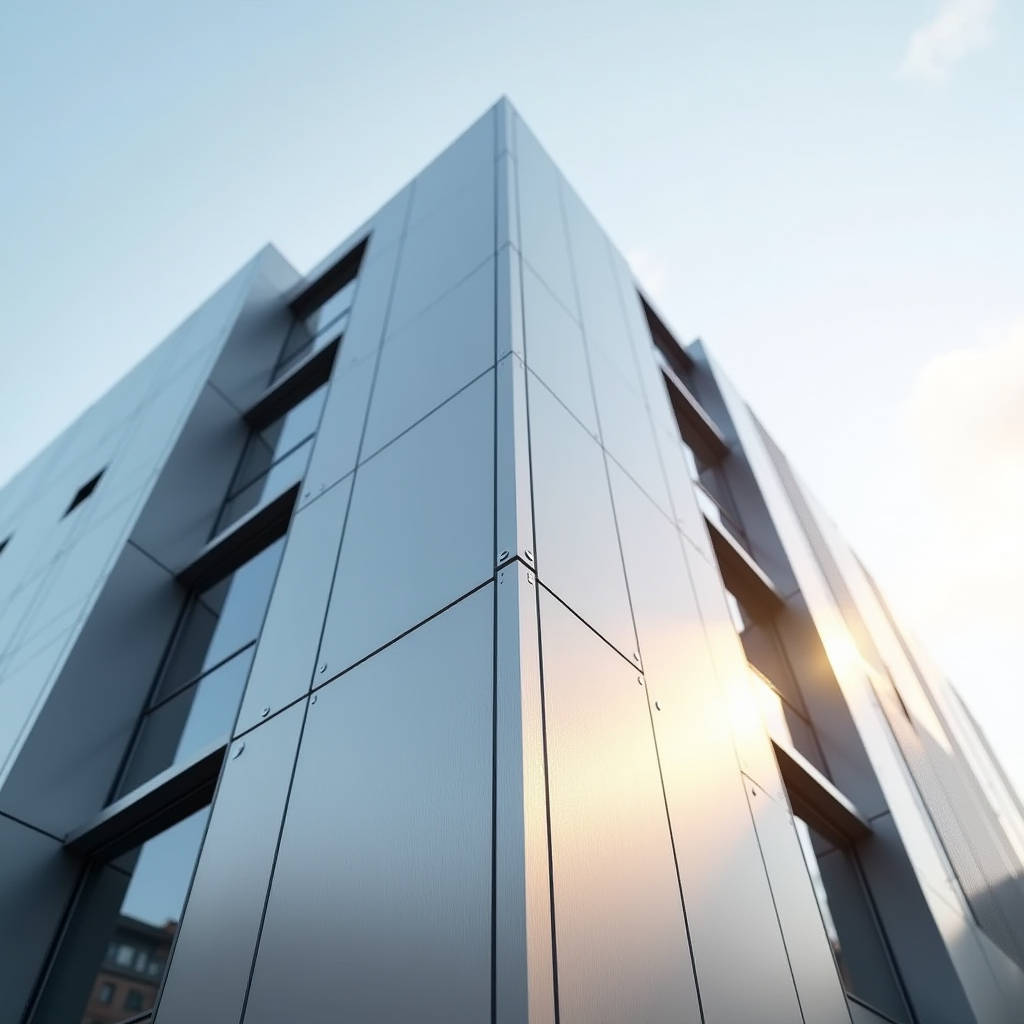
When specifying facade materials for high-rise commercial envelopes, the conversation around High Tensile Aluminum Sheet has shifted dramatically over the past five years. Building envelopes now contend with wind loads exceeding 3.5 kPa in coastal zones, thermal movement ranges that punish rigid connections, and impact resistance requirements driven by increasingly severe storm cycles. A standard 3003-H14 sheet simply cannot meet these demands without excessive thickness and weight penalties. High tensile aluminum sheet — specifically the 5xxx and 6xxx series alloys in strain-hardened tempers — offers yield strengths above 240 MPa while maintaining the formability required for complex panel geometries. This article examines the engineering logic behind high tensile aluminum sheet selection for solid aluminium cladding panels, focusing on the intersection of mechanical properties, fabrication constraints, and long-term facade performance. The goal is not to catalog alloys, but to give facade engineers and procurement managers a framework for matching specific tensile requirements to real-world building conditions.
What Defines a High Tensile Aluminum Sheet in Facade Engineering
In the context of solid aluminium cladding panels, a High Tensile Aluminum Sheet is not defined by a single number. The industry shorthand — tensile strength greater than 480 MPa — comes from aerospace and structural applications where 2xxx and 7xxx series alloys dominate. But facade engineering operates under different constraints. Here, high tensile aluminum sheet typically refers to 5xxx series (Al-Mg) and 6xxx series (Al-Mg-Si) alloys in tempers that deliver yield strengths between 215 MPa and 310 MPa, coupled with elongation percentages that permit brake forming, routing, and perforation without edge cracking.
The distinction matters because ultimate tensile strength (UTS) alone tells an incomplete story. A 7075-T6 sheet can reach 572 MPa UTS, but its stress corrosion cracking susceptibility and poor weldability make it unsuitable for exterior cladding. Facade engineers need yield strength — the point at which permanent deformation begins — as their primary design parameter. For a 3.0mm solid aluminium panel spanning 1,200mm between supports, the difference between a 5052-H32 sheet (yield strength 193 MPa) and a 6061-T6 sheet (yield strength 276 MPa) translates directly to allowable wind load capacity and deflection limits under ASTM E330 testing.
Alloy Selection Matrix for Solid Aluminium Cladding Panels
The four alloys that dominate high tensile aluminum sheet specifications for facade work are 5052, 5083, 6061, and 6082. Each occupies a specific performance niche. 5052-H32 and H34 tempers remain the workhorse for general commercial cladding — good formability, excellent corrosion resistance in marine environments, and yield strength around 193-215 MPa. 5083-H116 or H321 pushes yield strength to 228-250 MPa while maintaining weldability, making it the preferred choice for large-format panels exceeding 1,500mm in any dimension where deflection control governs design.
6061-T6 deserves special attention. With yield strength of 276 MPa and ultimate tensile strength of 310 MPa, it offers the highest strength-to-weight ratio among commonly specified facade alloys. The trade-off is formability — 6061-T6 requires larger bend radii (typically 3t to 4t versus 1.5t for 5052) and cannot be folded into sharp return legs without risk of cracking. This has direct cost implications for panel fabrication. 6082-T6, widely used in European facade projects, offers similar strength with slightly better extrusion characteristics, though it is less common in sheet form for cladding.
| Alloy & Temper | Yield Strength (MPa) | UTS (MPa) | Elongation (%) | Min. Bend Radius | Corrosion Resistance | Typical Cladding Application |
|---|---|---|---|---|---|---|
| 5052-H32 | 193 | 228 | 12 | 1.5t | Excellent (Marine) | Standard commercial facades |
| 5052-H34 | 215 | 260 | 10 | 2t | Excellent (Marine) | High-wind mid-rise envelopes |
| 5083-H116 | 228 | 305 | 12 | 2t | Excellent (Marine) | Large-format panels, coastal |
| 6061-T6 | 276 | 310 | 12 | 3t-4t | Very Good | High-strength architectural |
| 6082-T6 | 260 | 310 | 10 | 3t | Very Good | European facade systems |
| 7075-T6 | 503 | 572 | 11 | 5t+ | Poor (SCC risk) | Not recommended for cladding |
Wind Load Performance and Deflection Limits
The most common engineering trigger for specifying high tensile aluminum sheet is wind load. ASCE 7-22 and EN 1991-1-4 establish design wind pressures that vary by building height, exposure category, and geographic location. A 40-story tower in Miami faces design pressures of 3.0-4.5 kPa on corner zones, while a similar building in Chicago might see 2.0-3.0 kPa. The panel's ability to resist these pressures without exceeding deflection limits — typically L/60 for solid aluminium cladding under ASTM E330 — depends directly on the alloy's modulus of elasticity and yield strength.
Aluminum's elastic modulus is essentially constant across alloys at approximately 69 GPa. This means stiffness is controlled by section geometry and sheet thickness. However, yield strength determines whether the panel returns to its original shape after a wind event or retains permanent deformation. A 5052-H32 panel at 2.5mm thickness spanning 1,200mm between stiffeners might deflect 18mm under a 3.0 kPa load — within L/60 limits. But if the same panel experiences a 4.5 kPa gust, the outer fiber stress could exceed yield, leaving a visible dimple. Switching to 6061-T6 at the same thickness raises the elastic limit by 43%, eliminating the permanent set risk without adding weight.
Futeng® has supplied high tensile aluminum sheet for projects where this exact calculation drove material selection — including a 38-story mixed-use tower in Southeast Asia where corner panels were upgraded from 5052-H32 to 6061-T6 specifically to handle cyclone-rated wind pressures without increasing panel thickness beyond 3.0mm.
Thermal Movement and the Strength-Ductility Balance
Facade panels experience daily temperature swings of 40°C or more in desert climates, and seasonal ranges exceeding 70°C in continental locations. Aluminum's coefficient of thermal expansion — approximately 23.6 × 10⁻⁶ per °C — means a 3-meter panel expands by roughly 2.1mm across a 30°C temperature rise. High tensile aluminum sheet alloys with lower elongation percentages can develop stress concentrations at fixed connection points if the facade system does not accommodate this movement.
This is where 5052-H32 holds an advantage over 6061-T6 despite lower strength. Its 12% elongation (versus 10% for 6082-T6) provides slightly more capacity to absorb thermal strain without cracking at fastener holes or routed corners. The engineering solution is not to avoid high tensile aluminum sheet, but to design connection details that decouple thermal movement from structural restraint. Cassette systems with slotted connections, pressure-equalized rainscreen designs, and the use of stainless steel rivets with oversized holes in the panel flange all contribute to a system that lets the aluminum move while maintaining wind load resistance.
Fabrication Constraints: When High Strength Becomes a Liability
Every increase in tensile strength comes with a fabrication penalty. 6061-T6 sheet requires approximately 40% more press tonnage to bend compared to 5052-H32 at the same thickness. Bend radii must increase from 1.5t to 3t or 4t, which affects the visual sharpness of panel returns — a detail architects notice immediately. Routing and V-grooving operations that work cleanly on 5052 can produce chatter marks and edge micro-cracking on 6061-T6 if tool speeds and feed rates are not adjusted.
The practical implication for procurement managers is that specifying high tensile aluminum sheet should be a deliberate engineering decision, not a blanket upgrade. A project that uses 6061-T6 for all panels when only corner zones require the extra strength is paying a 15-25% premium on material and a 20-30% premium on fabrication for no performance benefit. The smarter approach is a hybrid specification: 5052-H32 for field panels, 6061-T6 or 5083-H116 for corner panels and large-format feature elements where wind loads peak.
Coating Compatibility with High Tensile Aluminum Sheet
PVDF fluoropolymer coatings — the industry standard for architectural aluminum cladding — apply equally well to all high tensile aluminum sheet alloys. The critical variable is not the alloy itself but the pretreatment process. High-magnesium 5xxx alloys (particularly 5083 with 4.0-4.9% Mg) require more aggressive chromate conversion coating or titanium-zirconium pretreatment to ensure coating adhesion over the panel's service life. AAMA 2605-compliant PVDF systems (70% PVDF resin, minimum 30μm dry film thickness) have been validated on 5052, 5083, 6061, and 6082 substrates when proper pretreatment is applied.
For coastal and industrial environments, the combination of high tensile aluminum sheet and FEVE fluoropolymer coatings offers an extended service interval. FEVE systems provide gloss retention exceeding 70% after 15 years of Florida exposure per AAMA 2605 testing, compared to 50% minimum for standard PVDF. The higher crosslink density of FEVE resins also provides better resistance to acid rain and industrial pollutants — a consideration for projects in rapidly urbanizing regions.
Supply Chain Realities: Lead Times and Mill Sources
Not all high tensile aluminum sheet is equally available. 5052-H32 in standard thicknesses (2.0mm, 2.5mm, 3.0mm) is stocked by most major service centers with lead times of 2-4 weeks. 6061-T6 sheet in the same thicknesses is less commonly stocked — particularly in widths exceeding 1,500mm — and may require mill orders with 8-12 week lead times. 5083-H116 is a specialty product with limited mill sources globally, and procurement managers should plan for 12-16 week lead times on large orders.
This supply reality has direct implications for project scheduling. A specification that calls for 6061-T6 across an entire facade should be locked in during the design development phase, not value-engineered during construction documentation. The cost of expedited mill orders or air freight on high tensile aluminum sheet can erase any budget advantage gained through value engineering elsewhere in the facade package.
Corrosion Performance in Aggressive Environments
The 5xxx series alloys — 5052 and 5083 — are the standard recommendation for marine and coastal environments. Their magnesium content (2.2-2.8% for 5052, 4.0-4.9% for 5083) provides excellent resistance to chloride-induced pitting. Independent testing per ASTM B117 (neutral salt spray) shows 5052-H32 panels with PVDF coating surviving 3,000+ hours without blistering or underfilm corrosion when edge-sealed properly.
6061-T6, while rated as having "very good" corrosion resistance, contains copper (0.15-0.40%) which can create galvanic micro-cells at cut edges and fastener holes in marine exposure. The risk is manageable with proper edge treatment and the use of 316 stainless steel fasteners rather than 304, but it should factor into material selection for projects within 500 meters of breaking surf. For these applications, 5083-H116 high tensile aluminum sheet with its higher magnesium content and absence of copper provides the optimal balance of strength and corrosion resistance.
Cost-Benefit Analysis Across Alloy Choices
Material cost differences between high tensile aluminum sheet alloys are significant but must be weighed against system-level savings. 6061-T6 sheet typically costs 15-20% more than 5052-H32 per kilogram. However, the ability to use 2.5mm 6061-T6 instead of 3.0mm 5052-H32 for a given wind load reduces material weight by approximately 17%, partially offsetting the unit cost premium. The net material cost increase is typically 5-8% after accounting for the thickness reduction.
The larger variable is fabrication cost. 6061-T6's higher strength means slower machining speeds, more frequent tool changes, and higher scrap rates from edge cracking during forming. A fabricator experienced with high tensile aluminum sheet can minimize these costs through optimized tool paths and bend sequences, but the learning curve is real. Projects specifying 6061-T6 should qualify fabricators based on documented experience with the alloy, not just general aluminum cladding experience.
Testing and Compliance for Facade Applications
Any high tensile aluminum sheet specified for solid aluminium cladding panels should be accompanied by mill test reports (MTRs) certifying chemical composition to the relevant ASTM or EN standard and mechanical properties to the specified temper. For critical applications — corner panels on high-rise towers, panels in hurricane zones — third-party tensile testing per ASTM E8/E8M provides independent verification of yield strength, ultimate tensile strength, and elongation.
System-level testing is equally important. ASTM E330 (structural performance under static wind load), ASTM E283 (air leakage), and ASTM E331 (water penetration) should be conducted on a representative mockup of the complete facade system, not just the panel material. The interaction between high tensile aluminum sheet, the support framing, and the connection details determines real-world performance. A panel material that passes all mill certifications can still fail system testing if the connections concentrate stress or restrict thermal movement.
For projects in seismic zones, AAMA 501.4 and AAMA 501.6 provide test protocols for inter-story drift and seismic movement. High tensile aluminum sheet with higher yield strength can actually be advantageous here — the panel can accommodate greater elastic deformation before permanent set, returning to its original position after a seismic event rather than requiring replacement.
Practical Specification Guidance for Procurement Teams
Writing a specification for high tensile aluminum sheet requires more than listing an alloy and temper. The specification should address: chemical composition limits per ASTM B209 or EN 485, mechanical property requirements including yield strength minimum and elongation minimum, dimensional tolerances (thickness, width, length, flatness), surface finish requirements, and coating system requirements per AAMA 2605 or equivalent.
Procurement managers should also specify documentation requirements: mill test reports, certificate of origin (increasingly important for tariff and duty compliance), and coating applicator warranties. For projects pursuing LEED or BREEAM certification, environmental product declarations (EPDs) and recycled content documentation for the high tensile aluminum sheet should be requested at the bid stage, not after award.
The global supply chain for high tensile aluminum sheet has matured significantly. Mills in North America, Europe, and Asia all produce alloys to ASTM and EN standards, though lead times, minimum order quantities, and available widths vary by source. Working with a supplier that maintains inventory across multiple alloys and can provide technical support on alloy selection — rather than simply processing orders — reduces the risk of specification errors that cascade into fabrication problems and installation delays.
Selecting the right high tensile aluminum sheet for a solid aluminium cladding project is fundamentally an exercise in balancing competing demands: strength versus formability, corrosion resistance versus cost, lead time versus performance. The projects that get this balance right are the ones where the facade performs quietly for decades — no oil-canning after the first storm season, no coating delamination, no fatigue cracks at folded corners. That outcome depends on decisions made long before the first panel is fabricated, starting with the alloy specification.