Structural Aluminum Alloy Selection for Load Bearing Facade and Curtain Wall Engineering
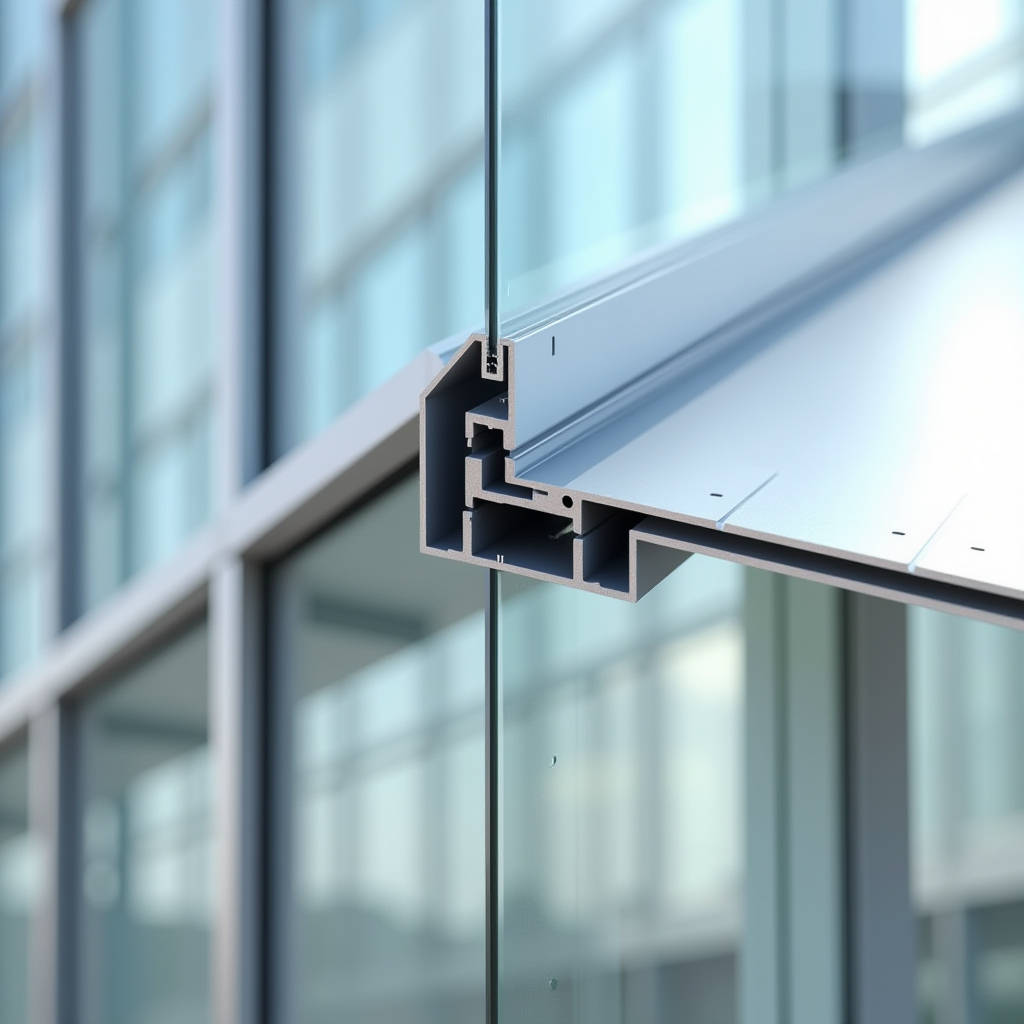
When a facade consultant specifies "Structural Aluminum Alloy" for a curtain wall project, the conversation shifts immediately from decorative cladding to load-bearing responsibility. A structural aluminum alloy panel does more than shed water and look clean from the street. It carries wind pressure, resists thermal movement, and in some configurations, contributes to the building's lateral stability system. Misunderstanding what makes an aluminum alloy "structural" leads to under-specification, premature fatigue, and expensive remediation. This article examines the alloy grades, temper designations, and engineering thresholds that separate a structural aluminum facade panel from a purely architectural one, with a focus on 6xxx-series extruded and plate products used in unitized curtain wall, rainscreen, and canopy applications.
What "Structural" Actually Means in Aluminum Facade Engineering
The word "structural" gets thrown around loosely in architectural product literature. In aluminum facade work, it has a specific engineering meaning: the component is designed to carry loads beyond its own self-weight. A structural aluminum alloy panel in a rainscreen assembly might need to span 1.2 meters between girts and resist a design wind pressure of 2.5 kPa without exceeding a deflection limit of L/175. That is a fundamentally different performance envelope than a non-structural infill panel that sits in a fully supported frame.
The distinction matters for procurement. When a specification calls for structural aluminum alloy, the supplier must provide mill test reports verifying mechanical properties, not just chemical composition. Yield strength, ultimate tensile strength, and elongation become contractually binding numbers. For general contractors and facade subcontractors, this means the sourcing conversation cannot start with "we need 3mm aluminum sheets." It starts with the alloy-temper combination, the design methodology (allowable stress design or load and resistance factor design), and the governing code, typically the Aluminum Design Manual published by the Aluminum Association, or Eurocode 9 for European projects.
Alloy Selection: Why 6xxx Series Dominates Structural Facade Applications
Walk through any major aluminum extruder's structural product catalog and one pattern becomes obvious: 6005A, 6061, 6063, and 6082 account for the overwhelming majority of structural profiles. The reason is a balance of three properties that no other alloy family delivers simultaneously: adequate strength, reliable extrudability, and predictable corrosion resistance in architectural exposure conditions.
6061-T6 is the benchmark structural aluminum alloy. With a minimum yield strength of 240 MPa and ultimate tensile strength of 260 MPa, it provides the highest strength-to-weight ratio among commonly available architectural alloys. It welds acceptably, machines well, and takes a Class I anodized finish with reasonable consistency. For facade mullions, transoms, and load-bearing brackets, 6061-T6 remains the default choice among structural engineers who prioritize strength over surface finish quality.
6063-T6, by contrast, yields around 170 MPa, roughly 30% lower than 6061. But it extrudes faster, produces sharper corner radii, and delivers superior anodizing response. This makes 6063 the preferred alloy for architectural profiles where the visual surface is critical and the structural demand is moderate. A typical unitized curtain wall might use 6061-T6 for the primary mullion and 6063-T6 for the pressure plate and cover cap, matching the alloy to the functional requirement at each location.
6005A and 6082 occupy the middle-to-high strength range. 6005A-T61 offers yield strength around 200-220 MPa with better extrudability than 6061, making it popular for complex hollow profiles. 6082-T6 reaches 250 MPa yield, slightly exceeding 6061, and is frequently specified in European projects under EN 755 for structural applications where weight savings are paramount.
Temper Designations: The Hidden Variable in Structural Performance
Specifying "6061 aluminum" without the temper is like specifying "concrete" without the compressive strength grade. The temper designation, the suffix after the alloy number, defines the thermal and mechanical processing history that determines the final mechanical properties. For structural aluminum alloy in facade work, four tempers dominate: T5, T6, T61, and T651.
T5 indicates the alloy was cooled from an elevated temperature shaping process and artificially aged. This is common for 6063 extrusions. The producer controls the cooling rate and aging cycle to achieve the specified properties, but no solution heat treatment is performed. T6 involves full solution heat treatment followed by artificial aging, producing higher strength than T5 for the same alloy. T61 is a variant with a modified aging practice that can enhance toughness or corrosion resistance. T651 adds a stress-relieving step by stretching after solution heat treatment, which reduces residual stresses that can cause distortion during machining.
The practical implication for procurement is straightforward: a 6063-T5 extrusion will have a yield strength roughly 30% lower than the same profile in 6063-T6. If the structural engineer's calculation assumes T6 properties and the extruder supplies T5, the facade may still stand, but the safety factor erodes. On large projects, the facade consultant should require the contractor to submit temper verification documentation as part of the shop drawing package.
Mechanical Properties at the Core of Structural Design
Structural aluminum alloy design revolves around three primary mechanical properties: yield strength (Fy), ultimate tensile strength (Fu), and modulus of elasticity (E). Yield strength governs the allowable stress under service loads. For aluminum, the yield point is defined by the 0.2% offset method, since aluminum does not exhibit a sharp yield plateau like structural steel. Ultimate tensile strength sets the failure limit. The modulus of elasticity for all aluminum alloys is approximately 69 GPa, roughly one-third that of steel.
That last number, 69 GPa versus steel's 200 GPa, explains why deflection often controls aluminum facade design rather than strength. An aluminum mullion of the same cross-sectional geometry as a steel one will deflect roughly three times as much under identical load. Structural engineers compensate by increasing the moment of inertia through deeper profiles or by adding reinforcement. The Aluminum Design Manual provides buckling constants and slenderness limits that account for this behavior, and they differ substantially from the equivalent steel provisions in AISC 360.
The table below summarizes key mechanical properties for structural aluminum alloys commonly encountered in facade engineering:
| Alloy-Temper | Yield Strength (MPa) | Ultimate Tensile Strength (MPa) | Elongation (%) | Typical Facade Application |
|---|---|---|---|---|
| 6063-T5 | 110 | 150 | 8-10 | Architectural trim, non-structural covers |
| 6063-T6 | 170 | 205 | 8-10 | Pressure plates, secondary mullions |
| 6061-T6 | 240 | 260 | 10 | Primary mullions, structural brackets |
| 6005A-T61 | 200 | 250 | 8 | Complex hollow profiles, transoms |
| 6082-T6 | 250 | 290 | 8 | High-load mullions, bridge fascias |
| 6061-T651 | 240 | 260 | 10 | Machined connectors, stress-relieved plates |
Corrosion Considerations for Structural Aluminum in Building Envelopes
Aluminum's corrosion resistance is often cited as a primary advantage, but the statement requires qualification when the application is structural. The natural oxide layer that forms on aluminum provides excellent protection in pH-neutral environments. However, structural aluminum alloy components in facades face specific corrosion risks that architectural specifiers sometimes overlook.
Galvanic corrosion is the most common failure mode. When structural aluminum alloy comes into direct contact with steel fasteners, copper flashing, or stainless steel in the presence of an electrolyte (rainwater, condensation), the aluminum acts as the anode and corrodes preferentially. The solution is well-established: isolate dissimilar metals with non-conductive gaskets, specify compatible fasteners (austenitic stainless steel with appropriate coatings), and detail joints to avoid water trapping. The American Architectural Manufacturers Association publishes detailed guidance on this in AAMA CW-10 and related standards.
Intergranular corrosion is a less visible but potentially more serious threat for 6xxx-series alloys. If the cooling rate after extrusion is too slow, magnesium silicide precipitates can form along grain boundaries, creating a susceptibility to localized attack. This is primarily a quality control issue at the extrusion mill. For critical structural applications, the facade specification should reference the intergranular corrosion testing requirements in ASTM B928 or EN ISO 11846. A reputable supplier like Futeng® addresses this through controlled quenching processes and batch testing protocols that verify the microstructure before the profiles leave the factory.
Fabrication Effects on Structural Integrity
Structural aluminum alloy components rarely arrive on site in their final condition. They get cut, drilled, welded, or mechanically fastened. Each fabrication step can alter the material's mechanical properties in ways that the original mill test report does not capture.
Welding is the most aggressive intervention. In the heat-affected zone adjacent to a weld, the aluminum alloy loses a significant portion of its strength. For 6061-T6, the as-welded yield strength in the HAZ can drop to approximately 110 MPa, less than half the parent material value. The Aluminum Design Manual accounts for this by requiring reduced allowable stresses in welded zones unless post-weld heat treatment is performed. For facade brackets and connections, bolted or mechanically fastened details are generally preferred over welded ones precisely to avoid this strength reduction.
Cold forming, such as bending 6061-T6 plate to create custom panel profiles, introduces work hardening and residual stresses. If the bend radius is too tight relative to the material thickness, micro-cracking can initiate at the outer fiber. The rule of thumb for 6061-T6 is a minimum bend radius of 2.5 to 3 times the material thickness for a 90-degree bend, increasing for tighter angles. For 3mm thick structural aluminum alloy panels, this means a minimum inside bend radius of approximately 7.5 to 9mm. Exceeding this limit risks cracking that may not be visible on the surface but can propagate under cyclic wind loading.
Structural Aluminum Alloy Panels: When Cladding Becomes Load-Bearing
Solid aluminum cladding panels, typically 2.0mm, 2.5mm, or 3.0mm thick, are most commonly used as non-structural rain-screen elements. But in certain facade typologies, the panel itself contributes to the structural system. Understanding when and how this happens is critical for specification and procurement.
A 3.0mm thick 6061-T6 solid aluminum panel spanning 600mm between supports can resist a uniform wind pressure of approximately 3.8 kPa at a deflection limit of L/175, based on simple bending theory and assuming simply supported edge conditions. This is a structural function: the panel is carrying wind load directly to the supporting girts, and its stiffness determines the overall facade deflection under design wind. If the same panel were specified in 6063-T5, the allowable span would drop by roughly 35% for the same deflection criterion.
For unitized curtain wall panels where the aluminum face sheet is bonded to a framing system, the panel can act compositely with the frame, increasing the overall section stiffness. This composite action depends on the adhesive bond integrity and must be verified through testing per AAMA 508 or equivalent standards. The structural aluminum alloy in this configuration serves dual purposes: weather barrier and structural diaphragm.
Canopy and soffit panels represent another case where structural performance governs. These panels are installed overhead, often horizontally, and must resist gravity loads, snow accumulation, and wind uplift. A 2.5mm 6061-T6 panel with PVDF coating, spanning 900mm, can typically handle a combined dead-plus-live load of 1.5 kPa with acceptable deflection. The panel thickness, alloy grade, and support spacing must be verified through calculation, not assumed from a standard product data sheet.
Code Framework and Design Standards
Structural aluminum alloy design for building facades operates within a well-defined code framework, though the specific standard depends on the project location. In North America, the governing document is the Aluminum Design Manual (ADM), published by the Aluminum Association and updated on a five-year cycle. The ADM provides both allowable strength design (ASD) and load and resistance factor design (LRFD) methodologies, with safety factors and resistance factors calibrated specifically for aluminum's mechanical behavior.
In Europe, Eurocode 9 (EN 1999) governs structural aluminum design. It follows the limit state design philosophy consistent with the other Eurocodes and provides detailed provisions for member buckling, welded connections, and fatigue. For projects in the Middle East and Southeast Asia, both ADM and Eurocode 9 appear in specifications, and the facade engineer must confirm which code governs before proceeding with calculations.
ASTM International provides the material standards that underpin these design codes. ASTM B221 covers aluminum alloy extruded bars, rods, wire, profiles, and tubes. ASTM B209 covers aluminum and aluminum alloy sheet and plate. For structural aluminum alloy procurement, these standards define the chemical composition limits, mechanical property minimums, and dimensional tolerances that the mill must meet. A complete specification references the alloy, temper, ASTM standard, and any supplementary requirements for the specific application.
Additional guidance comes from industry organizations. The American Architectural Manufacturers Association (AAMA) publishes installation standards and finish specifications. The Aluminum Association maintains the alloy and temper designation system used globally. For facade-specific structural testing, ASTM E330 covers structural performance testing of exterior windows, doors, skylights, and curtain walls under uniform static air pressure difference.
Finish Systems and Their Interaction with Structural Performance
The finish on a structural aluminum alloy component is not purely decorative. It affects fatigue behavior, corrosion resistance, and in some cases, the effective cross-sectional area used in structural calculations. Three finish systems dominate structural facade applications: anodizing, PVDF liquid coating, and powder coating.
Anodizing builds an aluminum oxide layer that is integral to the substrate. For structural components, Class I anodizing (AA-M10C22A31) provides the thickest coating, typically 18-25 microns, and is specified for exterior exposure. The anodizing process involves acid etching that can reduce the effective section thickness by 5-10 microns. For thin-gauge structural panels, this reduction should be accounted for in the net section calculation, though in practice, for 3mm and thicker material, the effect is negligible.
PVDF (polyvinylidene fluoride) coatings, typically applied at 25-35 microns dry film thickness for architectural applications, provide superior color retention and chemical resistance. The AAMA 2605 standard governs high-performance organic coatings on aluminum extrusions and panels. From a structural perspective, the PVDF coating contributes negligible strength, but it protects the substrate from environmental degradation that could, over decades, reduce the effective load-bearing capacity through pitting or exfoliation corrosion.
Powder coatings based on polyester or fluoropolymer chemistry offer an alternative with lower volatile organic compound emissions during application. Qualicoat and AAMA 2604 provide the relevant quality standards. The coating thickness, typically 60-80 microns, is greater than PVDF, but the structural contribution remains zero for design purposes.
Supply Chain and Quality Assurance for Structural Aluminum Alloy
Procuring structural aluminum alloy for a facade project requires a different approach than sourcing architectural trim. The supply chain must demonstrate traceability from the billet to the finished profile or panel. Mill test reports must accompany every batch, documenting the chemical analysis, mechanical test results, and compliance with the specified ASTM or EN standard.
For 6xxx-series structural profiles, the billet source matters. Primary aluminum smelters using high-purity alumina produce billets with lower iron and silicon variability, which translates to more consistent mechanical properties and better anodizing response. Secondary (recycled) billets can meet the chemical composition limits of ASTM B221, but the broader impurity profile may affect extrudability and surface finish. For critical structural applications, specifying primary billet or a controlled scrap blend is a prudent risk-management measure.
Third-party inspection during production adds a layer of verification. For large-scale facade projects, the contractor or owner may engage an inspection agency to witness tensile testing, verify heat treatment records, and check dimensional tolerances at the extrusion plant. This is standard practice in the oil and gas and infrastructure sectors and is increasingly common in high-end commercial facade work.
Futeng® maintains documented quality systems that support this level of supply chain transparency, including batch-level traceability from raw billet to finished structural aluminum alloy panels and extrusions. The mill test certification package includes chemical composition per ASTM B221, tensile properties per ASTM E8, and, when specified, intergranular corrosion test results per ASTM B928.
Fatigue and Long-Term Behavior Under Wind Cycling
Wind loads on a facade are not static. They fluctuate in magnitude and direction, and over a 50-year building life, a structural aluminum alloy component may experience millions of stress cycles. Fatigue behavior therefore enters the design conversation, particularly for high-rise facades in hurricane-prone or typhoon-prone regions.
Aluminum alloys do not exhibit a fatigue endurance limit in the way that steel does. The fatigue strength of 6061-T6 at 5×10⁸ cycles is approximately 95 MPa under fully reversed axial loading, based on data compiled in the Aluminum Design Manual. For facade components subjected to wind-induced vibration, the stress range under service conditions must be kept below this threshold. This is generally achieved by limiting the stress ratio (actual stress divided by allowable stress) to conservative values, often 0.6 or lower for connections and details with stress concentrations.
The ISO 1099 standard provides guidance on fatigue testing of metallic materials, and the Aluminum Association's fatigue design provisions in the ADM offer S-N curves for common alloy-temper combinations. In practice, fatigue rarely governs the design of facade panels and mullions because deflection limits typically keep stresses well below the fatigue threshold. It becomes relevant for slender elements, cantilevered sunshades, and connections subjected to vortex shedding or other dynamic excitation.
Practical Engineering Guidance for Specification and Procurement
Specifying structural aluminum alloy for a facade project requires clarity on several points that are often left ambiguous in outline specifications. The alloy and temper must be stated explicitly. The design code (ADM, Eurocode 9, or other) must be identified. The finish system and its standard must be called out. The quality assurance requirements, including mill test report content and any third-party inspection, must be defined.
For solid aluminum cladding panels in structural applications, the minimum thickness should be verified by calculation, not by precedent. A 2.0mm panel may be adequate for a fully supported infill condition but inadequate for a spanning application. The panel supplier should be asked to provide span tables or engineering calculations for the specific alloy, temper, support condition, and design load. Generic product literature is not a substitute for project-specific engineering.
When the facade involves welded aluminum connections, the specification must address the strength reduction in the heat-affected zone. Either the design must accommodate the reduced allowable stress, or post-weld heat treatment must be specified, with the understanding that the latter adds cost and schedule. For most architectural applications, bolted connections using stainless steel fasteners with appropriate isolation details provide a simpler and more reliable solution.
The intersection of structural aluminum alloy and architectural facade design continues to evolve. Higher-strength 7xxx-series alloys, long used in aerospace, are beginning to appear in specialized architectural applications where their 500 MPa yield strength justifies the higher material cost and more complex corrosion management. Extruded aluminum foam sandwich panels offer new possibilities for stiff, lightweight structural cladding. But for the foreseeable future, the 6xxx series, properly specified and verified, will remain the workhorse of structural aluminum facade engineering.