Architectural Grade Aluminum Alloy Selection for Solid Cladding Panels What Engineers Need to Know
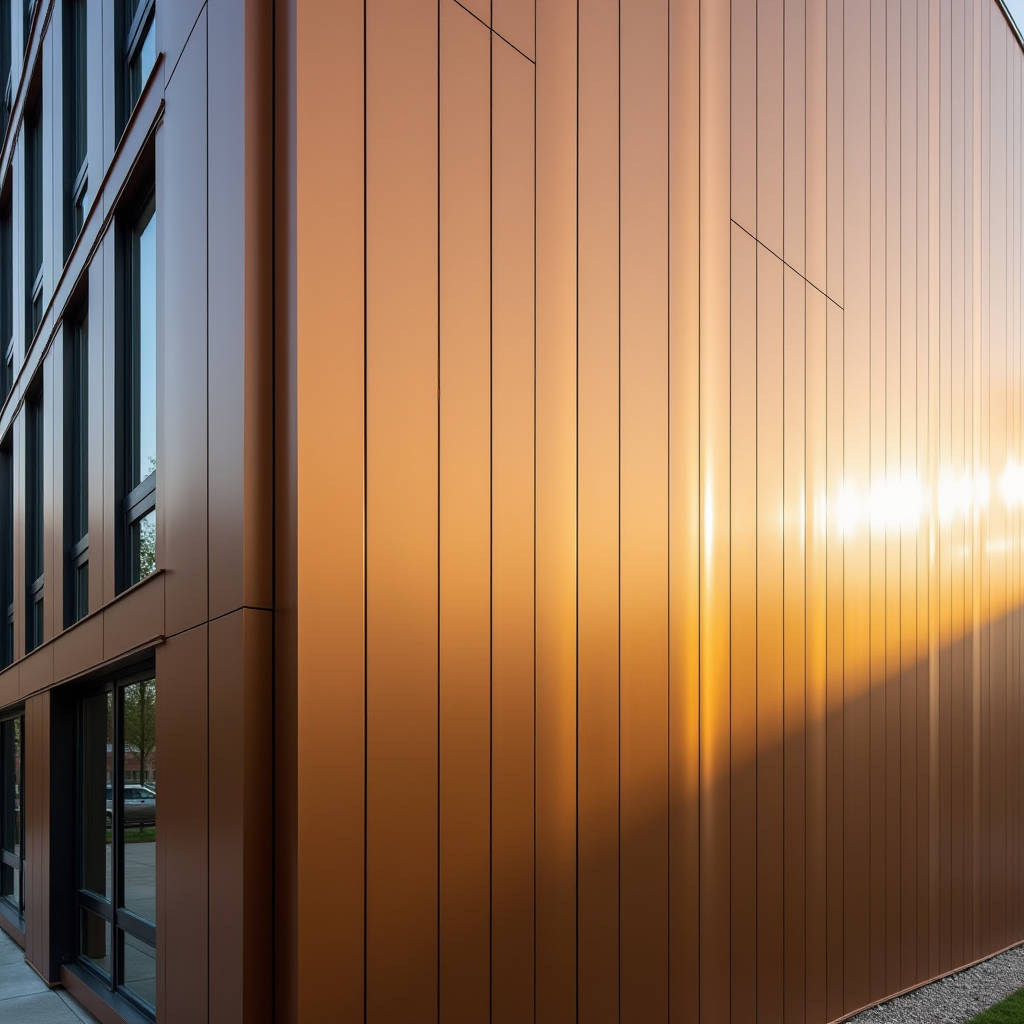
When a facade consultant stamps a set of drawings and specifies "Architectural Grade Aluminum Alloy," that single line item triggers a cascade of engineering decisions that ripple through procurement, fabrication, and on-site installation. Yet the term itself carries less regulatory weight than most project managers assume. No ISO or ASTM standard defines a binary threshold where an alloy flips from "commercial" to "architectural." Instead, the designation reflects a convergence of three measurable properties: extrudability, surface finishing response, and corrosion resistance in atmospheric exposure. For solid aluminium cladding panels—where thicknesses of 2.0 mm, 2.5 mm, and 3.0 mm are the norm and PVDF coatings must meet AAMA 2605—the alloy choice directly determines whether a panel holds its flatness across a 4-meter span or develops oil-canning distortion within the first thermal cycle. This article unpacks what actually separates architectural grade aluminum alloy from structural and general-purpose grades, and why that distinction matters most when metal hits the building envelope.
What the Term "Architectural Grade" Actually Means
Walk through any aluminium supplier's inventory and you will find 5052, 6061, 6063, and occasionally 7075 sitting on the rack. Only one of these carries the industry nickname "architectural alloy"—and that is 6063. The reason is not marketing. It is metallurgy. Aluminium alloy 6063 belongs to the 6xxx series, where magnesium and silicon combine to form magnesium silicide (Mg₂Si), the precipitate that governs both strength and extrudability. In the T5 temper (air-cooled from the extrusion press and artificially aged), 6063 delivers tensile strength around 186 MPa with elongation of 8-10%. Those numbers are modest compared to 6061-T6 (310 MPa tensile), but raw strength is not the point. What 6063 offers is an unmatched ability to flow through complex die geometries at speeds of 25-50 meters per minute, producing intricate profiles with tight corner radii and thin walls—exactly what architectural cladding systems demand for carrier rails, perimeter trims, and integrated gasket grooves.
The distinction between architectural and structural aluminum angles, as outlined by industry fabricators, hinges on this very trade-off. Structural angles in 6061-T6 carry higher load ratings and are specified where dead load, wind load, or seismic forces govern. Architectural angles in 6063-T5 prioritize surface quality and dimensional consistency. For solid aluminium cladding panels, the supporting framework often uses 6063 extrusions because the visible face matters, while hidden brackets and anchors may switch to 6061. The architectural grade designation, then, is less about a binary classification and more about an alloy's fitness for a specific set of facade requirements: anodizing response, minimum distortion during extrusion, and long-term weathering behavior.
6063 vs. 6061: Choosing the Right Alloy for Cladding Systems
The 6063 versus 6061 debate surfaces on nearly every cladding project where solid aluminium panels are specified. Both are 6xxx series alloys with magnesium and silicon as primary alloying elements. The difference lies in the ratio. 6061 contains roughly 1.0% Mg and 0.6% Si, with added copper (0.15-0.40%) and chromium (0.04-0.35%). 6063 runs leaner: approximately 0.45-0.9% Mg and 0.2-0.6% Si, with copper capped at 0.10%. That leaner chemistry produces a narrower solidification range, which translates to better hot workability and faster extrusion speeds. The trade-off is lower ultimate tensile strength—roughly 30-40% less than 6061-T6 depending on temper.
For solid aluminium cladding panels, the decision tree typically follows this logic. If the panel itself is a flat sheet (cut from rolled coil, not extruded), the alloy selection shifts to 5005, 5052, or 3003—all common sheet grades that form and bend well. But the extruded components that frame, stiffen, and mount those panels overwhelmingly use 6063. The reason is surface finish. 6063 anodizes to a uniform, aesthetically consistent oxide layer that architects expect on visible aluminium. 6061, with its higher copper content, tends to develop a slightly yellowish cast after anodizing—acceptable for structural members hidden behind ceilings, but rejected on exposed facade elements. When PVDF coatings are applied instead of anodizing, both alloys perform well, but 6063 still holds an edge in surface smoothness out of the die, reducing the polishing and pretreatment burden before the coating line.
Alloy Selection for Solid Aluminium Cladding Panels
Solid aluminium cladding panels—flat sheets of 2.0 mm, 2.5 mm, or 3.0 mm thickness—are not extruded. They are rolled. This changes the alloy conversation entirely. The workhorse grades for aluminium sheet in architectural facades are 5005 (Al-Mg series) and 5052 (also Al-Mg, with higher magnesium content). Both are classified as non-heat-treatable alloys that derive their strength from work hardening and grain structure control during rolling. 5005-H14 offers tensile strength around 145 MPa with excellent anodizing quality. 5052-H32 pushes tensile strength to 210-230 MPa, making it the preferred choice where panels face higher wind loads or require deeper stiffener profiles.
The table below summarizes the key sheet alloys relevant to architectural cladding, with data points that matter to facade engineers and procurement teams:
| Alloy & Temper | Tensile Strength (MPa) | Yield Strength (MPa) | Elongation (%) | Typical Cladding Thickness | Best Application |
|---|---|---|---|---|---|
| 5005-H14 | 145 | 110 | 6-8 | 2.0-2.5 mm | Low-rise facades, interior cladding |
| 5052-H32 | 210-230 | 160 | 8-10 | 2.0-3.0 mm | High-wind zones, large-format panels |
| 3003-H14 | 150 | 130 | 5-8 | 2.0-3.0 mm | Budget-sensitive projects, soffits |
| 6061-T6 (sheet) | 310 | 275 | 12 | 2.5-3.0 mm | Structural panels, blast-resistant facades |
For the vast majority of solid aluminium cladding panel applications, 5052-H32 hits the sweet spot. It bends cleanly on press brakes, welds acceptably (though mechanical fastening is standard for cladding), and holds PVDF coatings without adhesion issues. Projects in coastal environments—where chloride-laden air accelerates corrosion—particularly benefit from 5052's higher magnesium content, which improves resistance to pitting. The 5005 option serves well on interior applications or low-rise exteriors where cost pressure is significant and wind loads are moderate.
How Temper Designations Affect Cladding Performance
Alloy grade is only half the story. The temper designation—the suffix after the alloy number—describes the thermal and mechanical processing history that determines the material's final mechanical properties. For architectural grade aluminum alloy used in cladding, three temper families dominate: H1x (strain-hardened only), H3x (strain-hardened and stabilized), and T5/T6 (thermally treated).
H14 temper, common in 5005 and 3003 sheet, indicates strain hardening to half-hard condition. The "1" means strain-hardened only, and the "4" corresponds to roughly half the hardness achievable. H32 temper on 5052 means strain-hardened and then low-temperature stabilized—a process that locks in mechanical properties while improving resistance to softening over time. This stabilization matters on dark-colored PVDF panels in hot climates, where surface temperatures can reach 80°C. Without stabilization, cold-worked aluminium can partially anneal, losing strength and potentially causing panel distortion. The H32 temper on 5052 is specifically designed to resist this softening mechanism.
For extruded components, T5 temper on 6063 means the profile was cooled from the extrusion temperature and artificially aged. T6 temper (solution heat-treated and artificially aged) produces higher strength but at higher cost and with greater risk of distortion during quenching. Most architectural extrusions specify 6063-T5 because the strength is adequate for non-structural facade elements and the dimensional stability is superior. When a project engineer specifies 6063-T6 for a cladding carrier rail, the cost premium typically runs 8-12% over T5, and lead times can stretch because fewer extruders stock T6 tooling for architectural profiles.
PVDF Coating Compatibility Across Alloy Grades
The interaction between alloy chemistry and PVDF coating performance is a topic that rarely makes it into project specifications, but it should. PVDF (polyvinylidene fluoride) coatings, applied at 25-35 microns dry film thickness per AAMA 2605, rely on a chromate or chrome-free conversion coating as the bond layer between bare aluminium and the fluoropolymer topcoat. Different aluminium alloys respond differently to this pretreatment step.
5005 and 5052, with their clean Al-Mg chemistry and minimal copper, form a uniform conversion coating that delivers excellent adhesion. Testing per AAMA 2605 typically shows dry adhesion values exceeding the standard's minimum, with no under-film corrosion after 4,000 hours of salt spray (ASTM B117). 6061 sheet, with its copper content, can develop localized galvanic micro-cells at the coating interface if the pretreatment bath chemistry is not tightly controlled. This does not disqualify 6061 from architectural use—it simply means the pretreatment line must be dialed in correctly, and the coating applicator needs experience with the specific alloy batch.
For solid aluminium cladding panels, the industry standard is overwhelmingly 5005 or 5052 substrate with a three-coat PVDF system: primer, color coat, and clear topcoat. The primer contains corrosion-inhibiting pigments that compensate for any substrate variability. A reputable supplier such as Futeng® runs panels through a vertical electrostatic spray line where pretreatment, coating, and curing happen in a continuous process, with bath chemistry monitored hourly. This level of process control is what separates architectural-grade finished panels from commodity sheet metal with a spray can job.
Corrosion Behavior in Real-World Exposure Conditions
Laboratory salt spray tests tell one story. Real building facades tell another. Architectural grade aluminum alloy in the 5xxx series performs well in most atmospheric conditions, but the specific corrosion mechanisms deserve attention from anyone writing a 20-year facade warranty.
In urban environments, the primary threat is sulfur dioxide (SO₂) from vehicle exhaust and industrial emissions. SO₂ dissolves in surface moisture to form dilute sulfuric acid, which attacks the aluminium oxide layer. 5052 resists this better than 3003 because magnesium forms a more stable passive film. In coastal environments, chloride pitting is the dominant mechanism. Here, 5052 again outperforms 5005 due to higher magnesium content (2.2-2.8% vs. 0.5-1.1%), but neither alloy is immune. The PVDF coating system provides the primary barrier; the alloy's role is to resist corrosion at cut edges, fastener holes, and any scratch or impact damage that penetrates the coating.
One underappreciated factor is galvanic corrosion where aluminium panels contact dissimilar metals. Stainless steel fasteners (304 or 316 grade) are standard practice, and the galvanic potential between aluminium and stainless steel is small enough that corrosion is negligible in dry conditions. But in persistently wet conditions—think of a panel joint that traps water—the stainless steel can drive galvanic attack on the aluminium. The mitigation is straightforward: use nylon or EPDM isolation washers at fastener penetrations, and design joints to drain rather than trap water. These details are well-documented in the Aluminum Association design guidelines and in AAMA's installation standards.
Flatness, Oil-Canning, and the Alloy Connection
Oil-canning—the wavy distortion visible on flat metal panels under certain lighting conditions—is the most persistent aesthetic complaint on architectural metal facades. The phenomenon is not a material defect. It is a manifestation of residual stress in the sheet, released unevenly during thermal cycling or after stiffener attachment. Alloy selection plays a direct role in managing it.
5052-H32, with its higher yield strength, resists the onset of oil-canning better than 5005-H14 at the same thickness. A 2.5 mm 5052-H32 panel spanning 1,200 mm between stiffeners will typically show less visible waviness than an equivalent 5005-H14 panel. The mechanism is simple: higher yield strength means the material stays elastic under higher thermal stress, so it returns to flat when the stress is removed rather than taking a permanent set. For large-format panels—say, 1,500 mm by 4,000 mm—the stiffener layout and panel thickness must be engineered together with the alloy's mechanical properties. Some fabricators run finite element analysis to predict oil-canning risk, inputting the specific alloy's stress-strain curve rather than generic values.
Stiffener attachment method also matters. Adhesive-bonded stiffeners (using structural silicone or two-part epoxy) distribute stress more evenly than welded stiffeners, which introduce localized heat-affected zones with altered mechanical properties. This is another reason 5052 is preferred: it welds better than 5005, but for cladding, the trend is toward adhesive systems that eliminate welding entirely. The Aluminum Association's Aluminum Design Manual provides guidance on allowable stresses and deflection limits that inform these engineering decisions.
Extrusion Quality and Dimensional Tolerance for Architectural Profiles
While the solid cladding panel itself is rolled sheet, the system components—carrier rails, brackets, perimeter angles, and gasket channels—are extruded. The dimensional tolerance on these extrusions directly affects panel alignment, joint width consistency, and overall facade flatness. Architectural grade aluminum alloy 6063, extruded to tolerances per AAMA standards, delivers the precision that facade systems demand.
AAMA 606.1 defines tolerances for architectural aluminium extrusions across multiple dimensions: wall thickness, straightness, twist, angularity, and contour. For a typical cladding carrier rail of 50 mm by 100 mm cross-section, the straightness tolerance is 0.5 mm per 300 mm of length. Twist tolerance is 0.5 degrees per 300 mm, measured at the profile ends. These numbers sound small, and they are—but cumulative errors across a 30-meter facade run can add up to visible misalignment. Quality extruders running 6063-T5 with properly maintained dies consistently hold these tolerances. Lower-grade extrusion operations, often running recycled billet with inconsistent chemistry, produce profiles that drift out of tolerance mid-run, creating headaches on the installation site.
The surface finish of the extruded component also matters. 6063's fine grain structure and absence of copper produce a smooth surface that requires minimal mechanical polishing before anodizing or painting. This reduces labor cost and, more importantly, reduces the risk of die lines—those faint longitudinal scratches that become glaringly visible under glancing light on anodized surfaces. For architects who specify clear anodized finish on exposed aluminium trim, 6063 is effectively the only choice.
Cost Drivers in Architectural Grade Alloy Selection
Procurement managers evaluating bids for solid aluminium cladding panels need to understand what drives the cost differences between alloy choices. The raw material cost is only one factor, and often not the dominant one. The table below breaks down the cost contributors for a typical 2.5 mm PVDF-coated cladding panel in three different alloys:
| Cost Factor | 5005-H14 | 5052-H32 | 6061-T6 Sheet |
|---|---|---|---|
| Raw billet/sheet cost (USD/kg) | 3.20-3.50 | 3.50-3.90 | 4.00-4.50 |
| Formability & scrap rate | Low scrap (2-3%) | Low scrap (2-3%) | Higher scrap (5-8%) |
| Pretreatment complexity | Standard | Standard | Requires tighter control |
| PVDF coating adhesion risk | Low | Low | Moderate |
| Typical panel cost premium | Baseline | +8-12% | +20-30% |
| Best value scenario | Moderate climate, standard spans | Coastal, high-wind, large format | Blast-resistant, structural |
The 8-12% premium for 5052 over 5005 is almost always justified on exterior cladding projects. The improved corrosion resistance, higher strength allowing potentially thinner gauge (offsetting some material cost), and better flatness characteristics reduce the total installed cost when factoring in fewer callbacks and longer service life. The 20-30% jump to 6061-T6 sheet only makes sense where the panel is performing a structural function—blast-resistant facades, hurricane-impact zones, or panels that span unusually long distances without intermediate support.
Specifying Architectural Grade Aluminum Alloy: What to Write in the Project Spec
A specification that simply says "architectural grade aluminum alloy" is incomplete and invites substitution with whatever the bidder has in stock. A proper specification for solid aluminium cladding panels should address alloy grade, temper, thickness, coating standard, and fabrication tolerances in separate, measurable clauses.
For the panel substrate, the spec should read something like: "Aluminium alloy 5052-H32 per ASTM B209, thickness 2.5 mm nominal, tolerance ±0.08 mm." For extruded components: "Aluminium alloy 6063-T5 per ASTM B221, tolerances per AAMA 606.1." For PVDF coating: "Three-coat system per AAMA 2605, minimum 30 microns total dry film thickness, color [insert], gloss [insert]." The spec should also reference the ASTM standard for the specific product form—B209 for sheet and plate, B221 for extruded bars, rods, wire, profiles, and tubes.
Equally important is what the spec should exclude. Vague language like "aluminum composite material" or "ACM" opens the door to products that do not meet the performance requirements of solid aluminium cladding. If the design intent is a solid panel system, the spec should explicitly state "solid aluminium sheet, no composite core" and reference the relevant material standards. This protects the architect's design intent and gives the procurement team clear criteria for evaluating substitutions.
Supply Chain Realities: Lead Times, Mill Sources, and Quality Variance
The aluminium supply chain for architectural projects has consolidated significantly over the past decade. A limited number of mills produce the high-quality rolled sheet that meets architectural specifications for surface finish and flatness. The major production bases are in China (accounting for roughly 55% of global aluminium output), the Gulf Cooperation Council countries, and select European mills. For project managers, this means lead times for architectural grade aluminum alloy sheet can range from 4-12 weeks depending on alloy, temper, thickness, and mill backlog.
Quality variance between mills is real and measurable. Sheet from a mill running modern continuous casting and rolling lines with automated gauge control will show thickness variation within ±0.05 mm across a coil. Sheet from older reversing mills may vary by ±0.12 mm or more. That difference translates directly to panel flatness and joint alignment on the facade. Reputable fabricators audit their mill sources regularly and maintain mill test certificates (MTCs) traceable to heat numbers. When working with a supplier like Futeng®, the MTC package should include chemical composition, mechanical properties, and coating performance data—all traceable to the specific panels delivered to the site.
One supply chain consideration that catches projects off guard is the minimum order quantity (MOQ) for non-standard alloys. Mills typically require 5-8 metric tons minimum for a custom coil of 5052-H32 in a specific thickness and width. For smaller projects, this means either paying a premium for a mill to run a small batch, or sourcing from a service center that stocks the required grade. The service center route adds cost but reduces lead time and MOQ risk. Early engagement with the cladding fabricator—ideally during design development—allows these supply chain constraints to be factored into the project schedule.
Thermal Movement and Joint Design: The Alloy Factor
Aluminium expands and contracts at roughly 2.5 times the rate of steel. The coefficient of thermal expansion for 5005 and 5052 is approximately 23.8 × 10⁻⁶ per °C. For a 4-meter panel subjected to a 60°C temperature swing (from -10°C winter night to 50°C summer sun on a dark PVDF surface), the thermal movement is 5.7 mm. Joint design must accommodate this movement without binding, buckling, or opening gaps that expose the weather barrier.
The alloy choice does not change the expansion coefficient—all 5xxx and 6xxx alloys fall within a narrow range of 23.4-24.0 × 10⁻⁶ per °C. But the alloy's yield strength affects how the panel behaves under constrained thermal expansion. A higher-strength alloy like 5052-H32 can tolerate higher thermal stress before yielding, which means the panel is more likely to return to its original shape after the temperature cycles back. Lower-strength alloys may accumulate incremental plastic deformation over many thermal cycles, leading to progressive oil-canning that worsens over the building's life.
Joint design for solid aluminium cladding typically follows the guidelines in AAMA 501.2, which covers quality assurance and diagnostic water leakage field check of installed storefronts, curtain walls, and sloped glazing systems. While originally written for window systems, the joint movement principles apply equally to cladding panels. Open joints (with a drained and ventilated cavity behind) are increasingly common because they eliminate the sealant maintenance burden and accommodate thermal movement naturally. The alloy's role is to ensure the panel edges remain straight and true so those open joints read as consistent, intentional design lines rather than wavy, irregular gaps.
Selecting the right architectural grade aluminum alloy for solid cladding panels is ultimately a decision about managing risk across a 20- to 30-year service life. 5052-H32 for the panel substrate and 6063-T5 for extruded system components represent the consensus choice across the facade engineering community. The combination delivers the corrosion resistance, surface finish quality, and dimensional stability that architects demand, at a cost premium that is modest relative to the total facade budget. What matters most is that the specification is written with enough precision to ensure that what arrives on site matches what was modeled and tested. Vague language invites value engineering that erodes performance. Clear, standard-referenced specifications—backed by mill certificates and coating test reports—keep the entire supply chain accountable to the same set of measurable criteria.