6063 T6 Aluminum Extrusion in Solid Cladding Sub Frames Engineering Properties and Specification Guide
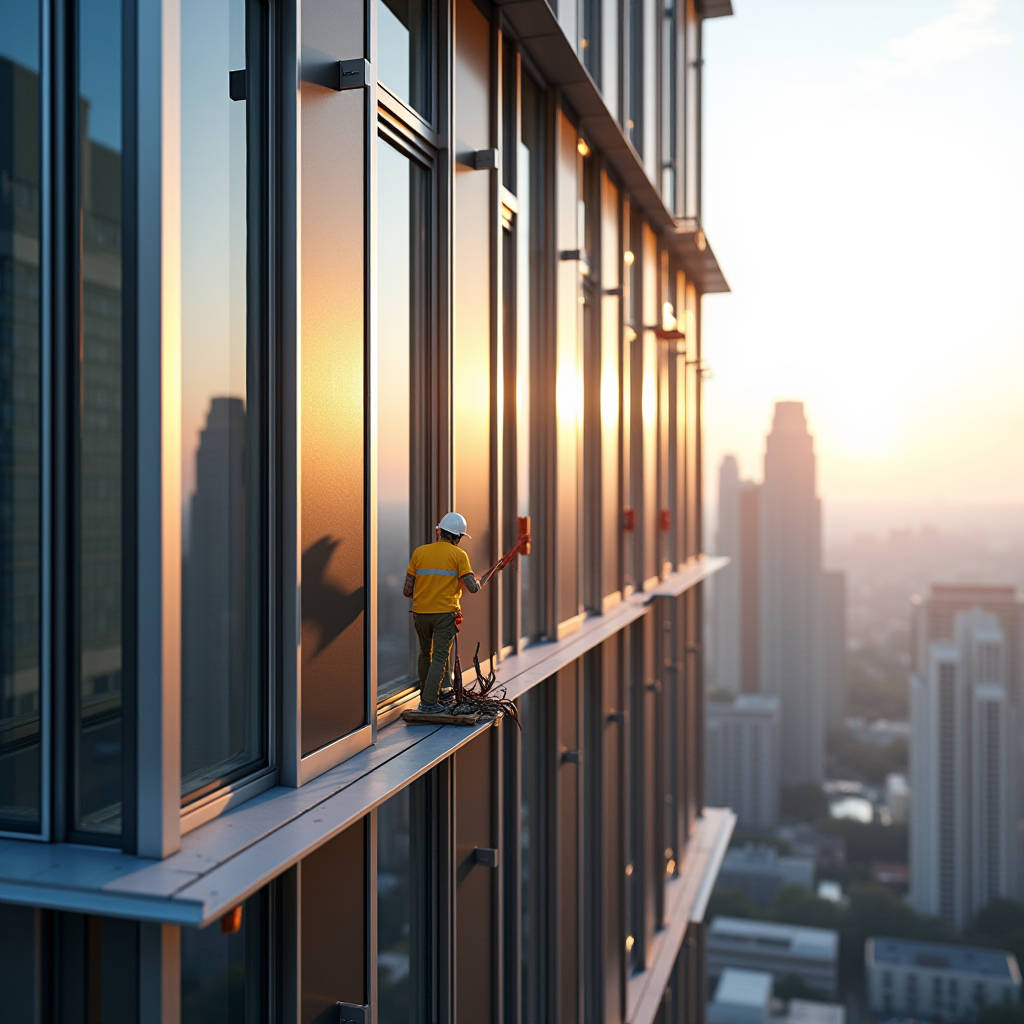
When specifying materials for high-end curtain wall systems, the conversation inevitably turns to the backbone of every aluminum cladding assembly: the extruded sub-frame. 6063 T6 Aluminum Extrusion has become the default choice for architects and facade engineers who need a supporting framework that balances strength, surface finish quality, and long-term corrosion resistance. Unlike structural grades that prioritize raw load-bearing capacity, 6063 T6 occupies a sweet spot — it extrudes into complex, thin-walled profiles that hold tight tolerances, anodizes beautifully, and resists the kind of micro-cracking that leads to premature failure in coastal environments. This article examines the specific role of 6063 T6 extrusions in solid aluminum cladding panel systems, with a focus on mechanical properties, deflection behavior, thermal movement, and coating compatibility — the engineering details that determine whether a curtain wall performs for 20 years or 50.
Understanding 6063 T6 in the Context of Solid Cladding Systems
Aluminum alloy 6063 belongs to the 6xxx series, where magnesium and silicon serve as the primary alloying elements. The magnesium silicide (Mg₂Si) precipitates that form during heat treatment give this alloy its mechanical properties. In the T6 temper, the material undergoes solution heat treatment followed by artificial aging — a process that produces a fine, uniform distribution of Mg₂Si particles throughout the aluminum matrix. The result is a material with tensile strength typically ranging from 205 to 240 MPa and yield strength around 170 to 210 MPa, depending on section thickness and extrusion conditions.
For solid aluminum cladding panels — typically 2.0mm, 2.5mm, or 3.0mm thick sheets with PVDF or FEVE coatings — the extruded sub-frame does the heavy lifting. The panels themselves resist wind pressure and impact, but the loads transfer through the extrusion grid. A 6063 T6 mullion or transom in a unitized curtain wall system might span 3.6 meters between floor slabs, carrying the dead load of 8-12 kg/m² glass or cladding plus live wind loads that can exceed 2.0 kPa in high-rise applications. The T6 temper provides the stiffness needed to keep deflection under L/175 or L/240, depending on the project specification.
The architectural industry gravitates toward 6063 T6 for a reason that has nothing to do with raw strength: extrudability. The alloy flows through dies at speeds up to 50 meters per minute, enabling the production of intricate hollow profiles with wall thicknesses as low as 1.0mm in non-structural zones. This means facade designers can specify custom profiles with integrated gasket raceways, thermal break pockets, and drainage channels — all in a single extrusion — without the cost penalty that would come with a harder alloy like 6061 T6.
Mechanical Properties That Matter for Facade Engineering
When a structural engineer reviews a curtain wall shop drawing, three numbers from the 6063 T6 datasheet get the most scrutiny: yield strength, modulus of elasticity, and elongation. Here is how they translate to real-world cladding performance:
- Yield Strength (170-210 MPa): This is the stress at which the extrusion permanently deforms. For a mullion carrying wind load, staying below yield is non-negotiable. A 6063 T6 profile with a section modulus of 25 cm³ can resist a bending moment of approximately 4.25 kN·m before permanent set occurs. In practice, engineers apply a safety factor of 1.65 for aluminum (per the Aluminum Design Manual), bringing the allowable design stress to roughly 110-125 MPa.
- Modulus of Elasticity (~69 GPa): Aluminum is about one-third as stiff as steel. This means deflection — not strength — usually governs the design of 6063 T6 extrusions. A 4-meter simply supported mullion under 1.5 kPa wind load might deflect 12-15mm, which is why moment of inertia (I-value) becomes the critical section property during profile optimization.
- Elongation (8-10% in 50mm): This ductility figure matters during fabrication. When brackets are crimped or profiles are notched for interlocking connections, the material must deform locally without fracturing. 6063 T6 handles these fabrication stresses better than higher-strength but less ductile alloys.
| Property | 6063 T5 | 6063 T6 | 6061 T6 | 6082 T6 |
|---|---|---|---|---|
| Tensile Strength (MPa) | 150-185 | 205-240 | 290-310 | 310-340 |
| Yield Strength (MPa) | 110-145 | 170-210 | 240-260 | 260-290 |
| Elongation (%) | 8-12 | 8-10 | 8-10 | 8-10 |
| Extrudability Rating | Excellent | Very Good | Moderate | Moderate |
| Typical Anodizing Response | Excellent | Excellent | Good (slight yellow tint risk) | Fair |
| Typical Cladding Application | Non-structural trim, interior | Mullions, transoms, pressure plates | High-load anchors, brackets | Heavy structural members |
The table above clarifies why 6063 T6 dominates facade sub-frames: it delivers the best balance of strength, surface finish, and cost-effective extrusion. 6061 T6 offers higher strength but extrudes more slowly, costs more per kilogram, and can develop a slight yellowish cast when anodized — a cosmetic defect unacceptable on architectural exposed surfaces. 6082 T6 is overkill for most cladding applications and difficult to extrude into complex hollow shapes.
The T5 vs. T6 Decision: A Cost-Performance Analysis
Many procurement specifications call for "6063 aluminum extrusions" without specifying the temper, leaving the decision to the facade contractor. The difference between T5 and T6 comes down to the cooling step after extrusion. T5 material is cooled from the extrusion temperature and then artificially aged — no separate solution heat treatment. T6 material undergoes a dedicated solution heat treatment at approximately 520°C, followed by rapid quenching and artificial aging at 175-200°C for 6-8 hours.
This extra processing step adds roughly 8-15% to the per-kilogram cost of T6 versus T5, depending on the profile complexity and order volume. For a typical mid-rise curtain wall project requiring 20 tonnes of extruded aluminum sub-frame, choosing T5 over T6 might save $3,000-$6,000. But the engineering trade-off is real: T5 yield strength is 20-25% lower than T6. If the structural engineer has optimized the profile based on T6 properties, downgrading to T5 could push deflections beyond allowable limits — or force a redesign with heavier, more expensive sections that erase the material cost savings.
There is one scenario where T5 makes clear engineering sense: internal non-structural components. Drip rails, trim pieces, and interior corner profiles that carry no wind load and minimal dead load can safely use 6063 T5. The cost savings accumulate without compromising facade integrity. For anything exposed to wind, thermal, or live loads, T6 is the prudent specification.
Thermal Movement and Joint Design
Aluminum expands and contracts at roughly 23 × 10⁻⁶ per °C — about twice the rate of steel and three times that of concrete. A 3-meter 6063 T6 extrusion subjected to a 60°C temperature swing (from -10°C winter night to 50°C summer sun on a dark-colored panel) will change length by approximately 4.1mm. Multiply that across a 60-meter building elevation, and the cumulative movement reaches 82mm.
Curtain wall designers address this through expansion joints at 10-15 meter intervals, typically using slip joints or telescoping sleeve connections that allow axial movement while maintaining lateral stability. The joint itself must accommodate the calculated movement plus a safety factor of 1.5. For 6063 T6 extrusions with dark PVDF coatings (which absorb more solar radiation), surface temperatures can exceed 80°C, so the thermal calculation should use the coating color as an input variable — not just ambient air temperature.
A common failure mode occurs when installers rigidly fix both ends of a long extrusion run. The resulting compressive stress in summer can buckle the profile laterally, popping cladding panels off their clips. The math is straightforward: a 6063 T6 extrusion with a cross-sectional area of 800 mm², fully restrained against a 60°C temperature rise, develops an axial force of approximately 76 kN — enough to shear M8 stainless steel bolts if the connection detail is not designed for thermal relief.
Coating Compatibility: PVDF, Anodizing, and Powder on 6063 T6
Solid aluminum cladding panels typically receive factory-applied PVDF (polyvinylidene fluoride) coatings in 70% or 50% formulations, with total dry film thickness of 30-40 microns for a three-coat system. The extruded sub-frame components — mullions, transoms, pressure plates, and cover caps — may be anodized, powder-coated, or PVDF-coated to match the panel finish.
6063 T6 has a particular advantage here: its low iron content (typically 0.15-0.35%) and fine grain structure produce clean, consistent anodized finishes in the AA10 to AA25 range. This matters because anodized aluminum exposed to the building exterior must meet AAMA 611 standards for architectural Class I anodized coatings — minimum 18 microns thickness, with no visible color variation across the building face. 6063 T6 consistently achieves this, while alloys with higher copper or iron content can produce mottled or streaked anodized surfaces that fail architectural review.
For PVDF-coated extrusions, the T6 temper provides another benefit: the artificial aging step stabilizes the microstructure, so the 230-250°C PVDF curing cycle does not cause additional age-hardening or dimensional distortion. This is not always true for T4 temper material, which can undergo natural aging at room temperature and shift dimensions slightly over weeks or months after fabrication.
Powder coating on 6063 T6 is also widely used for interior applications or sheltered exterior zones. Polyester TGIC-free powders applied at 60-80 microns provide good durability at a lower cost than PVDF. However, for exposed exterior applications on buildings over four stories, AAMA 2605-compliant PVDF remains the industry standard for both panels and visible extrusion components.
Corrosion Resistance in Aggressive Environments
6063 T6 aluminum extrusions resist atmospheric corrosion through the formation of a stable, self-healing aluminum oxide layer. In rural and urban environments, this passive layer provides decades of service with minimal degradation. The challenge comes in coastal and industrial settings.
In marine environments where chloride deposition exceeds 300 mg/m² per day, unprotected 6063 T6 can develop pitting corrosion within 2-5 years. The solution is not to switch alloys — 6063 actually outperforms 6061 in salt spray tests per ASTM B117 due to its lower copper content — but to specify the correct surface treatment. AAMA 2605 PVDF coating with a minimum 30-micron primer layer provides an effective barrier. For anodized extrusions in coastal zones, a minimum AA20 thickness (20 microns) with proper sealing in nickel acetate is recommended. The Aluminum Association publishes detailed guidance on alloy selection for corrosive environments.
Galvanic corrosion is a separate concern. When 6063 T6 extrusions contact stainless steel fasteners or carbon steel brackets in the presence of an electrolyte (rainwater, condensation), the aluminum — being more anodic — will corrode preferentially. The standard mitigation is to isolate dissimilar metals with nylon washers, EPDM gaskets, or a durable coating on the fastener. Stainless steel (304 or 316 grade) is generally compatible with aluminum in dry conditions, but in wet or marine exposure, isolation is mandatory regardless of the stainless grade.
Fabrication Considerations: Cutting, Machining, and Welding
6063 T6 extrusions machine easily with standard carbide-tipped tooling. Cutting speeds of 3,000-5,000 RPM with a 300mm diameter saw blade produce clean, burr-free cuts suitable for mitered corner joints on visible cover caps. Lubrication with a light mist coolant extends tool life and prevents chip welding on the blade.
Drilling and tapping 6063 T6 for M6-M10 fasteners is straightforward. The material's moderate hardness (approximately 75 HBW) means threads form cleanly without excessive tool wear. For structural connections, thread engagement should be at least 1.5 times the bolt diameter in the aluminum. Where higher pull-out strength is needed, threaded steel inserts (heli-coils or key-locking inserts) are installed in the extrusion.
Welding 6063 T6 requires careful procedure qualification. The heat of welding locally anneals the T6 temper in the heat-affected zone (HAZ), reducing strength by 30-50% within a few millimeters of the weld. Filler metal selection matters: 4043 filler provides good fluidity and crack resistance, while 5356 filler offers higher strength and better color match after anodizing. For architectural applications where the weld will be visible, 5356 is generally preferred. Post-weld heat treatment to restore T6 properties is possible but rarely practical for large curtain wall assemblies — the better approach is to design connections that avoid welding in highly stressed areas.
Futeng® has observed that many international contractors underestimate the HAZ strength reduction in field-welded 6063 T6 connections. A properly designed mechanical connection using stainless steel brackets and bolts often outperforms a field weld in both strength and corrosion resistance, while also being faster to install.
Quality Control and Mill Certification
For B2B procurement of 6063 T6 extrusions destined for architectural cladding, the mill test certificate (MTC) is the primary quality document. It should reference the applicable standard — typically ASTM B221 for North American projects or EN 755 for European specifications — and include:
- Chemical composition (Mg: 0.45-0.90%, Si: 0.20-0.60%, Fe: 0.35% max, Cu: 0.10% max, Mn: 0.10% max, Cr: 0.10% max, Zn: 0.10% max, Ti: 0.10% max)
- Tensile test results (yield, ultimate, elongation) from samples taken at the extrusion's thinnest section
- Hardness values if specified
- Heat treatment batch number and aging parameters
Dimensional tolerances for architectural extrusions follow the standard tables in EN 755-9 or ANSI H35.2. For critical fit dimensions — such as the gasket groove width in a pressure plate — tolerances of ±0.15mm are achievable with well-maintained dies. A reputable extrusion supplier will provide a dimensional inspection report for the first-off sample from each new die.
Surface quality inspection should follow a documented procedure. Visual defects to reject include die lines deeper than 0.05mm, pick-up (aluminum buildup on the die that scores the surface), and blistering from trapped gas. For anodized extrusions, a sample from each batch should be anodized and checked for color consistency against an approved reference standard under D65 lighting.
Specifying 6063 T6 for Solid Cladding Panel Sub-Frames
When writing a specification for extruded aluminum sub-frames supporting solid aluminum cladding panels, the following points should be explicit:
- Alloy and temper: 6063 T6 per ASTM B221 or EN 755-2. No substitution to T5 without structural re-calculation.
- Section properties: Minimum moment of inertia (I-value) and section modulus (S-value) for each profile based on the structural engineer's deflection analysis.
- Wall thickness: Minimum 1.5mm for structural profiles, 1.0mm for non-structural trim. Hollow profiles must maintain uniform wall thickness ±0.15mm.
- Surface treatment: AAMA 2605 PVDF (exterior visible), AAMA 2604 (semi-exposed), or AAMA 611 anodizing (Class I, AA20 minimum for exterior).
- Thermal break: Where required by energy code, specify polyamide strip type (PA66 GF25), minimum strip width (typically 20-34mm depending on climate zone), and shear strength (minimum 24 N/mm longitudinal).
- Tolerances: Length ±1.0mm for cut-to-length profiles, straightness 0.5mm per meter, twist 0.5° per meter.
The specification should also address the interface between the extrusion and the solid cladding panel. Most systems use a clip-and-rail arrangement where the panel's folded return edge engages with an extruded aluminum clip fastened to the sub-frame. The clip material should match the sub-frame alloy (6063 T6) to avoid galvanic issues, and the clip spacing should be verified by calculation — typically 300-600mm centers depending on wind load and panel thickness.
Cost Drivers and Procurement Strategy
The price of 6063 T6 extrusions fluctuates with the LME aluminum price, plus a conversion premium that covers extrusion, heat treatment, and surface finishing. As of current market conditions, budget pricing for standard architectural profiles ranges from $4.50 to $7.00 per kilogram, depending on profile complexity, order quantity, and surface treatment.
Several factors drive cost beyond the base metal price:
- Die cost: A new extrusion die for a custom profile costs $1,500-$4,000, amortized over the project quantity. Hollow profile dies cost more than solid profile dies due to the mandrel complexity.
- Minimum order quantity: Most extrusion mills require 500-1,000 kg per profile shape. Below this, a setup charge applies.
- Surface treatment: Anodizing adds $0.80-$1.50/kg; PVDF coating adds $2.00-$4.00/kg depending on color and number of coats.
- Cutting and machining: Saw-cutting to length, drilling, and notching add $0.50-$1.50 per cut or operation.
- Packaging: Export packaging with protective interleaving and seaworthy crating adds approximately $0.30-$0.50/kg.
For international projects, lead time is often the binding constraint. Standard profiles from inventory can ship in 2-3 weeks. Custom dies require 3-4 weeks for die manufacture, plus 2-3 weeks for extrusion, finishing, and fabrication. Procurement managers should factor in at least 8-10 weeks from approved shop drawing to delivery at site for custom 6063 T6 extrusion packages.
Common Failure Modes and How to Prevent Them
Engineering forensics on failed curtain wall systems reveals several recurring problems with 6063 T6 extrusion sub-frames:
Stress corrosion cracking (SCC): Rare in 6063 compared to 7xxx series alloys, but possible when high residual stresses from straightening or forming combine with a corrosive environment. The 6xxx series is generally resistant to SCC, but the risk increases if the extrusion is severely cold-worked after heat treatment. Specifying stress-relieved material (TX51 temper) for heavily formed components eliminates this risk.
Fretting at connections: When two 6063 T6 surfaces rub together under cyclic wind loading, the oxide layer wears away and reforms repeatedly, creating a black, powdery corrosion product. This is primarily cosmetic but can seize bolted connections over time. The fix is to specify a thin nylon or EPDM isolation pad at all sliding contact points.
Creep at elevated temperatures: While 6063 T6 is rated for continuous service up to approximately 150°C, creep deformation can occur at lower temperatures under sustained stress. This is not typically a concern for curtain wall applications (operating temperatures rarely exceed 80°C), but it can affect extrusions in direct contact with dark-colored spandrel panels behind unventilated cavities. Providing ventilation behind the panel reduces cavity temperatures and eliminates this risk.
Inadequate bearing at connections: Bolted connections in 6063 T6 extrusions must distribute the load over sufficient bearing area to prevent hole elongation. The allowable bearing stress for 6063 T6 is approximately 1.5 times the tensile ultimate strength per the Aluminum Design Manual. For an M10 bolt in a 3mm wall thickness extrusion, the bearing capacity is approximately 9.2 kN — adequate for most cladding connections but worth verifying for high-load anchor points.
Understanding these failure modes during the design phase costs nothing. Fixing them after installation costs everything — from scaffold rental to business interruption to reputational damage. The engineering time invested in proper extrusion specification and connection detailing pays for itself many times over across the building's service life.
The selection of 6063 T6 Aluminum Extrusion for solid aluminum cladding sub-frames represents a mature, well-characterized engineering choice. The alloy's combination of extrudability, surface finish quality, corrosion resistance, and adequate strength has been validated across millions of square meters of installed curtain wall worldwide. The key to successful application lies not in the alloy selection itself — which is straightforward — but in the detailed engineering of profiles, connections, thermal movement accommodation, and surface treatment specification. When these elements are properly addressed, a 6063 T6 sub-frame system supporting solid aluminum cladding panels will deliver decades of reliable service with minimal maintenance, across climate zones from Singapore to Stockholm.