6063 T5 Aluminum Extrusion in Solid Aluminium Cladding Sub Frames Engineering and Specification Guide
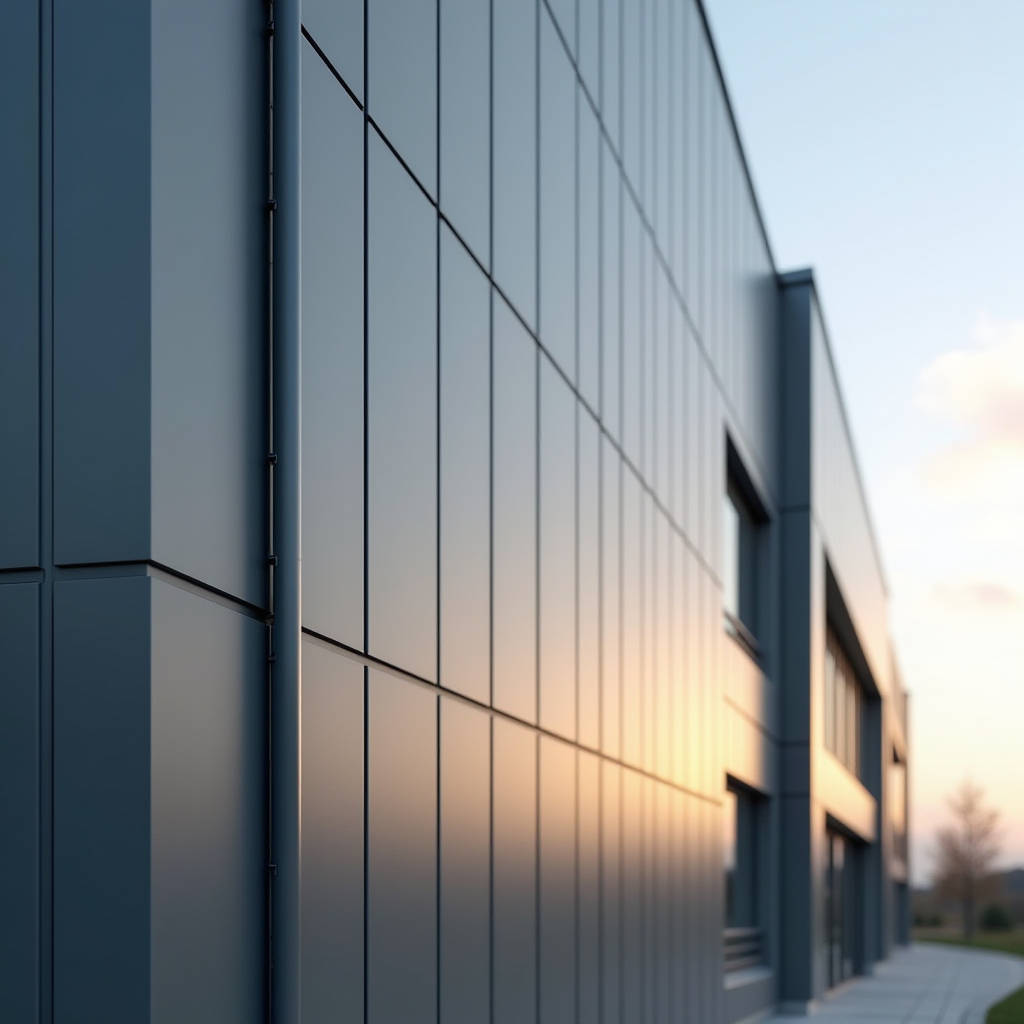
When a cladding project reaches the specification stage, the conversation around framing substrates inevitably narrows to a single alloy designation: 6063 T5 Aluminum Extrusion. The choice is not arbitrary. This temper offers the extrusion formability that complex facade geometries demand while retaining enough post-extrusion strength to hold dimensional tolerance across decades of thermal cycling. For solid aluminium cladding panels — the 2.0 mm, 2.5 mm, and 3.0 mm thick sheets that form the outer skin of commercial towers, airport terminals, and institutional buildings — the extruded framework behind the visible surface does the heavy lifting. The panel itself resists wind load and impact. The extrusion transfers those forces to the structure. Getting that interface right means understanding exactly what 6063 T5 brings to the table, where its limits lie, and how to specify it without overpaying for capacity you will never use.
Decoding the T5 Temper: What Happens Inside the Alloy
The 6063 aluminium alloy belongs to the 6xxx series, where magnesium and silicon serve as the primary alloying elements. In the as-extruded state, the material is relatively soft. The T5 designation describes a specific thermal path: the profile is cooled from extrusion temperature and then artificially aged. Unlike T6, which involves a separate solution heat treatment followed by quenching and aging, T5 skips the solution step. The result is a material with tensile strength in the range of 145–186 MPa and yield strength around 110–145 MPa, depending on wall thickness and profile geometry. Elongation typically falls between 8% and 12%.
Why does this matter for cladding systems? Because the T5 temper preserves the alloy's natural extrudability while delivering enough mechanical backbone for curtain wall mullions, pressure plates, and sub-frame connectors. A T6 temper pushes ultimate tensile strength closer to 240 MPa, but the gain comes at a cost: reduced formability, tighter die wear, and longer lead times. For most architectural applications below 30 meters in elevation, T5 provides the right balance. Above that, or in high-wind coastal zones, engineers may specify T6 for primary structural members — but the secondary framing that holds solid aluminium panels in place rarely needs it.
Where 6063 T5 Sits in the Cladding Assembly
To understand the extrusion's role, visualize a typical rainscreen facade. The outermost layer is a solid aluminium panel — 2.5 mm or 3.0 mm thick, PVDF-coated, fabricated with folded returns and corner welds. Behind that panel sits a ventilated cavity, usually 38 mm to 50 mm deep. Behind the cavity, a continuous layer of insulation and an air-water barrier. The panel attaches to the building through a carrier system: vertical extruded profiles (often called mullions or T-profiles), horizontal rails, and adjustable brackets. These extrusions are almost always 6063 T5.
The reason is threefold. First, the alloy anodizes beautifully. The magnesium-silicide precipitates that form during artificial aging create a uniform surface that takes anodic coatings with minimal color variation — critical when extrusions are visible in open-joint systems or shadow-box details. Second, 6063 T5 offers corrosion resistance that matches or exceeds the panel itself. In ASTM B117 salt spray testing, properly anodized 6063 T5 profiles withstand 1,000+ hours without significant pitting. Third, the extrusion process allows for complex hollow and semi-hollow profiles with wall thicknesses as low as 1.0 mm in non-structural zones, reducing weight without sacrificing stiffness.
Mechanical Properties That Shape Specification Decisions
Engineers writing performance specifications for cladding systems need hard numbers. The table below summarizes the key mechanical values for 6063 T5 alongside the T6 variant and the European near-equivalent 6060 T5, which occasionally appears in projects with European facade consultants.
| Property | 6063 T5 | 6063 T6 | 6060 T5 |
|---|---|---|---|
| Tensile Strength (MPa) | 145–186 | 205–240 | 130–170 |
| Yield Strength (MPa) | 110–145 | 170–200 | 100–130 |
| Elongation (%) | 8–12 | 8–10 | 8–12 |
| Hardness (Brinell HB) | 60–73 | 73–83 | 55–65 |
| Thermal Conductivity (W/m·K) | 200–209 | 200–209 | 200–209 |
| Typical Application | Architectural framing, cladding sub-structures | High-load mullions, structural members | Light-duty architectural profiles (Europe) |
The elongation figure deserves attention. At 8–12%, 6063 T5 provides enough ductility to absorb the stress concentrations that develop at bracket connections and splice joints. When a solid aluminium panel catches a wind gust, the load path runs through the panel edges into the extrusion's flange. A brittle material would crack at the fastener hole. 6063 T5 yields slightly, redistributing the load. This is not a failure mode — it is exactly how the system is designed to behave under service loads defined in AAMA 501.4 and ASTM E330.
Thermal Movement and the Extrusion-Panel Interface
One of the most overlooked aspects of cladding design is differential thermal expansion between the panel skin and the extrusion frame. Solid aluminium panels expand at roughly 23.6 × 10⁻⁶ m/m/°C. 6063 T5 extrusions expand at nearly the same rate — 23.4 × 10⁻⁶ m/m/°C. This near-match is not a coincidence; it is a deliberate feature of using the same base alloy family for both components.
On a 4-meter panel length subjected to a 60°C temperature swing (from -10°C winter night to +50°C summer solar exposure), the panel will expand approximately 5.7 mm. The extrusion behind it will expand 5.6 mm. The 0.1 mm differential is easily absorbed by the slotted holes in the extrusion's connection flange. If the extrusion were made from a different material — steel, for example, at 12.0 × 10⁻⁶ m/m/°C — the differential would be closer to 2.7 mm, requiring significantly larger slots and introducing the risk of binding, noise, and fastener fatigue over time.
This is why 6063 T5 Aluminum Extrusion remains the default choice for cladding sub-frames even when project budgets are tight. The alternative is not a cheaper extrusion; the alternative is a more expensive connection system with sliding joints, isolation pads, and longer installation hours. The material cost savings from a lower-grade alloy evaporate quickly when the detailing complexity increases.
Surface Finish Compatibility: Anodizing vs. PVDF on Extrusions
Visible extrusions in architectural applications typically receive one of two finishes: anodizing (Class I or Class II per AAMA 611) or PVDF liquid coating (AAMA 2605). 6063 T5 excels at both, but the decision between them carries implications for lead time, color matching, and long-term appearance.
Anodizing builds an aluminum oxide layer directly from the substrate. 6063 T5's fine grain structure and low iron content produce a clear, consistent anodic layer with minimal clouding. For projects where the extrusion color must match the adjacent solid aluminium panel, this presents a challenge: anodized extrusions have a metallic, slightly cool undertone that differs from the PVDF-coated panel surface. Architects often resolve this by specifying a contrasting finish — clear anodized framing with a bronze or charcoal PVDF panel — rather than attempting an exact match.
PVDF coating on extrusions is technically feasible but operationally complex. The electrostatic spray process works best on flat or gently curved surfaces. Deep channels, narrow grooves, and internal corners on complex extrusion profiles can suffer from Faraday cage effects, where the charged powder cannot penetrate recessed areas. For this reason, many fabricators, including Futeng® when supplying integrated panel-and-frame systems, recommend anodizing for the extrusion and reserve PVDF for the flat panel faces. If a project absolutely requires PVDF-coated extrusions for color uniformity, the profile geometry must be designed with coating accessibility in mind — wider grooves, larger radii, and fewer blind pockets.
Corrosion Resistance in Aggressive Environments
6063 T5 Aluminum Extrusion performs well in most atmospheric conditions, but specifying it for coastal or industrial environments requires additional considerations. The alloy itself contains no copper, which is the primary culprit in intergranular corrosion for 2xxx and 7xxx series alloys. The magnesium-silicide phases that form during T5 aging are electrochemically close to the aluminum matrix, minimizing galvanic driving forces.
However, "corrosion-resistant" does not mean "corrosion-proof." In marine environments with chloride deposition rates exceeding 300 mg/m²/day, 6063 T5 extrusions should be anodized to a minimum of AA20 (20 microns) per AAMA 611 Class I. For direct coastal exposure — within 500 meters of breaking surf — many specifications upgrade to AA25 and require a five-year cyclic corrosion test per ASTM D5894. The extrusion supplier should provide test coupons from the same production batch, not generic alloy data sheets.
One practical note: the cut ends of extrusions are vulnerable. When a 6063 T5 profile is cut to length in the fabrication shop, the exposed aluminum at the cut face has no anodic layer. In interior applications, this is irrelevant. In exterior applications, the cut face should be sealed with a touch-up treatment or, better, designed to sit inside a closed joint where standing water cannot accumulate. Good detailing eliminates the corrosion risk before it starts.
Die Design and Extrusion Economics
The cost of a 6063 T5 extrusion is not primarily in the billet material — aluminum billet prices fluctuate but rarely exceed $3.00/kg. The cost is in the die, the press time, and the post-extrusion processing. A well-designed die for a cladding sub-frame profile might cost $2,000–$5,000 and produce 20,000–50,000 linear meters before requiring refurbishment. Amortized over a typical mid-rise facade project (8,000–15,000 m² of cladding, requiring 12,000–20,000 linear meters of extrusion), the die cost contributes roughly $0.10–$0.25 per linear meter — negligible in the context of a cladding package that runs $120–$250/m² installed.
What drives extrusion cost upward is complexity. Hollow profiles with multiple internal webs require more expensive bridge or porthole dies and run slower on the press. Semi-hollow profiles with deep tongue ratios (greater than 3:1) increase die wear and scrap rates. The most cost-effective approach is to design the extrusion profile with uniform wall thickness wherever possible, avoiding sharp transitions that create hot spots during quenching. 6063 T5 is forgiving in this regard — its excellent hot workability means that well-designed profiles can be extruded at speeds of 25–50 meters per minute on a 2,000-ton press, keeping production costs competitive.
Quality Control Points for Incoming Extrusion Inspection
For procurement managers and QA engineers receiving 6063 T5 Aluminum Extrusion shipments, a systematic incoming inspection protocol prevents costly downstream problems. The following checklist covers the critical control points:
- Dimensional verification: Check cross-section dimensions against the approved shop drawing using a profile projector or digital caliper. Tolerances should conform to ANSI H35.2 or EN 755-9, typically ±0.2 mm for dimensions under 25 mm and ±0.5 mm for dimensions up to 100 mm.
- Straightness: Maximum deviation of 0.5 mm per 300 mm of length, measured with a feeler gauge on a flat surface plate. Twisted profiles indicate uneven quenching and should be rejected.
- Hardness testing: Webster hardness tester or digital Brinell on a milled flat surface. Target 60–73 HB. Values below 55 suggest under-aging; values above 78 suggest over-aging or incorrect alloy.
- Anodizing thickness: Eddy current gauge per ASTM B244. Minimum 15 microns for Class II, 20 microns for Class I. Measure on flat surfaces, not edges or corners.
- Surface defects: Visual inspection under 500 lux minimum illumination. Reject profiles with die lines deeper than 0.05 mm, pick-up marks, blistering, or corrosion staining.
- Mill certificate review: Verify heat numbers, chemical composition (Mg: 0.45–0.9%, Si: 0.2–0.6%, Fe: 0.35% max), and mechanical test results match the purchase order specification.
Establishing this protocol at the start of a project, and communicating it clearly to the extrusion supplier, sets expectations and reduces the likelihood of disputes. Reputable suppliers will provide mill certificates and sample coupons as standard practice.
Comparing 6063 T5 with Alternative Alloys for Cladding Framing
While 6063 T5 dominates architectural extrusion, it is not the only option. Understanding the alternatives helps justify the specification — or identify cases where an upgrade makes engineering sense.
| Alloy & Temper | Key Strength | Key Limitation | Best Use Case |
|---|---|---|---|
| 6063 T5 | Excellent extrudability, good anodizing response, cost-effective | Moderate strength, not for primary structural loads | Cladding sub-frames, window frames, decorative trims |
| 6063 T6 | Higher strength, same alloy chemistry | Higher cost, longer lead time, slightly reduced formability | High-wind-zone mullions, long-span horizontal rails |
| 6061 T6 | High strength (310 MPa tensile), good weldability | Poor anodizing appearance, higher extrusion pressure required | Structural connections, welded brackets, seismic framing |
| 6082 T6 | Very high strength (340 MPa tensile), good corrosion resistance | Expensive, limited extrudability for complex shapes | Heavy-load structural members, bridge components |
| 6060 T5 | Superior surface finish, very easy to extrude | Lower strength than 6063 T5 | European-spec architectural profiles, thin-wall decorative sections |
The table makes clear that 6063 T5 Aluminum Extrusion occupies a sweet spot: strong enough for the vast majority of cladding applications, extrudable enough for complex custom profiles, and economical enough to keep the framing package within budget. Moving to T6 or 6061 adds cost and complexity without a corresponding performance benefit for most rainscreen and curtain wall sub-structures.
Wind Load Performance and Span Tables
The structural performance of a 6063 T5 extrusion in a cladding system depends on three variables: the profile's moment of inertia (I-value), the span between support brackets, and the design wind pressure. For a typical T-shaped mullion profile with a 50 mm flange width and 3 mm web thickness, the moment of inertia might range from 15 to 40 cm⁴ depending on the overall depth.
Under a design wind pressure of 2.0 kPa (approximately 180 km/h wind speed, serviceability limit state), a profile with I = 25 cm⁴ spanning 1.2 meters between brackets will deflect roughly 3.5 mm — well within the typical L/360 deflection limit of 3.3 mm. Increase the span to 1.8 meters, and deflection jumps to approximately 11.8 mm, exceeding the limit. The solution is not to switch to T6; the solution is to reduce bracket spacing or increase the profile depth. 6063 T5's modulus of elasticity (approximately 69 GPa) is essentially identical to all other 6xxx alloys, meaning stiffness is a function of geometry, not temper.
This is a common point of confusion. Specifiers sometimes request T6 thinking it will reduce deflection. It will not. T6 increases yield strength, which affects the point at which permanent deformation occurs, but elastic deflection under service loads is governed by the modulus of elasticity, which is constant across all aluminum alloys. For deflection-critical applications, invest in a deeper profile, not a stronger temper.
For reference, the American Architectural Manufacturers Association (AAMA) publishes span tables and design guides that account for these relationships. Similarly, ASTM E330 provides the standard test method for structural performance of exterior windows, doors, skylights, and curtain walls under uniform static air pressure differences — the basis for most project-specific wind load calculations.
Fabrication Considerations: Cutting, Drilling, and Assembly
6063 T5 Aluminum Extrusion machines easily with standard carbide-tipped tools. Cutting speeds of 3,000–5,000 RPM with a 300 mm diameter saw blade produce clean, burr-free cuts. Lubrication is recommended but not mandatory for thin-walled profiles; a mist system with a water-soluble coolant extends blade life and improves cut quality.
Drilling and tapping for fastener connections requires attention to hole edge distance. The general rule is a minimum of 1.5 times the hole diameter from the hole center to the edge of the profile. For a typical M8 fastener (8 mm diameter), that means a minimum edge distance of 12 mm. Closer spacing risks tear-out under load. Stainless steel fasteners (A2 or A4 grade) are standard for exterior applications to avoid galvanic corrosion; the aluminum-stainless steel couple is acceptable in most environments, but adding a nylon washer or isolating bushing provides an extra margin of protection in marine exposures.
For projects where extrusions must be welded — for example, fabricating custom corner connectors or joining mitered frame corners — 6063 T5 welds readily using TIG (GTAW) with 4043 or 5356 filler rod. However, welding reduces the local strength of the heat-affected zone to approximately the as-extruded (T1) condition, roughly 60–70% of the T5 strength. The joint design should account for this reduction, either by increasing the weld throat thickness or by relocating welds away from high-stress areas.
Sustainability and End-of-Life Considerations
Aluminum extrusion carries a high embodied energy — approximately 180–200 MJ/kg for primary aluminum — but the material's recyclability offsets this over multiple building life cycles. 6063 T5 profiles can be remelted and re-extruded with minimal loss of properties. The recycling energy is roughly 5% of primary production energy, and the alloy chemistry is forgiving enough to accept a high percentage of post-consumer scrap without falling outside specification limits.
For projects targeting LEED, BREEAM, or Green Star certification, specifying 6063 T5 Aluminum Extrusion with a minimum recycled content (typically 30–50% post-industrial scrap) contributes to Materials and Resources credits. The extrusion supplier should provide a certified Environmental Product Declaration (EPD) per ISO 14025 that documents the product's lifecycle impacts. This documentation is increasingly required by institutional clients and government projects, and suppliers who cannot provide it are being excluded from bid lists.
Supply Chain Realities: Lead Times, Minimum Orders, and Regional Sourcing
The global extrusion market has consolidated significantly over the past decade. Major production capacity is concentrated in China, with significant output also from Turkey, India, and the Gulf states. For a typical cladding project requiring 15,000 linear meters of custom 6063 T5 profiles, lead times from Asian mills range from 4 to 8 weeks after die approval, plus 3 to 5 weeks for ocean freight to North American or European ports. Air freight cuts transit time to 5–7 days but multiplies shipping cost by a factor of 8–10, making it viable only for small emergency orders.
Minimum order quantities vary by mill. Large extrusion houses with 2,500-ton presses may require 500–1,000 kg per profile shape. Smaller mills with 1,200-ton presses can accommodate 300–500 kg minimums. For projects with multiple custom profiles, consolidating orders through a single supplier like Futeng® reduces logistics complexity and often unlocks volume pricing. The key is to finalize extrusion profiles early in the design phase — die manufacturing and trial runs consume the first 3–4 weeks of the lead time, and late design changes reset the clock.
Regional sourcing is gaining traction as a risk-mitigation strategy. North American extruders offer shorter lead times (3–5 weeks) but at a 20–40% price premium over Asian supply. European mills face similar dynamics, complicated by the EU's Carbon Border Adjustment Mechanism (CBAM), which is gradually adding cost to imported aluminum based on the carbon intensity of production. Project teams should evaluate the total landed cost — including freight, duties, and potential carbon surcharges — rather than comparing mill-gate prices alone.
Practical Specification Language for 6063 T5 Extrusions
Writing a clear, enforceable specification for 6063 T5 Aluminum Extrusion reduces ambiguity and protects the project from substitution risks. The following language, adapted for a typical cladding specification section, covers the essential requirements:
"Aluminum extrusions for cladding sub-frames, mullions, and pressure plates shall be alloy 6063 T5 conforming to ASTM B221/B221M or EN 755-2. Chemical composition shall meet the limits of EN 573-3: Mg 0.45–0.9%, Si 0.2–0.6%, Fe 0.35% max, Cu 0.10% max, Mn 0.10% max, Cr 0.10% max, Zn 0.10% max, Ti 0.10% max. Mechanical properties shall meet or exceed: tensile strength 145 MPa, yield strength 110 MPa, elongation 8%. Dimensional tolerances shall conform to ANSI H35.2 or EN 755-9. Anodized finish shall be Class I (AA20 minimum) per AAMA 611. Mill certificates and test reports shall be provided for each heat number delivered to site."
This language references the relevant standards without over-specifying. It gives the contractor clear pass/fail criteria and gives the specifier a defensible basis for rejecting non-conforming material. The Aluminum Association publishes the full ANSI H35.2 standard, and the AAMA maintains the finish standards referenced above.
Common Failure Modes and How to Prevent Them
Even with correct material specification, failures occur. The most frequent problems with 6063 T5 extrusions in cladding systems fall into predictable categories:
- Galvanic corrosion at stainless steel fastener interfaces: Occurs when moisture bridges the two metals without isolation. Prevention: specify nylon washers or EPDM gaskets at all stainless-to-aluminum contact points in exterior applications.
- Stress corrosion cracking at high-stress points: Rare in 6063 T5 due to the alloy's inherent resistance, but can occur in highly loaded components exposed to aggressive environments. Prevention: keep sustained tensile stresses below 50% of yield strength and avoid notches or sharp corners in high-stress zones.
- Anodizing color mismatch between batches: Caused by variations in alloy composition, etching time, or anodizing bath chemistry. Prevention: specify that all extrusions for a given elevation come from the same heat and are anodized in the same batch. Request color range samples before production.
- Creep under sustained load at elevated temperature: Aluminum creeps at temperatures above 100°C, which is irrelevant for building exteriors but can matter for interior applications near heating equipment. 6063 T5 is not recommended for sustained loads above 120°C.
Most of these failures are preventable through detailing and quality control, not through material substitution. 6063 T5 Aluminum Extrusion is a mature, well-characterized material. When it fails, the root cause is usually a design or installation error, not a material deficiency.
The specification of 6063 T5 for cladding sub-structures rests on a foundation of practical engineering economics. The alloy extrudes into complex shapes at competitive speeds, accepts a range of architectural finishes, matches the thermal expansion characteristics of the panel skin, and provides adequate strength for the vast majority of building envelope applications. Upgrading to T6 or switching to 6061 should be a deliberate engineering decision driven by specific load requirements, not a default response to uncertainty. The more productive investment is in careful profile design, thorough incoming inspection, and detailing that respects the material's real-world behavior under thermal, structural, and environmental loads.